MCQ
Which of the will not form an amalgam
  • A
    $Au$
  • B
    $Ag$
  • C
    $Zn$
  • $Fe$

Answer

Correct option: D.
$Fe$
d
Iron does not form any amalgam (compound with $Hg$ ), $while\,Indium$,$Copper$,$Tin$,$Silver$ and $Zinc$ form $amalgam.$

Need a full question paper?

Generate a complete, print-ready paper with questions like this in minutes — across 16+ boards, with answer keys.

Start Generating Free

Similar questions

  Column $-I$ (various
solutions)
  Column $-II$
(Their freezing
point )
$a$ $0.1\,M$ $BaCl_2$ solution $p$ $271\,K$
$b$ $0.1\,M$ $NaCl$ solution $q$ $270\,K$
$c$ $0.1\,M\, K_3 [Fe(CN)_6]$ solution $r$ $268\,K$
$d$ $0.1\,M\, Al_2 (SO_4)_3$ solution $s$ $269\,K$

Given : Freezing point of $0.1\,M$ sucrose solution $= 272\,K$ and $F.pt.$ of water $= 273\,K$ 

Which of the following option show correct matches ?
Among the following the weakest base is
Isobutyraldehyde on reaction with formaldehyde and $K _{2} CO _{3}$ gives compound $'A'.$ Compound $'A'$ reacts with $KCN$ and yields compound $'B',$ which on hydrolysis gives a stable compound $'C'.$ The compound $'C'$ is .... .
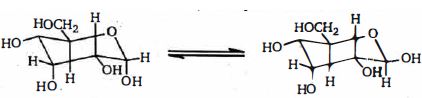
Which one of the statements conceming the equilibriurn shown is true ?
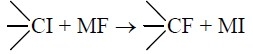
In the replacement reaction

The reaction will be most favourable if $M$ happens to be
Chlorine cannot displace
The vapour pressure of water at room temperature is $23.8\, mm\, Hg$. The vapour pressure of an aqueous solution of sucrose with mole fraction of $0.1$ is equal to .......... $mm\, Hg$.
Glyoxal $(CHOCHO)$ on being heated with concentrated $NaOH$ forms.
The reaction between $X$ and $Y$ is first order with respect to $X$ and zero order with respect to $Y$.

Experiment $\frac{[ X ]}{ mol \;L ^{-1}}$ $\frac{[ Y ]}{ mol\; L ^{-1}}$ $\frac{\text { Initial rate }}{ mol\; L ^{-1}\; min ^{-1}}$
$I$ $0.1$ $0.1$ $2 \times 10^{-3}$
$II$ $0.2$ $0.2$ $4 \times 10^{-3}$
$III$ $0.4$ $0.4$ $M \times 10^{-3}$
$IV$ $0.1$ $0.2$ $2 \times 10^{-3}$

Examine the data of table and calculate ratio of numerical value of $M$

For the reaction $A + B \to C$, it is found that doubling the concentration of $A$ increases the rate by $4$ times, and doubling the concentration of $B$ doubles the reaction rate. What is the overal order of the reaction.