MCQ
Which ($\pi$ -bond) will reduce first, when above compound undergoes catalytic hydrogenation ?
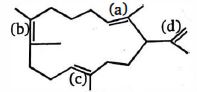
  • A
    $a$
  • B
    $b$
  • C
    $c$
  • $d$

Answer

Correct option: D.
$d$
d
$(d)$ Unstable alkene will readily undergo reduction.

Need a full question paper?

Generate a complete, print-ready paper with questions like this in minutes — across 16+ boards, with answer keys.

Start Generating Free

Similar questions

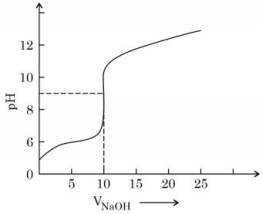
The titration curve of weak acid vs. strong base with phenolphthalein as indictor) is shown below. The $K _{\text {phenolphthalein }}=4 \times 10^{-10}$. Given: $\log 2=0.3$

The number of following statements which is/are correct about phenolphthalein is $.....$.

$A$. It can be used as an indicator for the titration of weak acid with weak base.

$B$. It begins to change colour at $pH =8.4$

$C$. It is a weak organic base

$D$. It is colourless in acidic medium
The ionic bonds $X^+Y^-$ are formed when

$(I)$ electron affinity of $Y$ is high    $(II)$ ionization energy of $X$ is low

$(III)$ lattice energy of $XY$ is high   $(IV)$ lattice energy of $XY$ is low

Choose the correct code

Which among the following is incorrect statement?
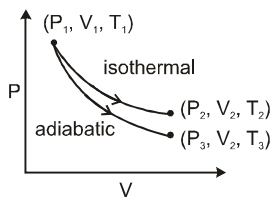
The reversible expansion of an ideal gas under adiabatic and isothermal conditions is shown in the figure. Which of the following statement$(s)$ is (are) correct? $Image$ 

$(A)$ $T _1= T _2$ $(B)$ $T _3> T _1$

$(C)$ $W _{\text {isothermal }} > W _{\text {adiabatic }}$ $(D)$ $\Delta U_{\text {isothermal }}>\Delta U_{\text {adiabatic }}$
For which of the following, the radius will same as for hydrogen atom having $n = 1$
The solubility product of a sparingly soluble salt $AB$ at room temperature is $1.21 \times 10^{-6},$ its molar solubility is :
The $IUPAC$ name of $\begin{array}{*{20}{c}}
  {C{H_3} - CH - CH - CH - C{H_3}} \\ 
  {\,|\,\,\,\,\,\,\,\,\,\,\,\,\,\,|\,\,\,\,\,\,\,\,\,\,\,\,\,|\,\,\,\,\,} \\ 
  {Cl\,\,\,\,\,\,\,\,\,Br\,\,\,\,\,\,\,\,\,OH} 
\end{array}$  is
The molecule has $sp^3d^2$, hybridisation and square planar shape
An electronic transition from $1s$  orbital of an atom causes
A solution which is resistant to change of $pH$ upon the addition of an acid or a base is known as