Tamilnadu BoardEnglish MediumSTD 10SciencePlant Anatomy and Plant Physiology4 Marks
Question
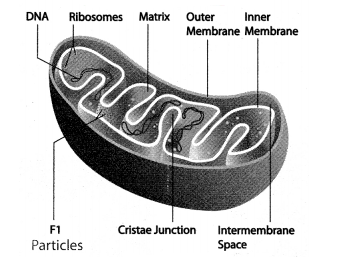
With a labelled diagram, explain the structure and function of mitochondria.
✓
Answer
Mitochondrial Membranes: It consists of two membranes called inner and outer membrane. Each membrane is $60 – 70 A^o$ thick. The outer mitochondrial membrane is smooth and freely permeable to most small molecules. It contains enzymes, proteins and lipids. It has porin molecules (proteins) which form channels for passage of molecules through it.
The inner mitochondrial membrane is semi – permeable membrane and regulates the passage of materials into and out of the mitochondria. It is rich in enzymes and carrier proteins. It consists of 80% of proteins and lipids.
Cristae: The inner mitochondrial membrane gives rise to finger-like projections called cristae. These cristae increase the inner surface area (fold in the inner membrane) of the mitochondria to hold a variety of enzymes.
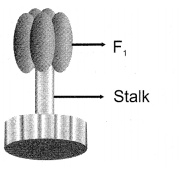
Oxysomes: The inner mitochondrial membrane bear minute regularly spaced tennis racket shaped particles known as oxysomes ($F_1$ particle). They involve in ATP synthesis.
Need a full question paper?
Generate a complete, print-ready paper with questions like this in minutes — across 16+ boards, with answer keys.