Answer


Image
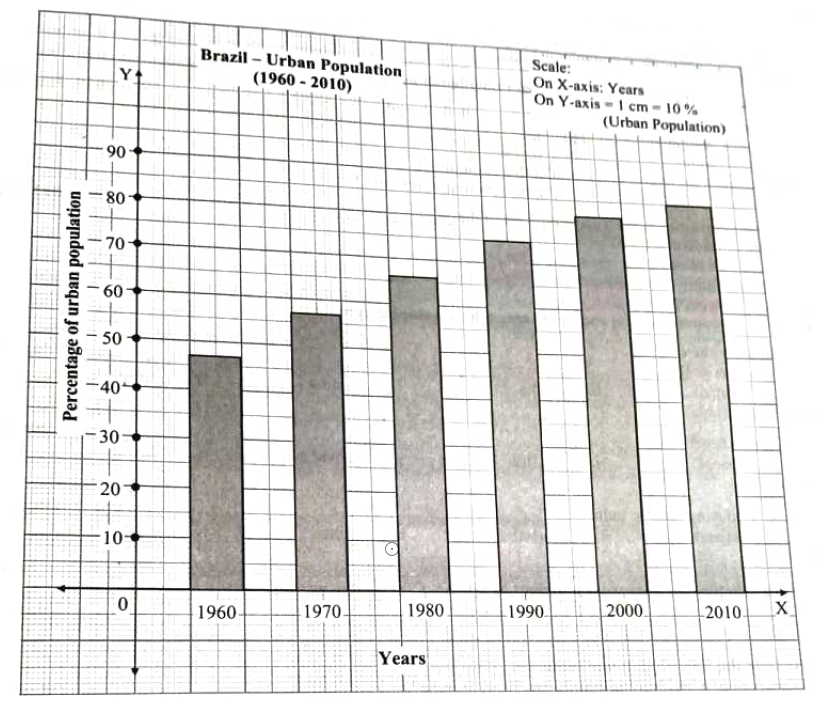
1. The above graph shows percentage of urban population in Brazil.
2. From 2000 to 2010 was the decade when urbanisation occurred slowly.
3. During the period from 1980 to 1990 the urbanization increased by 8.6 %.

Need a full question paper?

Generate a complete, print-ready paper with questions like this in minutes — across 16+ boards, with answer keys.

Start Generating Free

Similar questions

Prepare a simple bar graph with the help of given statistical information and answer the questions given below-

Brazil-% of urban population

Year % of urban population
1960 47.1
1970 56.8
1980 66.0
1990 74.6
2000 81.5
2010 84.6

Questions-

  1. What is the interval of years in the data?
  2. During which year did rapid urbanization start?
  3. Write five sentences about the analysis of graph.
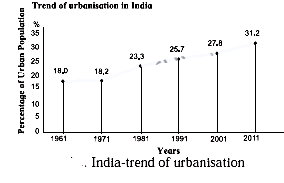
Read the graph in fig below and answer the following questions:

  1. What was the percentage of urbanisation in 1961?
  2. In which decade was urbanisation the highest?
  3. In which decade was the growth of urbanisation lowest?
  4. What inference can you draw regarding India’s urbanisation after reading the graph?
  5. In which decade is the percentage of urbanization 27.8?
  6. What is the difference between the percentage of urbanisation from 1971 and 1981?

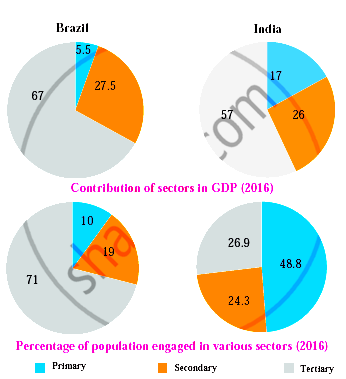
Observe the following graph and answer the questions given below-

  1. Which country has a higher percent of the population engaged in primary activities?
  2. In which country is the contribution of tertiary sector greater in the GDP?
  3. In which country is the share of secondary activities more in the GDP?
  4. Can we say that Brazil is an agrarian economy like India? Give reasons.
  5. Which country has a higher percent of the population engaged in secondary activities?
  6. How muchpercent of population is engaged in tertiary activities in India?
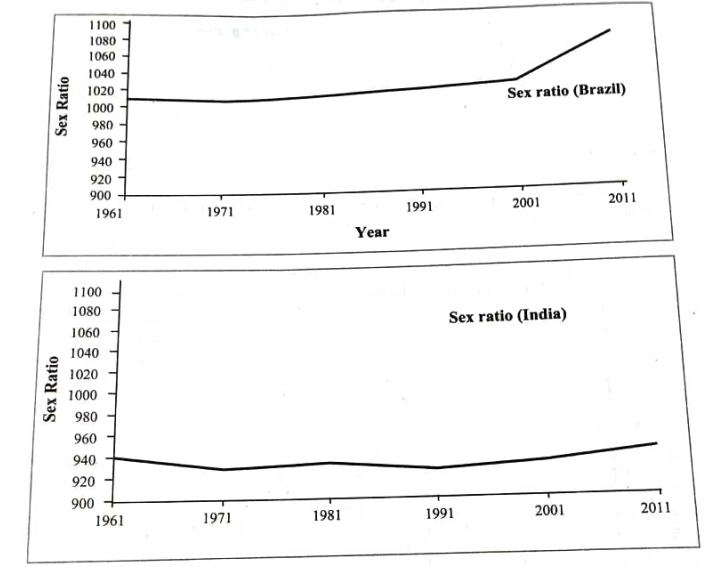
Observe the following graphs and answer the questions given below them.
Image
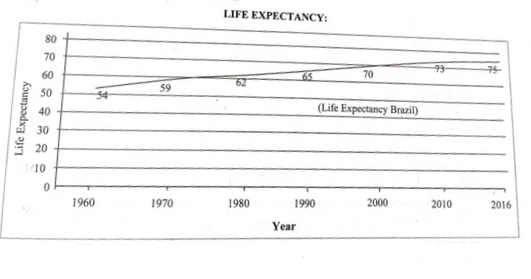
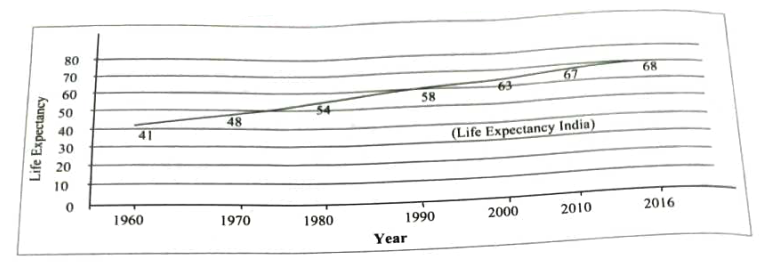
1. What do the above graphs show?
2. Which country has highest male population?
3. Which country has highest female population?
4. Which country has rapid increase in female population after 2001?
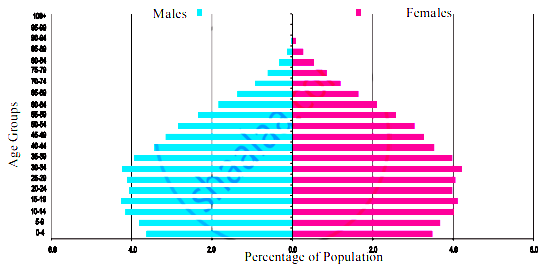
Observe the following graph and answer the questions given below-

Brazil- % of population (2016)


  1. Which type of graph is this?
  2. Which age group has the highest population?
  3. Write class interval of age groups given on Y-axis.
  4. Whose number is more in males and females of age above 60?
  5. How much percent of females are found in age group of 55 to 59 years?
  6. After which age group is the decrease in population found?
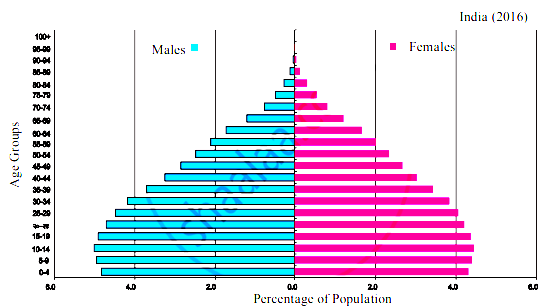
Observe the following graph and answer the questions given below-

India- % of population (2016)

  1. Which type of graph is this?
  2. Which age group has the highest population?
  3. Write class interval of age groups given on Y-axis.
  4. Whose number is more in males and females of age above 60?
  5. How much percent of females are found in age group of 55 to 59 years?
  6. After which age group is the decrease in population found?
Prepare a line graph with the help of given statistical information and answer the questions given below-

India-trends of urbanization(%)

Year India
1961 18.0
1971 18.2
1981 23.3
1991 25.7
2001 27.8
2011 31.2

Questions-

  1. In which year 18% urbanization is found?
  2. Urbanization has increased by how many percent from 2001 to 2011?
  3. In which decade was the growth of urbanization highest?