Question
Work done by an external agent in separating the parallel plate capacitor is
|
(a) CV |
(b) |
(c) |
(d) None of these |
Work done by an external agent in separating the parallel plate capacitor is
|
(a) CV |
(b) |
(c) |
(d) None of these |
(c) 
Generate a complete, print-ready paper with questions like this in minutes — across 16+ boards, with answer keys.
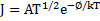
Which one is correct relation for thermionic emission
|
(a) |
(b) |
(c) |
(d) |
Assertion : When charges are shared between any two bodies, no charge is really lost, but some loss of energy does occur.
Reason : Some energy disappears in the form of heat, sparking etc.
|
(a) If both assertion and reason are true and the reason is the correct explanation of the assertion. |
|
(b) If both assertion and reason are true but reason is not the correct explanation of the assertion. |
|
(c) If assertion is true but reason is false. |
|
(d) If the assertion and reason both are false. |
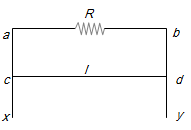
A wire cd of length l and mass m is sliding without friction on conducting rails ax and by as shown. The vertical rails are connected to each other with a resistance R between a and b. A uniform magnetic field B is applied perpendicular to the plane abcd such that cd moves with a constant velocity of
|
(a) |
(b) |
(c) |
(d) |
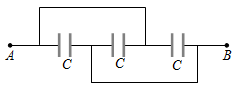
Three equal capacitors, each with capacitance C are connected as shown in figure. Then the equivalent capacitance between A and B is
|
(a) C |
(b) 3C |
(c) |
(d) |
A magnetic field
|
(a) Always exerts a force on a charged particle |
|
(b) Never exerts a force on a charged particle |
|
(c) Exerts a force, if the charged particle is moving across the magnetic field lines |
|
(d) Exerts a force, if the charged particle is moving along the magnetic field lines |
To an observer on the earth the stars appear to twinkle. This can be ascribed to
|
(a) The fact that stars do not emit light continuously |
|
(b) Frequent absorption of star light by their own atmosphere |
|
(c) Frequent absorption of star light by the earth's atmosphere |
|
(d) The refractive index fluctuations in the earth's atmosphere |
In hydrogen atom which quantity is integral multiple of 
|
(a) Angular momentum |
(b) Angular velocity |
|
(c) Angular acceleration |
(d) Momentum |