Question
Write any four differences between Agnatha and Gnathostomata.

Answer

Difference between Agnatha and Gnathostomata:
AgnathaGnathostomata
True jaws are absent in themTrue jaws present.
Paired appendages are absentPaired appendages are found.
Notochord is present till adulthoodThe notochord is transformed into the vertebral column.
Two semi-circular canals are found in the internal earThe number of semilunar tubes is three

Need a full question paper?

Generate a complete, print-ready paper with questions like this in minutes — across 16+ boards, with answer keys.

Start Generating Free

Similar questions

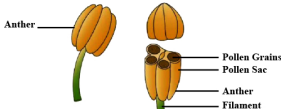
The androecium is composed of stamens. Each stamen that represents the male reproductive organ consists of a stalk or a filament and an anther. Each anther is usually bilobed and each lobe has two chambers, the pollen-sacs. Stamens of flowers may be united with other members such as petals or among themselves. The stamens may be epipetalous or epiphyllous. A flower is a modified shoot wherein the shoot apical meristem changes to floral meristem. Internodes do not elongate and the axis gets condensed. The apex produces different kinds of floral appendages laterally at successive nodes instead of leaves. The arrangement of flowers on the floral axis is termed an inflorescence.
Image

i. Observe the figure and mention what is androecium composed of. (1)
ii. The pollen grains are produced in pollen-sacs. What is a sterile stamen is called? (1)
iii. Is salvia and mustard show variation in the length of filaments within a flower? (2)

OR

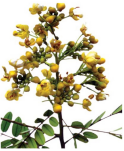
Mention statement justifies that the given figure is racemose inflorescence. (2)
Image
(i) Which factor is secreted due to increased blood flow in the atriums of the heart? Write one function of it.
(ii) Write any four differences in the urinary tract of men and women.
Make a labeled diagram of Singer and Nicolson improved model of the structure of cell membrane and briefly describe it.
Write comments on the following :
(i) Myasthenia gravis (ii) Muscular dystrophy (iii) Tetany (iv) Osteoporosis.
There are thousands of different eubacteria or 'true bacteria'. They are characterized by the presence of a rigid cell wall, and if motile, a flagellum. The cyanobacteria (also referred to as blue-green algae) have chlorophyll a similar to green plants and are photosynthetic autotrophs. The cyanobacteria are unicellular, colonial or filamentous, freshwater/marine or terrestrial algae. The colonies are generally surrounded by gelatinous sheath. They often form blooms in polluted water bodies. Some of these organisms can fix atmospheric nitrogen in specialized cells called heterocysts, e.g., Nostoc and Anabaena. Chemosynthetic autotrophic bacteria oxidise various inorganic substances such as nitrates, nitrites and ammonia and use the released energy for their ATP production. They play a great role in recycling nutrients like nitrogen, phosphorous. iron and Sulphur.

(1) Which of the following can be termed as 'Photosynthetic Autotrophs'
(a) All monerans (b) Chemosynthetic Bacteria (c) Cyanobacteria (d) All Eubacteria

(2) Blue green algae are characterized by :
(a) They often form blooms in polluted water bodies.
(b) Some of these organisms can fix atmospheric nitrogen
(c) Their colonies are generally surrounded by gelatinous sheath.
(d) All of these

(3) Which is incorrect about Heterocysts:
(a) These are specialized cells
(b) These are present in all Cyanobacteria.
(c) Nostoc and Anabaena have Heterocysts.
(d) Organisms having these cells can fix atmospheric nitrogen

(4) Green plants are similar to Blue green algae in having:
(a) chlorophyll a (b) Heterocysts (c) chlorophyll b (d) None of these

(5) Which of these can be described as ‘true Bacteria’.
(a) Cyanobacteria only
(b) Only Chemosynthetic autotrophic bacteria
(c) Bacteria without cell wall.
(d) Eubacteria
Describe briefly the four major groups of Protozoa.
Write the functions of human kidney.
Define the following :
(i) Vasa Recta (ii) Homeostasis (iii) Podocytes (iv) Juxtamedullary Nephron.
Try to collect all the currently accepted meanings for the word ‘species’. Discuss with your teacher the meaning of species in case of higher plants and animals on one hand, and bacteria on the other hand.