Question
Write electrode reactions taking place in:
  1. Ni–Cd cell.
  2. Lead Acid Accumulator.

Answer

  1. $\text{Cd(s)}+2\text{OH}^-(\text{aq})\xrightarrow{ \ \ \ \ \ }\text{Cd(OH)}_2(\text{s}) + 2\text{e}^-$

$\text{NiO}_2(\text{s) + 2H}_2\text{O}+2\text{e}^-\xrightarrow{ \ \ \ \ \ \ \ }\text{Ni(OH)}_2(\text{s})+2\text{OH}^-(\text{aq})$

  1. $\text{Pb}\xrightarrow{ \ \ \ \ \ \ \ }\text{Pb}^{2+}+2\text{e}^-\text{(at anode)}\text{PbO}_2^+$

$\text{SO}_4^{2-}+4\text{H}^++2\text{e}^-\xrightarrow{\ \ \ \ \ \ \ \ \ }\text{PbSO}_4+2\text{H}_2\text{O}$ (at cathode)

Need a full question paper?

Generate a complete, print-ready paper with questions like this in minutes — across 16+ boards, with answer keys.
Start Generating Free

Similar questions

Complte the following reaction :
C6H5 COOH + SOCI2
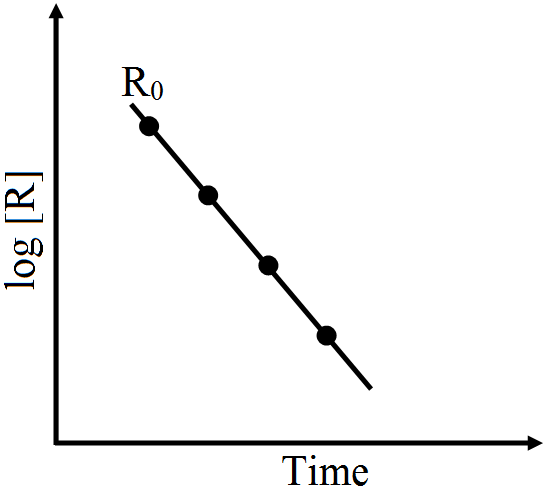
Observe the graph in diagram and answer the following questions.

  1. If slope is equal to -2.0 × 10⁻⁶ sec-1 , what will be the value of rate constant?
  2. How does the half-life of zero order reaction relate to its rate constant?
How do you convert the following:
  1. Prop-1-ene to Propan-2-ol
  2. Bromobenzene to 2-bromoacetophenone
  3. 2-bromobutane to But-2-ene
  1. E0 value for the Mn3+/Mn2+ couple is positive (+ 1.5V) whereas that of Cr3+/Cr2+ is negative (-0.4 V). Why?
  2. Transition metals form coloured compounds. Why?
  3. Complete the following equation:

$\text{2MnO}^{-}_{4}+\text{16H}^{+}+\text{5C}_{2}\text{O}^{2-}_{4}\xrightarrow{\text{ }\ \ \ \ \ \ \ \ \ \ \ \ }$

How do the oxides of transition elements in lower oxidation states differ from those in higher oxidation state in the nature of metal-oxygen bonding and why?
Why molecularity is applicable only for elementary reactions and order is applicable for elementary as well as complex reactions?
  1. Write the structural difference between starch and cellulose.
  2. What type of linkage is present in Nucleic acids?
  3. Give one example each for fibrous protein and globular protein.
Benzene and toluene form ideal solution over the entire range of composition. The vapour pressure of pure benzene and naphthalene at 300 K are 50.71 mm Hg and 32.06 mm Hg respectively. Calculate the mole fraction of benzene in vapour phase if 80 g of benzene is mixed with 100 g of naphthalene.
Arrange water, ethanol and phenol in increasing order of acidity and give reason for your answer.
How would you achieve the following conversions:

  1. Nitrobenzene to aniline.
  2. An alkyl halide to a quaternary ammonium salt.
  3. Aniline to benzonitrile.

Write the chemical equation with reaction conditions in each case.