Question
Write laws of reflection.

Answer

→(i) The angle of incidence and the angle of reflection are same. (i = r)
(ii) The incident ray, reflected ray and the normal to the reflecting surface at the point of incidence lie in the same plane. This plane is called the plane of incidence.
(iii) The incident ray and reflected ray lie on opposite sides of the normal.

Need a full question paper?

Generate a complete, print-ready paper with questions like this in minutes — across 16+ boards, with answer keys.
Start Generating Free

Similar questions

Two magnetic poles, one of which is $10$ times as strong as the other, exert on each other a force equal to $9.604\  mN$ , when placed $10 \ cm$ apart in air. Find the strength of the two poles.
(a) Calculate the potential at a point $P$ located at a distance of 9 cm due to the charge $4 \times 10^{-7} C$.(b) Now, find the work done in bringing the charge $2 \times 10^{-9} C$ from infinity to point P . Does the answer depend on the path along which the charge is brought?
The apparent weight of an object increases in an elevator while accelerating upward. A moongphaliwala sells his moongphali using a beam balance in an elevator. Will he gain more if the elevator is accelerating up?
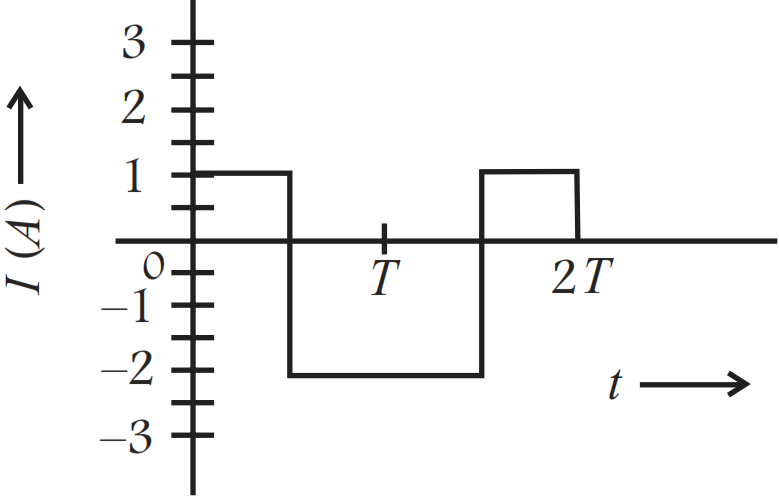
The alternating current in a circuit is described by the graph shown in Fig. Show rms current in this graph.
Can a process on an ideal gas be both adiabatic and isothermal?
Explain the unit of mass.
The average kinetic energy of molecules in a gas at temperature T is 1.5kT. Find the temperature at which the average kinetic energy of the molecules of hydrogen equals the binding energy of its atoms. Will hydrogen remain in molecular from at this temperature? Take $k = 8.62 \times 10^{-5}eVK^{-1}.$
A particle executes simple harmonic motion with an amplitude of 10cm. At what distance from the mean position are the kinetic and potential energies equal?
A galvanometer has a resistance of 30Ω. It gives full scale deflection with a current of 2 mA. Calculate the value of the resistance needed to convert it into an ammeter of range 0-0.3 A.
Is it possible for a particle to describe a curved path if no force acts on it? Does your answer depend on the frame of reference chosen to view the particle?