Question
Write short notes: Lamarckism.

Answer

(1) Lamarckism consists of two theories which were proposed by Jean Baptiste Lamarck. These are as follows: (a) Use and disuse of the organs (b) Inheritance of acquired characters.
(2) In theory of use and disuse of organs, Lamarck says : The characters of organs develop because specific activities that the organisms perform. If such organ is not used it gets degenerated. Thus the morphological changes take place due to activities or inactivity of a particular organism.
(3) To emphasise this theory, he quoted following examples. Due to constant extension of neck to eat foliage from the top of the trees, giraffe’s neck became long. Similarly blacksmith has strong arms due to constant work. Flightless ostrich and emu did not fly and hence their wings became useless. Aquatic birds like swan and duck made their feet suitable for swimming by living in water. Snake lost limbs as it tried burrowing mode.
(4) Such acquired characters are passed from one parental generation to the offspring. This is called inheritance of acquired characters.
(5) The theory of inheritance of acquired characters is not accepted as such transmission of acquired character does not take place. Only genetic characters are transmitted.
Need a full question paper?

Generate a complete, print-ready paper with questions like this in minutes — across 16+ boards, with answer keys.

Start Generating Free

Similar questions

Atoms of eight elements $A, B, C, D, E, F, G$ and H have the same number of electron shells but different number of electrons in their outermost shells. It was found that elements $A$ and $G$ combine to form an ionic compound. This ionic compound is added in a small amount to almost all vegetables and dishes during cooking. Oxides of elements $A$ and $B$ are basic in nature while those of elements $E$ and $F$ are acidic. The oxide of element $D$ is, however, almost neutral. Based on the above information, answer the following questions:
  1. To which group or period of the periodic table do these elements belong?
  2. What would be the nature of compound formed by a combination of elements $B$ and $F?$
  3. Which two of these elements could definitely be metals?
  4. Which one of the eight elements is most likely to be found in gaseous state at room temperature?
  5. If the number of electrons in the outermost shell of elements $C$ and $G$ be $3$ and $7$ respectively, write the formula of the compound formed by the combination of $C$ and $G.$
Complete the following chart with reference to pre-disaster management.
The chemical substance P is made and secreted by the meristematic tissue at the tip of stem (or shoot) of a plant. The chemical substance P is responsible for a phenomenon Q in plants in which the stem bends towards a source of light. The same chemical substance P has an opposite effect on the root of a plant. It causes the root of a plant to bend away from the source of light in a process called R.
  1. What is the chemical substance P?
  2. State whether P prefers to remains in the sunlit side of a stem or in shade.
  3. What is the effect of substance P on the rate of growth of (i) a root, and (ii) a stem?
  4. What is the name of process (i) Q, and (ii) R?
  5. What is the general name of chemical substances like P? Name another substance which belongs to this class of chemical substances.
Answer the following questions:
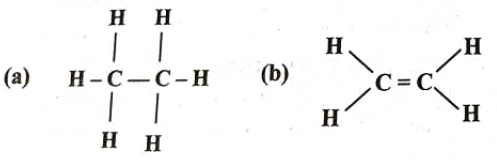
i. Identify saturated and unsaturated hydrocarbon from the given structural formula:
Image
ii. Draw electron dot structure for (a) and (b).
iii. Define Homologous series.
Define magnetic field lines. Describe an activity to draw a magnetic field line outside a bar magnet from one pole to another pole.
Explain the construction and working of the following. Draw a neat diagram and label it : Electric motor
What are the objectives of the space mission?
A woman uses pills A as a method of birth control (or preventing pregnancy). The pills A stop the ovaries from releasing ovum into oviducts. Another woman uses pills B as a method of birth control. The pills B kill the sperms and prevent pregnancy.
  1. What do the pills A contain?
  2. What is the common name of pills A?
  3. What do the pills B contain?
  4. What is the common name of pills B?
  5. What is the general name of these methods of birth control?
With a neat labelled diagram, explain the construction and working of a compound microscope.
Explain structure of modern periodic table in short.