Question
Write short notes on any two:
  1. Contingent liability.
  2. Capital expenditure.
  3. Operating profit.

Answer

  1. Contingent Liabilities: Contingent Liability is a liability that becomes payable on the happening of an event. In case, the event does not happen, no amount is payable. Such liabilities are not accounted and are not shown in the Balance Sheet; they are disclosed by way of a note.
  2. Capital Expenditure: is the expenditure that gives benefit of enduring nature, i.e., the benefit from the expenditure will be for period or periods beyond the accounting period. Capital expenditure increases the earning capacity or reduces the operating expenses of a business.
Capital Expenditure is the amount incurred by an enterprise normally on purchase of fixed assets. Fixed assets are used in the business to earn income and are not intended for resale. Fixed assets purchased may be tangible or intangible.
  1. Operating Profit: is the profit earned through normal operating activities of the business. It is calculated by deducting the Operating Expenses from the Gross Profit.
Operating Profit = Gross Profit - Operating Expenses

Need a full question paper?

Generate a complete, print-ready paper with questions like this in minutes — across 16+ boards, with answer keys.
Start Generating Free

Similar questions

State three points of difference between Single Entry and Double Entry System. Difference between Double Entry System and Single Entry System?
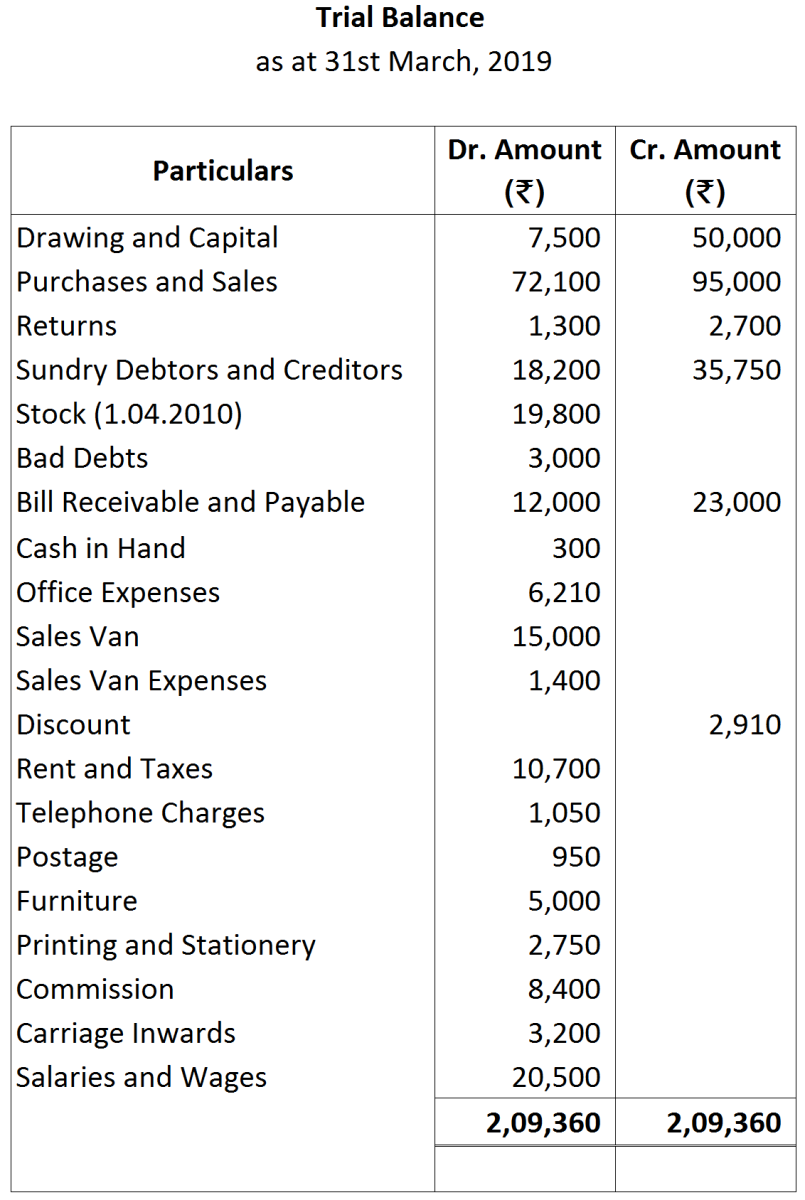
From the following trial balance of Mr. A. Lal, prepare trading, profit and loss account and balance sheet as on March 31, 2017.

Closing stock ₹ 15,000.
From the following balances, prepare Final Accounts of M/s Raja & Sons for the year ended $31^{st} $March, $2019:$
Salary ₹ $5,400$ Insurance ₹ $2,500$ Cash ₹ $400$ Purchases ₹ $84,170$ Rent Received ₹ $3,150$ Drawings ₹$ 2,100$ Bills Payable ₹ $3,900$ Debtors ₹ $38,080$ Stock ($1^{st} $April, $2018) ₹ 29,500$ Bank Overdraft ₹ $9,700$ Carriage ₹ $2,200$ Creditors ₹ $4,200$ Trade Expenses ₹ $4,900$ Sales Return ₹ $4,700$ Machinery ₹ $12,000$ Wages ₹ $45,000$ Sales ₹ $1,47,200$ Purchases Return ₹ $3,900$ Capital ₹ $58,900$ Closing Stock ($31^{st}$ March, $2019) ₹ 36,200.$
Describe the various types of accounting software along with their advantages and limitations.
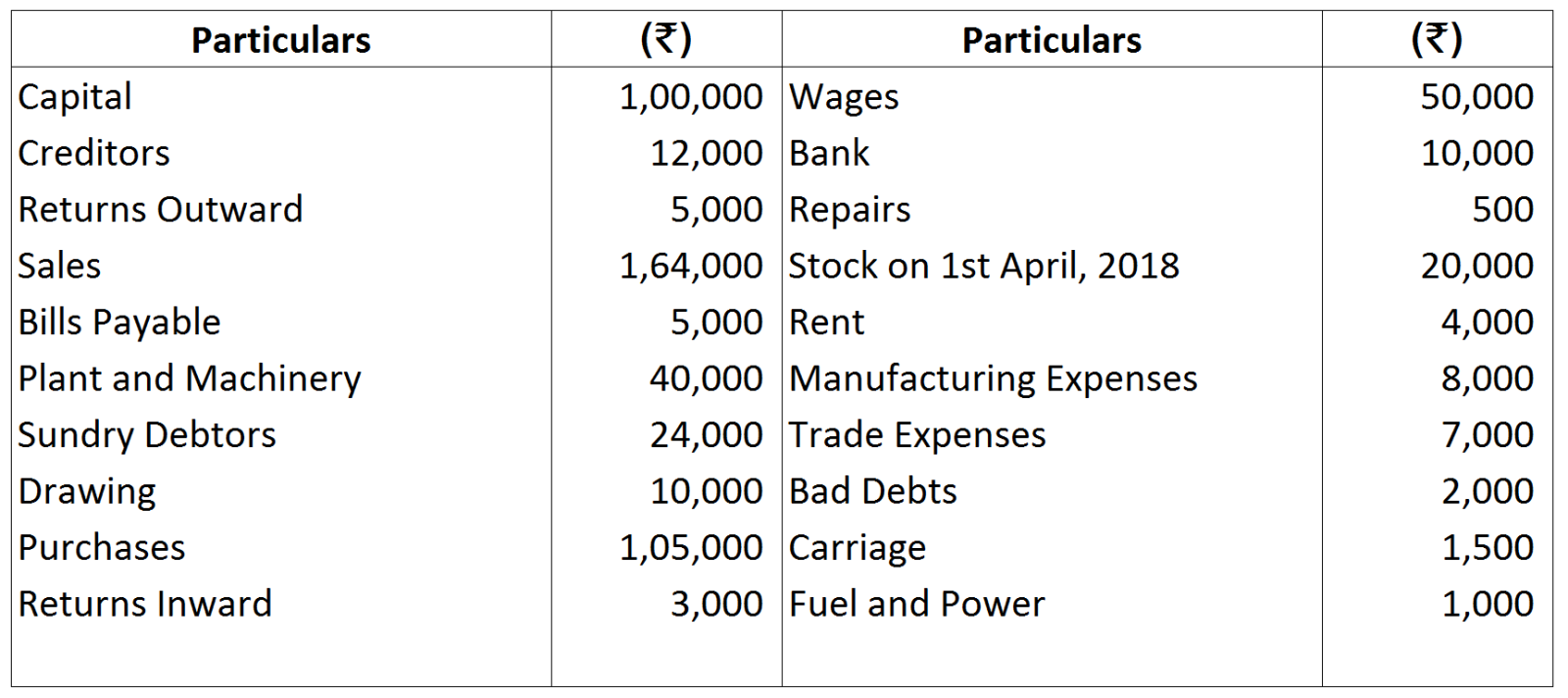
From the following balances, prepare Trading and Profit and Loss Account and Balance Sheet:
Closing Stock was valued at ₹ 30,000.
Prepare Simple Cash book of Gopal of Amritsar from the following transactions:​
2019
 
April 1
Gopal commenced business introducing cash ₹ 60,000 and ₹ 1,50,000 by taking a loan from the Allahabad Bank.
 
April 4
Purchased following assets for business: Computer ₹ 16,000; Furniture ₹ 18,500 and Machinery ₹ 32,000 plus CGST and SGST @ 6% each, paid by cheque.
 
April 6
Purchased goods of ₹ 40,000 plus CGST and SGST @ 6% each from Bhushan, Amritsar, half of the value paid in cash.
 
April 8
Paid wages for installation of Machinery
4,000
April 12
Computer repair charges ₹ 1,900 paid along with CGST and SGST @ 6% each
 
April 15
Paid wages
15,000
 
Purchased Postage Stamps
150
 
Paid for stationery of ₹ 2,700 along with CGST and SGST @ 6% each
 
April 19
Sold for cash half the goods purchased from Bhushan to Anil Krishna at a profit of 25% and allowed him Trade Discount of 5%. Charged CGST and SGST @ 6% each
 
April 24
Payment to carpenter for repairs to personal furniture
350
April 26
Paid for medical expenses of Smt. Gopal
1,800
April 30
Paid for shop rent ₹ 2,000 along with CGST and SGST @ 6% each.
 
From the following balances extracted from the books of Sharma, prepare the Trading and Profit & Loss Account for the year ended 31st March 2019 and Balance Sheet as at that date after taking into consideration the adjustments given below:

Adjustments:
  1. Closing Stock was valued at ₹ 61,700.
  2. Depreciate Furniture and Machinery @10% p.a. and Sale Van @20% p.a.
  3. Outstanding Rent amounted to ₹ 900.
  4. Bad Debts ₹ 200.
  5. Make a provision for Doubtful Debts @5% on Debtors.
  6. Charge one-fourth of salaries and wages to the Trading Account.
  7. A new machinery was purchased on credit and installed on 31st December 2018 costing ₹ 15,000. No entry for the same has yet been passed in the books.
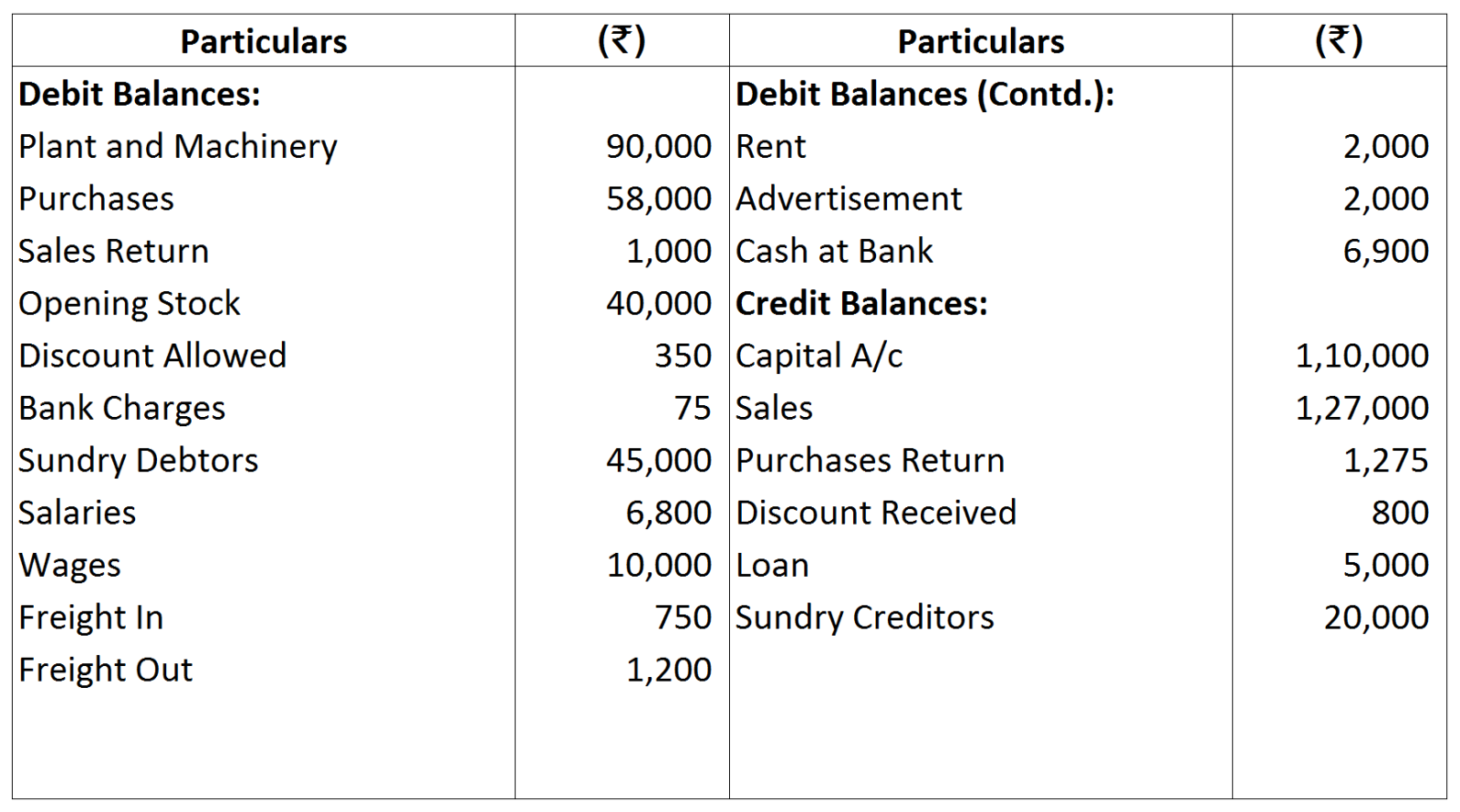
Prepare Trading and Profit and Loss Account and Balance Sheet from the following balance, retating to the year ended 31st march, 2019:

Additional Information:
  1. Closing Stock was valued at ₹ 14,500.
  2. Depreciation Plant and machinery.
  3. Write off Debts ₹ 5,000.
  4. ₹ 400 is due for repairs.
On 1st March, 2019, R accepted a Bill of Exchange of ₹ 20,000 from S payable 3 months after date in full settlement of his dues. On the same day S endorsed the Bill of Exchange to T together with a cheque for ₹ 5,000 in settlement of his debt to the latter. On 2nd March, 2019, T discounted the Bill of Exchange @ 6% p.a. with his bank. On maturity the Bill of Exchange was dishonoured.
Journalise the transactions in the books of R and T.
Trial Balance of Chatter Sen on $31^{st}$​​​​​​​ March, $2019$ revealed the following balances:

Stock on $31^{st}​​​​​​​$​​​​​​​ March, $2019$ was valued at $₹ 35,000$.
Prepare Trading and Profit and Loss Account for the year ended $31^{st}$ March, $2019$ and Balance Sheet as at the date.