Question
Write the principles of the following methods:
  1. Vapour phase refining.
  2. Zone refining.
  3. Chromatography.

Answer

  1. Vapour phase refining: In this process, the impure metal is converted into its volatile compound, which is decomposed to obtain the pure metal. The basic requirements for the vapour phase refining are:
  1. The metal should form a volatile compound with an available reagent.
  2. The volatile compound should decompose easily so that pure metal should be recovered.
  1. Zone refining: This method is used for producing metal of high purity. Metal like germanium, gallium and indium are prepared by this method. This method is based on the principle that impurities are more soluble in melt than in the solid state of the metal.
  2. Chromatography: This is the method used for the separation and purification of elements. It can also be used for testing the purity of a compound. The principle behind the chromatography is that different components of a mixture are differently adsorbed on an adsorbent.

Need a full question paper?

Generate a complete, print-ready paper with questions like this in minutes — across 16+ boards, with answer keys.
Start Generating Free

Similar questions

Write chemical reactions taking place in the extraction of zinc from zinc blende.
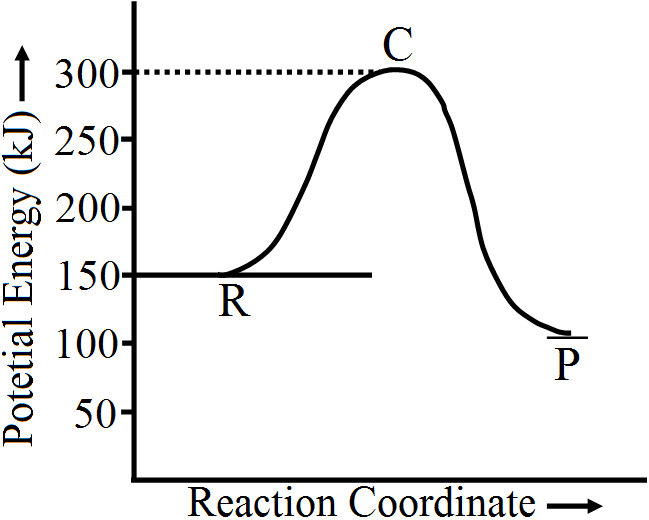
Answer the following questions on the basis of the given plot of potential energy vs reaction coordinate:
  1. What is the threshold energy for the reaction?
  2. What is the activation energy for forward reaction?
  3. What is the activation energy for backward reaction?
  4. What is enthalpy change for the forward reaction?
Answer the following questions: An optically active compound having molecular formula $C_7H_{15}Br$ reacts with aqueous KOH to give a racemic mixture of products. Write the mechanism involved in this reaction.
$[Ti(H_2O)]^{3+}$ is coloured while $[Sc(H_2O)_6]^{3+}$ is colourless.
Give reasons:
  1. $SO_2$ is reducing while $TeO_2$ is an oxidizing agent.
  2. Nitrogen does not form pentahalide.
  3. $ICl$ is more reactive than $I_2.$
On the basis of which evidences D-glucose was assigned the following structure?
$\text{CHO}\\ \ \ |\\ (\text{CH}\text{OH})_{4}\\\ \ |\\\text{CH}_{2}\text{OH}$
Tert$-$Butylbromide reacts with aq. $NaOH$ by $S_N1$ mechanism while $n-$butylbromide reacts by $SN_2$ mechanism. Why?
A crystalline solid has a cubic structure in which tungsten $(W)$ atoms are located at cube corners of the unit cell, oxygen atoms at the cube edges and sodium atom at the centre. What is the molecular formula of the compound?
(a) How will you prepare phenol from benzenediazonium chloride?
(b) How will you convert salicylic acid into phenol?
Phosphorus has three allotropic forms —
  1. white phosphorus
  2. red phosphorus and
  3. black phosphorus.
Write the difference between white and red phosphorus on the basis of their structure and reactivity.