| Column I | Column II |
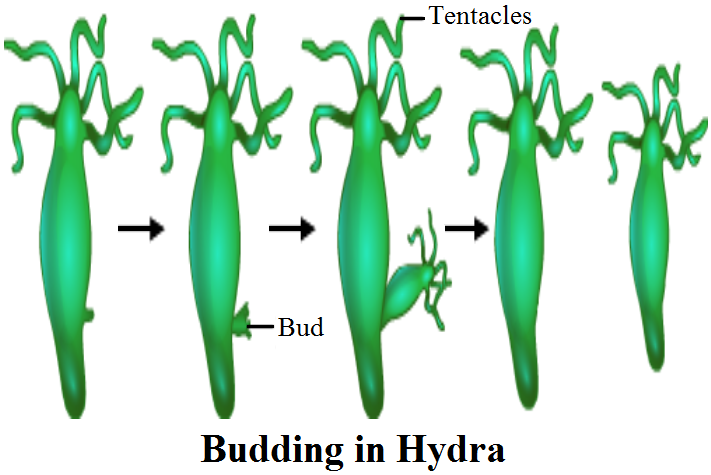
| Bud | Maple |
| Eyes | Spirogyra |
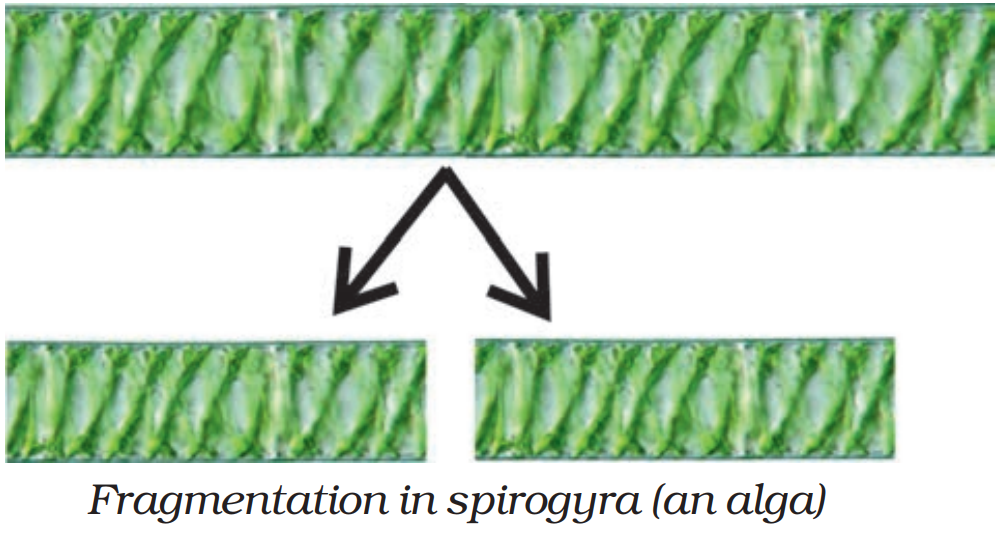
| Fragmentation | Yeast |
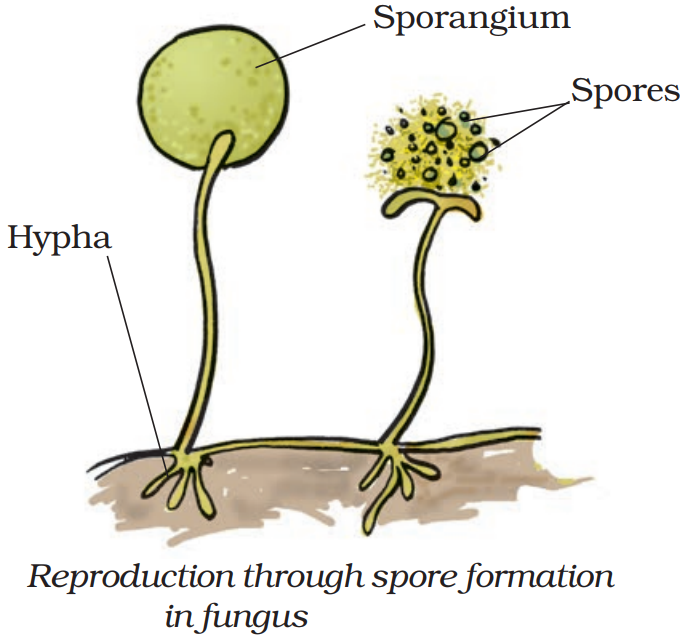
| Wings | Bread mould |
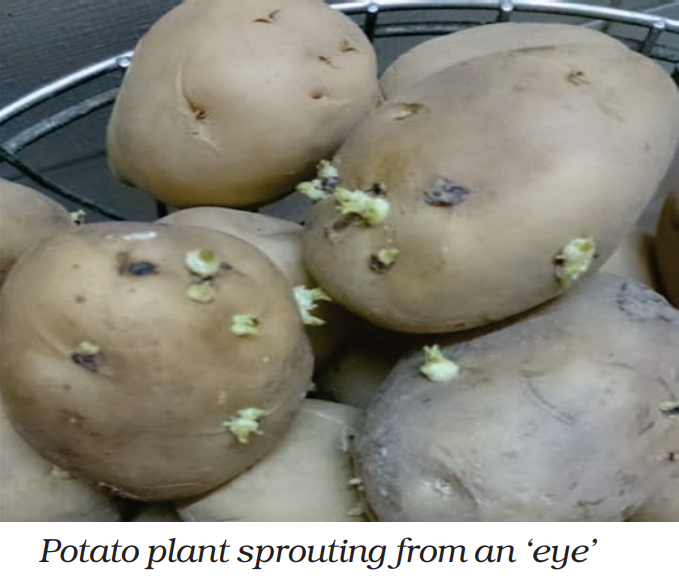
| Spores | Potato |
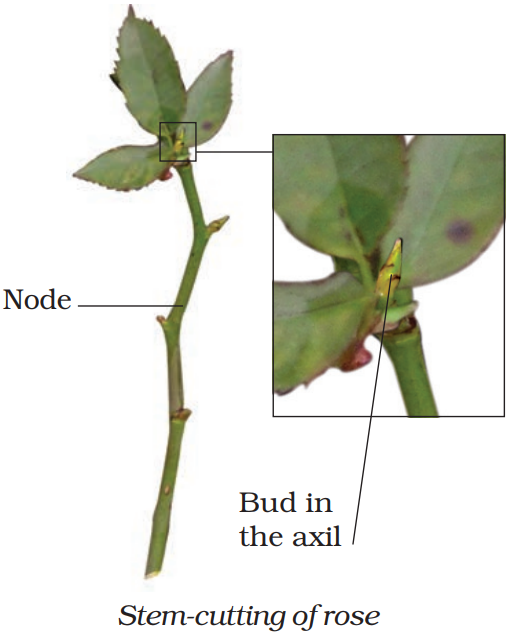
| Rose |
| Column I | Column II |
| Bud | Yeast |
| Eyes | Potato |
| Fragmentation | Spirogyra |
| Wings | Maple |
| Spores | Bread mould |
32 questions · timed · auto-graded
| Column I | Column II |
| Bud | Maple |
| Eyes | Spirogyra |
| Fragmentation | Yeast |
| Wings | Bread mould |
| Spores | Potato |
| Rose |
| Column I | Column II |
| Bud | Yeast |
| Eyes | Potato |
| Fragmentation | Spirogyra |
| Wings | Maple |
| Spores | Bread mould |
Dispersal by animals − There are many ways by which birds and animals can disperse seeds. For example, birds and animals can eat the fruits and excrete the seeds away from the parent plant. Some seeds have barbs or other structures that get attached to the animal’s body and are carried to new sites. Some fruits have hooks on them which cling to fur or clothes.
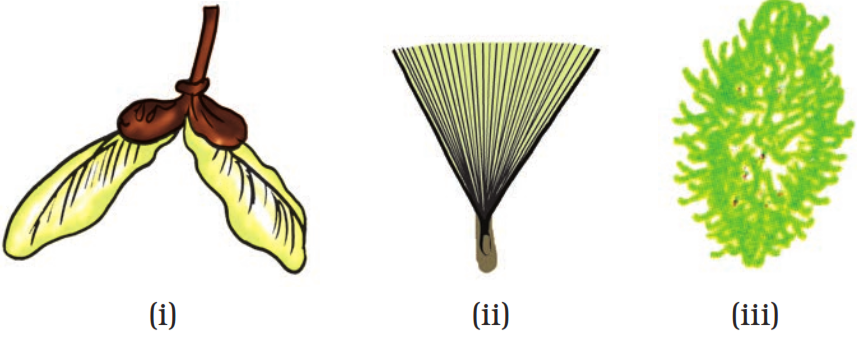
Dispersal by wind − Seeds that get dispersed by wind are usually smaller in size or they have wings or hair-like structures. For example, winged seeds of drumsticks, hairy fruit of sunflower, etc. are dispersed by wind.
Dispersal by water − Many aquatic plants or plants that live near water has seeds that can float and are carried away by water. For example, coconuts can float and are dispersed by water.
Dispersal by explosion − Sometimes the seeds are dispersed by the bursting of fruits with sudden jerks. The seeds get scattered or distributed far from the parent plant. Examples of such plants are castor and balsam.

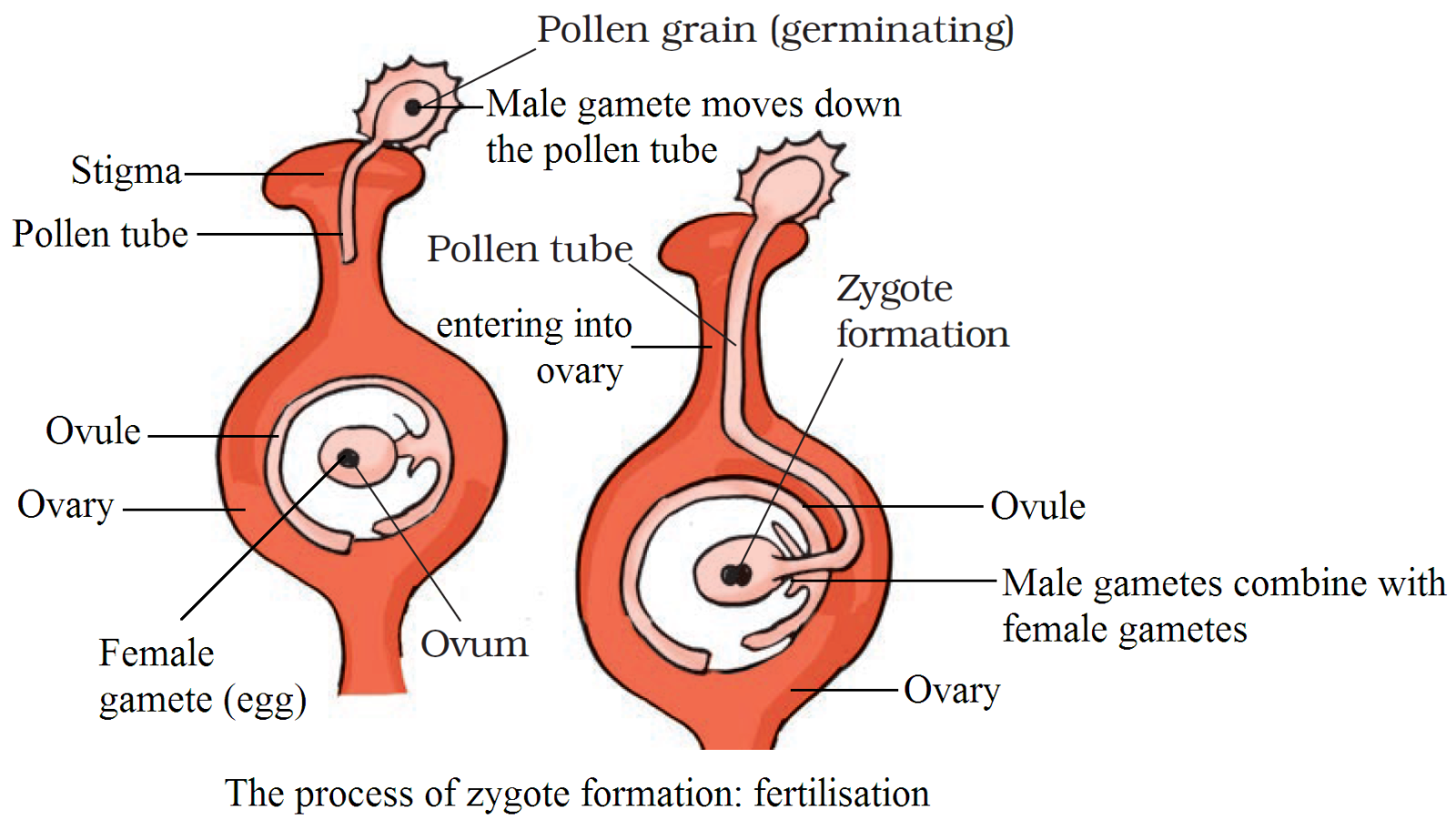
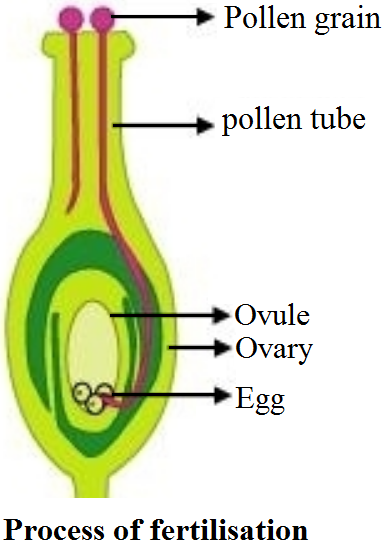
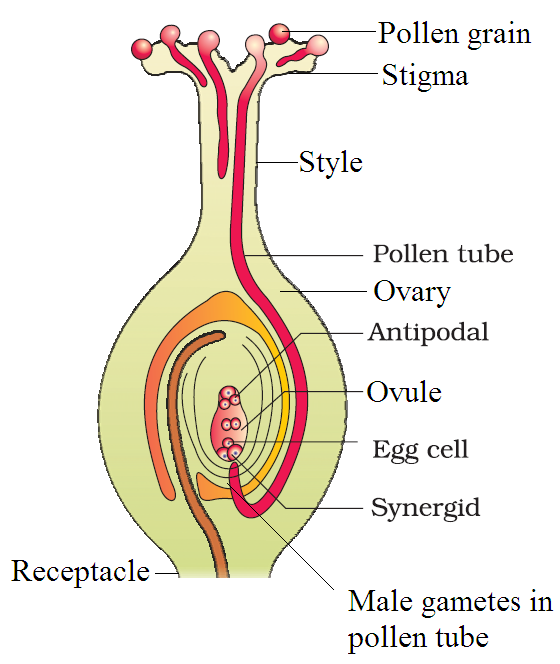
Process of fertilisation
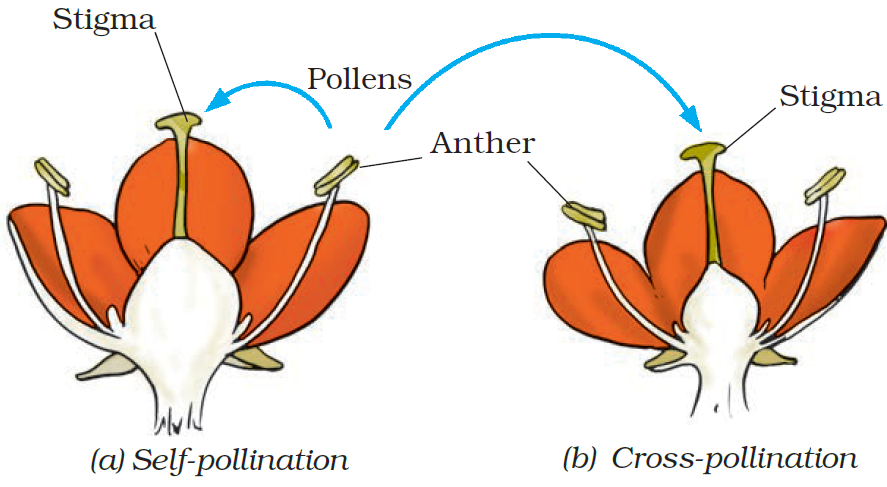
| Self Pollination | Cross Pollination |
| Transfer of pollen grains from the anther to the stigma of the same flower | Transfer of pollen grains from the anther to stigma of another flower |
| Occurs in bisexual flowers having anther and stigma maturing at same time | Occurs in bisexual flowers having anther and stigma maturing at different times |
| External medium is not required | External medium is required |
| Examples- wheat, peas etc. | Examples- lady finger, tomato, brinjal etc. |
| Asexual reproduction | Sexual reproduction |
| It requires only one parent | It requires two parents |
| In asexual reproduction, newly developed plants are identical to the parent and to each other. | In sexual reproduction, newly developed plants are not identical to parents |
| Special reproductive parts are not required for asexual reproduction. | Flower is the reproductive part of a plant which contains the sexual organs of a plant. These are important for sexual reproduction. |
| Examples are yeast, rose, jasmine, potato, etc. | Examples are flowering plants, such as Hibiscus, corn, papaya, etc. |
| Occur in Unisexual plants | Occurs in bisexual plants |
| Reproductive organ are not presents | Fully developed reproductive parts are present |
| In most of the methods the orginal parent disappears | Original parents remain alive after process of reproduction. |
| Process like gamete formation or fertilization is not seen | Fertilization of gametes given rises to zygote |
| Characteristics of only one parent is inherited | Characteristics of both parents are inherited |
| No need of seeds | Seeds are used to get new plants from flower. |


|
Basis of differentiation
|
Self pollination
|
Cross pollination
|
|
Meaning
|
The process of transfer of pollen grains from anthers to the stigma of a flower, but when this process is between the flowers of the same plant than the term is called self-pollination.
|
The process of transfer of pollen grains between the flowers of the different plants of the same species is called cross-pollination.
|
|
It involves
|
Single plant.
|
Two different plants of the same species.
|
|
Self pollination
|
Self-pollination occurs in perfect flowers only.
|
It occurs in both imperfect and perfect flowers.
|
|
Pollinating agents
|
Pollinating agents are not required.
|
Pollinating agent such as wind, water, insects, etc. is not required.
|
|
Pollen grains
|
Less number of pollen grains are produced.
|
A large number of pollen grains are produced.
|
|
Examples
|
Wheat, rice, pea, orchids, barley, tomatoes, peaches, apricot.
|
Mulberry, maize, pumpkins, strawberries, blackberries, plums, grapes, daffodils, maple, catkins, grasses.
|

| Column I | Column II | ||
| $(a)$ | Bud. | $(i)$ | Maple. |
| $(b)$ | Eyes. | $(ii)$ | Spirogyra. |
| $(c)$ | Fragmentation. | $(iii)$ | Yeast. |
| $(d)$ | Wings. | $(iv)$ | Bread mould. |
| $(e)$ | Spores. | $(v)$ | Potato. |
| $(vi)$ | Rose. |
| Column I | Column II | ||
| $(a)$ | Bud. | $(iii)$ | Yeast. |
| $(b)$ | Eyes. | $(v)$ | Potato. |
| $(c)$ | Fragmentation. | $(ii)$ | Spirogyra. |
| $(d)$ | Wings. | $(i)$ | Maple |
| $(e)$ | Spores. | $(iv)$ | Bread mould. |
| Name of fruits bearing plants | Agents through which seeds are dispersd | Parts or seeds which helps in dispersal |
| Drumstick | Air/wind | Winged seeds |
| Sunflower | Wind | Hairy seeds |
| Gokhru | Animal | Spines and Hooks |
| Coconut | Water | Fibrous coating |
| Lotus | Water | Thalamus float in water |
| Poppy | Explosion | Pericarp bursts |
| Grass | Wind | minute, light weighted seeds |

|
S.No.
|
Sexual Reproduction
|
Asexual Reproduction
|
|
$1.$
|
Two parents are involved.
|
One parent is involved.
|
|
$2.$
|
Characteristics of both parents are inherited.
|
Characteristics of only one parent are inherited.
|
|
$3.$
|
It requires the formation of gametes.
|
It doesn't require the formation of gametes.
|
|
$4.$
|
Special organs for reproduction are required.
|
Special organs for reproduction are not required.
|
|
$5.$
|
Examples: Mangoes, coconut, Hibiscus etc.
|
Examples: Potato, Jasmine, Rose, Yeast, Bryophyllum etc.
|

|
Asexual reproduction
|
Asexual reproduction
|
|
It requires only one parent.
|
It requires two parents.
|
|
In asexual reproduction, newly developed plants are identical to theparent and to each other.
|
In sexual reproduction, newly developed plants are not identical to parents.
|
|
Special reproductive parts are not required for asexual reproduction.
|
Flower is the reproductive part of a plant which contains the sexual organs of a plant. These are important for sexual reproduction.
|
|
Examples are yeast, rose, jasmine, potato, etc.
|
Examples are flowering plants, such as Hibiscus, corn, papaya, etc.
|