Question 513 Marks
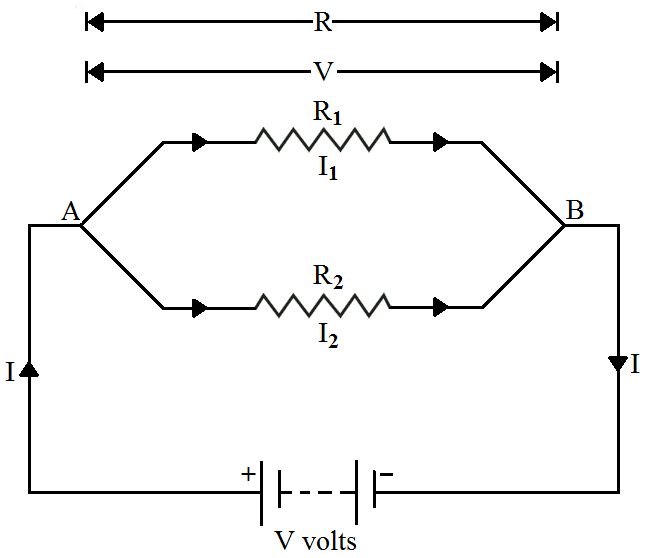
Consider the circuit given below where A, B and C are three identical light bulbs of constant resistance.
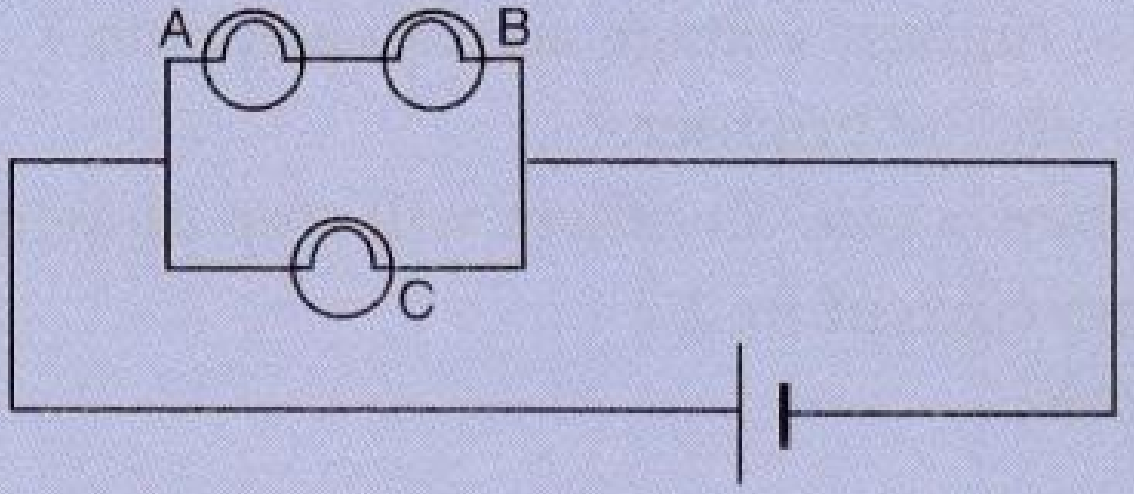
- List the bulbs in order of increasing brightness.
- If C burns out, what will be the brightness of A now compared with before?
- If B burns out instead, what will be the brightness of A and C compared with before?
Answer
View full question & answer→- C will be the brightest. Voltage will be distributed equally between A and B, so they will have equal brightness but lesser than that of C.
- A gets the same voltage as before, so its brightness remains the same.
- If B burns put, A will also stop glowing because it is connected in series with B. However, brightness of C remains the same.