Questions

4 Marks Question

🎯

Test yourself on this topic

28 questions · timed · auto-graded

Question 14 Marks
On the basis of duration, classify the sources of finance.
Answer
On the basis of duration, the sources of finance:
  1. Long term: It is generally a period of 5 or more years for:
  1. Procuring Fixed assets.
  2. Meeting out Expansion or Diversification plans.
  3. Conduct research work.
  1. Short term: It is generally a period of up to 1 year. To meet working capital requirement short term finance is to be raised.
  2. Medium term: A period, where finance is required for more than one year but less than 5 years, is called medium term requirement. To meet especially modernization requirements, finance is required for medium term.
View full question & answer
Question 24 Marks
Ayaan is running a business manufacturing car tyres. He is now planning to diversify into the manufacturing of truck tyres. Advice him regarding the various financial needs he will encounter while diversifying and also the sources of availing these needs.
Answer
Ayaan will be facing requirements for fixed capital and working capital.
Sources of Fixed Capital:
  1. Issue of shares.
  2. Issue of debentures.
  3. Inviting public deposits.
  4. Ploughing back of profits (in case of existing firms).
  5. Long-term borrowings from banks and financial institutions.
Sources of Working Capital:
A part of working capital is permanently locked up in an enterprise and should therefore, be financed through long-term sources discussed above.
For the other part, the requirement could be met through:
  1. Short/ medium-term borrowing from commercial banks/ financial institutions.
  2. Public deposits.
  3. Other finance companies.
  4. From internal sources.
View full question & answer
Question 34 Marks
Why should entrepreneurs ensure that there is a "right individual at the right job"?
Answer
The most important assets that a firm must have and that management must be most concerned with, are the human assets of the enterprises, in whose absence all other nonliving resources are useless. An organization‘s performance and resulting productivity are directly proportional to the quantity and quality of its human resource. A rich and continuing supply of qualified people/ personnel is the best assurance an enterprise can have that it will flourish. 'Right man at right job at the right time'- is the mantra for successful enterprises because it ensures:
  1. Benefits of specialization to the firm.
  2. Minimizes wastages of resources.
  3. Reduces inefficiencies.
  4. Reduces labour turnover ratio and rate of absenteeism.
  5. Saves cost of production.
View full question & answer
Question 44 Marks
State the distinct features of mentor-mentee relationship.
Answer
A mentor-mentee relationship focuses on developing the mentee professionally and personally. As such, the mentor does not evaluate the mentee with respect to his or her current job, does not conduct performance reviews of the mentee and does not provide input about salary increase and promotions.
All this helps in creating a safe learning environment for the mentee, without making him worry about negative consequences.
on the basis of the above discussion, it can be concluded that rendering of mentoring services exhibits the following features:
  1. It takes place outside the line of manager-employee relationship, through the mutual consent of a mentor and the mentee.
  2. It is career focused or focuses on professional development son that may be outside a mentee's area of work.
  3. The relationship is personal- a mentor provides both professional and personal support.
  4. The relationship may be initiated by a mentor, through a match initiated by the organisation.
  5. The relationship crosses job boundaries.
  6. The relationship may last for a specific period of time (nine months to a year) in a formal programme, beyond which, the pair may continue in an informal mentoring relationship.
View full question & answer
Question 54 Marks
Explain the features of overdraft.
Answer
  1. Overdraft: A temporary arrangement in the form of a permission granted to the customers to withdraw more than the amount standing to his/ her credit.
  2. How it works:
  1. Under overdraft, the bank permits the customer to overdraw his account up to a certain limit for an agreed period.
  2. To avail of this facility, a customer should have a current account with that bank.
  3. Interest is charged on the amount actually overdrawn.
  4. Overdraft may be allowed on the security of assets or customer's personal security.
View full question & answer
Question 64 Marks
Identify any six major small scale industry groups in India.
Answer
It means that Industrial Unit whose investment in plant and machinery does not exceed ₹ 5 crore. The main features of these industries are as follows:
  1. Labour is kept on wages (thus unlike cottage industry, employers themselves do not do the work but get the work done with the help of labourers).
  2. Machines are used.
  3. Machines are run with electricity.
  4. The following are the main examples of SSI units:
  • Hosiery factories in Ludhiana.
  • Scientific instruments making factories in Ambala.
  • Carpet making factories in Panipat.
  • Radio, TV, etc. manufacturing factories in Delhi.
Small scale industry groups:
  1. Tiny Sector.
  2. Auxiliary Small Units.
  3. Micro-business.
  4. Small-scale Service and Business (industry Related) Enterprise.
  5. Small-Scale Industries Owned and Managed by Women Entrepreneurs.
  6. Export-oriented.
View full question & answer
Question 74 Marks
Briefly explain the various forms of mentoring on the basis of mode of delivery.
Answer
Various forms of mentoring on the basis of mode of delivery:
  1. One-to-one mentoring:This mentoring matches one mentor with one mentee and is conducted mostly as a face-to-face activity. It is a two-way learning process where helpful, personal and reciprocal relationships can be established through the mutual exchange of ideas and view points.
  2. Group mentoring: This mentoring requires a mentor to work with 4-6 mentees at one time. Group mentoring is particularly valuable when the organisation has a greater pool of mentees than it has mentors and when mentees have similar roles and responsibilities in the organisation or some common learning agenda.
  3. Online mentoring: In this form, mentoring programme is conducted through computers. This form of mentoring uses e-mail and smart technologies such as online or web-based tools, video links or mobile phones as important ways of communicating between mentor and mentee.
  4. Peer mentoring: In this form, mentoring relations are harboured formally or informally with colleagues. This form of mentoring enables one to get advice from more than one persons and helps in all-round development of the mentee.
View full question & answer
Question 84 Marks
Identify the information resource centre at the State and Central levels available in India to the entrepreneur regarding:
  1. Product standardization and quality mark
  2. Technical know - how
  3. Selection of Project
  4. Registration
Answer
(a)
Product standardization and quality mark
ISI (India Standards Institute),
RT (Register of Trade Mark).
(b)
Technical know - how
DDCA (Directorate of Drug Control Association),
CIPET (Central Institute of Plastic and Engineer Tool).
(c)
Selection of project
DTC (District Industrial Centre),
ITC (Indian Investment Centre,
SFC (State Finance Corporation).
(d)
Registration
NSIC (National Small Industrial Corporation),
CCIE (Chief Controller of Import and Export),
STC (State Trading Corporation).
View full question & answer
Question 94 Marks
Explain the features/characteristics of the term business.
Answer
Characteristics of the term business are the following:
  1. It is a day-to-day economic activity of the enterprise.
  2. It deals with exchange, sale, transfer of goods and/ or services in the enterprises with various types of people.
  3. Exchange of goods, sale or transfer of goods and services can be cash basis or it can be credit basis.
  4. There is regularity in dealings means daily, weekly, monthly, quarterly, six monthly etc.
  5. The main motive of every business dealings are with profit motive.
  6. Every business has an element of risk.
  7. Business deals with creation of utility.
  8. To be business the activity should be capable of consumer satisfaction.
View full question & answer
Question 104 Marks
Enumerate the sources of long term capital.
Answer
Long term capital can be obtained through equity share, preference shares, debentures, as loans from financial institutions, owner's capital, undistributed profit of the enterprise, etc.
A form of secondary protection sometimes required by a bank and intended to guarantee a borrower's performance on a debt obligation. The primary security on a substantial business loan is typically the thing that is being financed, such as a factory, company car or shipment, but secondary or collateral security might also be requested by a bank to help assure that the loan will be repaid.
View full question & answer
Question 114 Marks
What purpose does 'information' serve for an entrepreneur.
Answer
Importance of Information for an Entrepreneur:
Entrepreneur is a person who conceives an idea, or who discovers the opportunity in the environment. This ability of an entrepreneur of perceiving and sensing an opportunity, makes him always, search "for knowledge/ need/ problem" in the environment.
He needs to, in depth scan "inquiry/ idea/ quest" so as to evaluate its feasibility and viability. A detailed investigation is a must, before an entrepreneur converts the idea into enterprise. The most common parameters to be investigated are:
  1. Feasibility, viability, application and utility of the idea.
  2. Prevailing market conditions viz. demand, supply, competitors.
  3. Types of resources required and their supplies.
  4. Expected profitability.
  5. Prevailing environmental factors and their impact on idea's feasibility.
Thus, before any decision is taken an entrepreneur needs accurate, authentic and relevant information.
View full question & answer
Question 124 Marks
What are the objectives of financial planning?
Answer
Financial planning being an intellectual process of formulating a financial plan, is devised to achieve the following objectives:
  1. To assess the different types of financial requirements, viz. long, medium and short - term funds, i.e. capitalization.
  2. To procure the funds from the suitable sources, keeping in view the principles of economy, convenience, financial commitments, ownership etc. i.e. capital structure.
  3. To allocate the funds to various departments to achieve the predetermined objectives.
  4. To establish effective control on financial matters.
  5. To provide optimum amount of working capital requirement of the enterprise.
  6. To build up reserves for future contingencies.
View full question & answer
Question 134 Marks
How the 'Silo Mentality in workplace affect the enterprises culture?
Answer
A silo mentality is an attitude found in some organisations that occurs when several departments or groups do not want to share information or knowledge with other individuals in the same company.Increasing effect of Silo Mentality always :
  • Reduces efficiency of overall business enterprise.
  • It leads to poor communication, reduced trust, and often keeps one department or group against another.
  • This leads to cost overruns, project delays, wasted efforts, poor products falling production and falling sales and ultimately less profit.
  • It gives a bad reputation of an organisation in the market.
  • It reduces morale among the employees.
View full question & answer
Question 144 Marks
Differentiate between the Fixed Capital Requirement and Working Capital Requirement on the following basis:
  1. Meaning and scope.
  2. Nature.
  3. Duration.
  4. Sources of procurement used.
Answer
S.No.
Basis
Fixed Capital Requirement
Working Capital Requirement
(a)
Meaning
The capital which is required for meeting the permanent or long term needs of the business is referred as fixed capital.
Working capital refers to that part of the capital which is needed for the financing of the working or current requirements of the enterprises and for meeting out day-today operational expenses.
(b)
Nature
Permanent in nature. It does not change with the change in the volume of output. Nature of business decides the amount of fixed capital in a business.
Fluctuating in nature. It varies with the change in the volume of output. Trading and financial firm's needs less fixed capital. They require more working to invest in current assets.
(c)
Duration
It is required for meeting long term need of the business enterprise means more than one year.
It is required to meet short term/ day to day needs of the business enterprise means within one year.
(d)
Sources of procurement used
It is procured by long-term sources like owner's fund, long term loans and public deposits retained profits.
It is procured by long-term, medium term and short term sources like shares, bank credit, trade credit, financial institutions, public deposits etc.
View full question & answer
Question 154 Marks
Explain the characteristics of a Cottage and Rural industry.
Answer
Cottage and Rural: According to the Fiscal Commission, "Cottage industry is an industry which is run either as whole-time or part-time occupation with the full or partial help of the members of the family."
The main features of these industries are as follows:
  1. Run only by the members of the family.
  2. Mainly run by the artisans at their homes.
  3. Involve very little capital.
  4. Often fulfill the requirement of a local region.
  5. Involve rare use of machines.
  6. The main examples are khadi and handicrafts industries. Traditional items are manufactured in these industries like mats, shoes, pottery etc.
View full question & answer
Question 164 Marks
Categories the types of Small Scale Industrial Unit with their investment capacity and limits.
Answer
S.No.
Type of SSI unit
Investment Limit
(1 million = 10 Lakhs)
Remarks
1.
Small Scale Industry.
₹10 million
Historical cost of plant & machinery.
2.
Ancillary.
₹1 0 million
At least 50% of its output should go to other industrial undertaking.
3.
Tiny Enterprise.
₹ 2.5 million
No location limit
4.
Service & Business Enterprise.
₹ 0.5 million
No location limit.
5.
Women Enterprise.
10 million
51% equity holding by women.
6.
Export Oriented.
₹ 10 million
Obligation to export 30% of production.
View full question & answer
Question 174 Marks
"Not only the entrepreneur but also the entire organization benefits from mentoring". Explain?
Answer
Mentoring in itself benefits the organisation through:
  • Enhancing strategic business initiatives.
  • Encouraging retention.
  • Reducing turnover costs.
  • Improving productivity.
  • Breaking down the "silo" mentality that hinders cooperation among company departments or divisions.
  • Elevating knowledge transfer from just getting information and to retaining the practical experience and wisdom gained from long-term employees.
  • Enhancing professional development.
  • Linking employees with valuable knowledge and information to other employees in need of such information.
  • Using own employees, instead of outside consultants, as internal experts for professional development.
  • Supporting the creation or a multicultural workforce by creating relationships among diverse employees and allowing equal access to mentoring.
  • Creating a mentoring culture, which continuously promotes individual employee growth and development.
View full question & answer
Question 194 Marks
Shraddha wants to start an Agro based unit in Solan. What is she required to do to acquire a competent workforce for her proposed plant?
Answer
This question deals with the quantity of personnel the enterprise needs. The number of people required for various positions throughout the enterprise gets affected by:
  1. Finding out the total amount of works to be done and then dividing it into different sets of activities.
  2. The total number of tasks and jobs required to be accomplished under different activities.
  3. How much work can the average person do in a specified period of time?
  4. Level of absenteeism expected.
  5. Level of labour turnover.
  6. The present number of employees.
  7. The future plans for expansions, diversification and growth.
View full question & answer
Question 204 Marks
Differentiate between ‛owner‘s funds‘ and ‛borrowed funds‘.
Answer
BASIS
Owned Capital
Borrowed Capital
Meaning
Owned Capital refers to the Capital collected by issuing various types of shares.
Borrowed capital refer to the capital collected by issuing debentures, bonds, taking loans from banks. etc.
Status
It is ownership or owned capital.
It is debt or owned capital.
Nature
It is the permanent capital, as the company is not under obligation to repay the amount during its lifetime.
it is necessary temporary capital as it is to be repaid after fixed period of them.
Mention
It is mentioned in capital clause of memorandum of Association.
It is not mentioned in Memorandum of Association.
Consideration
Return on capital is paid in the form of dividend.
Return of capital is paid in the form of interest.
Liability
It is not a liability for a company.
It is a liability for a company.
View full question & answer
Question 214 Marks
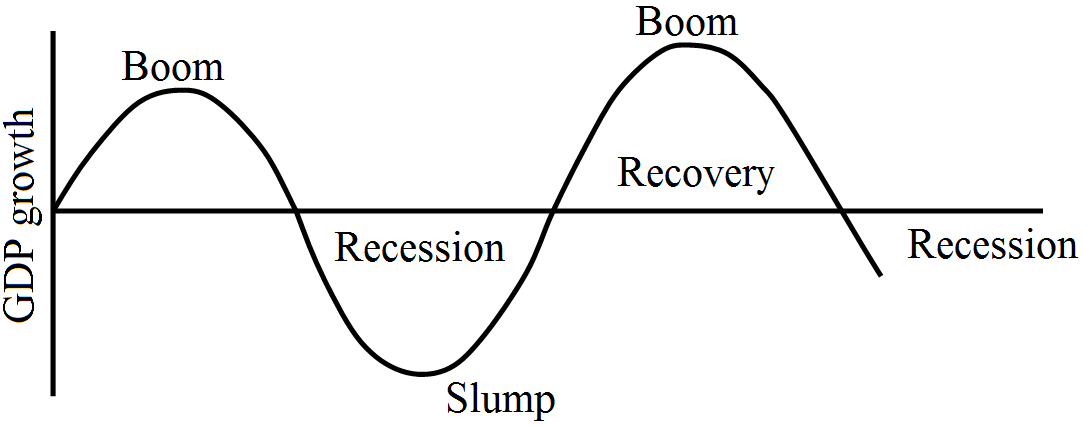
What do you mean by business cycle? Draw diagram.
Answer
The term business cycle refers to economy-wide fluctuations in production, trade and economic activity in general over several months or years in an economy organized on free-enterprise.
Principles: It is also known as economic cycle or boom-bust cycle.
View full question & answer
Question 224 Marks
Give the importance of professional assistance for an entrepreneur.
Answer
It is an industry of technical or unique functions performed by independent contractors and consultants, whose occupation is the rendering of such service. Importance of Professional Assistance for an Entrepreneur.
Availing professional expertise as and when need arises or on a regular basis will assist the entrepreneur to have a better cost efficiency through:
  1. Reduced wastages.
  2. Savings of time, cost and energy.
  3. Higher efficiency and effectiveness because of professionally proven expertise in the concerned field.
  4. Focus on the core areas/ activities of the enterprise.
  5. Availing of qualified quality service in time bound frame and at a fraction of cost.
  6. Lowering the chances of risks.
  7. Savings on additional fixed investment required in creating infrastructure for providing these facilities on one's own.
  8. Enhancing business due to others expertise and experience in the defined field.
  9. Access to new and growing markets.
View full question & answer
Question 234 Marks
Discuss the various sources of financing capital through ownership.
Answer
Basis
Owner's Funds
Borrowed Funds
Meaning
Owners fund is that part of the total investment which is invested by the owner of the business.
It is that amount of borrowed by the enterprise from outsiders for the normal running of the enterprise.
Forms of Organisation:
Sole Tradership
Partnership firm
Joint Stock Company
Capital contributed by the sole trader and profit reinvested by him.
Capital contributed by the partners.
Capital raised by issuing shares plus net reserves and surplus profit
Loan raised by sole trader with or without any security from relatives friends, banks and institutions money lenders.
Loans raised by partner's wife, friends, relatives, money lenders, banks and financial institutions.
Loans raised by secured or unsecured loans from banks and financial institutions and secured and unsecured debentures.
Advantages
  • Right to control over management.
  • It provides risk capital.
  • It decreases obligations of an entrepreneur.
  • It always encourages development of the enterprise.
  • No right to control over management of the enterprise.
  • There is no risk of control over management.
  • Interest is tax deductible expenses.
Disadvantages
  • It will be difficult to raise owner's funds if the profit earning capacity is comparatively.
  • The capital raised through owner's funds always depends on large number of persons, those who are ready to take risk of investing personal savings.
  • Banks and other financial institutions provide loan to the enterprise against some collateral securities.
  • There is a fixed obligation to pay the principal amount and amount of interest.
View full question & answer
Question 244 Marks
What are professional services?
Answer
Professional services support entrepreneurs and enterprises of all types whether small scale industries or large scale industries in the economy. The provided services includes legal advice, tax advice, financial advice and business advice. It helps an entrepreneur and enterprise to improve productivity and easily can achieve the objectives. All those people can provide professional services:
  • Has specialized education, knowledge, labour, judgment and skill.
  • Is predominantly mental or intellectual.
  • Has professional workforce.
  • Good capital resources intensity.
  • Has proven expertise in the field.
  • Expects compensation in return for the work done.
View full question & answer
Question 254 Marks
What do you understand by physical resources? Availability of resources determines the location of an enterprise. Do you agree? Justify of your answer?
Answer
Yes, It is true that availability of resources determine the location of an enterprise. It is because of following reasons:
  1. Cost factors: If sources of resources are near the enterprise then the transportation Le cost is reduced.
  2. Supply factors: The supply of resources is quick if resources are readily available.
  3. Maintenance: The maintenance of machinery becomes easy as vendors are readily available.
View full question & answer
Question 274 Marks
State whether the following require small or large working capital. Answer should be supported by a valid reason:
  1. Selling ice-creams.
  2. Following a liberal credit policy.
  3. Dealing in stainless steel wares.
  4. Using capital intensive technology.
Answer
S.No.
Items
Small/ Large Working Capital
Reasons
(a)
Selling ice-creams
Small Working Capital
It is a retail shop and the product is sold in cash therefore it requires less working capital.
(b)
Following a liberal credit policy
Large Working Capital
When the market is competitive, then the enterprises/ entrepreneur believe in selling goods on credit, needs more working capital.
(c)
Dealing in stainless steel wares
Large Working Capital
He need to stock up inventories. The larger the stocks of finished goods (steel wares) required to be kept, the more will be the need for working capital.
(d)
Using capital intensive technology
Large Working Capital
Using capital intensive technique means it is a manufacturing unit. It gives an indication that large amount of working capital is required.
View full question & answer
Question 284 Marks
Explain the concept of mentoring. Give 2 examples to support your answer.
Answer
Mentoring is about a person helping another to achieve something. Where in, a faithful, wise advisor, creates an informal environment, in which the other person feels encouraged to discuss their needs and circumstances openly and in confidence is said to be mentoring. Mentoring is a powerful personal development and empowerment tool.
In other words, providing help and support in a non-threatening way, in a manner that the recipient appreciates and values is mentoring. It involves to support and encourage people to manage their own learning in order that may maximize their potential develop their skills, improve performance and become the person they want to do.
A friend, philosopher, guide, coach, teacher, adviser, tutor, instructor, counselor, guru–all are terms, used interchangeably to denote 'Mentor'.
View full question & answer
4 Marks Question - Entrepreneurship STD 11 Commerce Questions - Vidyadip