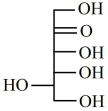
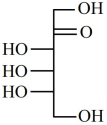
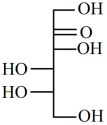
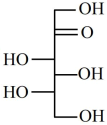
Questions

SECTION - A [CHEMISTY - MCQ]

Take a timed test

20 questions · 13 auto-graded MCQ + 7 self-marked written.

MCQ 14 Marks
Correct order of limiting molar conductivity for cations in water at 298 K is :
  • A
    $H ^{+}> Na ^{+}> K ^{+}> Ca ^{2+}> Mg ^{2+}$
  • $H ^{+}> Ca ^{2+}> Mg ^{2+}> K ^{+}> Na ^{+}$
  • C
    $Mg ^{2+}> H ^{+}> Ca ^{2+}> K ^{+}> Na ^{+}$
  • D
    $H ^{+}> Na ^{+}> Ca ^{2+}> Mg ^{2+}> K ^{+}$
Answer
Correct option: B.
$H ^{+}> Ca ^{2+}> Mg ^{2+}> K ^{+}> Na ^{+}$
(B) $H ^{+}> Ca ^{2+}> Mg ^{2+}> K ^{+}> Na ^{+}$
Limiting Molar Conductivities of Ions :
$\begin{array}{l}•\stackrel{\oplus}{ H }: 349.8 Scm ^2 mol^{-1} \\ •Na ^{+}: 50.11 Scm ^2 mol^{-1} \\• K^{+}: 73.52 Scm ^2 mol^{-1} \\• Ca ^{+2}: 119 Scm ^2 mol^{-1} \\• Mg ^{+2}: 106.12 Scm ^2 mol^{-1}\end{array}$
Therefore correct order of limiting molar conductivity of cations will be -
$
\stackrel{\oplus}{H}>Ca^{+2}>Mg^{+2}>K^{+}>Na^{+}
$

View full question & answer
MCQ 34 Marks
Match the LIST-I with LIST-II
LIST - I
(Molecules/ion)
LIST - II
(Hybridisation of central atom)
A.PF_(5)Idsp^(2)
B.SF_(6)II.sp^(3)d
C.Ni(CO)_(4)III.sp^(3)d^(2)
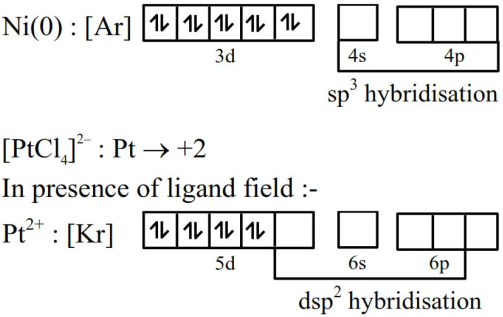
D.[PtCl_(4)]^(2-)IV.sp^(3)
Choose the correct answer from the options given below :
  • A
    A-II, B-III, C-IV, D-I
  • B
    A-IV, B-I, C-II, D-III
  • C
    A-I, B-II, C-III, D-IV
  • D
    A-III, B-I, C-IV, D-II
View full question & answer
MCQ 54 Marks
2 moles each of ethylene glycol and glucose are dissolved in 500 g of water. The boiling point of the resulting solution is :
(Given : Ebullioscopic constant of water $=0.52 K kg mol ^{-1}$)
  • A
    379.2 K
  • 377.3 K
  • C
    375.3 K
  • D
    277.3 K
Answer
Correct option: B.
377.3 K
(B) 377.3 k
$\begin{array}{l}\Delta T _{ b }= i _1 m_1 k _{ b }+ i _2 m_2 k _{ b } \\ =1 \times \frac{2}{0.5} \times 0.52+\frac{1 \times 2}{0.5} \times 0.52=4.16 \\ \left(T_{ b }\right)_{\text {solution }}=373.16+4.16=377.3 K .\end{array}$
View full question & answer
MCQ 64 Marks
In the following system, $PCl _5(g) \rightleftharpoons PCl _3(g)+ Cl _2(g)$ at equilibrium, upon addition of xenon gas at constant T & p, the concentration of
  • A
    $PCl _5$ will increase
  • $Cl _2$ will decrease
  • C
    $PCl _5, PCl _3 \& Cl _2$ remain constant
  • D
    $PCl _3$ will increase
Answer
Correct option: B.
$Cl _2$ will decrease
(B) $Cl_2$ will decrease
On addition of inert gas at constant $P$ $\&$ $T$, reaction moves in the direction of greater no. of moles so it will shift in forward direction, so $\left[ PCl _5\right]$ decrease and $\left[ PCl _3\right] \&\left[ Cl _2\right]$ will increase.
View full question & answer
MCQ 74 Marks
The correct order of the complexes $\left[ Co \left( NH _3\right)_5\left( H _2 O \right)\right]^{3+} \quad( A ), \quad\left[ Co \left( NH _3\right)_6\right]^{3+}$ $\left[ Co ( CN )_6\right]^{3-}( C )$ and $\left[ CoCl \left( NH _3\right)_5\right]^{2+}$ (D) in terms wavelength of light absorbed is :
  • D $>$ A $>$ B $>$ C
  • B
    $C >$ B $>$ D $>$ A
  • C
    D $>$ C $>$ B $>$ A
  • D
    $C >$ B $>$ A $>$ D
Answer
Correct option: A.
D $>$ A $>$ B $>$ C
(A) $ D > A > B > C $
We know $E = h v=\frac{ hC }{\lambda}$
$E \propto \frac{1}{\lambda}$
Here all Co in +3 oxidation state.
So, as the ligand field strength $\uparrow, \operatorname{CFSE} \uparrow$
Order of field strength of ligand :
$
CN^{-}>NH_3>H_2 O>Cl^{-}
$
CFSE order : $C > B > A > D$
Wavelength order : $D > A > B > C$
View full question & answer
MCQ 104 Marks
Number of molecules from below which cannot give ioddoform reaction is :
Ethanol, Isopropyl alcohol, Bromoacetone, 2-Butanol, 2-Butanone, Butanal, 2-Pentanone, 3-Pentanone, Pentanal and 3-Pentanol
  • A
    5
  • 4
  • C
    3
  • D
    2
Answer
Correct option: B.
4
(B) 4
Following will not give iodoform reaction/test.
(1) Butanal
(2) 2-Pentanone
(3) Pentanal
(4) 3-Pentanol
View full question & answer
MCQ 114 Marks
  • A
    Molar heat capacity
  • B
    Density
  • C
    Concentration
  • Gibbs free energy
Answer
Correct option: D.
Gibbs free energy
(D) Gibbs free energy
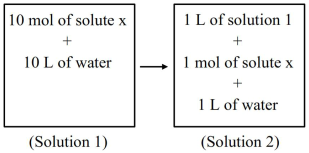
Both solutions are having same composition, which is 1 mole of ' $x$ ' in 1 ' $\ell$ ' water, so all the intensive properties will remain same, but as total amount is greater in solution ' 1 ' compared to solution ' 2 '. So extensive properties will be different hence Gibbs free energy will be different.
View full question & answer
MCQ 124 Marks
Which of the following statements are correct?
A. The process of the addition an electron to a neutral gaseous atom is always exothermic
B. The process of removing an electron from an isolated gaseous atom is always endothermic
C. The $1^{\text {st }}$ ionization energy of the boron is less than that of the beryllium
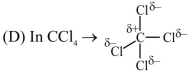
D. The electronegativity of C is 2.5 in $CH _4$ and $CCl _4$
E. Li is the most electropositive among elements of group I
Choose the correct answer from the options gives below
  • A
    B and C only
  • B
    A, C and D only
  • C
    B and D only
  • D
    B, C and E only
View full question & answer
MCQ 134 Marks
Among $10^{-9} g$ (each) of the following elements, which one will have the highest number of atoms?
Element : Pb, Po, Pr and Pt
  • A
    Po
  • Pr
  • C
    Pb
  • D
    Pt
Answer
Correct option: B.
Pr
(B) $pr$
$
\text { No. of atoms }=\frac{\text { Massing }}{\operatorname{Molar} \operatorname{Mas}(g / mol)} \times N_{A}
$
Therefore for the same Mass element having the least Molar mass will have the higher no. of atoms.
- $M _{ P _{ o }}=209$
- $M _{ pr }=141$
- $M _{ Pb }=207$
- $M _{ Pt }=195$
View full question & answer
MCQ 164 Marks
In a reaction $A + B \rightarrow C$, initial concentrations of $A$ and $B$ are related as $[A]_0=8[B]_0$. The half lives of $A$ and $B$ are 10 min and 40 min . respectively. If they start to disappear at the same time, both following first order kinetics, after how much time will the concentration of both the reactants be same?
  • A
    60 min
  • B
    80 min
  • C
    20 min
  • 40 min
Answer
Correct option: D.
40 min
(D) 40 min
$\begin{array}{l}\text { Given : }[ A ]_0=8[B]_0 \\ {\left[ t _{12}\right]_{ A }=10 min .} \\ {\left[ t _{12}\right]_{ B }=40 min .} \\ I ^{ A } \text { order kinetics } \\ t =? \\ {[A]_{ t } \quad=[ B ]_{ t }} \\ - k _{ A } \times t \quad- k _{ B } \times t \\ \Rightarrow \quad[ A ]_0 e =[ B ]_0 e \\ \Rightarrow \quad \frac{[ A ]_0}{[B]_0}= e ^{\left( k _{ A }- k _{ B }\right) t } \\ \Rightarrow \quad 8= e ^{\left( k _{ A }- k _{ B }\right) \times t } \\ \Rightarrow \quad \ell 8=\left( k _{ A }- k _{ B }\right) \times t \\ \Rightarrow \quad \ell n 8=\ln 2\left(\frac{1}{\left( ta _2\right)_{ A }}-\frac{1}{\left( ta _2\right)_{ B }}\right) \times t \end{array}$
View full question & answer
MCQ 174 Marks
The metal ions that have the calculated spin only magnetic moment value of 4.9 B.M. are
A. $Cr ^{2+}$
B. $Fe ^{2+}$
C. $Fe ^{3+}$
D. $Co ^{2+}$
E. $Mn ^{3+}$
Choose the correct answer from the options given below
  • A
    A, C and E only
  • B
    A, D and E only
  • C
    B and E only
  • A, B and E only
Answer
Correct option: D.
A, B and E only
(D) A, B and E only
Given magnetic moment $=4.9$ B.M.
We know M.M $=\sqrt{ n ( n +2)}$ B.M.
Where, $n \rightarrow$ No. of unpaired $e ^{-}$
$
4.9=\sqrt{n(n+2)}
$
We get $n =4$
(A) ${ }_{24} Cr ^{2+} \Rightarrow[ Ar ] 3 d^4 \quad\left(4\right.$ unpaired $\left.e ^{-}\right)$
(B) ${ }_{26} Fe ^{2+} \Rightarrow[ Ar ] 3 d^6 \quad(4$ unpaired e $)$
(C) ${ }_{26} Fe ^{3+} \Rightarrow[ Ar ] 3 d^5 \quad(5$ unpaired e $)$
(D) ${ }_{27} Co ^{2+} \Rightarrow[ Ar ] 3 d^7 \quad(3$ unpaired e $)$
(E) ${ }_{25} Mn ^{3+} \Rightarrow[ Ar ] 3 d^4 \quad(4$ unpaired e $)$
View full question & answer
MCQ 184 Marks
Given below are two statements
Statement I : A catalyst cannot alter the equilibrium constant $\left( K _{ c }\right)$ of the reaction, temperature remaining constant
Statement II : A homogenous catalyst can change the equilibrium composition of a system temperature remaining constant
In the light of the above statements, choose the correct answer from the options given below
  • A
    Statement I is false but Statement II is true
  • Both Statement I and Statement II are true
  • C
    Both Statement I and Statement II is false
  • D
    Statement I is true but Statement II is false
Answer
Correct option: B.
Both Statement I and Statement II are true
(B) Both Statement I and Statement II are true
A catalyst can change equilibrium composition if it is added at constant pressure, but it can not change equilibrium constant.
View full question & answer
MCQ 194 Marks
Given below are two statements
Statement I : The $N - N$ single bond is weaker and longer than that of $P - P$ single bond
Statement II : Compounds of group 15 elements in +3 oxidation states readily undergo disproportionation reactions.
In the light of above statements, choose the correct answer from the options given below
  • A
    Statement I is true but statement II is false
  • Both statement I and statement II are false
  • C
    Statement I is false but statement II is true
  • D
    Both statement I and statement II are true
Answer
Correct option: B.
Both statement I and statement II are false
(B) Both statement I and statement II are false
$\ddot{ N }-\ddot{ N }$ single bond weaker than $\ddot{ P }-\ddot{ P }$ due to more $\ell p -\ell p$ repulsion.
Bond length $\Rightarrow d_{p-p}>d_{ N - N }($ size $\uparrow$, B.L. $\uparrow)$
In group 15 elements only N & P show disproportionation in +3 oxidation state, As, $S b$ & Bi have almost inert for disproportionation in +3 oxidation state.
So both statements are false.
View full question & answer
MCQ 204 Marks
Which of the following postulate of Bohr's model of hydrogen atom in not in agreement with quantum mechanical model of an atom ?
  • A
    An atom in a stationary state does not emit electromagnetic radiation as long as it stays in the same state
  • B
    An atom can take only certain distinct energies $E _1, E _2, E _3$, etc. These allowed states of constant energy are called the stationary states of atom
  • C
    When an electron makes a transition from a higher energy stationary state to a lower energy stationary state, then it emits a photon of light
  • The electron in a H atom's stationary state moves in a circle around the nucleus
Answer
Correct option: D.
The electron in a H atom's stationary state moves in a circle around the nucleus
D
The electron in a H-atom's stationary state moves in a spherical path. 
View full question & answer