Questions · Page 2 of 12

M.C.Q (1 Marks)

Question 511 Mark

The count rate of 10g of radioactive material was measured at different times and this has been shown in the figure. The half life of material and the total counts (approximately) in the first half life period, respectively are
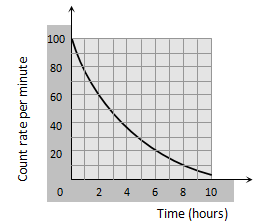
(a) 4h, 9000

(b) 3h, 14000
(c) 3h, 235

(d) 3h, 50

Answer

(b) 3h, 14000

View full question & answer
Question 521 Mark

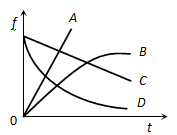
The fraction f of radioactive material that has decayed in time t, varies with time t. The correct variation is given by the curve

(a) A

(b) B

(c) C

(d) D

Answer

(b) B

View full question & answer
Question 531 Mark

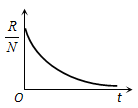
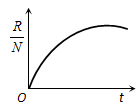
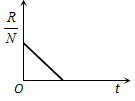
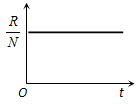
A radioactive sample has  active atoms at t = 0. If the rate of disintegration at any time is R and the number of atoms is N, then the ratio R/N varies with time as

(a)

(b)

(c)

(d)

Answer

(d)

View full question & answer
Question 541 Mark

In the disintegration series  the values of Z and A respectively will be

(a) 92, 236

(b) 88, 230

(c) 90, 234

(d) 91, 234

Answer

(d) 91, 234

View full question & answer
Question 551 Mark

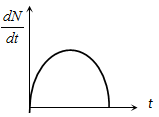
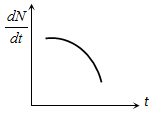
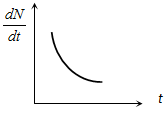
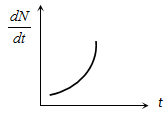
Radioactive element decays to form a stable nuclide, then the rate of decay of reactant   will vary with time (t) as shown in figure

(a)

(b)

(c)

(d)

Answer

(c)

View full question & answer
Question 561 Mark

Assertion  : For the scattering of a-particles at a large angles, only the nucleus of the atom is responsible.

Reason      : Nucleus is very heavy in comparison to electrons.

(a) If both assertion and reason are true and the reason is the correct explanation of the assertion.

(b) If both assertion and reason are true but reason is not the correct explanation of the assertion.

(c) If assertion is true but reason is false.

(d) If the assertion and reason both are false.

Answer

(a) If both assertion and reason are true and the reason is the correct explanation of the assertion.

View full question & answer
Question 571 Mark

Assertion : Electron capture occurs more often than positron emission in heavy elements.

Reason    : Heavy elements exhibit radioactivity.

(a) If both assertion and reason are true and the reason is the correct explanation of the assertion.

(b) If both assertion and reason are true but reason is not the correct explanation of the assertion.

(c) If assertion is true but reason is false.

(d) If the assertion and reason both are false.

Answer

(b) If both assertion and reason are true but reason is not the correct explanation of the assertion.

View full question & answer
Question 581 Mark

Assertion : Fragments produced in the fission of   are radioactive.

Reason     : The fragments have abnormally high proton to neutron ratio.

(a) If both assertion and reason are true and the reason is the correct explanation of the assertion.

(b) If both assertion and reason are true but reason is not the correct explanation of the assertion.

(c) If assertion is true but reason is false.

(d) If the assertion and reason both are false.

Answer

(c) If assertion is true but reason is false.

View full question & answer
Question 591 Mark

Assertion : Radioactivity of  undecayed radioactive nuclei of half life of 50 days is equal to that of 1.2   number of undecayed nuclei of some other material with half life of 60 days  

Reason    : Radioactivity is proportional to half-life.

(a) If both assertion and reason are true and the reason is the correct explanation of the assertion.

(b) If both assertion and reason are true but reason is not the correct explanation of the assertion.

(c) If assertion is true but reason is false.

(d) If the assertion and reason both are false.

Answer

(c) If assertion is true but reason is false.

View full question & answer
Question 601 Mark

Assertion  : Amongst alpha, beta and gamma rays, a-particle has maximum penetrating power.

Reason      : The alpha particle is heavier than beta and gamma rays.

(a) If both assertion and reason are true and the reason is the correct explanation of the assertion.

(b) If both assertion and reason are true but reason is not the correct explanation of the assertion.

(c) If assertion is true but reason is false.

(d) If the assertion and reason both are false.

Answer

(d) If the assertion and reason both are false.

View full question & answer
Question 611 Mark

Assertion : All the radioactive elements are ultimately converted in lead.

Reason     : All the elements above lead are unstable.

(a) If both assertion and reason are true and the reason is the correct explanation of the assertion.

(b) If both assertion and reason are true but reason is not the correct explanation of the assertion.

(c) If assertion is true but reason is false.

(d) If the assertion and reason both are false.

Answer

(c) If assertion is true but reason is false.

View full question & answer
Question 621 Mark

Assertion  : The electron in the hydrogen atom passes from energy level n = 4 to the n = 1 level. The maximum and minimum number of photon that can be emitted are six and one respectively.

Reason      : The photons are emitted when electron make a transition from the higher energy state to the lower energy state.

(a) If both assertion and reason are true and the reason is the correct explanation of the assertion.

(b) If both assertion and reason are true but reason is not the correct explanation of the assertion.

(c) If assertion is true but reason is false.

(d) If the assertion and reason both are false.

Answer

(b) If both assertion and reason are true but reason is not the correct explanation of the assertion.

View full question & answer
Question 631 Mark

Assertion : According to classical theory, the proposed path of an electron in Rutherford atom model will be parabolic.

Reason     : According to electromagnetic theory an accelerated particle continuously emits radiation.

(a) If both assertion and reason are true and the reason is the correct explanation of the assertion.

(b) If both assertion and reason are true but reason is not the correct explanation of the assertion.

(c) If assertion is true but reason is false.

(d) If assertion is false but reason is true.

Answer

(d) If assertion is false but reason is true.

View full question & answer
Question 641 Mark

Assertion  : The positively charged nucleus of an atom has a radius of almost .

Reason      : In a-particle scattering experiment, the distance of closest approach for a-particles is

(a) If both assertion and reason are true and the reason is the correct explanation of the assertion.

(b) If both assertion and reason are true but reason is not the correct explanation of the assertion.

(c) If assertion is true but reason is false.

(d) If the assertion and reason both are false.

Answer

(a) If both assertion and reason are true and the reason is the correct explanation of the assertion.

View full question & answer
Question 651 Mark

Assertion : The force of repulsion between atomic nucleus and a-particle varies with distance according to inverse square law. 

Reason     : Rutherford did a-particle scattering experiment.

(a) If both assertion and reason are true and the reason is the correct explanation of the assertion.

(b) If both assertion and reason are true but reason is not the correct explanation of the assertion.

(c) If assertion is true but reason is false.

(d) If the assertion and reason both are false.

Answer

(b) If both assertion and reason are true but reason is not the correct explanation of the assertion.

View full question & answer
Question 661 Mark

Assertion  : Isobars are the element having same mass number but different atomic number.

Reason      : Neutrons and protons are present inside nucleus.

(a) If both assertion and reason are true and the reason is the correct explanation of the assertion.

(b) If both assertion and reason are true but reason is not the correct explanation of the assertion.

(c) If assertion is true but reason is false.

(d) If the assertion and reason both are false.

Answer

(b) If both assertion and reason are true but reason is not the correct explanation of the assertion.

View full question & answer
Question 671 Mark

Assertion  : Density of all the nuclei is same.

Reason      : Radius of nucleus is directly proportional to the cube root of mass number.

(a) If both assertion and reason are true and the reason is the correct explanation of the assertion.

(b) If both assertion and reason are true but reason is not the correct explanation of the assertion.

(c) If assertion is true but reason is false.

(d) If the assertion and reason both are false.

Answer

(a) If both assertion and reason are true and the reason is the correct explanation of the assertion.

View full question & answer
Question 681 Mark

If one starts with one curie of radioactive substance (T1/2 = 12 hrs) the activity left after a period of 1 week will be about

(a) 1 curie

(b) 120 micro curie

(c) 60 micro curie 

(d) 8 mili curie

Answer

(c) 60 micro curie 

View full question & answer
Question 691 Mark

Assertion  : Radioactive nuclei emit   particles.

Reason      : Electrons exist inside the nucleus.

(a) If both assertion and reason are true and the reason is the correct explanation of the assertion.

(b) If both assertion and reason are true but reason is not the correct explanation of the assertion.

(c) If assertion is true but reason is false.

(d) If the assertion and reason both are false.

Answer

(c) If assertion is true but reason is false.

View full question & answer
Question 701 Mark

Assertion  : Bohr had to postulate that the electrons in stationary orbits around the nucleus do not radiate.

Reason      : According to classical physics all moving electrons radiate.

(a) If both assertion and reason are true and the reason is the correct explanation of the assertion.

(b) If both assertion and reason are true but reason is not the correct explanation of the assertion.

(c) If assertion is true but reason is false.

(d) If the assertion and reason both are false.

Answer

(b) If both assertion and reason are true but reason is not the correct explanation of the assertion.

View full question & answer
Question 711 Mark

Assertion : Neutrons penetrate matter more readily as compared to protons.

Reason     : Neutrons are slightly more massive than protons.

(a) If both assertion and reason are true and the reason is the correct explanation of the assertion.

(b) If both assertion and reason are true but reason is not the correct explanation of the assertion.

(c) If assertion is true but reason is false.

(d) If the assertion and reason both are false.

Answer

(b) If both assertion and reason are true but reason is not the correct explanation of the assertion.

View full question & answer
Question 721 Mark

The ratio of radii of nuclei   and   is 3 : 5. The number of neutrons in the nuclei of X will be

(a) 52

(b) 73

(c) 125  

(d) 13

Answer

(b) 73

View full question & answer
Question 731 Mark

Assertion  :  from the radioactive fall out from a nuclear bomb ends up in the bones of human beings through the milk consumed by them. It causes impairment of the production of red blood cells. 

Reason      : The energetics b-particles emitted in the decay of  damage the bone marrow.

(a) If both assertion and reason are true and the reason is the correct explanation of the assertion.

(b) If both assertion and reason are true but reason is not the correct explanation of the assertion.

(c) If assertion is true but reason is false.

(d) If the assertion and reason both are false.

Answer

(a) If both assertion and reason are true and the reason is the correct explanation of the assertion.

View full question & answer
Question 741 Mark

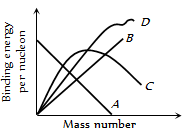
Binding energy per nucleon plot against the mass number for stable nuclei is shown in the figure. Which curve is correct

(a) A

(b) B

(c) C

(d) D

Answer

(c) C

View full question & answer
Question 761 Mark

Rest mass energy of an electron is 0.54 MeV. If velocity of the electron is 0.8 c, then K.E. of the electron is

(a) 0.36 MeV

(b) 0.41 MeV

(c) 0.48 MeV

(d) 1.32 MeV

Answer

(a) 0.36 MeV

View full question & answer
Question 771 Mark

A radioactive isotope X with a half-life of 1.37   years decays to Y which is stable. A sample of rock from the moon was found to contain both the elements X and Y which were in the ratio of 1 : 7. The age of the rock is

(a) 1.96  years

(b) 3.85  years

(c) 4.11  years

(d) 9.59  years

Answer

(c) 4.11  years

View full question & answer
Question 781 Mark

If 10% of a radioactive material decays in 5 days, then the amount of original material left after 20 days is approximately

(a) 60%

(b) 65%

(c) 70%

(d) 75%

Answer

(b) 65%

View full question & answer
Question 791 Mark

The wavelength Ka X-rays produced by an X-ray tube is 0.76 Å. The atomic number of anticathode material is

(a) 82       

(b) 41

(c) 20    

(d) 10

Answer

(b) 41

View full question & answer
Question 801 Mark

A hydrogen like atom of atomic number Z is in an excited state of quantum number 2n. It can emit a maximum energy photon of 204 eV. If it makes a transition to quantum state n, a photon of energy 40.8 eV is emitted. The value of  n will be

(a) 1

(b) 2

(c) 3

(d) 4

Answer

(b) 2

View full question & answer
Question 811 Mark

Assertion :   The mass of b-particles when they are emitted is higher than the mass of electrons obtained by other means.

Reason    : b-particle and electron, both are similar particles.

(a) If both assertion and reason are true and the reason is the correct explanation of the assertion.

(b) If both assertion and reason are true but reason is not the correct explanation of the assertion.

(c) If assertion is true but reason is false.

(d) If the assertion and reason both are false.

Answer

(b) If both assertion and reason are true but reason is not the correct explanation of the assertion.

View full question & answer
Question 821 Mark

Half life of a radio-active substance is 20 minutes. The time between 20% and 80% decay will be

(a) 20 minutes

(b) 40 minutes

(c) 30 minutes

(d) 25 minutes

Answer

(b) 40 minutes

View full question & answer
Question 831 Mark

A and B are two radioactive substances whose half lives are 1 and 2 years respectively. Initially 10 gm of A and 1 gm of B is taken. The time (approximate) after which they will have same quantity remaining is

(a) 6.62 years

(b) 5 years

(c) 3.2 years

(d) 7 years

Answer

(a) 6.62 years

View full question & answer
Question 841 Mark

Two radioactive materials  and  have decay constants 10λ  and λ respectively. If initially they have the same number of nuclei, then the ratio of the number of nuclei of   to that of   will be 1/e  after a time

(a) 1/(10 λ)

(b) 1/(11 λ)

(c) 11(10 λ)

(d) 1(9 λ)

Answer

(d) 1(9 λ)

View full question & answer
Question 851 Mark

Half-life of a radioactive substance is 20 minutes. Difference between points of time when it is 33% disintegrated and 67% disintegrated is approximately

(a) 10 min

(b) 20 min

(c) 30 min

(d) 40 min

Answer

(b) 20 min

View full question & answer
Question 861 Mark

A radioactive nucleus undergoes a-emission to form a stable element. What will be the recoil velocity of the daughter nucleus if V is the velocity of a-emission and A is the atomic mass of radioactive nucleus

(a)     

(b)  

(c)   

(d)  

Answer

(a)     

View full question & answer
Question 871 Mark

The half-life of radioactive Polonium (Po) is 138.6 days. For ten lakh Polonium atoms, the number of disintegrations in 24 hours is

(a) 2000  

(b) 3000

(c) 4000  

(d) 5000

Answer

(d) 5000

View full question & answer
Question 881 Mark

For a substance the average life for a-emission is 1620 years and for b emission is 405 years. After how much time the 1/4 of the material remains after a and b emission

(a) 1500 years

(b) 300 years

(c) 449 years

(d) 810 years

Answer

(c) 449 years

View full question & answer
Question 891 Mark

The half life period of a radioactive element X is same as the mean life time of another radioactive element Y. Initially both of them have the same number of atoms. Then

(a) X and Y have the same decay rate initially

(b) X and Y decay at the same rate always

(c) Y will decay at a faster rate than X

(d) X will decay at a faster rate than Y

Answer

(c) Y will decay at a faster rate than X

View full question & answer
Question 901 Mark

A radioactive material decays by simultaneous emission of two particles with respective half lives 1620 and 810 years. The time (in years) after which one- fourth of the material remains is

(a) 1080  

(b) 2430

(c) 3240  

(d) 4860

Answer

(a) 1080  

View full question & answer
Question 911 Mark

From a newly formed radioactive substance (Half life 2 hours), the intensity of radiation is 64 times the permissible safe level. The minimum time after which work can be done safely from this source is

(a) 6 hours

(b) 12 hours

(c) 24 hours

(d) 128 hours

Answer

(b) 12 hours

View full question & answer
Question 921 Mark

α - particles of energy 400 KeV are bombarded on nucleus of  . In scattering of α - particles, its minimum distance from nucleus will be

(a) 0.59 nm

(b) 0.59 Å

(c) 5.9 pm

(d) 0.59 pm

Answer

(d) 0.59 pm

View full question & answer
Question 931 Mark

Consider an electron (m = 9.1   confined by electrical forces to move between two rigid walls separated by 1.0  metre, which is about five atomic diameters. The quantised energy value for the lowest stationary state is

(a) 12  

(b) 6.0  

(c) 6.0  

(d) 6 Joule

Answer

(b) 6.0  

View full question & answer
Question 941 Mark

The half life of radioactive Radon is 3.8 days. The time at the end of which 1/20 th of the Radon sample will remain undecayed is  (Given

(a) 3.8 days

(b) 16.5 days

(c) 33 days

(d) 76 days

Answer

(b) 16.5 days

View full question & answer
Question 951 Mark

A freshly prepared radioactive sample of half- life 1 hour emits radiations that are 128 times as intense as the permissible safe limit. The minimum time after which this sample can be safely used is

(a) 14 hours

(b) 7 hours

(c) 128 hours

(d) 256 hours

Answer

(b) 7 hours

View full question & answer
Question 961 Mark

Assertion : The ionising power of b-particle is less compared to a-particles but their penetrating power is more.

Reason     : The mass of b-particle is less than the mass of a-particle.

(a) If both assertion and reason are true and the reason is the correct explanation of the assertion.

(b) If both assertion and reason are true but reason is not the correct explanation of the assertion.

(c) If assertion is true but reason is false.

(d) If the assertion and reason both are false.

Answer

(b) If both assertion and reason are true but reason is not the correct explanation of the assertion.

View full question & answer
Question 971 Mark

A nucleus with mass number 220 initially at rest emits an a-particle. If the Q value of the reaction is 5.5 MeV, calculate the kinetic energy of the a-particle

(a) 4.4 MeV

(b) 5.4 MeV

(c) 5.6 MeV

(d) 6.5 MeV

Answer

(b) 5.4 MeV

View full question & answer
Question 981 Mark

The rest mass of an electron as well as that of positron is 0.51 MeV. When an electron and positron are annihilate, they produce gamma-rays of wavelength(s)

(a) 0.012 Å

(b) 0.024 Å

(c) 0.012 Å to ¥

(d) 0.024 Å to ¥

Answer

(a) 0.012 Å

View full question & answer
Question 991 Mark

For uranium nucleus how does its mass vary with volume

(a) m   V

(b) m   1/V

(c) m  

(d) m  

Answer

(a) m   V

View full question & answer
Question 1001 Mark

A heavy nucleus at rest breaks into two fragments which fly off with velocities in the ratio 8 : 1. The ratio of radii of the fragments is

(a) 1 : 2

(b) 1 : 4

(c) 4 : 1

(d) 2 : 1

Answer

(a) 1 : 2

View full question & answer