Question types

Model Paper 9 question types

45 questions across 6 question groups — pick any mix to generate a Science paper with step-by-step answer keys.

45
Questions
6
Question groups
5
Question types
Sample Questions

Model Paper 9 questions

One sample from each question group in this chapter. Select any group above to see the full set with answer keys.

Q 2M.C.Q. [1 M]1 Mark
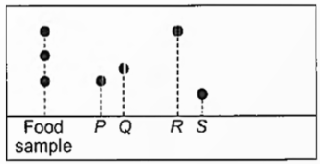
A food sample was tested for the presence of components P, G, R and S and the following chromatogram was obtained.
Image
The components not present in food sample are
  • A
    Q and R
  • B
    P and Q
  • C
    P and R
  • Q and S

Answer: D.

View full solution
Q 4M.C.Q. [1 M]1 Mark
"Viruses are non-cellular organisms" - this statement is a
  • A
    Partially false
  • True statement
  • C
    False statement
  • D
    Partially true

Answer: B.

View full solution
Assertion (A): An atom contains a positively charged center called the nucleus of the atom.
Reason (R): The nucleus of an atom is 10,000 times bigger than the atom.
  • A
    Both A and R are true and R is the correct explanation of A
  • B
    Both A and R are true but R is not the correct explanation of A
  • A is true but R is false
  • D
    A is false but R is true.

Answer: C.

View full solution
Assertion (A): Cells of cork or bark are dead, acts as a protective covering.
Reason (R): In leguminous plants, the root nodules harbor nitrogen-fixing bacteria which convert atmospheric nitrogen into nitrates.
  • A
    Both A and R are true and R is the correct explanation of A
  • Both A and R are true but R is not the correct explanation of A
  • C
    A is true but R is false.
  • D
    A is false but R is true.

Answer: B.

View full solution
Assertion (A): Gaseous state of ammonia is not regarded as vapours.
Reason (R): As the volume of a substance increases, its density increases.
  • A
    Both A and R are true and R is the correct explanation of A
  • Both A and R are true but R is not the correct explanation of A
  • C
    A is true but R is false.
  • D
    A is false but R is true.

Answer: B.

View full solution
Assertion $(A):$ A tiger can accelerate from rest at the rate of $4\ m/s^2$
Reason $(R):$ The velocity attained by it in $10s$ is $40\ m/s.$
  • Both $A$ and $R$ are true and $R$ is the correct explanation of $A$
  • B
    Both $A$ and $R$ are true but $R$ is not the correct explanation of $A$
  • C
    $A $ is true but $R$ is false.
  • D
    $A$ is false but $R$ is true.

Answer: A.

View full solution
The following is the distance-time table of an object in motion:
Time (s)Distance (m)
00
11
28
327
464
5125
6216
7343

a. What conclusion can you draw about the acceleration? Is it constant, increasing, decreasing, or zero?
b. What do you infer about the forces acting on the object?
View full solution
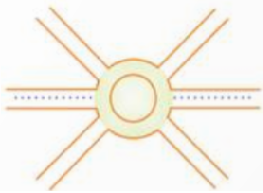
A boy is moving on a straight road against a frictional force of 5 N . After travelling a distance of 1.5 km he forgot the correct path at a round about (Fig.) of radius 100 m . However, he moves on the circular path for one and half cycle and then he moves forward upto 2.0 km . Calculate the work done by him.
Image
View full solution
Classify each of the following as a physical or a chemical change. Give reasons.
i. Drying of a shirt in the sun.
ii. Rising of hot air over a radiator.
iii. Burning of kerosene in a lantern.
iv. Change in the colour of black tea on adding lemon juice to it.
v. Churning of milk cream to get butter.
View full solution
i. A cube of side 5 cm is immersed in water and then in saturated salt solution. In which case, will it experience a greater buoyant force? If each side of the cube is reduced to 4 cm and then immersed in water, what will be the effect on the buoyant force experienced by the cube as compared to the first case for water. Give the reason for each case.
ii. A ball weight 4 kg of density $4000 kg m ^{-3}$ is completely immersed in water of density $10^3 kg m ^{-3}$. Find the force of buoyancy on it. (Given g $=10 ms^{-2}$.)
View full solution
Homogeneous mixtures are regarded as solutions or true solutions. Heterogeneous mixtures are of two types. These are suspensions and colloidal solutions. These differ in the size of the particles responsible for the difference in their properties. In a suspension, the particle size is more than $10^{-5} cm$ whereas in a colloidal solution, it ranges between $10^{-5} cm$ to $10^{-7} cm$. The two phases which constitute colloidal solutions, are dispersed phase and dispersion medium. Based upon their nature, the colloidal solutions are classified into eight types. The mixture of the non-reacting gases is always homogeneous irrespective of their nature. Therefore, it is not a colloidal solution.
i. Scattering of light occurs when a beam of light is passed through Blood. Why?
ii. What is Tyndall effect?
iii. What is called colloidal solution?
OR
Give an example of colloidal solution and identified their dispersed phase and dispersion medium?
View full solution
Crop Season: Different crops require different climatic conditions like temperature, moisture and photoperiods to grow well and complete their life cycle.
The Indian cropping season is classified into two main seasons- (i) Kharif and (ii) Rabi based on the monsoon.
The characteristics of these two main crop seasons are
Image
i. Mention the various cropping seasons in India.
ii. Differentiate between Rabi and Kharif crops.
iii. If there is low rainfall in a village throughout the year, what measures will you suggest to the farmers for better cropping?
OR
What is zaid crop? Give example.
View full solution
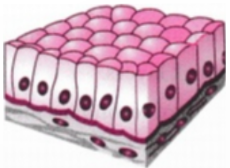
The covering or protective tissues in the animal body are epithelial tissues. Epithelium covers most organs and cavities within the body. It also forms a barrier to keep different body systems separate. Epithelial tissue cells are tightly packed and form a continuous sheet. The skin, which protects the body, is also made of squamous epithelium. Skin epithelial cells are arranged in many layers to prevent wear and tear. This columnar epithelium facilitates movement across the epithelial barrier. In the respiratory tract, the columnar epithelial tissue also has cilia, which are hair-like projections on the outer surfaces of epithelial cells. Cuboidal epithelium forms the lining of kidney tubules.
i. Identify the type of epithelial tissue shown in the following figure. 
Image
ii. Which cell is present in the inner lining of the intestine?
iii. Is excretion is the main function of the cuboidal epithelium?
OR
Sometimes a portion of the epithelial tissue folds inward, and a multicellular gland is formed which is called a?
View full solution

Generate a Model Paper 9 paper free

Pick question groups from the list above, set marks and difficulty, and export a branded PDF with step-by-step answer keys. First 3 chapters free — no signup.

Download App