Questions · Page 1 of 2

[3 Mark Questions]

Take a timed test

50 questions · self-marked practice — reveal the answer and mark yourself.

Question 13 Marks
Explain the process of breakdown of glucose in a cell:
  1. In the presence of oxygen.
  2. In the absence of oxygen.
Answer
The first step is the break - down of glucose, a six-carbon molecule, into a three-carbon molecule called pyruvate. This process takes place in the cytoplasm. Further, the pyruvate may be converted into ethanol and carbon dioxide. This process takes place in yeast during fermentation. Since this process takes place in the absence in air (oxygen), it is called anaerobic respiration. Break-down of pyruvate using oxygen takes place in the mitochondria. This process breaks up the three-carbon pyruvate molecule to give three molecules of carbon dioxide. The other product is water. Since this process takes place in the presence of air (oxygen), it is called aerobic respiration. The release of energy in this aerobic process is a lot greater than in the anaerobic process.$\text{Glucose}\rightarrow\text{Pyruvate}$
$\text{Pyruvate} \xrightarrow[\text{of oxygen}]{\text{In presence}}\text{CO}_{2}+\text{H}_{2}\text{O} + \text{Energy}$
$\text{Pyruvate}\xrightarrow[\text{of oxygen}]{\text{In absence}}\text{C}_{2}\text{H}_{5}\text{OH + CO}_{2}+ \text{ Energy}$
View full question & answer
Question 23 Marks
How are oxygen and carbon dioxide transported in human beings? How are lungs designed to maximise the area for exchange of gases?
Answer
 Hemoglobin transports oxygen molecule to all the body cells for cellular respiration. The hemoglobin pigment present in the blood gets attached to four $O _2$ molecules that are obtained from breathing. It thus forms oxyhemoglobin and the blood becomes oxygenated. This oxygenated blood is then distributed to all the body cells by the heart. After giving away $O _2$ to the body cells, blood takes away $CO _2$ which is the end product of cellular respiration. Now the blood becomes de-oxygenated.
Since hemoglobin pigment has less affinity for $CO _2, CO _2$ is mainly transported in the dissolved form. This de-oxygenated blood gives $CO _2$ to lung alveoli and takes $O _2$ in return.
View full question & answer
Question 33 Marks
Nervous and hormonal systems together perform the function of control and coordination in human beings. Justify this statemdent with the help of an example.
Answer
For nervous and hormonal systems to control and coordinate in human beings, hypothalamus plays an important role in receiving the neural/ nerve signals from brain and release hormones.
Example - In situation of iodine deficiency, hypothalamus releases hormones to stimulate pituitary gland, it further sends stimulating hormone to thyroid gland to secrete thyroxine that regulates carbohydrate metabolism.
View full question & answer
Question 43 Marks
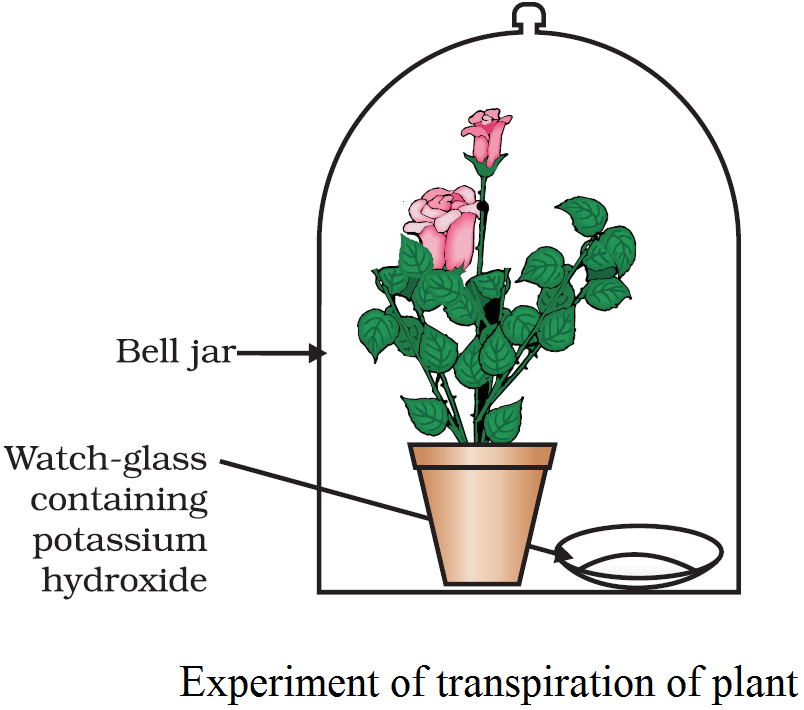
Define the term transpiration. Design an experiment to demonstrate this process.
Answer
Loss of water vapour through the stomatal openings of the leaves of a plant is termed as transpiration.
  1. Following experiment can be performed to demonstrate transpiration in a plant:
  2. Place a healthy growing plant on a horizontal and plane slab in the sun.
  3. Place a glass bell jar over the potted plant and seal its end to the slab by applying vaseline at its edges.
  4. Allow the set-up to remain in the sun for some time.
  5. Observe the presence of water droplets on the inner surface of the glass bell jar.
  6. This collection of water droplets is indicative of transpiration.
View full question & answer
Question 53 Marks
Write three types of blood vessels. Give one important feature of each.
Answer
Three main types of blood vessels that are found in the human body are arteries, veins, and capillaries.
Arteries carry blood from the heart to different body parts. Veins bring blood from different body parts to the heart. Valves are present in veins to prevent backward flow of blood. Both arteries and veins divide in the organs to form arterioles and venules respectively. The arterioles sub-divide to form thin-walled capillaries which join to form venules. Venules join to form veins. The nutrients, hormones, gases can diffuse into the tissue cells through the walls of the capillaries and vice versa. Thus, arteries, arterioles, veins, venules, and capillaries are blood vessels.
View full question & answer
Question 63 Marks
How do villi increase the surface area?
Answer
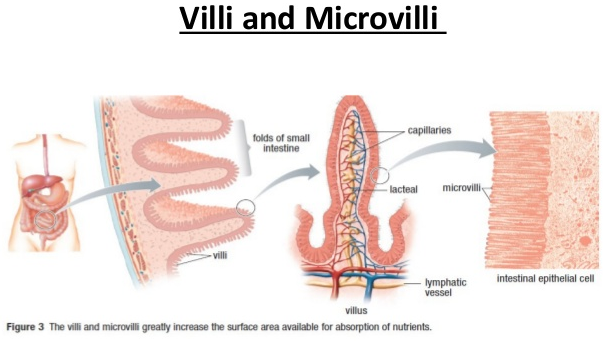
The villi has a finger like structure and the microvilli acts as a hairlike on those fingers. Both of them expand to increase the surface area so more nutrients can be absorbed. They both are made up of a single layer of cells. the villi and the microvilli increase intestinal absorptive surface area approximately 30-fold and 600-fold, respectively, providing exceptionally efficient absorption of nutrients in the lumen. There are also enzymes (enterocyte digestive enzyme) on the surface for digestion.
View full question & answer
Question 73 Marks
Explain the process by which inhalation occurs during breathing in human beings.
Answer
He process by which oxygen rich air is taken up through the nostril into the body is known as inhalation. During inhalation, the chest cavity increases in size due to the downward movement of the diaphragm (dome shaped muscular sheet that separates chest from abdomen). As a result air from outside rushes into the lungs to fill the extra space.
Explanation: is the process by which carbon dioxide rich air comes out of the body. It occurs when the diaphragm moves up and the chest cavity becomes narrower. This creates a pressure on the air inside the lungs. As a result the air comes out of the lungs to the atmosphere due to lack of space inside. Both the process of inhalation and exhalation is commonly known as breathing.
View full question & answer
Question 83 Marks
In what forms, apart from water, do plants excrete out liquid waste?
Answer
Apart from water, plants excrete out a number of liquid waste products into the soil around them. It includes essential oils, organic acids, aromatic oils, tannins, resins, latex and sap.
They are stored in leaves dead cells and the leaves fall off. Some other waste products are stored as resins and gums in old xylem of the plant and other wastes Most of these wastes are useful to humans.
View full question & answer
Question 93 Marks
What are herbivores, carnivores and omnivores? Give two examples of each.
Answer
  1. Herbivores: Those animals which eat only plants are called herbivores.
Example: Goat and cow.
  1. Carnivores: Those animals which eat only other animals as food are called carnivores.
Example: Tiger and Lion.
  1. Omnivores: Those animals which eat both plants and animals are called omnivores.
Example: Human Being and dog.
View full question & answer
Question 103 Marks
What are the raw materials required for photosynthesis to occur? Write the chemical equation of the process.
Answer
The raw materials required for photosynthesis are CARBON DIOXIDE and WATER. Photosynthesis Preparation of food by the Green Leaves of a plant from carbon dioxide and water in the presence of Sunlight and chlorophyll is called photosynthesis. Sunlight is the source of energy & chlorophyll traps this energy.$6\text{CO}_{2}+6\text{H}_{2}\text{O}\xrightarrow[\text{Chlorophyll}]{\text{Sunlight}}\text{C}_{6}\text{H}_{12}\text{O}_{6}{2}+\text{6}\text{O}_{2}$
View full question & answer
Question 113 Marks
Define breathing. State the differences between breathing and respiration.
Answer
The mechanism by which an organism obtains oxygen from the air and releases carbon-dioxide is called breathing.Difference between breathing and respiration:Breathing:
  1. Breathing is a simple process.
  2. Breathing involves taking in oxygen from the air and releasing carbon dioxide into the air.
  3. Breathing is a physical process.
Respiration:
  1. Respiration is a complex process.
  2. Respiration includes breathing as well as the oxidation of food in the cells of the organism to release energy.
  3. Respiration is a bio-chemical process.
View full question & answer
Question 123 Marks
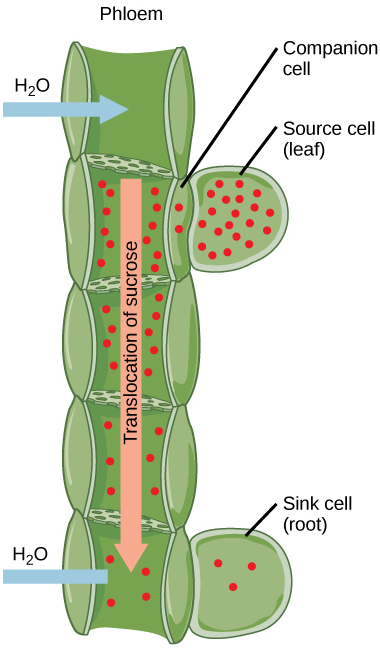
What are the differences between the transport of materials in xylem and phloem?
Answer
Xylem
Phloem
Xylem tissue helps in the transport of water and minerals.
Phloem tissue helps in the transport of food.
Water is transported upwards from roots to all other plant parts.
Food is transported in both upward and downward directions.
Transport in xylem occurs with the help of simple physical forces such as transpiration pull.
Transport of food in phloem requires energy in the form of ATP.
View full question & answer
Question 133 Marks
Diffusion pressure cannot deliver oxygen all over the body in bigger animals’. Comment on this statement.
Answer
This diffusion pressure plays a major role in exchange of gases in plants and in smaller animals but fails in bigger animals. Multicellular organisms such as humans possess complex body designs. They have specialised cells and tissues for performing various necessary functions of the body such as intake of food and oxygen. Unlike unicellular organisms, multicellular cells are not in direct contact with the outside environment. Therefore, diffusion cannot meet their oxygen requirements.
View full question & answer
Question 143 Marks
What is lymph? State two major functions of lymph.
Answer
Lymph is a light yellow liquid. It is a medium of circulation in human body which flows only in one direction – from body tissues to the heart. The functions of lymph are:
  1. It takes part in the nutritive process of the body.
  2. It protects the body by killing the germs drained out of the body tissues with the help of lymphocytes contained in the lymph nodes, by making antibodies.
  3. It helps in removing the waste products like fragments of dead cells etc.
View full question & answer
Question 153 Marks
Which feature(s) help the plants to make food by the process of photosynthesis?
Answer
The leaves containing the green pigment chlorophyll (present in chloroplast) helps the plant to perform photosynthesis by trapping light energy. The plant absorbs $CO _2$ through stomata and reduces it to glucose. The presence of chloroplasts and stomata helps the plants to make food.
View full question & answer
Question 163 Marks
What are the components of the transport system in human beings? What are the functions of these components?
Answer
The main components of the transport system in human beings are the heart, blood, and blood vessels.
  • Heart pumps oxygenated blood throughout the body. It receives deoxygenated blood from the various body parts and sends this impure blood to the lungs for oxygenation.
  • Being a fluid connective tissue, blood helps in the transport of oxygen, nutrients, $CO _2$, and nitrogenous wastes.
  • The blood vessels (arteries, veins, and capillaries) carry blood either away from the heart to various organs or from various organs back to the heart.
View full question & answer
Question 173 Marks
What is meant by ‘systolic pressure’ and ‘diastolic pressure’? What are their normal values?
Answer
The maximum pressure at which the blood leaves the heart through the main artery (Aorta) during contraction phase is called systolic pressure. The minimum pressure in the arteries during relaxation phase of the heart is called the diastolic pressure.
The normal blood pressure values are: Systolic pressure: 120mm Hg. Diastolic pressure: 80mm Hg.
View full question & answer
Question 183 Marks
Why does the rate of breathing in aquatic animals is faster than others?
Answer
The breathing rate of aquatic animals is faster than that of terrestrial animals because the amount of dissolved oxygen in the water in much less than the amount on land. Therefore, rate of breathing in aquatic organisms is much faster than in terrestrial organisms.
View full question & answer
Question 193 Marks
How do plants get rid of their excretory products?
Answer
To get rid of excretory products, plants use the following ways:
  1. Many waste products are stored in vacuoles of the cells. Plant cells have comparatively large vacuoles.
  2. Some waste products are stored in the leaves. They are removes as the leaves fall off.
  3. Some waste products such as resins and gums are stored, especially in non-functional old xylem.
  4. Some waste products such as tannins, resins, gums are stored in bark, thereby removed as peeled off.
  5. Plants excrete some waste products through roots into the soil around them.
  6. Plants also get rid of excess water through transpiration.
View full question & answer
Question 203 Marks
Describe the circulatory system in a fish.
Answer
The fish has a two chambered heart. Oxygenation of the blood takes place in the gills. The oxygenated blood from the gills is supplied to the body parts of the fish where oxygen is utilized and carbon-dioxide enters into it making it deoxygenated. The deoxygenated blood returns to the heart to be pumped into gills again.
View full question & answer
Question 213 Marks
Leaves of a healthy potted plant were coated with vaseline. Will this plant remain healthy for long? Give reason for your answer.
Answer
This plant will not remain healthy for long because vaseline coating closes the stomatal pores on the leaves due to which:
  1. Plant will not get oxygen for respiration.
  2. Plant will not get carbon dioxide for photosynthesis, and.
  3. Plant will not get water (and minerals) due to stoppage of transpiration.
View full question & answer
Question 223 Marks
Tabulate adaptations of terrestrial respiration in human being.
Answer
Different respiratory adaptations of human beings are as follows:
  1. All the respiratory organs have a large surface area to get enough oxygen.
  2. All the respiratory organs have thin walls for easy diffusion and exchange of respiratory gases.
  3. All the respiratory organs like skin gills, and lungs have a rich blood supply for transporting respiratory gases.
The thin and delicate respiratory structures must be well protected under layers of tissues so as to protect them from the external environment.
View full question & answer
Question 233 Marks
Explain how the blood system carries waste products from liver to the kidneys?
Answer
The circulatory system also serves to remove waste products from the body. Certain wastes such as water, urea, uric acid and carbon dioxide are transported from the liver to the kidneys, where the blood is filtered. The urea is produced in liver and released into the bloodstream. Blood flows round the body; it passes through the heart to replenish its oxygen content. Veins are the blood vessels that take oxygen depleted blood from the body to the heart while arteries take oxygen rich blood away from the heart to the body. Blood transports nutrients from the digestive system or storage sites to tissues that require them, and waste products from the tissues to the liver and then to the kidneys for disposal.
View full question & answer
Question 243 Marks
Describe the mechanism of breathing in human beings.
Answer
Mechanics of Breathing. The action of breathing in and out is due to changes of pressure within the thorax, in comparison with the outside. This action is also known as external respiration. When we inhale the intercostal muscles (between the ribs) and diaphragm contract to expand the chest cavity.
View full question & answer
Question 253 Marks
What will happen to the rate of photosynthesis in a plant under the following circumstances?
  1. Cloudy day in morning but bright sunshine in the afternoon.
  2. No rainfall in the area for a considerable time.
  3. Gathering of dust on the leaves.
Answer
  1. Decreases in morning but increases in the afternoon.
  2. Decreases.
  3. Decreases.
View full question & answer
Question 263 Marks
How does aerobic respiration differ from anaerobic respiration?
Answer
 
Aerobic Respiration
Anaerobic Respiration
1.
Method: It is the common method of respiration.
It occurs permanetly only in a few organisms. In other it may occur as a temporary measure to overcome shortage of oxygen.
2.
Steps: It is completed in 3 steps- glycolysis, krebs cycle and terminal oxidation.
There are two steps- glycolysis and anaerobic breakdown of pyruvic acid.
3.
Oxygen: It requires oxygen.
Oxygen is not required.
View full question & answer
Question 273 Marks
State the various steps involved in the process of photosynthesis.
Answer
The photosynthesis takes place in the following three steps:
  1. Absorption of sunlight energy by chlorophy ll.
  2. Conversion of light energy into chemical energy and splitting of water into hydrogen and oxygen by light energy.
  3. Reduction of carbon dioxide by hydrogen to form carbohydrates like glucose by utilising the chemical energy.
View full question & answer
Question 283 Marks
State the functions of blood in our body.
Answer
Functions of blood:
  1. It carries oxygen from the lungs to different parts of the body.
  2. It carries carbon-dioxide from the body cells to the lungs for breathing out.
  3. It carries digested food from the small intestine to all the parts of the body.
  4. It carries waste product called urea from the liver to the kidneys for excretion in the form of urine.
  5. It protects the body from diseases.
View full question & answer
Question 293 Marks
What are the various types of heterotrophic nutrition?
Answer
The various types of Heterotrophic nutrition are:
  1. Saprotrophic nutrition.
  2. Parasitic nutrition.
  3. Holozoic nutrition.
View full question & answer
Question 303 Marks
Describe the process of respiration in fish.
Answer
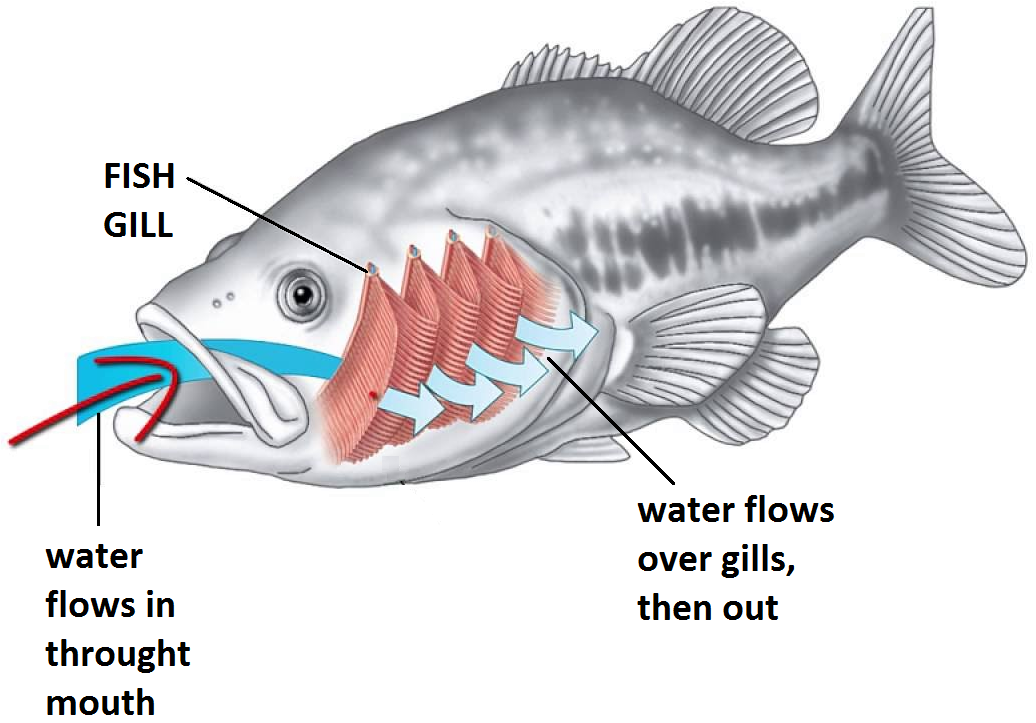
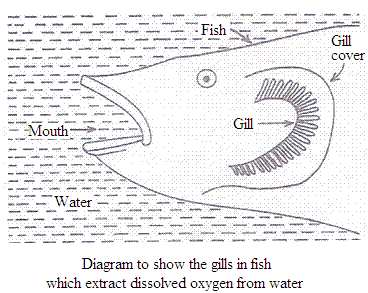
Respiration and fish: The fish has special organ of breathing called gills on both the sides of its head. The gills are covered by gill covers. The fish lives in water which contains dissolved oxygen. The fish breathes by taking in water through its mouth and sending it over the gills. When water passes over the gills, the gills extract dissolved oxygen from the water. The extracted oxygen is absorbed by the blood and carried to all the parts of the fish. The carbon-dioxide produced by respiration is brought back by the blood into the gills for expelling into the surrounding water.
View full question & answer
Question 313 Marks
State the three common features of all the respiratory organs like skin, gills and lungs.
Answer
The common features of all respiratory organs? skin, gills and lungs are:
  1. All the respiratory organs have a large surface area to get enough oxygen.
  2. All the respiratory organs have thin walls for easy diffusion and exchange of respiratory gases.
  3. All the respiratory organs like skin, gills and lungs have a rich blood supply for transporting respiratory gases.
View full question & answer
Question 323 Marks
Name the water and minerals conducting element of non-flowering plants. Mention how conduction takes place in it.
Answer
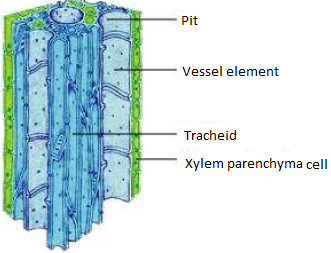
Non flowering plants includes ferns, mosses and gymnosperms (exception: they produce seeds from cones). Tracheids are the conducting elements in gymnosperms and pteridophyte. In bryophytes like mosses water and mineral conduction takes place by hydroid tissue and sugar conducting tissue is leptoid​.
View full question & answer
Question 333 Marks
‘The urge to urinate can be controlled'. Give reason.
Answer
The urine is stored in urinary bladder, which is a muscular sac composed of smooth muscles that are able to relax and contract. The pressure built inside the expanded bladder due to storage of urine leads to the urge to urinate. The urinary bladder is muscular, so it is under nervous control. As a result, we can usually control the urge to urinate.
View full question & answer
Question 343 Marks
What is the essential feature of respiratory organ of different terrestrial animals?
Answer
There are various features among terrestrial organisms that aid in respiration. Some animals exchange gases through their moist skin surface, insects have tracheal systems for exchange of gases and higher animals have lungs. Common features of all these respiratory organs are as follows:
  1. All the respiratory organs have a large surface area to transport/exchange enough oxygen.
  2. All the respiratory organs have thin walls for easy diffusion and exchange of respiratory gases.
  3. All the respiratory organs such as skin, gills and lungs, have a rich blood supply for transporting respiratory gases.
View full question & answer
Question 353 Marks
Describe how deoxygenated blood from this chamber is sent to lungs for oxygenation.
Answer
The de-oxygenated blood received into the right atrium is then made to go into the right ventricle after the heart's contraction and then that blood goes into the pulmonary artery from the ventricle and goes to the lungs where the carbon-dioxide is then diffused into the alveoli and then the oxygen recieved in the lungs again gets diffused in the blood and then again goes to the heart from the pulmonary vein.
View full question & answer
Question 363 Marks
The surface across which breathing in animals occurs is very fine and delicate. How do the organisms protect their body by such surfaces?
Answer
Almost all the organisms the breathing surface is very fine and delicate for easy and fast exchange of gases. Since they are very delicate they must be protected from external environmental conditions. So for protection these structures are covered well in a layer of tissues. Like in human beings the exchange of gases take place through alveoli which are present in the lungs which are further protected from environment by ribs and diaphragm.
View full question & answer
Question 373 Marks
What are the different ways in which glucose is oxidised to provide energy in various organisms? Give one example of each.
Answer
There are two ways in which glucose is oxidized to provide energy in various organisms:
  1. Anaerobic respiration? The respiration which takes place without oxygen is called anaerobic respiration.
Example: Yeast and some bacteria break down glucose into ethanol and carbon-dioxide.
  1. Aerobic respiration? The respiration which uses oxygen is called aerobic respiration.
Example: Plants and animals break down glucose completely into carbon-dioxide and water to release energy.
View full question & answer
Question 383 Marks
How are water and minerals transported in plants?
Answer
The components of xylem tissue (tracheids and vessels) of roots, stems, and leaves are interconnected to form a continuous system of water-conducting channels that reaches all parts of the plant. Transpiration creates a suction pressure, as a result of which water is forced into the xylem cells of the roots. Then there is a steady movement of water from the root xylem to all the plant parts through the interconnected water conducting channels.
View full question & answer
Question 393 Marks
How are the alveoli designed to maximise the exchange of gases?
Answer
Alveoli provide a surface for the exchange of gases. An extensive network of blood vessels is present in the wall of the alveoli. By lifting our ribs and flatten the diaphragm, the chest cavity becomes spacious. Air is sucked into the lungs and alveoli. The oxygen from the breath, diffuses into the blood and $CO _2$ from the blood brought from the body, diffuses out into the air.
View full question & answer
Question 403 Marks
What are the necessary conditions for autotrophic nutrition and what are its byproducts?
Answer
Conditions necessary for autotrophic nutrition are:
  1. Light.
  2. Chlorophyll.
  3. Water and,
  4. Carbon dioxide.
By-products are:
  1. Oxygen and,
  2. Water.
View full question & answer
Question 413 Marks
Water is absorbed by roots and lost through leaves. How does this happen?
Answer
Transpiration is the loss of water from a plant in the form of water vapor. Water is absorbed by roots from the soil and transported as a liquid to the leaves via xylem. In the leaves, small pores allow water to escape as a vapor. Of all the water absorbed by plants, less than 5% remains in the plant for growth.
View full question & answer
Question 423 Marks
Where does aerobic respiration occur? How many molecules of ATP are released during it?
Answer
Respiration on the basis of presence or absence of oxygen can be of two type. aerobic respiration and anaerobic respiration. Aerobic respiration occurs in the presence of oxygen while anaerobic occurs in the absence of oxygen.
Site of aerobic respiration is mitochondria.
During aerobic respiration 38 ATPs get released in complete oxidation of one glucose molecule.
View full question & answer
Question 433 Marks
What are outside raw materials used for by an organism?
Answer
Various outside raw materials used by an organism are as follows:
  1. Food as source of supplying energy and materials.
  2. Oxygen for breakdown of food to obtain energy.
  3. Water for proper digestion of food and other functions inside the body.
The raw materials required by an organism will vary depending on the complexity of the organism and its environment.
View full question & answer
Question 443 Marks
State the differences between artery, vein and capillary.
Answer
 
Artery
Vein
Capillary
i.
It is a thick walled blood vessel.
It is a thin walled blood vessel.
It is an extremely narrow blood vessel having very thin walls.
ii.
It carries blood from the heart to different parts of the body.
It brings blood from the different parts of the body to the heart.
They form an extensive network throughout all living cells in the body and connect arteries and veins.
iii.
It can dilate or constrict depending on the regulatory requirement of the body.
It cannot dilate or constrict.
It can dilate or constrict according to the requirement of the tissue.
iv.
It does not contsin any valve.
It contains simple valves which permit blood flow only towards the heart.
It does not contain any valves.
View full question & answer
Question 453 Marks
What is meant by dental caries? How are they caused?
Answer
The formation of small cavities (or holes) in the teeth due to the action of acid forming bacteria and improper dental care is called dental caries. This happens as follows:
When we eat sugary food, the bacteria in our mouth act on sugar to produce acids. These acids dissolve the calcium salts from the tooth enamel and then from dentine forming small cavities in the tooth over a period of time in our mouth act on sugar to produce acids. These acids dissolve the calcium salts from the tooth enamel and then from dentine forming small cavities in the tooth over a period of time.
View full question & answer
Question 463 Marks
If one hold his breath after expiration for about 30sec., would there still be occurring any exchange of respiratory gases in the lung during this period? Explain.
Answer
Yes, of course.
We have an equilibrium between gases dissolved in our blood and gases in our alveolae. The law is Henry’s law. The amount of dissolved gases in a fluid is directly proportional to the partial pressure of gases above the fluid. When you breathe in, partial pressure of oxygen is 1/5 of an atmosphere and nitrogen is 4/5 of an atmosphere. Our bodies use oxygen so it goes out of blood, hence out of alveolae. Carbon dioxide our bodies produce hence its concentration goes up in the blood and subsequently in alveolae. Nitrogen is neither consumed not produced so it stays approximately the same. After expiration you have in your lungs only residual volumen and oxygen continues to go down and carbon dioxide goes up. Now, after several seconds, maybe even a minute, you will feel a strong urge to breathe in. That’s because the level of carbon dioxide becomes very high in your blood and in your alveolae. It stimulates the centres in your medulla oblongata and you will have that urge to breathe in. It’s possible to overcome that urge. That’s what all breath-hold divers do. However, oxygen continues to go down. When it reaches very low levels you simply fall unconscious. That’s obviously not a desired outcome and, if underwater, you drown and die.
View full question & answer
Question 473 Marks
Draw a sieve tube and label the various parts. Name the dead elements of the phloem.
Answer
Phloem fibres are the dead element of phloem.
View full question & answer
Question 483 Marks
What is hypertension? Why is it caused? What harm can it do?
Answer
High blood pressure is called hypertension. It is caused by the constriction of very small arteries which results in increased resistance to blood flow. Very high blood pressure can lead to rupture of artery and internal bleeding.
View full question & answer
Question 493 Marks
What is the difference between autotrophic nutrition and heterotrophic nutrition?
Answer
Autotrophic Nutrition: It is that mode of nutrition in which an organism makes its own food from the simple inorganic materials like carbon dioxide and water present in the surroundings (with the help of sunlight energy)Example: Green Plants
Heterotrophic Nutrition: It is that mode of nutrition in which an organism cannot make its own food from simple inorganic materials like carbon dioxide and water, and depends on other organisms for its food.
Example: Animals.
View full question & answer
Question 503 Marks
A dialysis machine contains long tubes coiled in a tank containing dialysing solution:
  1. Of what substance are the tubes made?
  2. What does the dialysing solution contain?
  3. Name the main waste which passes into the dialysing solution.
Answer
  1. Cellulose.
  2. Water, glucose, salts in similar concentration to those in normal blood.
  3. Urea.
View full question & answer
[3 Mark Questions] - Science STD 10 Questions - Vidyadip