Question types

Sorting Materials and Groups question types

382 questions across 9 question groups — pick any mix to generate a Science paper with step-by-step answer keys.

382
Questions
9
Question groups
5
Question types
Sample Questions

Sorting Materials and Groups questions

One sample from each question group in this chapter. Select any group above to see the full set with answer keys.

Read the given classification.
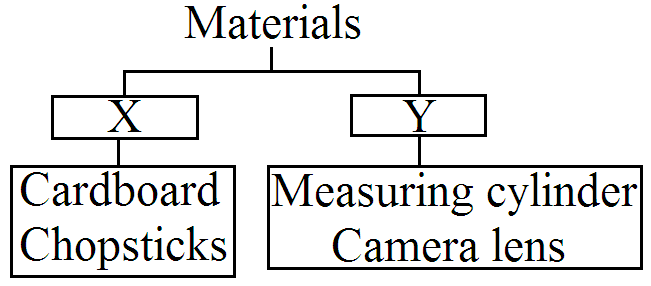
Which of the following materials are used in the making of $X$ and $Y?$
  • A
    Wood metal.
  • B
    Plastic, glass.
  • Bamboo glass.
  • D
    Bamboo/ plastic.

Answer: C.

View full solution
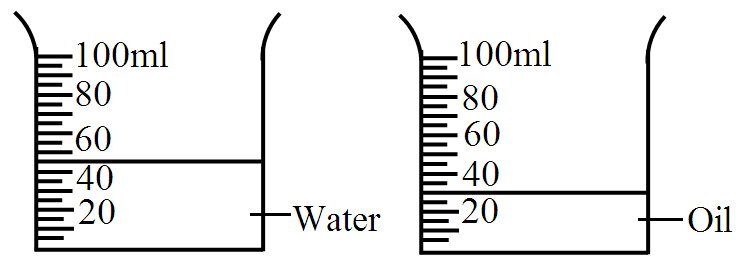
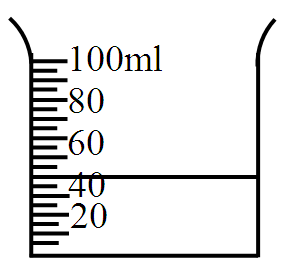
Swapna was given two beakers having oil and water as shown below.

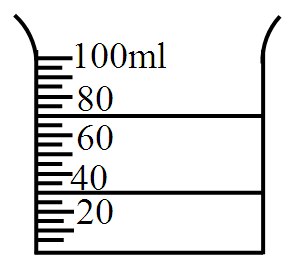
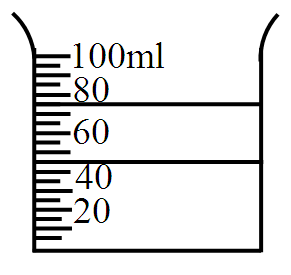
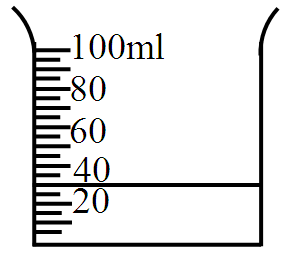
If all the water from the first beaker is poured into the beaker of oil, then which of the following correctly represents the above?
  • A
  • C
  • D

Answer: B.

View full solution
Three groups of materials are given below:
$I$
Salt
sugar
flour
$II$
$II :$ Copper
gold
silver
$III$
$III :$ Petrol
kerosene
paper
Identify the property common to each group.
  • A
    $I$ $II$ $III$
    Solid   Inflammable Non
  • B
    $I$ $II$ $III$
    Edible. metallic. Inflammable.
  • $I$ $II$ $III$
    Edible. Metallic. inflammable
  • D
    $I$ $II$ $III$
    Solid   Inflammable

Answer: C.

View full solution
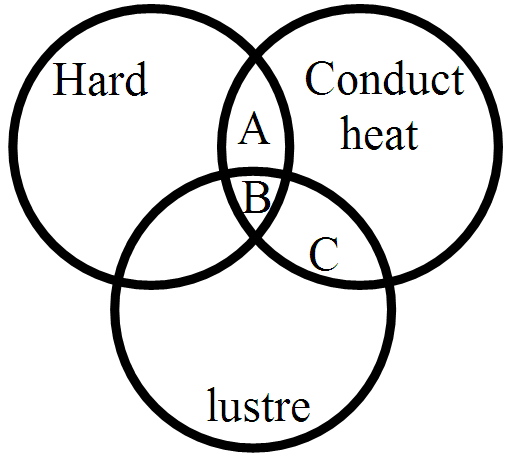
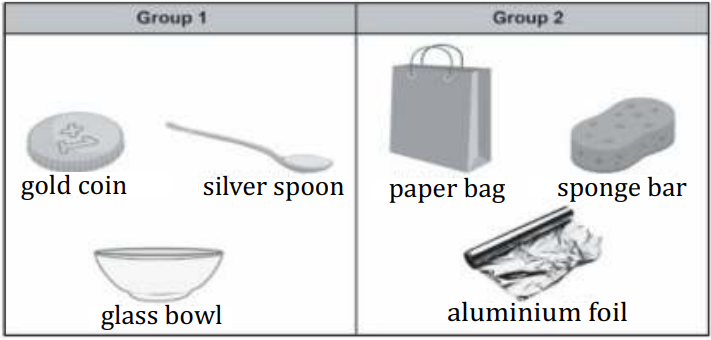
DIRECTIONS: Read the passage$(s)$ given below and answer the questions that follow. Passage $- 5$ Look at the following Venn diagram and answer the questions.

Which of the following represent $'C'?$
  • A
    Rusted iron nail.
  • B
    Plastic flower vase.
  • C
    Bark of tree.
  • Steel fry pan.

Answer: D.

View full solution
Which of the following materials is used to make an electric iron?
$(i)$
Plastic.
$(ii)$
Metal.
$(iii)$
Glass.
  • A
    Only $(i).$
  • Only $(i)$ and $(ii).$
  • C
    Only $(ii)$ and $(iii).$
  • D
    $(i), (ii)$ and $(iii).$

Answer: B.

View full solution
DIRECTIONS: The questions in this segment consists of two statements, one labelled as "Assertion $A"$ and the other labelled as "Reason $R"$. You are to examine these two statements carefully and decide if the Assertion $A$ and Reason $R$ are individually true and if so, whether the reason is a correct explanation of the assertion. Select your answers to these items using codes given below.
Assertion A: Rain coats are made up of plastic like material.
Reason R: Plastic is waterproof.
  • Both $A$ and $R$ are true and $R$ is the correct explanation of $A$
  • B
    Both $A$ and $R$ are true but $R$ is not the correct explanation of $A$
  • C
    $A$ is true but $R$ is false
  • D
    $A$ is false but $R$ is true

Answer: A.

View full solution
DIRECTIONS: The questions in this segment consists of two statements, one labelled as "Assertion $A"$ and the other labelled as "Reason $R"$. You are to examine these two statements carefully and decide if the Assertion $A$ and Reason $R$ are individually true and if so, whether the reason is a correct explanation of the assertion. Select your answers to these items using codes given below.
Assertion A: Some plastics are transparent in nature.
Reason R: We can see clearly through some plastic containers.
  • Both $A$ and $R$ are true and $R$ is the correct explanation of $A$
  • B
    Both $A$ and $R$ are true but $R$ is not the correct explanation of $A$
  • C
    $A$ is true but $R$ is false
  • D
    $A$ is false but $R$ is true

Answer: A.

View full solution
DIRECTIONS: The questions in this segment consists of two statements, one labelled as "Assertion $A"$ and the other labelled as "Reason $R"$. You are to examine these two statements carefully and decide if the Assertion $A$ and Reason $R$ are individually true and if so, whether the reason is a correct explanation of the assertion. Select your answers to these items using codes given below.
Assertion A: Shopkeepers usually keep biscuits, sweets etc in transparent containers of glass or plastic.
Reason R: Buyers could see through the transparent materials.
  • Both $A$ and $R$ are true and $R$ is the correct explanation of $A$
  • B
    Both $A$ and $R$ are true but $R$ is not the correct explanation of $A$
  • C
    $A$ is true but $R$ is false
  • D
    $A$ is false but $R$ is true

Answer: A.

View full solution
DIRECTIONS: The questions in this segment consists of two statements, one labelled as "Assertion $A"$ and the other labelled as "Reason $R"$. You are to examine these two statements carefully and decide if the Assertion $A$ and Reason $R$ are individually true and if so, whether the reason is a correct explanation of the assertion. Select your answers to these items using codes given below.
Assertion A: Wood, plastic and paper are poor conductor of heat.
Reason R: Poor conductors are also called insulators.
  • Both $A$ and $R$ are true and $R$ is the correct explanation of $A$
  • B
    Both $A$ and $R$ are true but $R$ is not the correct explanation of $A$
  • C
    $A$ is true but $R$ is false
  • D
    $A$ is false but $R$ is true

Answer: A.

View full solution
DIRECTIONS: The questions in this segment consists of two statements, one labelled as "Assertion $A"$ and the other labelled as "Reason $R "$. You are to examine these two statements carefully and decide if the Assertion $A$ and Reason $R$ are individually true and if so, whether the reason is a correct explanation of the assertion. Select your answers to these items using codes given below.
Assertion A: Wood is a good conductor of heat.
Reason R: Substances which do not allow heat to pass through them are called poor conductors of heat.
  • A
    Both $A$ and $R$ are true and $R$ is the correct explanation of $A$
  • B
    Both $A$ and $R$ are true but $R$ is not the correct explanation of $A$
  • C
    $A$ is true but $R$ is false
  • $A$ is false but $R$ is true

Answer: D.

View full solution
Activity.Collect small pieces of different materials— paper, cardboard, wood, copper wire, aluminium sheet, chalk. Do any of these appear shiny?
Now, observe as the teacher cuts each material into two pieces and look at the freshly cut surface. What do you notice? Does the freshly cut surface of some of these materials appear shiny?
View full solution
You are provided with the following materials-turmeric, honey, mustard oil, water, glucose, rice flour, groundnut oil.
Make any three pairs of substances where one substance is soluble in the other and any three pairs of substances where one substance remains insoluble in the other substances.
View full solution
Match the objects given in Column $I$ with the materials given in Column $II.$
 
$COLUMN\ I$
 
$COLUMN\ II$
$a$
Surgical Instruments
$i$
Plastic
$b$
Newspaper
$ii$
Animal product
$c$
Electrical switches
$iii$
Steel
$d$
Wool
$iv$
Plant product
View full solution
Activity.Lists some common materials. You can also add more materials in Column $1$ that are known to you. Now, try and think of everyday objects you know, that are made mainly of these materials, and list them in Column $2.$
View full solution
During summer holidays, a group of children collected a lump of salt, green grass, broken glass piece, a small thermocol box, pen, iron nail, glass marbles, hair, naphthalene ball, a piece of sugar candy (mishri) and tried to group them on the basis of properties given in Table below. Help them in filling the Table.
Name of the material Appearance (Hard/ Soft) Transparency (Transparent/ Transucent/ Opaque) Floats/ Sinks in water Soluble/ Insouble in water
- - - - -
View full solution
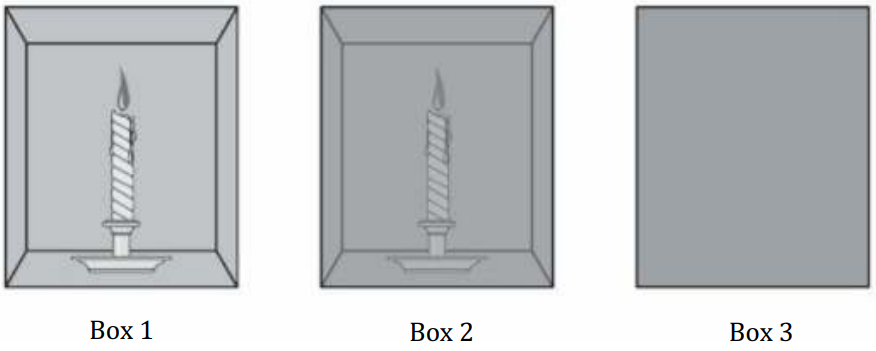
Namita has three boxes with the same thickness.
She places a burning candle inside each box.
The images show how Namita was able to view the candle through each box.Image
$7.$ Which box is made of an opaque material?
$8.$ Namita replaces box $1$ with a thicker box made of the same material and repeats the activity.
Will there be any change in the results of the activity? Explain your answer.
$9.$ Which object is commonly made of plastic?
$A.$ House gate
$B.$ Sleeping cot
$C.$ Cooking vessel
$D.$ Water bottle
$10.$ Neeraj spilled some water on the loor. He cleaned the loor using a mop. Which material is best suited for making the mop?
$A.$ Iron scrubber
$B.$ Cotton cloth
$C.$ Plastic sheet
$D.$ Copper sheet
View full solution
The picture shows two hollow pipes.
One pipe is made of copper and the other is made of plastic.

Image
$5.$ Which of the following will help to identify the pipe made of copper?
$A.$ Place the pipes in water and check if they absorb water.
$B.$ Rub the pipes with sandpaper and check if they appear shiny.
$D.$ Bring the pipes near a magnet and check if they are attracted by the magnet.
$C.$ Hold the pipes under a glowing bulb and check if they produce shadows
$6.$ Which of these is a translucent object?
$A.$ An iron plate
$B.$ A glass sheet
$C.$ A concrete slab
$D.$ A sheet of tissue paper
View full solution
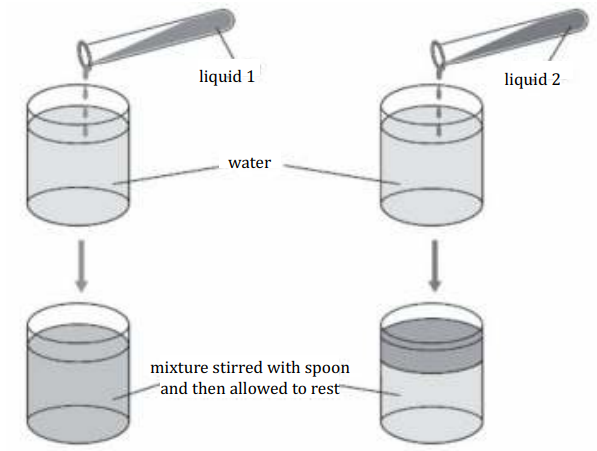
Aqeel poured liquid $1$ and liquid $2$, each to a jar of water.
He stirred the mixture in each jar with a spoon.
He allowed the mixtures to rest for $10$ mins.Image

$3.$ Are liquid $1$ and liquid $2$ soluble in water?
Write Yes or No in the space given in the table below.
Type of liquid added to water Is it soluble in water?
Liquid $1$  
Liquid $2$  
$4.$ Which of the following must Aqeel keep the same in his activity?
Circle $‘Yes’$ or $‘No’$ for the correct response.
Should this be kept the same in the activity? $Yes$ or $No$?
Amount of the two liquids added to water $Yes/No$
Amount of water in both the jars $Yes/No$
Amount of time the two mixtures were stirred $Yes/No$
View full solution
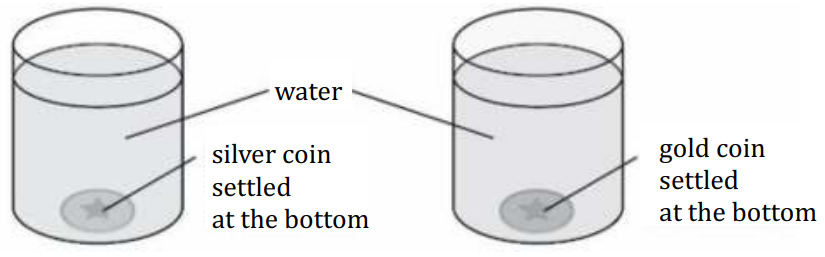
Rajiv dropped a silver and a gold coin each in a jar of water.
The picture below shows what happened.Image
$2.$ Which question can be answered from the activity?
  •  Do gold and silver coins loat in water?
  • B
     Is the gold coin harder than the silver coin?
  • C
     Is the gold coin heavier than the silver coin?
  • D
     Do gold and silver coins change size in water?

Answer: A.

View full solution

Generate a Sorting Materials and Groups paper free

Pick question groups from the list above, set marks and difficulty, and export a branded PDF with step-by-step answer keys. First 3 chapters free — no signup.

Download App