Question 13 Marks
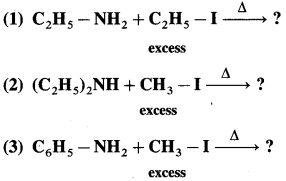
31 questions · self-marked practice — reveal the answer and mark yourself.

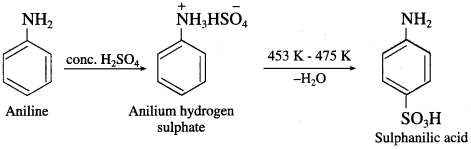
(2) Aniline into sulphanilic acid.
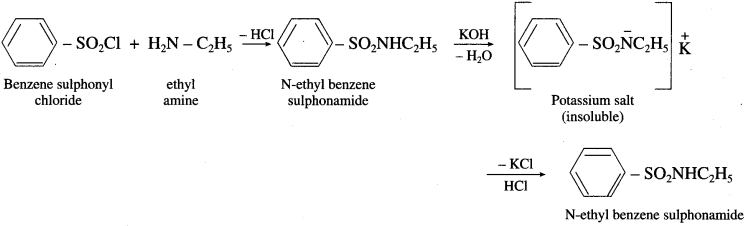
(i) Primary amine (like ethyl amine) is treated with Hinsberg’s reagent (benzene sulphonyl chloride) forms N-alkyl benzene sulphonamide which dissolve in aqueous KOH solution to form a clear solution of potassium salt and upon acidification gives insoluble N-alkyl benzene sulphonamide.
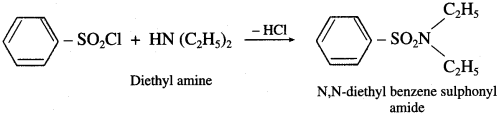
(ii) Secondary amine like diethyl amine is treated with benzene sulphonyl chloride forms N,N-diethyl benzene which sulphonyl amide remains insoluble in aqueous KOH and does not dissolve in acid.
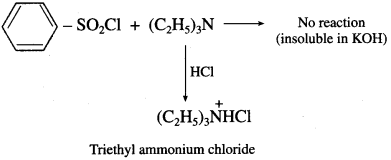
(iii) Tertiary amine like triethyl amine does not react with benzene sulphonyl chloride and remains insoluble in KOH, however it dissolves in dil. HCl to give a clear solution due to formation of ammonium salt.
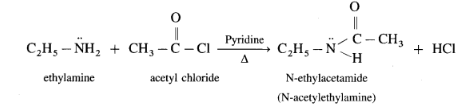
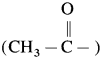 is called acetylation of amines.
(2) Diethylamine (a secondary amine) on reaction with acetic anhydride forms a monoacetyl derivative, N-acetyldiethyl amine (or N,N-diethyl acetamide).

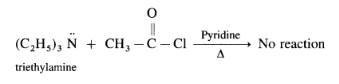
(3) Triethylamine does not react with acetic anhydride as it does not have any H atom attached nitrogen atom of amin e


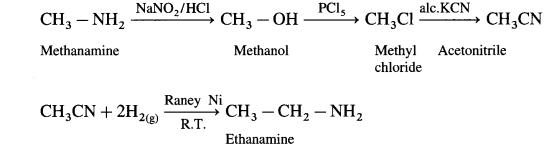
b. Ethanamine from nitroethane :

c. Ethanamine from Propionamide :


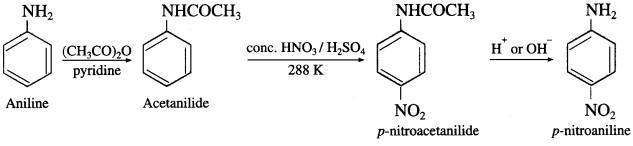
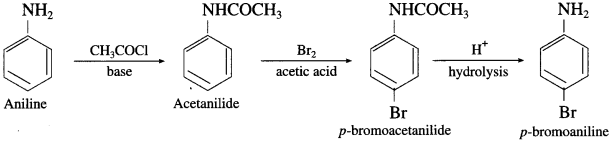
(2) Aniline into p-bromo aniline
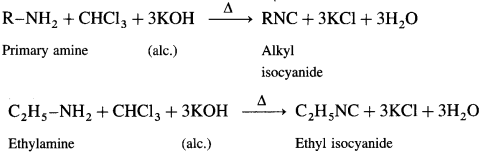
Secondary and tertiary amines do not give this test.
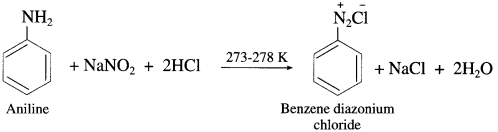
Diazotisation of aniline :