Questions · Page 1 of 2

2 Marks Questions

🎯

Test yourself on this topic

50 questions · timed · auto-graded

Question 12 Marks
$HCF$ of co-prime numbers $4$ and $15$ was found as follows:
$4 = 2$ $\times$ $2$ and $15 = 3$ $\times$ $5$
since there is no common factor, so $H.C.F.$ of $4$ and $15$ is $0$. Is the answer correct? If not, what is the correct $H.C.F$.
Answer
No! the answer is not correct. The correct answer is as follows:
H.C.F of 4 and 15 is 1.
View full question & answer
Question 22 Marks
Find the $H.C.F$ of the numbers: $18, 54, 81.$
Answer
Factors of $18$ are $1, 2, 3, 6, 9$ and $18.$
Factors of $54$ are $1, 2, 3, 6, 9, 18, 27$ and $54.$
Factors of $81$ are $1, 3, 9, 27$ and $81.$
$\therefore $ Common factors of $18, 54$ and $81$ are $1, 3$ and $9.$
Highest of these common factors is $9.$
$\therefore H.C.F$ of $18, 54$ and $81$ is $9.$
View full question & answer
Question 32 Marks
Find the H.C.F of the numbers: $91, 112, 49.$
Answer
Factors of $91$ are $1,7,13$ and $91.$
Factors of $112$ are $1,2,4,7,8,14,16,28,56$ and $112.$
Factors of $49$ are $1, 7$ and $49.$
$\therefore $ Common factors of $91, 112$ and $49$ are $1$ and $7$.
Highest of these common factors is $7.$
$\therefore H.C.F.$ of $91, 112$ and $49$ is $7.$
View full question & answer
Question 42 Marks
Find the $H.C.F$ of the numbers: $70, 105, 175$
Answer
Factors of $70$ are $1, 2, 5, 7, 10, 14, 35$ and $70.$
Factors of $105$ are $1, 3, 5, 7, 15, 21, 35$ and $105.$
Factors of $175$ are $1, 5, 7, 25, 35$ and 175.
$\therefore $ Common factors of $70, 105$ and $175$ are $1,5,7$ and $35.$
Highest of these common factors is $35.$
$\therefore H.C.F$ of $70, 105$ and $175$ is $35.$
View full question & answer
Question 52 Marks
Find the $H.C.F$ of the numbers: $34, 102.$
Answer
Factors of $34$ are $1, 2, 17$ and $34.$
Factors of $102$ are $1, 2, 3, 6, 17, 34, 51$ and $102.$
$\therefore $ Common factors of $34$ and $102$ are $1, 2, 17$ and $34.$
Highest of these common factors is $34$. So $HCF$ of $34$ and $102$ is $34$
View full question & answer
Question 62 Marks
Find the $H.C.F$ of the numbers: $36, 84.$
Answer
Factors of $36$ are $1,2,3,4,6,9,12,18$ and $36.$
Factors of $84$ are $1,2,3,4,6,7,12,14,21,28,42$ and $84.$
$\therefore $ Common factors of $36$ and $84$ are $1, 2, 3, 4, 6$ and $12.$
Highest of these common factors is $12.$
$\therefore H.C.F.$ of $36$ and $84$ is $12.$
View full question & answer
Question 72 Marks
Find the $H.C.F$ of the numbers: $27, 63$
Answer
Factors of $27$ are $1, 3, 9$ and $27.$
Factors of $63$ are $1, 3, 7, 9, 21$ and $63.$
$\therefore $ Common factors of $27$ and $63$ are $1, 3$ and $9.$
Highest of these common factors is $9.$
$\therefore H.C.F.$ of $27$ and $63$ is $9.$
View full question & answer
Question 82 Marks
Find the $H.C.F$ of the numbers: $18, 60$
Answer
Factors of $18$ are $1, 2, 3, 6, 9$ and $18.$
Factors of $60$ are $1, 2, 3, 4, 5, 6, 10, 12, 15, 20, 30$ and $60.$
$\therefore $ Common factors of $18$ and $60$ are $1, 2, 3$ and $6.$
Highest of these common factors is $6.$
$\therefore $ $H.C.F.$ of $18$ and $60$ is $6.$
View full question & answer
Question 92 Marks
Find the $H.C.F$ of the numbers: $30, 42$
Answer
$30, 42$
Factors of $30$ are $1, 2, 3, 5, 6, 10, 15$ and $30.$
Factors of $42$ are $1, 2, 3, 6, 7, 14, 21$ and $42.$
$\therefore $ Common factors of $30$ and $42$ are $1, 2, 3$ and $6.$
Highest of these common factors is $6.$
$\therefore H.C.F.$ of $30$ and $42$ is $6.$
View full question & answer
Question 102 Marks
Find the $H.C.F$ of the numbers: $12, 45, 75.$
Answer
Factors of $12$ are $1,2,3,4,6$ and $12.$
Factors of $45$ are $1,3,5,9,15$ and $45.$
Factors of $75$ are $1,3,5,15,25$ and $75.$
$\therefore $ Common factors of $12, 45$ and $75$ are $1$ and $3.$
Highest of these common factors is $3.$
$\therefore H.C.F$ of $12, 45$ and $75$ is $3.$
View full question & answer
Question 112 Marks
Find the $H.C.F$ of numbers:$18, 48$
Answer
$18, 48$
Factors of $18$ are $1, 2, 3, 6, 9$ and $18.$
Factors of $48$ are $1, 2, 3, 4, 6, 8, 12, 16, 24$ and $48.$
$\therefore $ Common factors of $18$ and $48$ are $1, 2, 3$ and $6.$
Highest of these common factors is $6.$
$\therefore H.C.F.$ of $18$ and $48$ is $6.$
View full question & answer
Question 122 Marks
The sum of two consecutive odd numbers is divisible by $4$. Verify this statement with the help of some examples.
Answer
$Ex.1 :$ Take two consecutive odd numbers $5$ and $7.$
Sum of these numbers $= 5 + 7 = 12$
$12$ is divisible by $4.$
$Ex.2 : 13$ and $15.$
Sum of $13$ and $15 = 13 + 15 = 28$
$28$ is divisible by $4$.So sum of two consective odd numbers is divisible by $4$
View full question & answer
Question 132 Marks
Find all the prime factors of $1729$ and arrange them in ascending order. Now state the relation, if any; between two consecutive prime factors.
Answer
 
$7$ $1729$
$13$ $247$
$19$ $19$
  $1$

$\therefore$ $1729 = 7$ $\times$ $13$ $\times$ $19.$
All the prime factors of $1729$ are $7, 13$ and $19.$
When arranged in ascending order,
these are: $7, 13, 19.$
We observe that $13 - 7 = 6$
$19 - 13 = 6$
The difference of two consecutive prime factors is $6.$
View full question & answer
Question 142 Marks
Write the smallest $5$-digit number and express it into the forms of prime factors.
Answer
The smallest five-digit number is $10000.$
$2$ $10000$
$2$ $5000$
$2$ $2500$
$2$ $1250$
$5$ $625$
$5$ $125$
$5$ $25$
$5$ $5$
  $1$
$\therefore 10000 = 2 \times 2 \times 2 \times 2 \times 5 \times 5 \times 5 \times 5$

 
View full question & answer
Question 152 Marks
Write the greatest $4$ -digit number and express it in terms of its prime factors.
Answer
The greatest four-digit number is $9999.$
$3$ $9999$
$3$ $3333$
$11$ $1111$
$101$ $101$
  $1$
$\therefore 9999 = 3 \times 3 \times 11 \times 101$
 
View full question & answer
Question 162 Marks
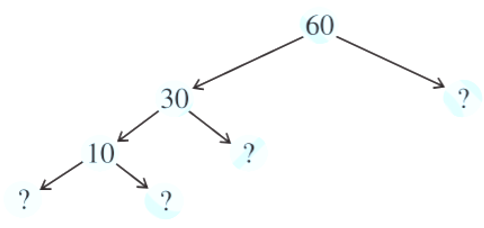
Here are two different factor trees for $60$. Write the missing numbers.
Answer
As we know that $60 = 30 \times 2$
$30 = 10 \times 3$
$10 = 5 \times 2$
So, the Missing numbers are: $2, 5, 3$ and $2.$
View full question & answer
Question 172 Marks
$18$ is divisible by both $2$ and $3$. It is also divisible by $2 \times 3 = 6$. Similarly, a number is divisible by both $4$ and $6$. Can we say that the number must also be divided by $4 \times 6 = 24$? If not, give an example to justify your answer.
Answer
No, we cannot say that the number will be divisible by $4 \times 6 = 24$, if it is divisible by both $4$ and 6 because $4$ and $6$ are not co-prime numbers (they have two common factors $1$ and $2$)
$Ex. 36$ is divisible by both $4$ and $6.$
But, $36$ is not divisible by $24.$
View full question & answer
Question 182 Marks
Find if the numbers $81$ and $16$ are co-prime or not.
Answer
$81$ and $16$
Factors of $81$ are $1, 3, 9, 27$ and $81$
Factors of $16$ are $1, 2, 4, 8$ and $16.$
$\therefore$ Common factor of $81$ and $16$ is $1.$
$\because$ $81$ and $16$ have only $1$ as the common factor.
$\therefore$ $81$ and $16$ are co-prime numbers.
View full question & answer
Question 192 Marks
Find if the numbers $216$ and $215$ are co-prime or not.
Answer
$216$ and $215$
Factors of $216$ are $1, 2, 3, 4, 6, 8, 9, 12, 18, 24, 27, 36, 54, 72, 108$ and $216.$
Factors of $215$ are $1,5$ and $43$
$\therefore$ Common factors of $216$ and $215$ is $1.$
$\because$ $216$ and $215$ have only $1$ as the common factor.
$\therefore$ $216$ and $215$ are co-prime numbers.
View full question & answer
Question 202 Marks
Find if the numbers $17$ and $68$ are co-prime or not.
Answer
$17$ and $68 :$
$1$ $\times$ $17=17$
Factors of $17$ are $1$ and $17.$
$1 \times 68 =68 ; 2 \times 34=68 ; 4 \times 17= 68$
Factors of $68$ are $1, 2, 4, 17, 34$ and $68.$
$\therefore$ Common factors of $17$ and $68$ are $1$ and $17.$
$\because$ $17$ and $68$ have two common factors.
$\therefore$ $17$ and $68$ are not co-prime numbers.
View full question & answer
Question 212 Marks
Find if the numbers $30$ and $415$ are co-primes or not.
Answer
$1 \times 30=30 ; 2 \times 15=30 ; 3 \times10=30 ; 5 \times 6=30$
Factors of $30$ are $1, 2, 3, 5, 6, 10, 15$ and $30.$
$1 \times 415=415 ; 5 \times 83=415$
Factors of $415$ are $1, 5, 83$ and $415.$
$\therefore$ Common factors of $30$ and $415$ are $1$ and $5.$
$\because 30$ and $415$ have two common factors.
$\therefore 30$ and $45$ are not co-prime numbers.
View full question & answer
Question 222 Marks
Find if the numbers $15$ and $37$ are co-primes or not.
Answer
$1 \times 15=15 ; 3 \times 5=15$
Factors of $15$ are $1, 3, 5$ and $15.$
$1 \times 37=37$
Factors of $37$ are $1$ and $37.$
$\therefore$ Common factor of $15$ and $37$ is $1$.
$\because 15$ and $37$ have only $1$ as the common factor.
$\therefore 15$ and $37$ are co-prime numbers.
View full question & answer
Question 232 Marks
Find if the numbers $18$ and $35$ are co-primes or not.
Answer
$1 \times 18=18 ; 2\times 9=18 ; 3 \times 6= 18$
Factors of $18$ are $1, 2, 3, 6, 9$ and $18.$
$1 \times 35=35 ; 5 \times7= 35$
Factors of $35$ are $1, 5, 7$ and $35.$
\therefore Common factor of $18$ and $35$ is $1.$
$\because 18$ and $35$ have only $1$ as the common factor.
$\therefore 18$ and $35$ are co-prime numbers.
View full question & answer
Question 242 Marks
Write all the numbers less than $100$ which are common multiples of $3$ and $4.$
Answer
Multiples of $3$ are $3, 6, 9, 12, 15, 18, 21, 24, 27, 30, 33, 36, 39, 42, 45, 48, 51, 54, 57, 60, 63, 66, 69, 72, 75, 78, 81, 84, 87, 90, 93, 96, 99, 102, 105, 108, .....$
Multiples of $4$ are $4, 8, 12, 16, 20, 24, 28, 32, 36, 40, 44, 48, 52, 56, 60, 64, 68, 72, 76, 80, 84, 88, 92, 96, 100, 104, 108, .....$
$\therefore $ Common multiples of $3$ and $4$ are $12, 24, 36, 48, 60, 72, 84, 96, 108, ....$
$\therefore $ All the numbers less than $100$ which are common multiples of $3$ and $4$ are $12, 24, 36, 48, 60, 72, 84$ and $96.$
View full question & answer
Question 252 Marks
Find first three common multiples of $12$ and $18.$
Answer
Multiples of $12$ are $12, 24, 36, 48, 60, 72, 84, 96, 108, 120, 132, 144, .....$
Multiples of $18$ are $18, 36, 54, 72, 90, 108, 126, 144, ....$
$\therefore $ Common multiples of $12$ and $18$ are $36, 72, 108, 144, ....$
$\therefore $ First three common multiples of $12$ and $18$ are $36, 72$ and $108.$
View full question & answer
Question 262 Marks
Find first three common multiples of $6$ and $8.$
Answer
$6$ and $8$
Multiples of $6$ are $6, 12, 18, 24, 30, 36, 42, 48, 54, 60, 66, 72, 78, 84, 90, 96, ....$
Multiple of $8$ are $8, 16, 24, 32, 40, 48, 56, 64, 72, 80, 88, 96, ....$
$\therefore $ Common multiples of $6$ and $8$ are $24, 48, 72, 96, ......$
$\therefore $ First three common multiples of $6$ and $8$ are $24, 48$ and $72.$
View full question & answer
Question 272 Marks
Find the common factors of $5, 15$ and $25$
Answer
$1 \times 5 = 5$
Factors of $5$ are $1$ and $5.$
$1 \times 15 = 15 ; 3 \times 5 = 15$
Factors of $15$ are $1, 3$ and $5.$
$1 \times 25 = 25 ; 5 \times 5 = 25$
Factors of $25$ are $1, 5$ and $25.$
Hence, the common factors of $5, 15$ and $25$ are $1$ and $5.$
View full question & answer
Question 282 Marks
Find the common factors of $4, 8$ and $12$
Answer
$1 \times 4=4 ; 2 \times 2=4$
Factors of $4$ are $1, 2$ and $4.$
$1 \times8 = 8 ; 2 \times 4 = 8$
Factors of $8$ are $1, 2, 4$ and $8.$
$1 \times 12 = 12 ; 2 \times 6 = 12 ; 3 \times 4 = 12$
Factors of $12$ are $1, 2, 3, 4, 6$ and $12.$
Hence, the common factors of $4, 8$ and $12$ are $1, 2$ and $4.$
View full question & answer
Question 292 Marks
Find the common factors of $56$ and $120$
Answer
$1 \times 56 = 56 ; 2 \times 28 = 56 ; 4 \times 14 = 56 ; 7 \times 8 = 56$
Therefore Factors of $56$ are $1, 2, 4, 7, 8, 14, 28$ and $56.$
$1 \times 120 = 120 ;$
$2 \times 60 = 120 ;$
$ 3 \times 40 = 120 ;$
$ 4 \times 30 = 120 ; $
$5 \times 24 = 120 ; $
$6 \times 20 = 120 ; $
$8 \times 15 = 120 ;$
$10 \times 12 = 120.$
Therefore Factors of $120$ are $1, 2, 3, 4, 5, 6, 8, 10, 12, 15, 20, 24, 30, 40, 60$ and $120$.
Hence, the common factors of $56$ and $120$ are $1, 2, 4$ and $8.$
View full question & answer
Question 302 Marks
Find the common factors of $35$ and $50$
Answer
$1 \times 35 = 35 ; 5 \times 7 = 35 .$
Therefore Factors of $35$ are $1, 5, 7$ and $35.$
$1 \times 50 = 50 ; 2 \times 25 = 50 ; 5 \times 10 = 50$
Therefore Factors of $50$ are $1, 5, 10, 25$ and $50.$
Hence, the common factors of $35$ and $50$ are $1$ and $5.$
View full question & answer
Question 312 Marks
Find the common factors of $15$ and $25$
Answer
$1 \times 15 = 15; 3 \times 5 = 15.$
Therefore Factors of $15$ are $1, 3, 5$ and $15.$
$1 \times 25 = 25; 5 \times 5 = 25.$
Therefore Factors of $25$ are $1, 5$ and $25.$
Hence, the common factors of $15$ and $25$ are $1$ and $5.$
View full question & answer
Question 322 Marks
Find the common factors of $20$ and $28$
Answer
$20$ and $28$
$1 \times 20 = 20 ; 2 \times 10 = 20 ; 4 \times 5 = 20.$
Therefore Factors of $20$ are $1, 2, 4, 5, 10$ and $20.$
$1 \times 28 = 28 ; 2 \times 14 = 28 ; 7 \times 4 = 28.$
Therefore Factors of $28$ are $1, 2, 4, 7, 14$ and $28.$
Hence, the common factors of $20$ and $28$ are $1, 2$ and $4.$
View full question & answer
Question 332 Marks
Write digit in the blank space of number so that the number is divisible by $11 : 8__9484$
Answer
Sum of the given digits (at odd places) from the right $= 4 + 4 +$ required digit $= 8 +$ required digit.
Sum of the given digits (at even places) from the right $= 8 + 9 + 8 = 25$
Difference of the sums $=25 -$ ($8$ +required digit)$=17 -$ required digit
For the above difference to be divisible by $11$, required digit $= 6$ because $17 - 6 = 11$, which is divisible by $11$.
Hence, the required number is $869484.$
View full question & answer
Question 342 Marks
Write digit in the blank space of the number so that the number is divisible by $11 : 92$__$389$
Answer
$92$__$389$
Sum of the given digits (at odd places) from the right $= 9 + 3 + 2 = 14$
Sum of the given digits (at even places) from the right $= 8 +$ required digit $+ 9$ = required digit $+ 17$
Difference of these sums = required digit $+ 3$
For the above difference to be divisible by $11$, required digit $= 8$ because $8+3=11$ which is divisible by $11$
Hence, the required number is $928389.$
View full question & answer
Question 352 Marks
Write the smallest digit and the largest digit in the blank space of number so that the number is divisible by $3 : 4765\_\_\ 2.$
Answer
$1.$ Smallest digit
Sum of the given digits $= 4 + 7 + 6 + 5 + 2 = 24$
$\because$ $24$ is divisible by $3$
$\therefore$ Smallest digit is $0.$
$2.$ Largest digit
The largest digit is $9$ because $24 + 9 = 33$ which is divisible by $3.$
View full question & answer
Question 362 Marks
Using divisibility tests, determine if $639210$ is divisible by $6.$
Answer
A number is divisible by $6$ if it is divisible by $2 \ \& \ 3$ both.
$i.$ Divisible by $2$
$\because$ Unit's digit $= 0$
$\therefore$ $639210$ is divisible by $2.$
$ii.$ Divisibility by $3$
Sum of the digit $= 6 + 3 + 9 + 2 + 1 + 0 = 21,$
which is divisible by $3$
$\therefore$ $639210$ is divisible by $3$
Since, $639210$ is divisible by $2$ and $3$ both, so it is divisible by $6.$
View full question & answer
Question 372 Marks
Using divisibility tests, determine if $1790184$ is divisible by $6.$
Answer
A number is divisible by $6$, if it is divisible by $2\ \&\ 3$ both.
$i.\ $Divisibility by $2$
$\because$ Unit's digit $= 4$
$\therefore 1790184$ is divisible by $2.$
$ii.\ $Divisibility by $3$
Sum of the digits $= 1 + 7 + 9 + 0 + 1 + 8 + 4 = 30,$
which is divisible by $3$
$\therefore 1790184$ is divisible by $3$
Since, $1790184$ is divisible by $2$ and $3$ both, so it is divisible by $6.$
View full question & answer
Question 382 Marks
Using divisibility tests, determine if number $438750$ is divisible by $6.$
Answer
A number is divisible by $6$, if it is divisible by $2\ \&\ 3$ both.
$i.\ $Divisibility by $2.$
$\because$ Unit's digit $= 0$
$\therefore$ $438750$ is divisible by $2$.
$ii.\ $Divisibility by $3.$
Sum of the digits $= 4 + 3 + 8 + 7 + 5 + 0 = 27,$
which is divisible by $3$
$\therefore$ $438750$ is divisible by $3$
Since, $438750$ is divisible by $2$ and $3$ both, so it is divisible by $6.$
View full question & answer
Question 392 Marks
Using divisibility test, determine if number $901352$ is divisible by $6.$
Answer
$i.\ $Divisibility by $2.$
$\because$ Unit's digit $= 2$
$\therefore$ $901352$ is divisibility by $2.$
$ii.\ $Divisibility by $3.$ 
Sum of the digits $= 9 + 0 + 1 + 3 + 5 + 2 = 20.$
which is not divisible by $3.$
$\therefore$ $901352$ is not divisible by $3.$
Since, $901352$ is divisible by $2$ but not by $3$, so it is not divisible by $6.$
View full question & answer
Question 402 Marks
Using divisibility test, determine if number $4335$ is divisible by $6.$
Answer
A number is divisible by $6$, if it is divisible by $2\ \& \ 3$ both.
$i.\ $Divisibility by $2$
$\because$ Unit's digit $= 5$, which is not any of the digits from $0, 2, 4, 6$ or $8.$
$\therefore$ $4335$ is not divisible by $2.$
$ii.\ $Divisibility by $3$ 
Sum of the digits $4 + 3 + 3 + 5 = 15$ which is divisible by $3.$
So $4335$ is also divisible by $3.$
$\therefore$ $4335$ is not divisible by $6$ because it is divisible by $3$ but not by $2.$
View full question & answer
Question 412 Marks
Using divisibility test, determine if number $1258$ is divisible by $6$
Answer
 
A number is divisible by $6$, if it is divisible by $2$ and $3$ both.
$i.\ $Divisibility by $2.$
$\because$ Unit's digit $= 8.$
$\therefore$ $1258$ is divisible by $2.$
$ii.\ $Divisibility by $3.$
Sum of the digits $= 1 + 2 + 5 + 8 = 16,$
which is not divisible by $3.$
Since, $1258$ is divisible by $2$ but not by $3,$
so $1258$ is not divisible by $6.$
 
View full question & answer
Question 422 Marks
Using divisibility tests, determine if number $297144$ is divisible by $6.$
Answer
We know that a number is divisible by 6 if it is divisible by $2$ and $3$ both.
$i.\ $Divisibility by $2.$
$\because$ Unit's digit $= 4$
$\therefore$ $297144$ is divisible by $2.$
$ii.\ $Divisibility by $3.$
Sum of the digits $= 2 + 9 + 7 + 1 + 4 + 4 = 27,$
which is divisible by $3.$
$\therefore$ $297144$ is divisible by $3.$
Since, $297144$ is divisible by $2$ and $3$ both, so it is divisible by $6.$
View full question & answer
Question 432 Marks
Using divisibility tests, determine if the number $1700$ is divisible by
$a.\ 5$
$b.\ 10$
Answer
$i.\ $Divisibility by $5$.
The last digit $= 0$
$\therefore$ $1700$ is divisible by $5$ because a no. is divisible by $5$ if it has $0$ or $5$ in its ones place.
$ii.\ $Divisibility by $10.$
The last digit $= 0$
$\therefore$$1700$ is divisible by $10$ because a no. is divisible by $10$ if it has $0$ in the ones place.
View full question & answer
Question 442 Marks
Using divisibility tests, determine if the number $31795072$ is divisible by
$a.\ 4$
$b.\ 8$
Answer
$i.\ $Divisibility by $4.$
The number formed by last two digits $= 72$
$\text { (4) } 72(18)$
$\frac{4}{32}$
$\frac{32}{0}$ 
$\because$ Remainder is $0.$
$\therefore 72$ is divisible by $4.$
$\therefore 31795072$ is divisible by $4$ because a no. is divisible by $4$ if the no. formed by its last two digits is divisible by $4.$
$ii.\ $Divisibility by $8.$
The number formed by last three digits $= 072 = 72$
$(8) 72(9)$
$\frac{72}{0}$
$\because$ Remainder is $0.$
$\therefore 72$ is divisible by $8$.
$\therefore 31795072$ is divisible by $8$ because a no. is divisible by $8$ if no. formed by its last three digits is divisible by $8.$
View full question & answer
Question 452 Marks
Using divisibility tests, determine if the number $21084$ is divisible by
$a.\ 4$
$b.\ 8$
Answer
$i.$ Divisibility by $4$
The number formed by last two digits $= 84$

$4)84(21$
$\underline {8}$
$4$
$\underline{4}$
$0$
$84$ is divisible by $4$
So $21084$ is also divisible by $4$ because a no. is divisible by $4$ if the no. formed by its last two digits $($ i.e ones and tens $)$ is divisible by $4.$
$ii.$ Divisibility by $8$
The number formed by last three digits $= 084 = 84 (8)84(10)$
$\underline {8}$
$4$
$\underline{0}$
$4$
$\because$ Remainder is not $0.$
$\therefore$ $84$ is not divisible by $8.$
$\therefore$ $21084$ is not divisible by $8$ because a no. is divisible by $8$ only if the no. formed by its last three digits is divisible by $8.$

View full question & answer
Question 462 Marks
Using divisibility tests, determine if the no.$14560$ is divisible by
$a.\ 4$
$b.\ 8$
Answer
$i.$ Divisibility by $4.$
The number formed by last two digits $= 60.$
$4)60(15$
$\underline {4}$
$20$
$\underline{20}$
$0$
$\because$ Remainder is $0.$
$\therefore$ $60$ is divisible by $4.$
$\therefore$ $14560$ is divisible by $4$ because a no. is divisible by $4$ only if the no. formed by its last two digits $($ i.e ones and tens $)$ is divisible by $4.$
$ii.$ Divisibility by $8.$
The number formed by last three digits $= 560$
$8)560(70$
$\underline {56}$
$0$
$\underline{0}$
$0$
$\because$ Remainder is $0.$
$\therefore$ $560$ is divisible by $8.$
$\therefore$ $14560$ is divisible by $8$ because a no. is divisible by $8$ if the no.
​​​​​​​formed by its last three digits is divisible by $8.$
View full question & answer
Question 472 Marks
Using divisibility tests, determine if the number $12159$ is divisible by
$a.\ 4$
$b.\ 8$
Answer
 
$i.$ Divisibility by $4$
The number formed by last two digit $= 59$
$(4)59(14)$
$\underline {4}$
$19$
$\underline{16}$
$3$
$\because$ Remainder is not $0$
$\therefore$ $59$ is not divisible by $4.$
$\therefore$ $12159$ is not divisible by $4$ because a no. is divisible by $4$ only if its last two digits are divisible by $4.$
$i.$ Divisible by $8$
The number formed by last three digits $= 159$.
$(8)159(19)$
$\underline {8}$
$79$
$\underline{72}$
$7$
$\because$ Remainder is not $0$
$\therefore$ $159$ is not divisible by $8.$
$\therefore$ $12159$ is not divisible by $8$ because a no. is divisible by $8$ only if its last three digits are divisible by $8$.
 
View full question & answer
Question 482 Marks
Using divisibility tests, determine if the number $6000$ is divisible by
$a.\ 4$
$b.\ 8$
Answer
$(i)$ Divisibility by $4.$
The number formed by last two digits $= 00,$
which is divisible by $4$
$\therefore 6000$ is divisible by $4$ because a no. is divisible by $4$ if the no. formed by its last two digits (i.e ones and tens) is divisible by $4.$
$(ii)$ Divisibility by $8.$
The number formed by last three digits $= 000,$
which is divisible by $8.$
$\therefore 6000$ is divisible by $8$ because a no. is divisible by $8$ if the no. formed by its last three digits is divisible by $8$.
View full question & answer
Question 492 Marks
Using divisibility tests, determine if the number $5500$ is divisible by
$a.\ 4$
$b.\ 8$
Answer
$i.$ Divisibility by $4.$
The number formed by last two digits $= 00,$ which is divisible by $4.$
$\therefore \ 5500$ is divisible by $4$ because a no. is divisible by $4$ if, no. formed by its last two digits $($ i.e ones and tens$)$ is divisible by $4.$
$ii$ Divisible by $8.$
The number formed by last three digits $= 500.$
$(8)500(62)$
$\underline {48}$
$20$
$\underline{16}$
$4$
$\because$ Remainder is not $0$
$\therefore$ $500$ is not divisible by
$\therefore$$5500$ is not divisible by $8$ because a no. is divisible by $8$ if , the no.formed by its last three digits is divisible by $8.$
View full question & answer
Question 502 Marks
Using divisibility tests, determine if the number $726352$ is divisible by
$a.\ 4$
$b.\ 8$
Answer
 
$a.$ Divisibility by $4$
The number formed by last two digits $= 52$
$4)52(13$
    $\underline {4}$
  $12$
  $\underline{12}$
    $0$
$\because$ Remainder is $0$
$\therefore$ $52$ is divisible by $4$
$\therefore 726352$ is divisible by $4$ because a no. is divisible by $4$ if the no. formed by its last two digits i.e (ones and tens) is divisible by $4$
$b.$ Divisibility by $8.$
The number formed by last three digits $= 352$
$8)352(44$
    $\underline {32}$
    $32$
    $\underline{32}$
     $0$
$\because$ Remainder is $0$
$\therefore$ $352$ is divisible by $8.$
​​​​​​$\therefore$ $726352$ is divisible by $8$ because a no. with four or more digits is divisible by $8$ if the no. formed by its last three digits is divisible by $8.$
 
View full question & answer