Questions

5 Marks Questions

Take a timed test

25 questions · self-marked practice — reveal the answer and mark yourself.

Question 15 Marks
Can you describe what happens when milk is converted into curd or yoghurt, from your understanding of proteins.
Answer
Proteins are macromolecules formed by the polymerization of amino acids. Structurally, proteins are divided into four levels.
  1. Primary structure – It is the linear sequence of amino acids in a polypeptide chain.
  2. Secondary structure – The polypeptide chain is coiled to form a three-dimensional structure.
  3. Tertiary structure – The helical polypeptide chain is further coiled and folded to form a complex structure.
  4. Quaternary structure – More than one polypeptide chains assemble to form the quaternary structure.
Milk has many globular proteins. When milk is converted into curd or yoghurt, these complex proteins get denatured, thus converting globular proteins into fibrous proteins. Therefore, by the process of denaturation, the secondary and tertiary structures of proteins are destroyed.
View full question & answer
Question 25 Marks
Proteins have primary structure. If you are given a method to know which amino acid is at either of the two termini (ends) of a protein, can you connect this information to purity or homogeneity of a protein?
Answer
Yes, if we are given a method to know the sequence of proteins, we can connect this information to the purity of a protein. It is known that an accurate sequence of a certain amino acid is very important for the functioning of a protein. If there is any change in the sequence, it would alter its structure, thereby altering the function. If we are provided with a method to know the sequence of an unknown protein, then using this information, we can determine its structure and compare it with any of the known correct protein sequence. Any change in the sequence can be linked to the purity or homogeneity of a protein.
For example, any one change in the sequence of hemoglobin can alter the normal hemoglobin structure to an abnormal structure that can cause sickle cell anemia.
View full question & answer
Question 35 Marks
Describe the important properties of enzymes.
Answer
The important properties of enzymes are as follows:
  1. The enzymes are generally proteins which are high molecular weight complex globular proteins. They can associate with non-protein substance for their activity.
  2. The enzymes do not start a chemical reaction but only accelerate it. They combine temporarily with the substrate molecules and are not consumed or changed permanently in the reaction which they catalyse.
  3. The enzyme controlled reactions are reversible.
  4. The enzymes are specific in action. An enzyme catalyses only a particular kind of reaction or acts on a particular substrate only.
  5. The enzymes are thermo labile i.e., heat sensitive and can function best at an optimum temperature. Similarly, enzymes show maximum activity at optimum pH.
  6. The enzymes are inactivated by poisons and radiation.
View full question & answer
Question 45 Marks
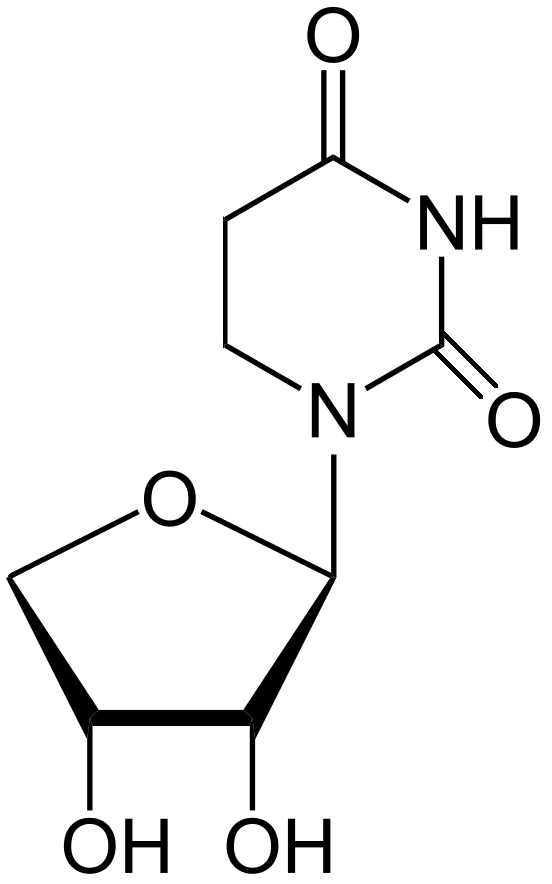
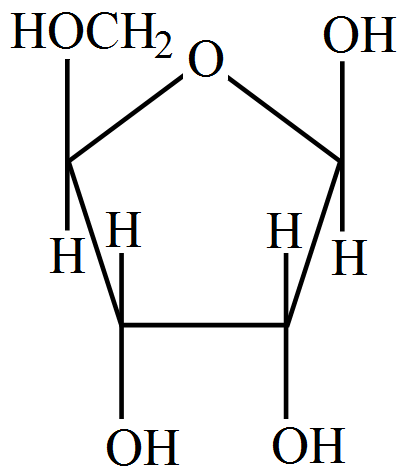
Find and write down structures of 10 interesting small molecular weight biomolecules. Find if there is any industry which manufactures the compounds by isolation. Find out who are the buyers.
View full question & answer
Question 55 Marks
Find out a qualitative test for proteins, fats and oils, amino acids and test any fruit juice, saliva, sweat and urine for them.
Answer
  1. Test for protein

Biuret’s test – If Biuret’s reagent is added to protein, then the colour of the reagent changes from light blue to purple.

  1. Test for fats and oils

Grease or solubility test

  1. Test for amino acid

Ninhydrin test – If Ninhydrin reagent is added to the solution, then the colourless solution changes to pink, blue, or purple, depending on the amino acid.

 
Item
Name of the test
Procedure
Result
Inference
1.
Fruit juice
Biuret’s test
Fruit juice + Biuret’s reagent
Colour changes from light blue to purple.
Protein is present.
 
 
Greasetest
To a brown paper, add a few drops of fruit juice.
No translucent spot.
Fats and oils are absent or are in negligible amounts.
 
 
Ninhydrin test
Fruit juice +Ninhydrin reagent + boil for 5 minutes.
Colourless solution changes to pink, blue, or purple colour.
Amino acids are present.
2.
Saliva
Biuret’s test
Saliva + Biuret’s reagent
Colour changes from light blue to purple.
Proteins are present.
 
 
Greasetest
On a brown paper, add a drop of saliva.
No translucent spot
Fats/oils are absent.
 
 
Ninhydrin test
Saliva + Ninhydrin reagent + boil for 5 minutes.
Colourless solution changes to pink, blue, or purple colour.
Amino acids are present.
3.
Sweat
Biuret’s test
Sweat + Biuret’s reagent
No colour change
Proteins are absent.
 
 
Solubility test
Sweat + Water
Oily appearance
Fats/oil may be present.
 
 
Ninhydrin test
Sweat + Ninhydrin reagent + boil for 5 minutes
No colour change, solution remains colourless.
Amino acids are absent.
4.
Urine
Biuret’s test
Few drops of urine + Biuret’s reagent
Colour changes from light blue to purple.
Proteins are present.
 
 
Solubility test
Few drops of urine + Water
Little bit of oily appearance.
Fats may or may not be present.
 
 
Ninhydrin test
Few drops of urine + Ninhydrin reagent + boil for 5 minutes.
Colourless solution changes to pink, blue, or purple colour depending on the type of amino acid.
Amino acids are present.
View full question & answer
Question 65 Marks
Can you attempt building models of biomolecules using commercially available atomic models (Ball and Stick models).
Answer

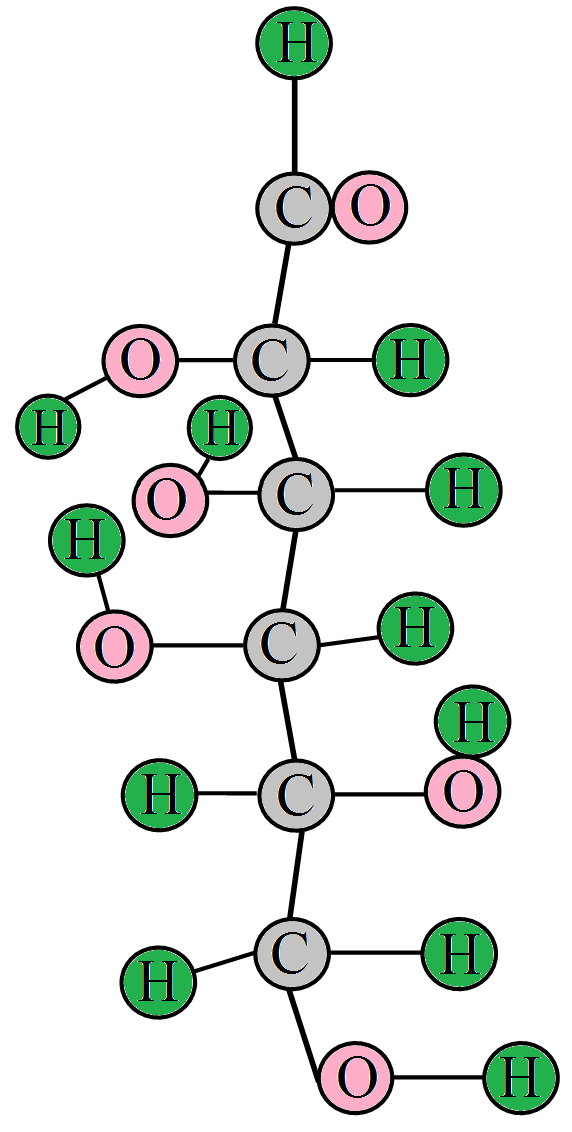
Yes. The biomolecules can be represented by the ball and stick model. The bonds which hold the atoms are represented by sticks, whereas the atoms are represented by balls.

Example: In the model of D-glucose, the oxygen atoms are represented by pink balls, the hydrogen atoms by green balls, while the carbon atoms are represented by grey balls.

View full question & answer
Question 75 Marks
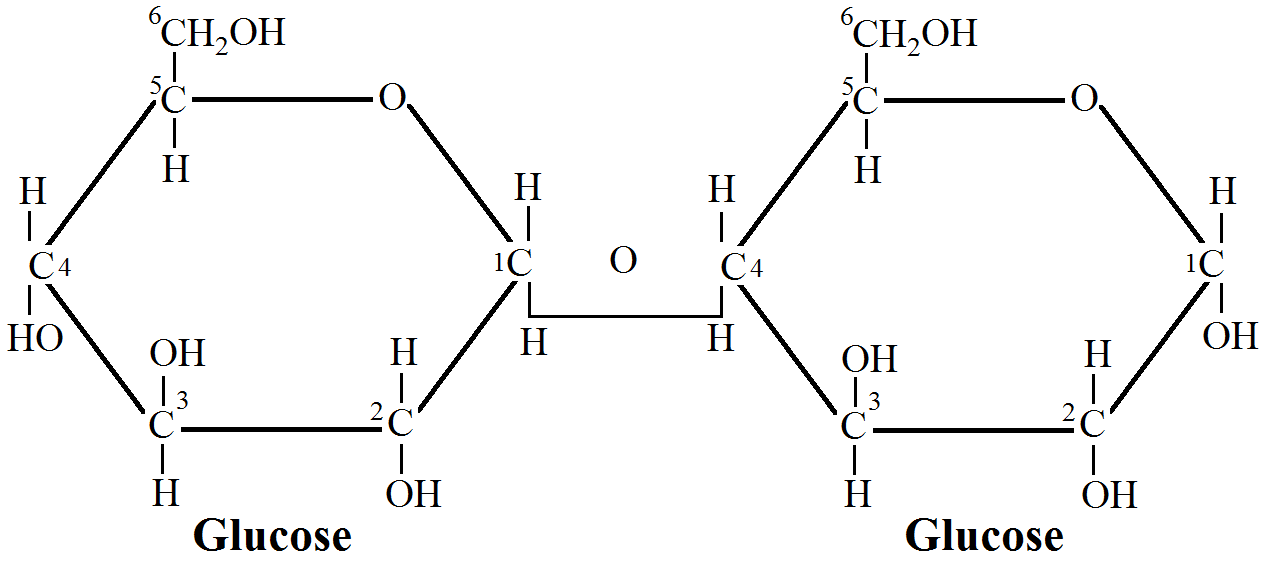
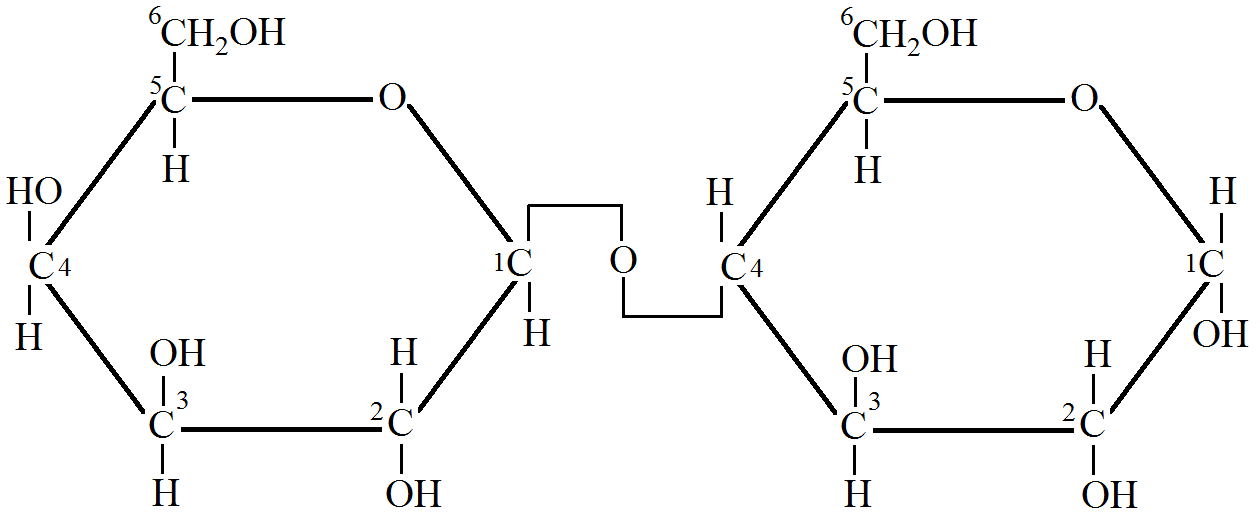
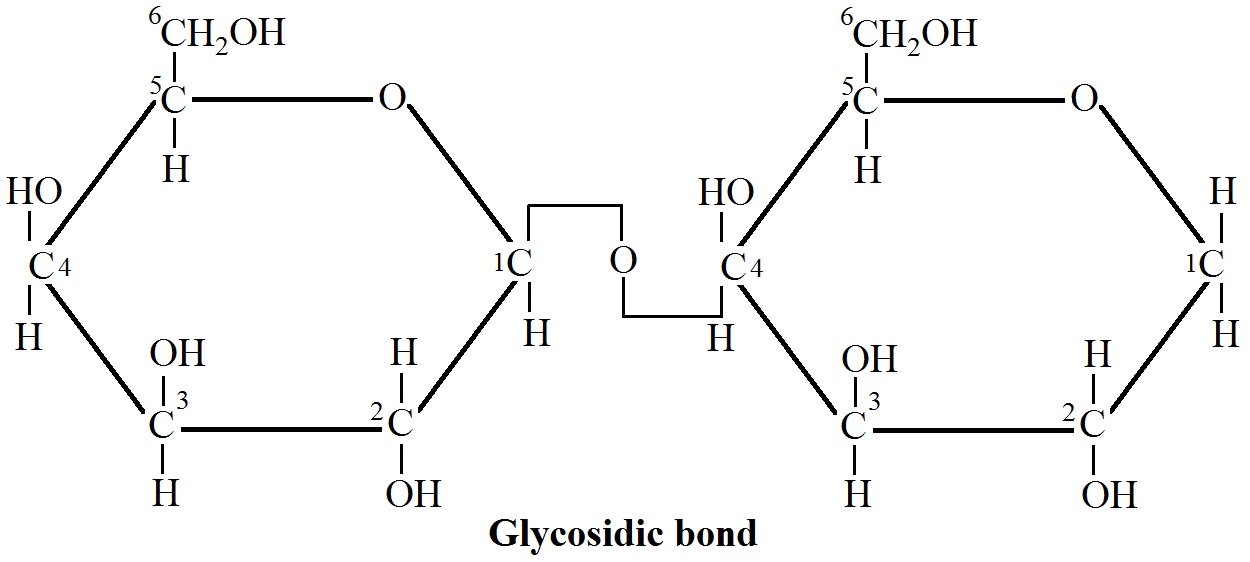
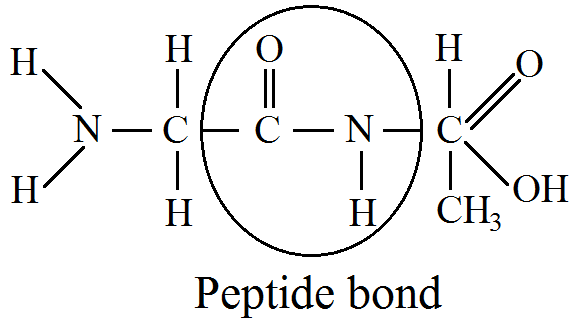
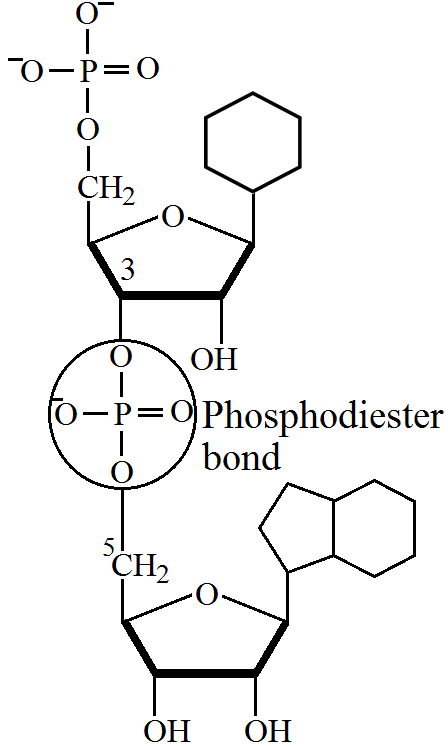
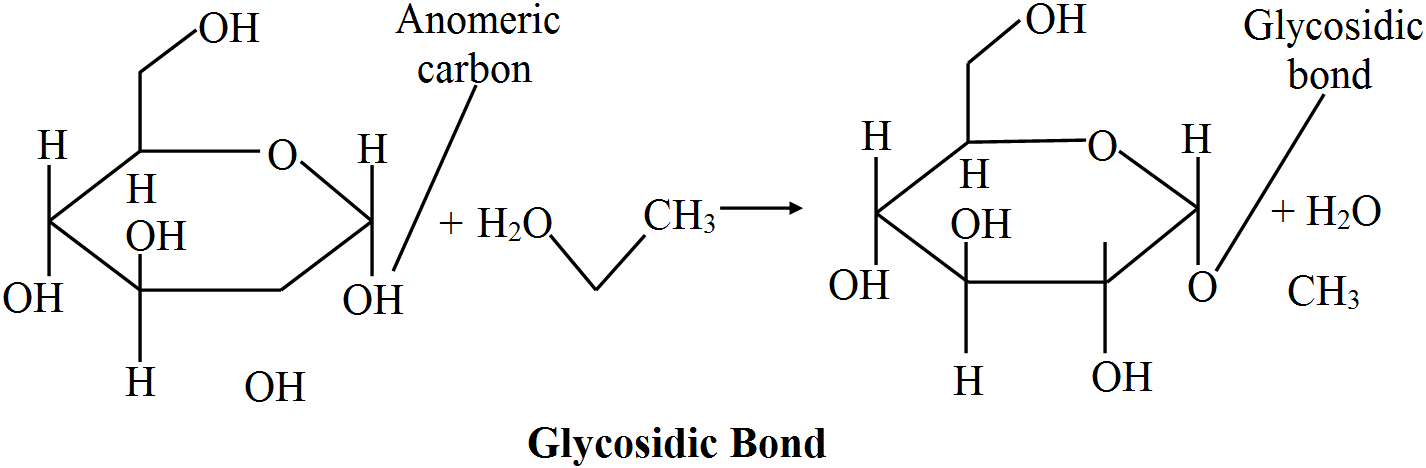
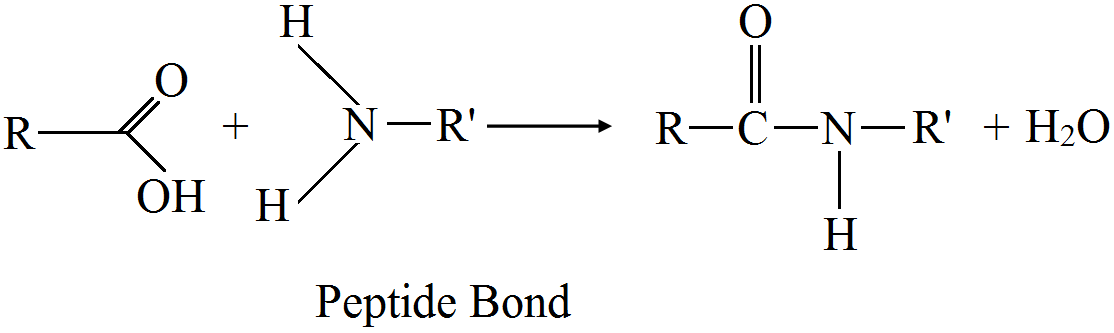
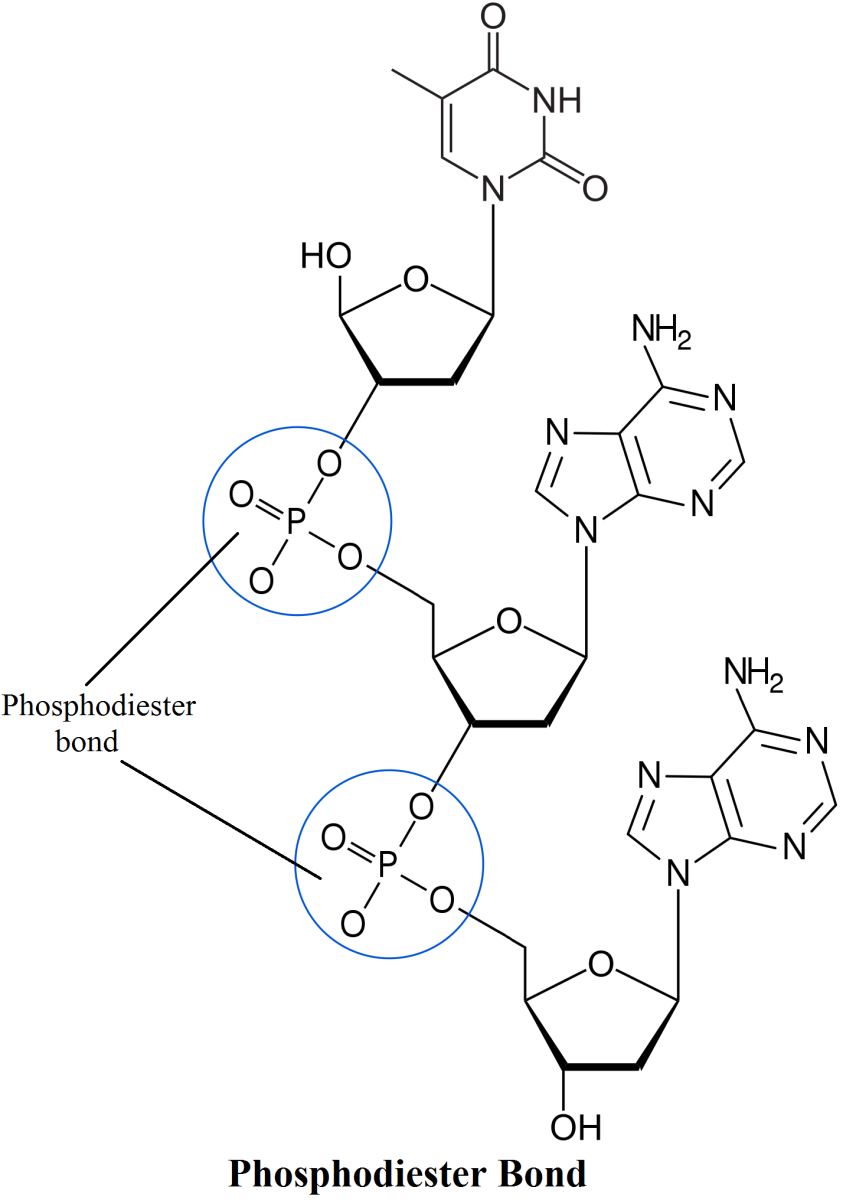
Illustrate a glycosidic, peptide and a phospho-diester bond.
Answer
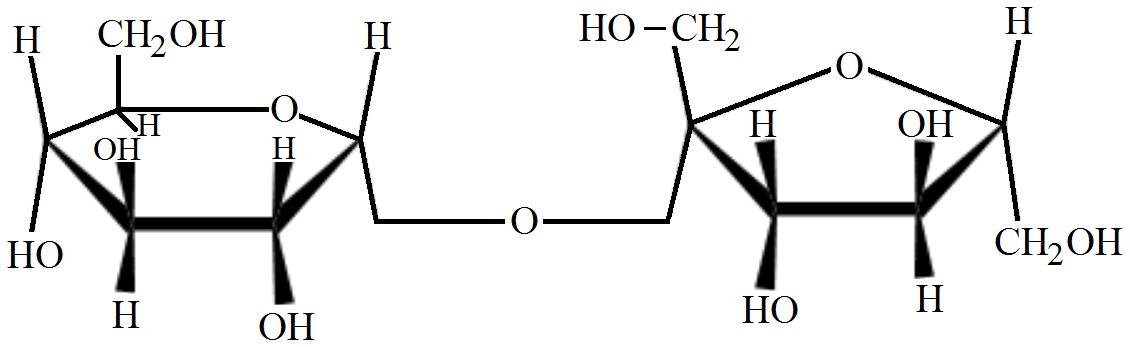
 Glycosidic bond is formed normally between carbon atoms, 1 and 4, of neighbouring monosaccharide units.

Peptide bond is a covalent bond that joins the two amino acids by – NH – CO linkage.

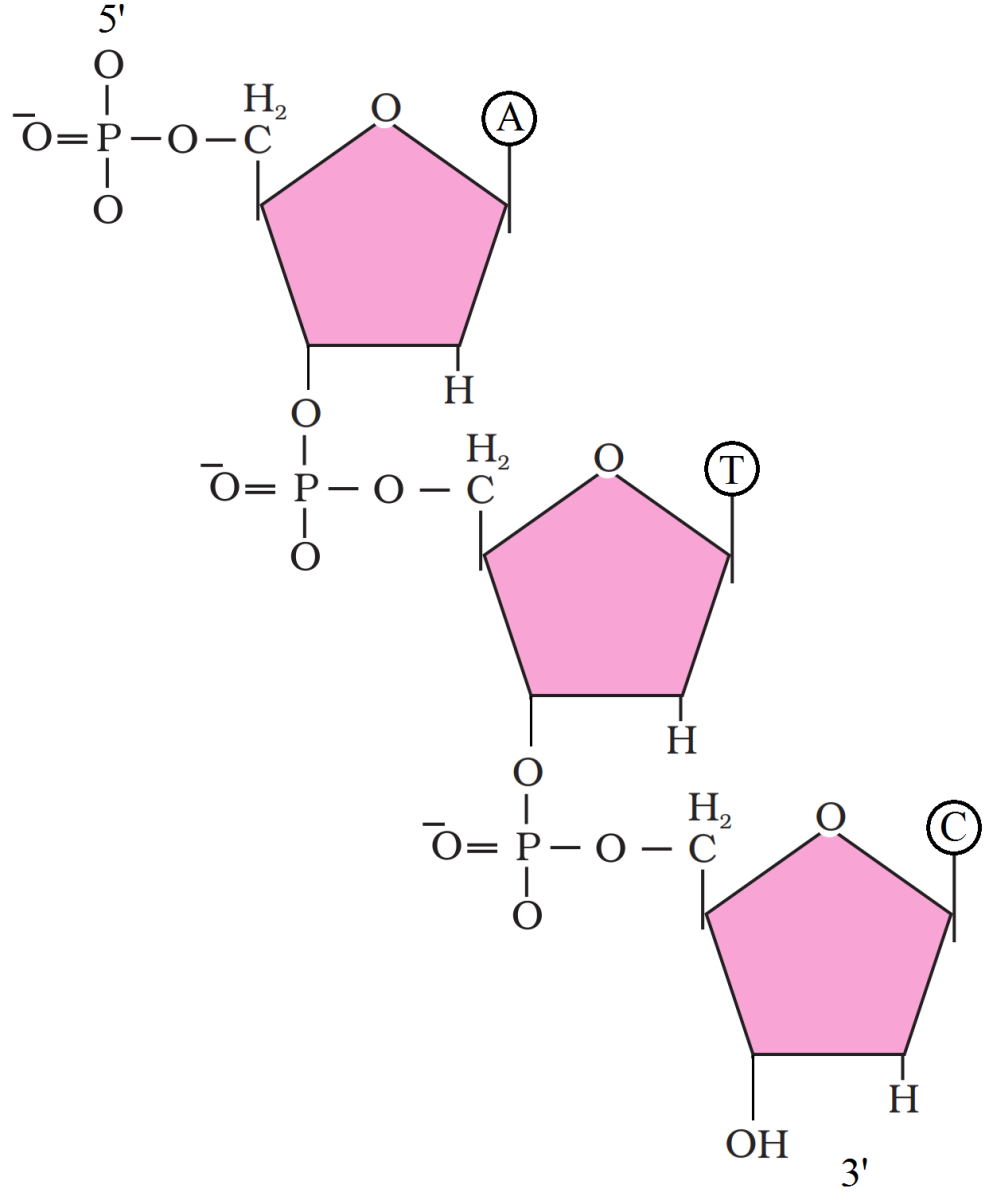
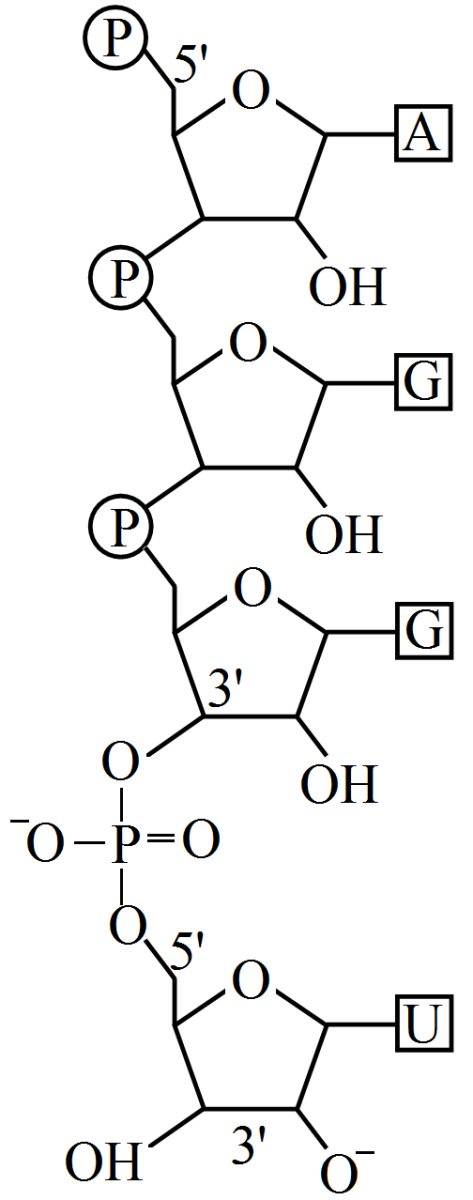
Phosphodiester bond is a strong covalent bond between phosphate and two sugar groups. Such bonds form the sugar phosphate backbone of nucleic acids.


View full question & answer
Question 85 Marks
  1. Identify the structure shown in figure.
  2. Write the measurement (distance) of the parts marked (A), (B), (C).
  3. How many H-bonds are there at the place marked as (6)?
  4. Which form of DNA is shown in the figure?
  5. Whether B type DNA has left-handed spiral structure or right- handed?

Answer
  1. Double helix model of DNA (Walton-Crick model of DNA).
  2. (A) 2 nm (B) 3.4 rim (C) 0.34 run.
  3. The bonds between C and G are three.
  4. This is B-form of DNA.
  5. B-DNA is right-handed spiral structure.
View full question & answer
Question 95 Marks
What is meant by turn over of biomolecules?
Answer
Turn over of biomolecules means that they are constantly being changed into some other biomolecules and also made from some other biomolecules.
View full question & answer
Question 105 Marks
Describe various forms of lipid with a few examples.
Answer
Lipids are fatty acids esters of alcohols and related substances which are insoluble in water but get dissolved in a number of non-polar organic solvents like ether, benzene, chloroform, acetone, etc.Depending upon their composition and characteristics lipids are often classified into. Simple lipids, compound lipids and derived lipids.
  1. Simple lipids– These are formed from fatty acids and alcohol. They do not have any additional group, e.g., fats, suberin, cutin, wax.
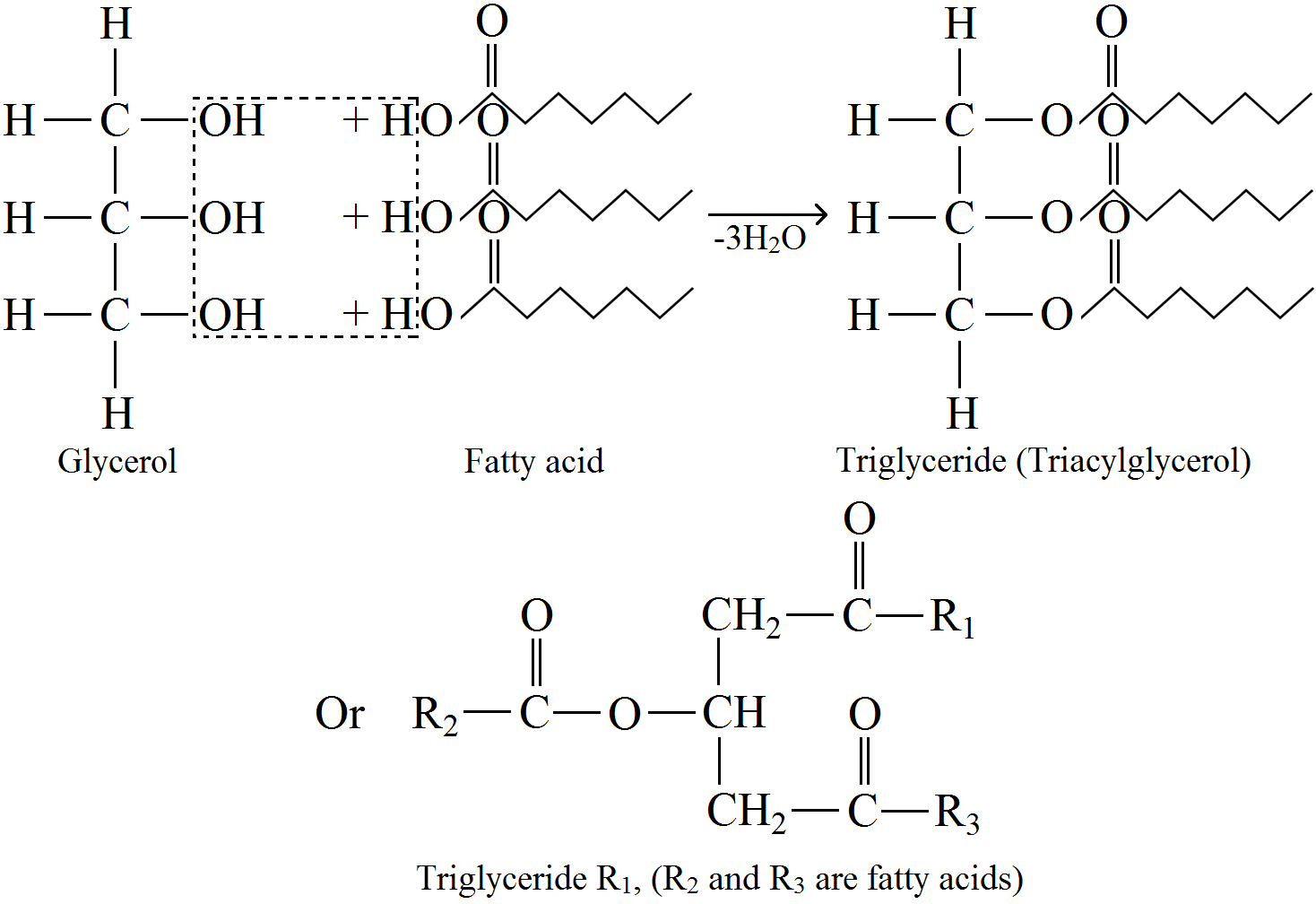
    1. Neutral or true fats– They are triglycerides which are formed by esterification of three molecules of fatty acids with one molecule of trihydric alcohol, glycerol (glycerine or trihydroxy propane). Three molecules of water are eliminated.fatty acids, e.g., dipalmito-stearin, palmito-oleio-stearin, steario-oleio-palmitin. In fats the three fatty acids are only rarely similar (e.g., tripalmitin, tristearin, triolein). They are called pure fats. Usually they are dissimilar or two of the three fatty acids are similar. They are known as mixed fats, e.g., Butter. Fats are named after the names of fatty acids, e.g., dipalmito-stearin, palmito-oleio-stearin, steario-oleio-palmitin.
    2. Waxes– They are fatty acid esters of long chain monohydric alcohols like cytyl, ceryl or mericyl.
    3. Cutin– It is a complex lipid produced by cross-esterification and polymerisation of hydroxy fatty acids, as well as other fatty acids with or without esterification by alcohols other than glycerol.
    4. Suberin– It is a mixture of fatty material having condensation products of glycerol and phellonic acid or its derivatives.
  2. Compound or conjugated lipids: These are the esters of fatty acids and alcohol but contain other substances also, e.g., phosphor lipid, glycol lipids, sphingo lipids etc.
    1. Phospholipids- They are triglyceride lipids where one fatty acid is replaced by phosphoric acid which is often linked to ‘additional nitrogenous groups like choline (in lecithin), ethanolamine (in cephalin), serine or inositol.”
    2. Sphingo lipids– They are lipids having amino alcohol sphirigosine. Sphingomyelins contain an additional phosphate attached to choline like phospholipids.
    3. Glycol lipids– These are sugar containing lipids, in which the lipids portion of themolecule is usually based on glycerol or sphingosine and the sugar is typically galactose, glucose or inositol.
  3. Derived lipids: These are lipid-like substance such as sterol or derivatives of lipids, e.g., steroids, prostaglandins and teapenes.
    1. Steroids– They are a group of complex lipids that possess a hydrogenated cyclopentano-perhydrophenanthrene ring system.
    2. Prostaglandins– They are derivatives of arachidonic acid and other 20 carbon fatty acids.
    3. Terpenes– They are lipid like hydrocarbons formed of isoprene (C5H8) units. Steroids like cholesterol are also derived from terpenes having 6 isoprene units. Fats are also differentiated into two main types, on the basis of their melting points at room temperature as follows. Hard Fats are solids at room temperature and contains long chains of fatty acids, e.g., Animals fat.
View full question & answer
Question 115 Marks
Describe the concept of metabolism. What are anabolic and catabolic pathways?
Answer
One of the greatest discoveries ever made was the observation that all these biomolecules have a turnover. This means that they are constantly being changed into some other biomolecules and also made from some other biomolecules. This breaking and making is through chemical reactions constantly occurring in living organisms. Together all these chemical reactions are called metabolism. Each of the metabolic reactions results in the transformation of biomolecules. A few examples for such metabolic transformations are: removal of CO2 from amino acids making an amino acid into an amine, removal of amino group in a nucleotide base; hydrolysis of a glycosidic bond in a disaccharide, etc.
Metabolic Pathways: Majority of these metabolic reactions do not occur in isolation but are always linked to some other reactions. In other words, metabolites are converted into each other in a series of linked reactions called metabolic pathways.
These pathways are either linear or circular. These pathways crisscross each other, i.e., there are traffic junctions. Flow of metabolites through metabolic pathway has a definite rate and direction like automobile traffic. This metabolite flow is called the dynamic state of body constituents. What is most important is that this interlinked metabolic traffic is very smooth and without a single reported mishap for healthy conditions. Another feature of these metabolic reactions is that every chemical reaction is a catalysed reaction. There is no uncatalysed metabolic conversion in living systems.
The catalysts which hasten the rate of a given metabolic conversation are also proteins. These proteins with catalytic power are named enzymes.
Anabolic Pathways: Anabolic pathways convert simpler structure molecules to complex molecules. Anabolic pathways consume energy to synthesize something.
Catabolic Pathways: Catabolic pathways convert complex molecules into simple molecules. Catabolic pathways release energy while breaking down molecules. Living organisms have learnt to trap this energy liberated during degradation and store it in the form of chemical bonds. As and when needed, this bond energy is utilized for biosynthetic, osmotic and mechanical work that we perform. The most important form of energy currency in living systems is the bond energy in a chemical called adenosine triphosphate (ATP).
View full question & answer
Question 125 Marks
Explain the nature of bonds linking monomers in a polymer.
Answer
Nature of bond linking monomers in a polymer.

Glycosidic Bond: A glycosidic bond is a certain type of functional group that joins a carbohydrate (sugar) molecule to another group, which may or may not be another carbohydrate.

Peptide Bond: A peptide bond (amide bond) is a chemical bond formed between two molecules when the carboxyl group of one molecule reacts with the amine group of the other molecule, thereby releasing a molecule of water (HO). This is a dehydration synthesis reaction (also known as a condensation reaction), and usually occurs between amino acids. The resulting CO-NH bond is called a peptide bond, and the resulting molecule is an amide. The four-atom functional group -C(=O)NH- is called an amide group or (in the context of proteins) a peptide group. Polypeptides and proteins are chains of amino acids held together by peptide bonds, as is the backbone of PNA. Polyamides, such as nylons and aramids, are synthetic molecules (polymers) that possess peptide bonds.

Phosphodiester Bond: A phosphodiester bond is a group of strong covalent bonds between a phosphate group and two other molecules over two ester bonds. Phosphodiester bonds are central to all life on Earth, as they make up the backbone of the strands of DNA. In DNA and RNA, the phosphodiester bond is the linkage between the 3' carbon atom of one sugar molecule and the 5' carbon of another, deoxyribose in DNA and ribose in RNA.

View full question & answer
Question 135 Marks
What are factors which affect action of enzyme? What is lock and key model and induced fit model?
Answer
Factors Affecting Enzymatic Action
Temperature and pH: Enzymes generally function in a narrow range of temperature and pH. Each enzyme shows its highest activity at a particular temperature and pH called the optimum temperature and optimum pH. Activity declines both below and above the optimum value. Low temperature preserves the enzyme in a temporarily inactive state whereas high temperature destroys enzymatic activity because proteins are denatured by heat.
Concentration of Substrate: With the increase in substrate concentration, the velocity of the enzymatic reaction rises at first. The reaction ultimately reaches a maximum velocity (Vmax) which is not exceeded by any further rise in concentration of the substrate. This is because the enzyme molecules are fewer than the substrate molecules and after saturation of these molecules, there are no free enzyme molecules to bind with the additional substrate molecules.
Effect of Inhibitor: The activity of an enzyme is also sensitive to the presence of specific chemicals that bind to the enzyme. When the binding of the chemical shuts off enzyme activity, the process is called inhibition and the chemical is called an inhibitor. When the inhibitor closely resembles the substrate in its molecular structure and inhibits the activity of the enzyme, it is known as.
Competitive inhibitor: Due to its close structural similarity with the substrate, the inhibitor competes with the substrate for the substrate binding site of the enzyme. Consequently, the substrate cannot bind and as a result, the enzyme action declines, e.g., inhibition of succinic dehydrogenase by malonate which closely resembles the substrate succinate in structure. Such competitive inhibitors are often used in the control of bacterial pathogens.
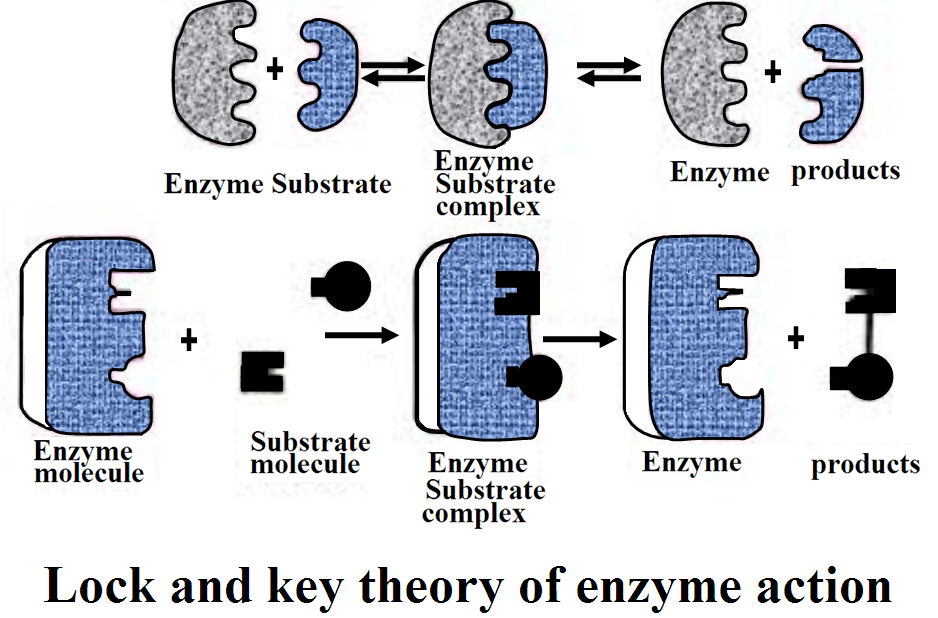
"Lock and Key” Model: Enzymes are very specific, and it was suggested by Emil Fischer in 1894 that this was because both the enzyme and the substrate possess specific complementary geometric shapes that fit exactly into one another. This is often referred to as “the lock and key” model. However, while this model explains enzyme specificity, it fails to explain the stabilization of the transition state that enzymes achieve. The “lock and key” model has proven inaccurate, and the induced fit model is the most currently accepted enzyme-substrate-coenzyme figure.
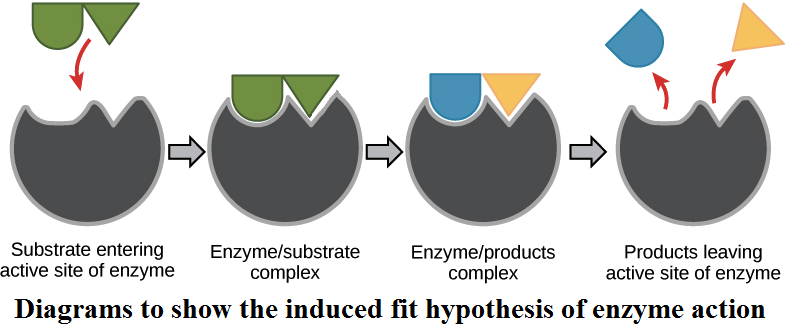
Induced Fit Model: In 1958, Daniel Koshland suggested a modification to the lock and key model: since enzymes are rather flexible structures, the active site is continually reshaped by interactions with the substrate as the substrate interacts with the enzyme. As a result, the substrate does not simply bind to a rigid active site; the amino acid side chains which make up the active site are molded into the precise positions that enable the enzyme to perform its catalytic function. In some cases, such as glycosidases, the substrate molecule also changes shape slightly as it enters the active site. The active site continues to change until the substrate is completely bound, at which point the final shape and charge is determined.
View full question & answer
Question 145 Marks
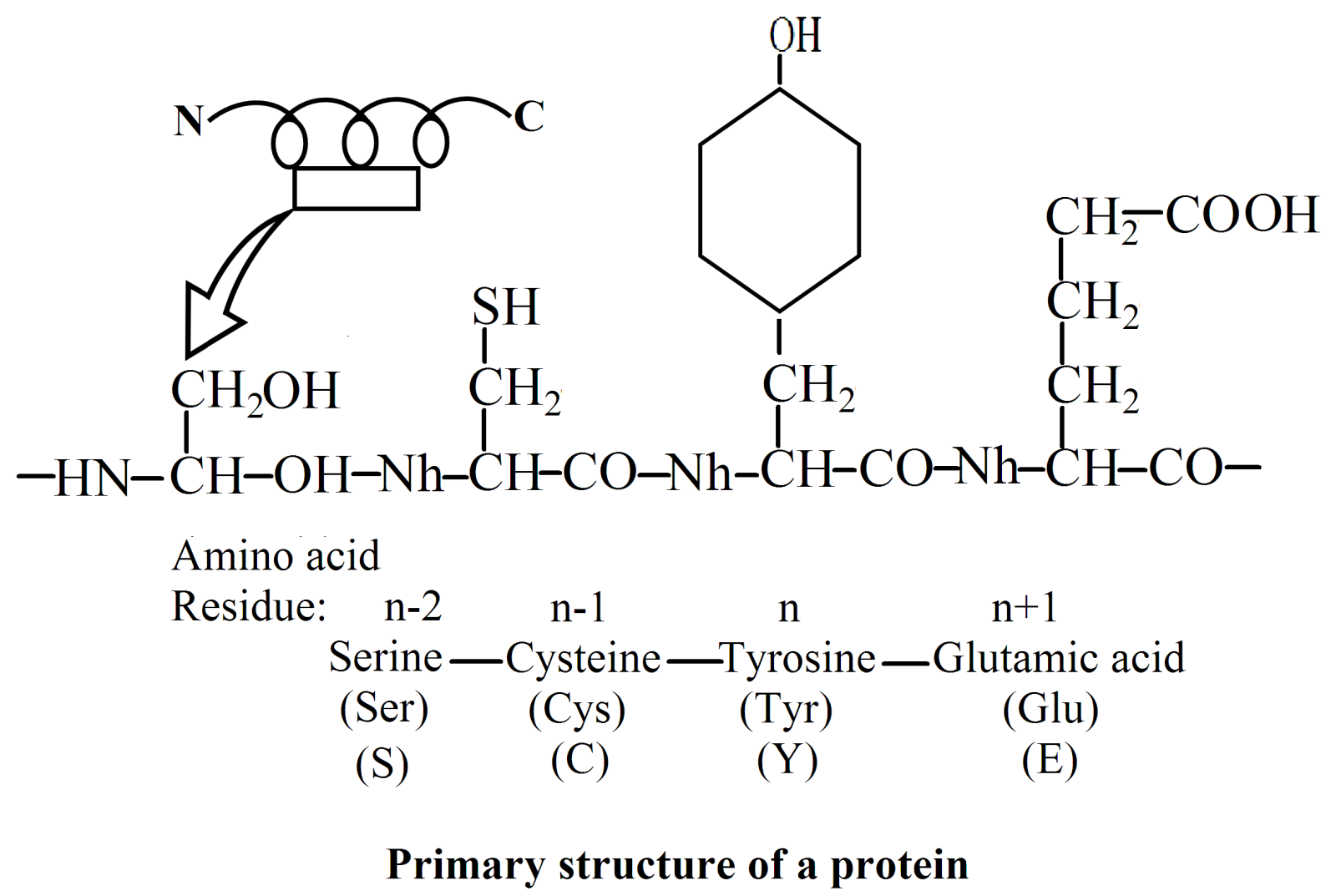
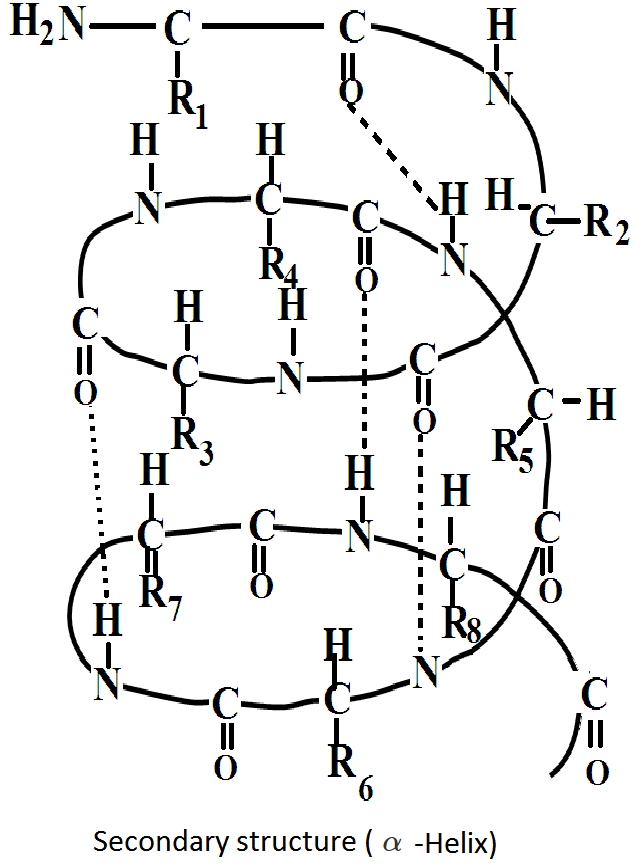
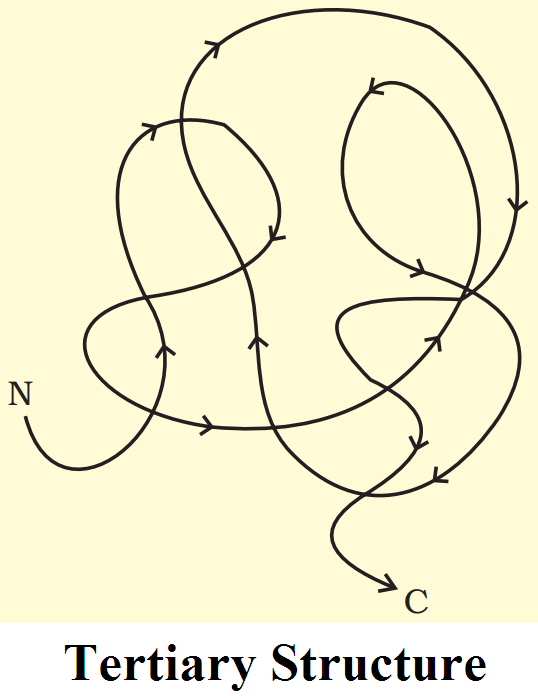
Schematically represent primary, secondary and tertiary structures of a hypothetical polymer say for example a protein.
Answer
Primary structure of a protein includes number of polypeptides, number and sequence of amino acids in each polypeptide.

The development of new stearic relationships of amino acids present in linear sequence inside the polypeptides leads to the formation of secondary structure of proteins.

Tertiary structure involves interactions that are caused by binding and folding of a-helix or P sheets leading to the formation of rods, spheres or fibres. Tertiary structure is stabilized by several types of bonds such as, H-bonds, ionic bonds, covalent bonds, van der Waal’s interactions hydrophobic bonds, etc.

View full question & answer
Question 155 Marks
Describe any four classes of enzymes. Make distinction between prosthetic group and coenzymes.
Answer
Classes of enzymes

  1. Class 1: Oxidoreductases:
  • These enzymes catalyse the oxidation (by adding oxygen or removal of hydrogen or removal of electrons) or reduction (by adding hydrogen or adding electrons to a substrate) of a substance.

S reduced + S'oxidised → S oxidised + S' reduced

  1. Class 2: Transferases:
  • These enzymes catalyse the transfer of specific groups from one substrate to another.

S - G + S' → S + S’ - G

  1. Class 3: Hydrolases:
  • These enzymes catalyse the breakdown of larger molecules into smaller molecules with the addition of water.
  1. Class 4: Lyases:
  • These enzymes catalyse the cleavage of specific covalent bonds and removal of specific group(s), without the use of water.

$\text{X}\ \ \ \ \text{Y}\\ |\ \ \ \ \ \ \ |\\\text{C}-\text{C}\rightarrow \text{X}-\text{Y}+\text{C}=\text{C}$

  1. Class 5: Isomerases:
  • These enzymes catalyse the rearrangement of atoms in a molecule to form isomers.
  1. Class 6: Ligases:
  • These enzymes catalyse covalent bonding (of C - O, C - S, C - N, P - O etc.) between two substrates to form a large molecule, mostly involving utilisation of energy by hydrolysis of ATP.
S. No.
Prosthetic Group
Coenzyme
1.
It is a non-protein organic moiety, that is tightly bound to the apoenzyme.
It is a non-protein organic moiety, that is loosely bound to the apoenzyme.
2.
It is a permanent association, e.g., Haem in peroxidases.
Its association is more often transient, e.g., NAD in dehydrogenases.
View full question & answer
Question 165 Marks
Give a detail explanation of structure of protein.
Answer
Structure of Protein:
Primary Structure: The sequence of amino acids i.e., the positional information in a protein-which is the first amino acid, which is second, and so on - is called the primary structure of a protein. A protein is imagined as a line, the left end represented by the first amino acid and the right end represented by the last amino acid. The first amino acid is also called as N-terminal amino acid. The last amino acid is called the C-terminal amino acid. A protein thread does not exist throughout as an extended rigid rod.
Secondary Structure: Regularly repeating local structures stabilized by hydrogen bonds. The most common examples are the alpha helix, beta sheet and turns. Because secondary structures are local, many regions of different secondary structure can be present in the same protein molecule.
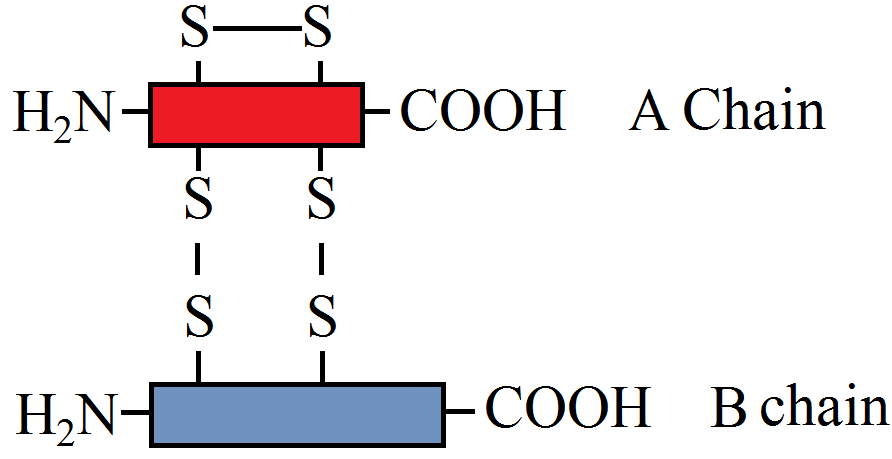
Tertiary structure: The overall shape of a single protein molecule; the spatial relationship of the secondary structures to one another. Tertiary structure is generally stabilized by nonlocal interactions, most commonly the formation of a hydrophobic core, but also through salt bridges, hydrogen bonds, disulfide bonds, and even post-translational modifications. The term “tertiary structure” is often used as synonymous with the term fold. The Tertiary structure is what controls the basic function of the protein.
Quaternary Structure: Some proteins are an assembly of more than one polypeptide or subunits. The manner in which these individual folded polypeptides or subunits are arranged with respect to each other (e.g. linear string of spheres, spheres arranged one upon each other in the form of a cube or plate etc.) is the architecture of a protein otherwise called the quaternary structure of a protein.
View full question & answer
Question 175 Marks
Describe the mechanism of enzymatic action.
Answer
Mechanisms of Enzymatic Actions:

  1. Lowering the activation energy by creating an environment in which the transition state is stabilized (e.g. straining the shape of a substrate-by binding the transition-state conformation of the substrate/ product molecules, the enzyme distorts the bound substrate(s) into their transition state form, thereby reducing the amount of energy required to complete the transition).
  2. Lowering the energy of the transition state, but without distorting the substrate, by creating an environment with the opposite charge distribution to that of the transition state.
  3. Providing an alternative pathway: For example, temporarily reacting with the substrate to form an intermediate ES complex, which would be impossible in the absence of the enzyme.
  4. Reducing the reaction entropy change by bringing substrates together in the correct orientation to react. Considering AHỊ alone overlooks this effect.
  5. Increases in temperatures speed up reactions. Thus, temperature increases help the enzyme function and develop the end product even faster. However, if Sheated to heated too much, the enzyme's shape deteriorates and only when the temperature comes back to normal does the enzyme regain its shape. Some enzymes like thermolabile enzymes work best at low temperatures.

The catalytic cycle of an enzyme action can be described in the following steps:

  1. First, the substrate binds to the active site of the enzyme, fitting into the active site.
  2. The binding of the substrate induces the enzyme to alter its shape, fitting more tightly around the substrate.
  3. The active site of the enzyme, now in close proximity of the substrate breaks the chemical bonds of the substrate and the new enzyme- product complex is formed.
  4. The enzyme releases the products of the reaction and the free enzyme is ready to bind to another molecule of the substrate and run through the catalytic cycle once again.
View full question & answer
Question 185 Marks
Formation of enzyme-substrate complex (ES) is the first step in catalysed reactions. Describe the other steps till the formation of product.
Answer
Each enzyme has an active site. The active sites of enzymes have a specific conformation for attracting and holding substrate. Both enzyme and substrate molecules have specific geometrical shapes. In the region of active sites the surface configuration of the enzyme is such as to allow the particular substrate molecules to be held over it. The contact is such that the substrate molecules or reactants come together causing the chemical change. It is similar to the system of lock and key. Just as a lock can be opened by its specific key, a substrate molecule can be acted upon by a particular enzyme. After coming in contact with the active site of the enzyme, the substrate molecules or reactants form a complex called enzyme-substrate complex. The active site of enzyme is now in close proximity with the substrate and break its chemical bonds and a new enzyme product complex is formed. The products are soon time so that an enzyme-product complex is also formed. However, the products are soon released and the freed enzyme is able to bind more substrate molecules.
$\text{Enzyme }+\text{substrate}\rightleftharpoons\text{Enzyme }-\text{Substrate Complex}$
$\text{Enzyme }-\text{Substrate Complex }\rightleftharpoons\text{Enzyme }-\text{Products Complex}$
$\text{Enzyme }-\text{Product Complex }\rightleftharpoons\text{ Enzyme + Product}$
Thus we see that the chemical reactants do not cause any alteration in the composition or physiology of the enzyme. The same enzyme molecule can be used again and again. Hence, enzymes are required in very small concentrations.
Upper series – Breakdown reaction Lower series – Biosynthetic reaction.
View full question & answer
Question 195 Marks
Nucleic acids exhibit secondary structure. Describe through WetsonCrick Model.
Answer
Nucleic acids are long chain macromolecules which are formed by end to end polymerization of large number of repeated units called nucleotides. Nucleic acids show a wide range of secondary structures. A secondary structure is the set of interactions between bases and sugar phosphate backbone and is responsible for the shap that nucleic acid.

James Watson and Francis Crick proposed a secondary structure of DNA molecules based on the crystallographic studies.
  1. DNA or deoxyribonucleic acid is a helically twisted double-chain polydeoxyribo- nucleotide macromolecule.
  2. The two strands of DNA run anti-parallely to each other called as DNA duplex.
  3. The spiral twisting of DNA has two types of alternate grooves, i.e., major and minor.
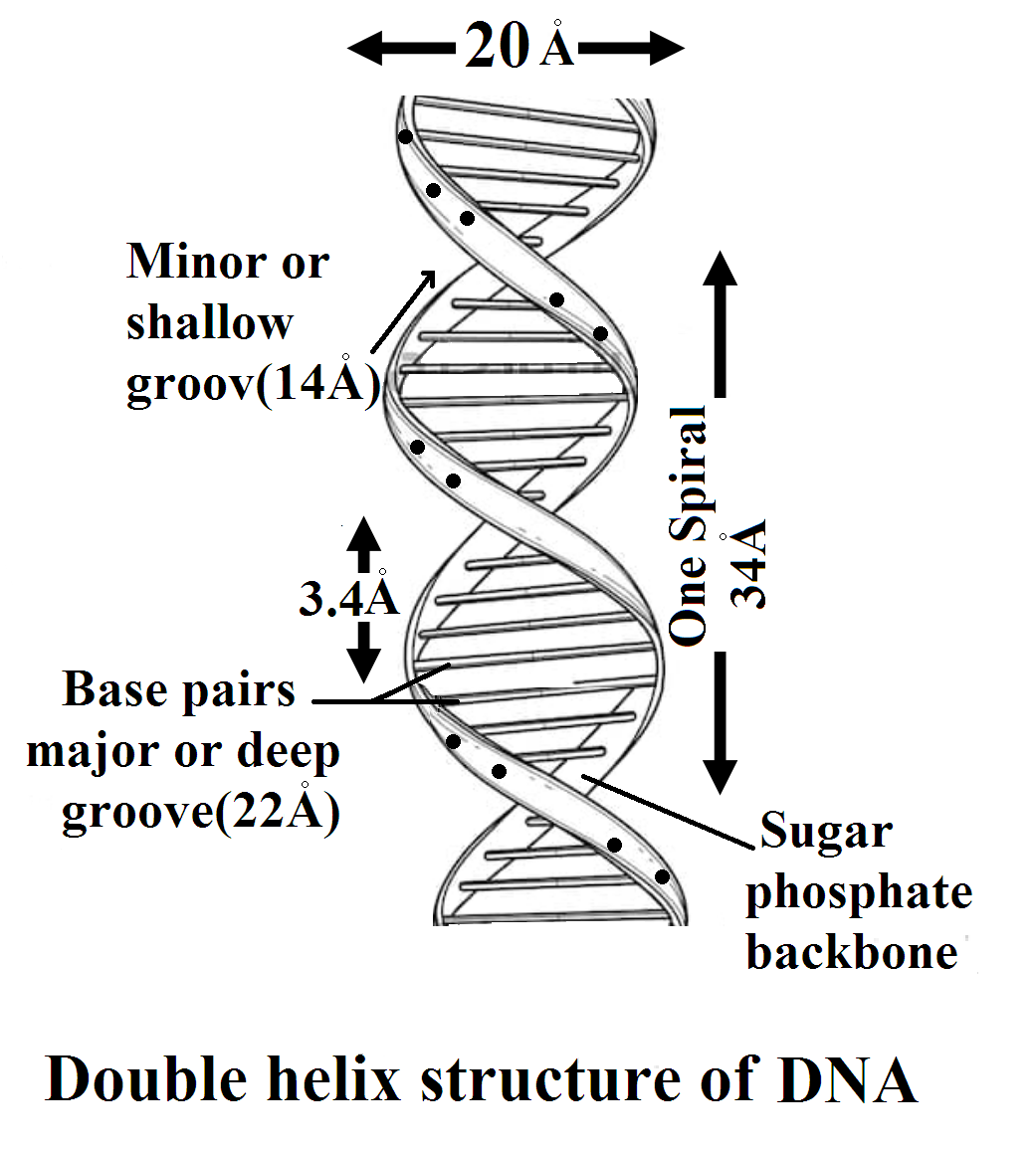
  4. One turn of 360° of the spiral has about 10 nucleotides on each strand of DNA occupying a distance of about 3.4 nm.
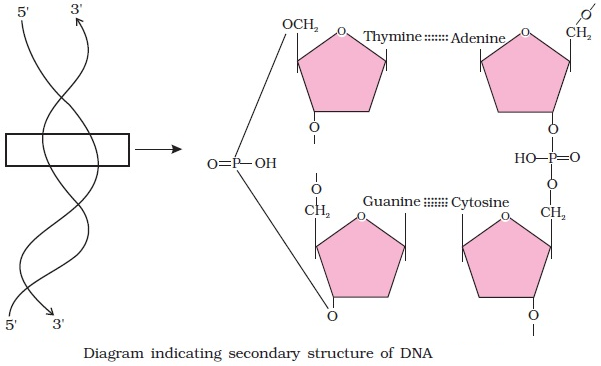
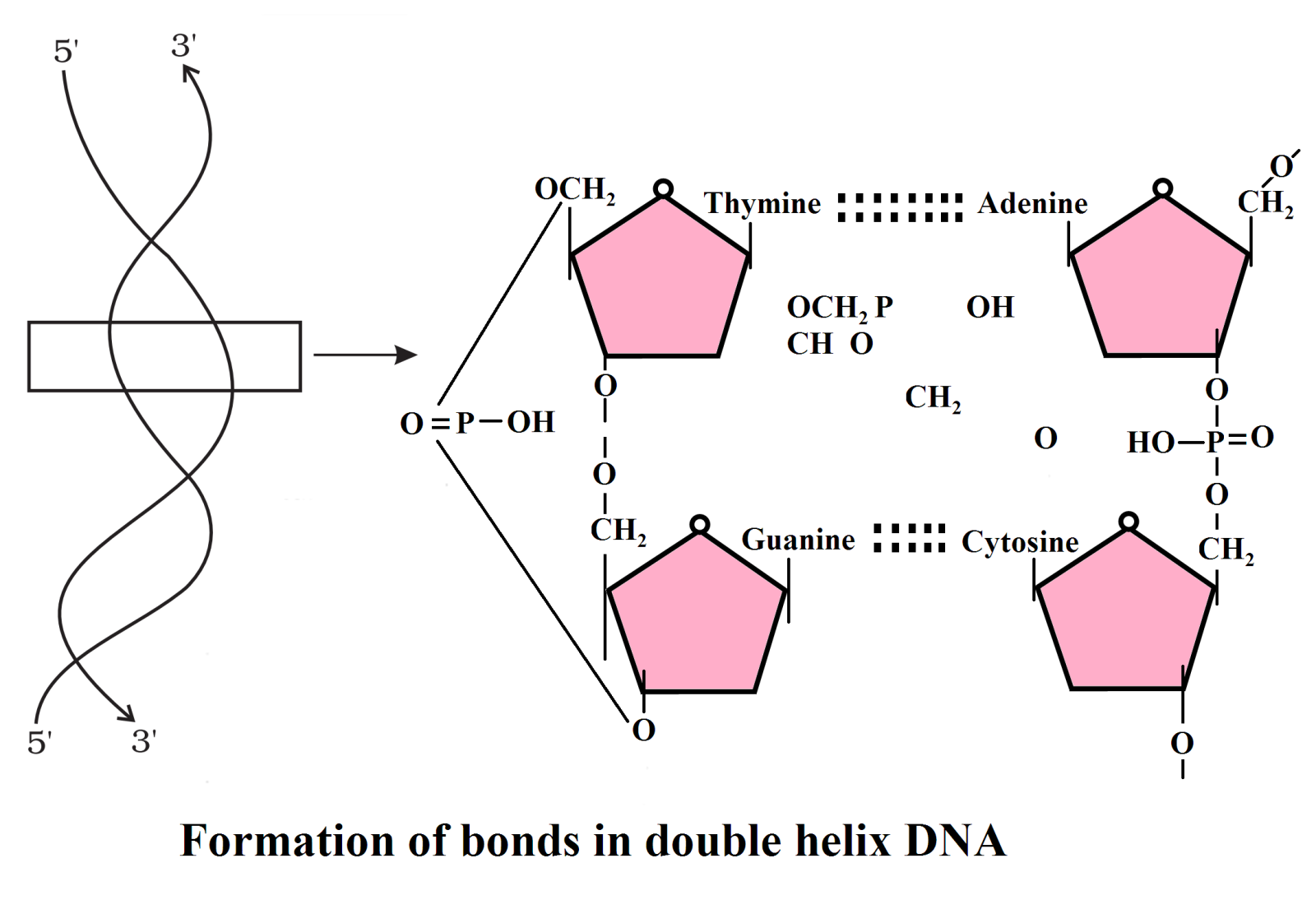
  5. The nucleotides within each strand are held together by the phosphodiester bonds between the 5' carbon of one nucleotide and the 3' carbon of the adjacent nucleotide. This strong covalent bond holds the sugar/phosphate backbone together.
  6. The two strands of DNA are held together by weak hydrogen boiias between the nitrogenous bases. These hydrogen bonds are base specific. That is adenine forms 2hydrogen bonds with thymine CA=T and cytosine forms 3 hydrogen bonds with guanine (C=G).
  7. As specific and different nitrogen bases occur on two DNA chains, they are said to be complementary, i.e., urine lies opposite to pyrimidine. This purine-pyrimidine pairing also contributes to the thickness of strand, i.e., 2nm, and makes the two chains complementary.​​​​​​
View full question & answer
Question 205 Marks
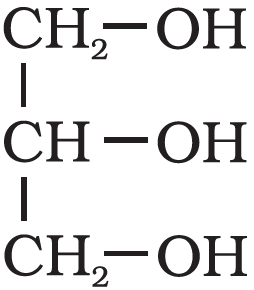
Name the product formed by esterification of glycerol with a fatty acid. Also draw its structure.
Answer
On esterification, triglyceride is produced.
The ester is called monoglyceride, diglyceride and triglyceride depending on the number of fatly acids attached to a glycerol
molecule.

View full question & answer
Question 215 Marks
Nucleic acids exhibit secondary structure, justify with example.
Answer
Nucleic acids exhibit a wide variety of secondary structures. For example, one of the secondary structures exhibited by DNA is the famous Watson - Crick Model. This model says that DNA exists as a double helix. The two strands of polynucleotide’s are antiparallel, i.e. run in the opposite direction. The backbone is formed by the sugar-phosphate-sugar chain. The nitrogen bases are projected more or less perpendicular to this backbone but face inside. A and G of one strand compulsorily base pairs with T and C respectively on the other strand. There are two hydrogen bonds between A and T and three hydrogen bonds between G and C. Each strand appears like a helical staircase. Each step of ascent is represented by a pair of bases. At each step of ascent, the strand turns 36°. One full turn of the helical strand would involve ten steps or ten base pairs. Attempt drawing a line diagram. The pitch would be 34 A. The rise per base pair would be 3.4 A. This form of DNA with the above mentioned salient features is called B-DNA.
View full question & answer
Question 225 Marks
What are different classes of enzymes? Explain any two with the type of reaction they catalyse.
Answer

According to International Union of Biochemistry (IUB) enzymes are grouped into the following six categories.

  1. Oxidoreductase: They take part in oxidation and reduction reactions or transfer of electrons.

​​​​​​$\text{S reduced + S' oxidised }\xrightarrow[\text{S oxidised + S' reduced}]{\text{oxidoreductase}}$

Oxidoreductase are of three types- oxidases, dehydrogenises and reductases, c.g., cyto-chrome oxidase, succinate dehydrogenase, nitrate reductase.

  1. Transferases: They transfer a group from one molecule to another c.g., glutamate pyruvate transaminase (transfers amino group from glutamate to pyruvate during synthesis of alanine). The chemical group transfer does not occur in the free state.

$\text{S - G + S'}\xrightarrow{\text{transfer}}\text{S + S' - G}$

$\text{Glutamic acid + Oxaloacetic acid}\xrightarrow{\text{transfer}}\alpha-\text{ketoglutaric acid +Aspartic acid}$

  1. Hydrolases: They catalyse hydrolysis of bonds like ester, ether, peptide, glycosidic, C—C, C—halide, P—N, etc. which are formed by dehydration condensation. Hydrolases break up large molecules into smaller ones with the help of hydrogen and hydroxyl groups of water molecules. The phenomenon is called hydrolysis. Digestive enzymes belong to this group, e.g., amylase (hydrolysis of starch)sucrase, lactase.

 $\text{C}_{12}\text{H}_{22}\text{O}_{11}+\text{H}_2\text{O}\xrightarrow{\text{maltase}}2\text{C}_6\text{H}_{12}\text{O}_6\\\ \ \ \ \ \ \ \ \ \text{maltase}\ \ \ \ \ \ \ \ \ \ \ \ \ \ \ \ \ \ \ \ \ \ \ \ \ \text{glucose}$

  1. Lyases: These enzymes cause cleavage, removal of groups without hydrolysis, addition of groups to double bonds or removal of a group producing double bond, e.g., histidine decarboxylase (breaks histidine to histamine and CO2), aldolase (fructose-1, 6-diphosphate to dihydroxy acetone phosphate and glyceraldehyde phosphate).

$\text{X}\ \ \ \ \ \ \ \ \text{Y}\\ \ | \ \ \ \ \ \ \ \ \ || \\\text{C}\ \ - \ \ \text{C}\xrightarrow{\ \ \ \ \ {\text{lyase}}\ \ \ \ }\text{X}-\text{Y}+\text{C}=\text{C}$

$\text{Fructuse }1,6-\text{diphosphate}\xrightarrow{\text{aldolase}}\text{Dihydroxy acetone phosphate+Glyceraldehyde phosphate.}$

  1. Isomerases: These enzymes cause rearrangement of molecular structure to effect isomeric changes. They are of three types, isomerases (aldose to ketose group or vice-versa like glucose 6-phosphate to fructose 6-phosphate), epimerases (change in position of ope constituent or carbon group like xylulose phosphate to ribulose phosphate) and mutases (shifting the position of side group like glucose-6-phosphate toglucose-1- phosphate).

$\text{Glucose }6-\text{phosphate}\xrightarrow{\text{isomerase}}\text{Fructose }6-\text{phosphate} $

$\text{Glucose }6-\text{phosphate}\xrightarrow{\text{isomerase}}\text{Glucose }6-\text{phosphate} $

$\text{Xylulose }5-\text{phosphate}\xrightarrow{\text{epimerase}}\text{Ribulose }5-\text{phosphate} $

  1. Ligases (Synthetases): These enzymes catalyse bonding of two chemicals with the help of energy obtained from ATP resulting in formation of such bonds as C—O, C—S, C—N and P—O, e.g., pyruvate carboxyl’s. It combines pyruvic acid with CO2 to produce oxaloacetic acid.

Pyruvic acid + CO2 + ATP + H2O

View full question & answer
Question 235 Marks
The teacher fixed five cards on the board that marked A, T, C, U, G. She asked Rakesh to pick up the card or cards that indicate bases that are not common to all nucleic acids.
  1. Which card would Rakesh pick from the five?
  2. Of the N-bases picked by Rakesh which does not form H bonding with other nucleic acids?
  3. Name the components of nucleic acids.
Answer
  1. Rakesh would pick T and U cards as thymine is present only in DNA and uracil is present only in RNA.
  2. Uracil does not form H-bonding with other nucleic acid as uracil is found in RNA and RNA is single-stranded molecule.
  3. A nucleic acid is a polymer of nucleotides which is composed of three components.
  • Heterocyclic compound-nitrogen base (adenine, guanine, uracil, cytosine and thymine). The skeletal heterocyclic in DNA/ RNA is called as purine and pyrimidines. Adenine and guanine are purines while uracil (only in RNA), thymine (only in DNA) and cytosine are pyrimidines.
  • Monosaccharide (ribose or deoxyribose).
  • Phosphoric acid or phosphate.
View full question & answer
Question 245 Marks
What is the concept of metabolism? What are the metabolic basis for living?
Answer
  1. The continuous process of breakdown and synthesis of biomolecules through chemical reactions occurring in the living cells is called metabolism.
  2. Each of the metabolic reaction results in a transformation of biomolecules.
  3. Most of these metabolic reactions do not occur in isolation but are always linked with some other reactions.
  4. In these reactions, the metabolites are converted into another metabolite in a series of linked reactions called metabolic
  5. pathways.
  6. Each metabolite has a define rate and direction during the flow through a metabolic pathways called the dynamic state.

In living systems, metabolism involves two following types of pathways.

  1. The anabolic pathway is called biosynthetic pathway. It leads to a more complex structure from a simpler structure, e.g., the pathway involving the conversion of acetic acid into cholesterol. These pathways consume energy.

  2. The catabolic pathway leads to simpler structure from a complex structure, e.g., thepathway involving conversion of glucose into lactic acid in our skeletal muscles. This pathway leads to the release of energy, e.g., energy is liberated when glucose is degrated to lactic acid in our skeletal muscles.

View full question & answer
Question 255 Marks
Vikas, student of class XI had interest in physical exercises and he also used to participate in body building competitions. One day, he visited a gym where the gym trainer suggested him to consume muscle building pills available in the market and also gave him a sample of such pills. Vikas showed that sample to his biology teacher who, after examination, found it to be rich in proteins and said him that he should not take them at this age and should consult a doctor before taking anything.
  1. What are the building blocks of proteins?
  2. What is the importance of amino acids in an organism?
  3. What is your opinion about muscle building pills available in the market?
  4. What values are shown from teachers character?
Answer
  1. Amino acids are the building blocks of proteins.
  2. Besides building blocks of proteins, amino acids are involved in the synthesis of a number of compounds such as hormones, amine buffers, antibiotics, prokaryotic cell wall, etc.
  3. Such pills might be harmful in long run and one should have balanced diet and exercise regularly to built muscles naturally.
  4. Vikas's teacher was concerned about his students health, and knows scientific ethics and had knowledge about harmful effects of such products.
View full question & answer