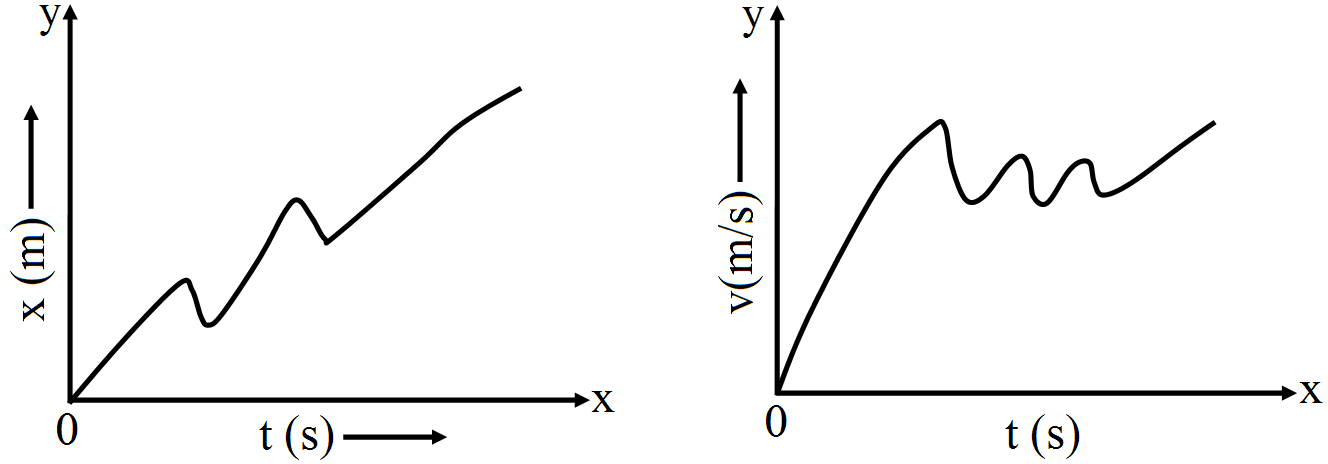
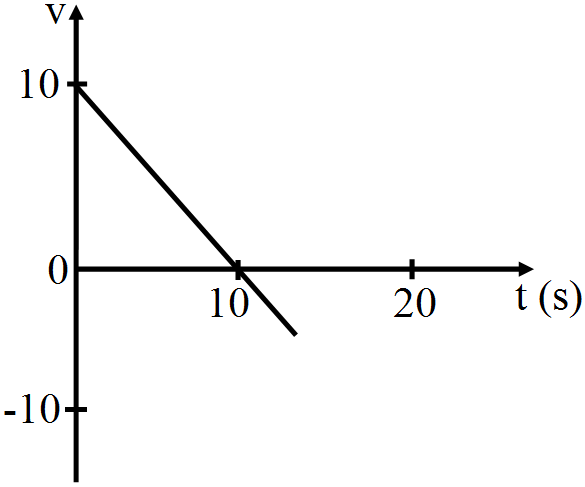
- Downward motion of Ball
Ball is dropped from a height, s = 90m
Initial velocity of the ball, u = 0
Acceleration, a = g = 9.8m/s2
Final velocity of the ball = v
From second equation of motion, time (t) taken by the ball to hit the ground can be obtained as:
s = ut + (1/2)at2
90 = 0 + (1/2) × 9.8t2
$\text{t} = \sqrt{18.38} = 4.29\text{s}$
From first equation of motion, final velocity is given as:
v = u + at
= 0 + 9.8 × 4.29 = 42.04m/s
Here we see that v=at, so velocity varies linearly with downward motion of ball.
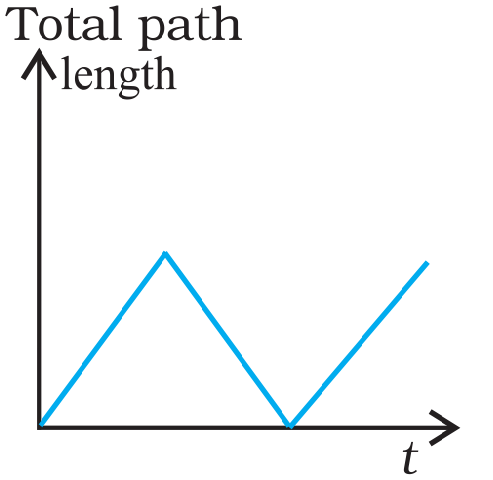
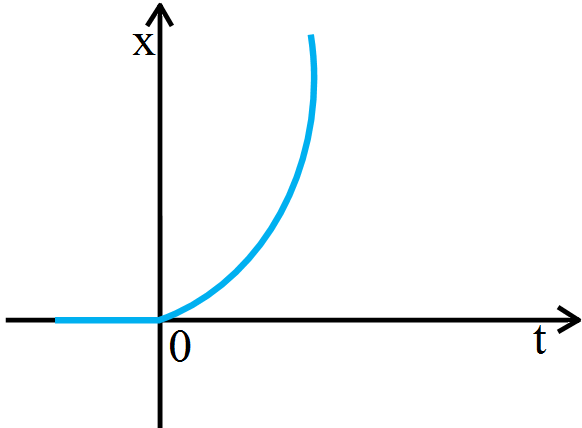
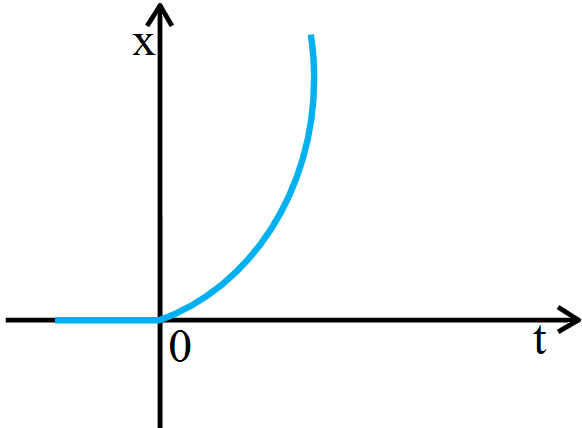
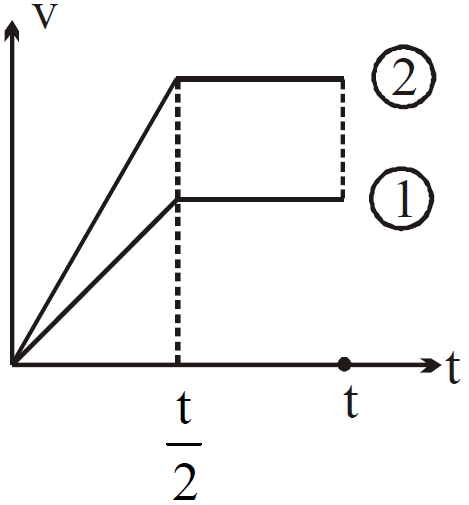
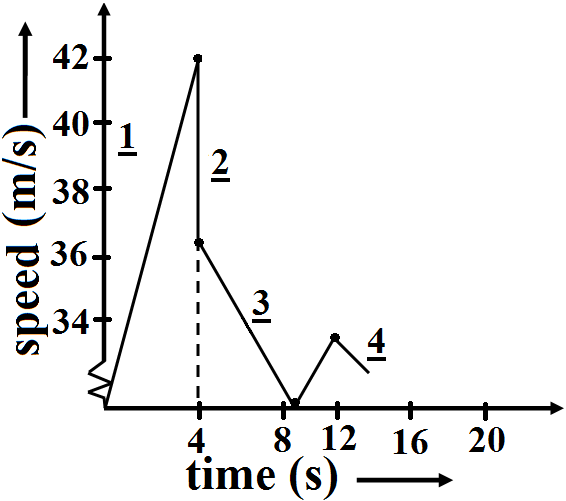
This part of motion is represented by first line (1) in the below graph
- First rebound
Now Rebound velocity of the ball, ur =v(1 - 1/10) = 9v/10 = 9 × 42.04/10 = 37.84 m/s
This is represented the line (2) in the graph. We are assumed negligible time of collision between ball and floor
- Upward motion of ball
Time (t1) taken by the ball to reach maximum height is obtained with the help of first equation of motion as:
v = u + at1
0 = 37.84 + (– 9.8)t1
t1 = -37.84/-9.8 = 3.86s
Total time taken by the ball = t + t1 = 4.29 + 3.86 = 8.15s
This is represented by line (3) in the graph
- Second descent of ball
As the time of ascent is equal to the time of descent, the ball takes 3.86s to strike back on the floor for the second time.
The velocity with which the ball rebounds from the floor = 9 × 37.84/10 = 34.05m/s
Total time taken by the ball for second rebound = 8.15 + 3.86 = 12.01s
This is represented by line (4) in the graph