Questions

3 Marks Question

Take a timed test

79 questions · self-marked practice — reveal the answer and mark yourself.

Question 13 Marks
Consult internet and find out how to make orally active protein pharmaceutical. What is the major problem to be encountered?
Answer
Orally active protein pharmaceuticals contain biologically active materials such as peptides or proteins, antibodies, and polymeric beads. It is administrated orally into the body through various formulations. It involves the encapsulation of protein or peptide in liposomes or formulations using penetration enhancers. These proteins or peptides are used for treatment of various diseases and are also used as vaccines. However, the oral administration of these peptides or proteins has some problems related to it. Once these proteins are ingested, the proteases present in the stomach juices denature the protein. As a result, their effect will be nullified. Hence, it is necessary to protect the therapeutic protein from digestive enzymes, if taken orally. This is the reason for the proteins to be injected directly into the target site.
View full question & answer
Question 23 Marks
What are Cry proteins? Name an organism that produce it. How has man exploited this protein to his benefit?
Answer
Cry proteins are encoded by cry genes. These proteins are toxins, which are produced by Bacillus thuringiensis bacteria. This bacterium contains these proteins in their inactive from. When the inactive toxin protein is ingested by the insect, it gets activated by the alkaline pH of the gut. This results in the lysis of epithelial cell and eventually the death of the insect. Therefore, man has exploited this protein to develop certain transgenic crops with insect resistance such as Bt cotton, Bt corn, etc.
View full question & answer
Question 33 Marks
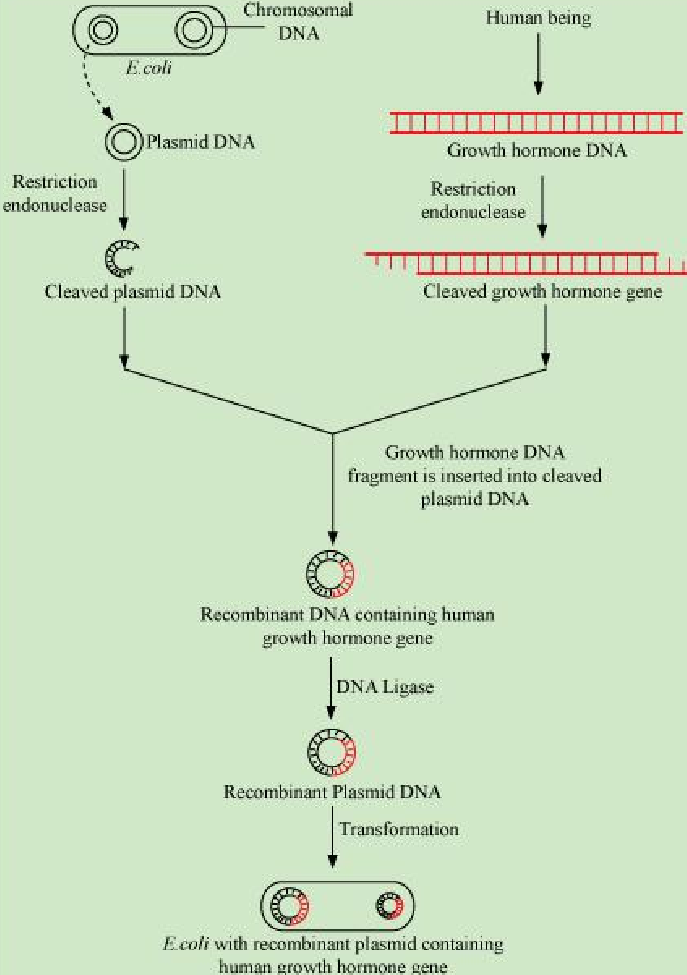
Digrammatically represent the experimental steps in cloning and expressing an human gene (say the gene for growth hormone) into a bacterium like E. coli ?
Answer
DNA cloning is a method of producing multiple identical copies of specific template DNA. It involves the use of a vector to carry the specific foreign DNA fragment into the host cell. The mechanism of cloning and transfer of gene for growth hormone into E.coli is represented below.
View full question & answer
Question 43 Marks
Which three options could be thought for increasing food production?
Answer
  1. Agro-chemical based agriculture.
  2. Organic agriculture.
  3. Genetically engineered crop-based agriculture.
View full question & answer
Question 53 Marks
List the disadvantages of insulin obtained from the pancreas of slaughtered cow and pigs.
Answer
  1. Insulin being a hormone is produced in very little amounts in the body. Hence, a large number of animals need to be sacrificed for obtaining small quantities of insulin. This makes the cost of insulin very high, demand being manyfold higher than supply.
  2. Slaughtering of animal is also not ethical.
  3. There is potential of immune response in humans against the administered insulin which is derived from animals.
  4. There is possibility of slaughtered animals being infested with some infectious micro organism which may contaminate insulin.
View full question & answer
Question 63 Marks
Name the host plant and its part that Meloidegyne incognita infects. Explain the role of Agrobacterium in the production of dsRNA in the host plant.
Answer
  • Tobacco plant, roots are infected.
  • Agrobacterium acts as the vector for the introduction of nematode-specific genes into the host plant.
  • The DNA is introduced such that it produces both sense and anti-sence RNA in the host plant.
  • Since these two RNAs are complementary to each other, they form a dsRNA, which initiates RNA interference.
View full question & answer
Question 73 Marks
Ignoring our traditional knowledge can we prove costly in the area of biological patenting. Justify.
Answer
Most of the industrialised nations are rich financially but poor in biodiversity and traditional knowledge. In contrast the developing and the underdeveloped world is rich in biodiversity and traditional knowledge related to bio-resources. Traditional knowledge related to bio-resources can be exploited to develop modem applications and can also be used to save time, effort and expenditure during their commercialisation. There has been” growing realisation of the injustice, inadequate compensation and benefit sharing between developed and developing countries. Therefore, some nations are developing laws to prevent such unauthorised exploitation of their bio-resources and traditional knowledge.
View full question & answer
Question 83 Marks
  1. What is a vaccine? Give an example of a vaccine produced by recombinant DNA technology?
  2. Name the diseases against which DTP vaccination develops immunity.
Answer
  1. Vaccine: Inactivated/weakened/pathogens injected into the body which produces special antibodies/generate immune response.
    Example: Hepatitis B.
  2. DTP Vaccination: Diphtheria, tetanus, pertussis.
View full question & answer
Question 93 Marks
Write the three critical research areas of biotechnology.
Answer
The three critical research areas of biotechnology are:
  1. Providing the best catalyst in the form of improved organism, usually a microbe or pure enzyme.
  2. Creating optimal conditions through engineering for a catalyst to act.
  3. Downstream processing technologies to purify the protein or other compounds.
View full question & answer
Question 103 Marks
Expand GEAC. Why was GEAC established? Mention the responsibilities assigned to this organisation.
Answer
Genetic Engineering Approval Committee.

The reasons are:

  1. To have some ethical standards to evaluate the morality of human activities that might help or harm living organisms.
  2. Genetic modifications of organisms may have unpredictable results when such organisms are introduced into the ecosystem; hence a regulation is necessary.

Its responsibilities are:

  1. To make decisions regarding the validity of GM research.
  2. To check the safety of introducing GM-organisms for public services.
View full question & answer
Question 113 Marks
What are biopesticides? Give the scientific name and the use of the first commercially used biopesticide in the world.
Answer
Biopesticides are those biological agents that are used for control of weeds/insects/pathogens Bacillus thuringiensis

(It produces insecticidal Cry protein). Spores of this bacterium kill larvae of certain insects.

View full question & answer
Question 123 Marks
  1. Why must a cell be made 'competent’ in biotechnology experiments? How does calcium ion help in doing so?
  2. State the role of ‘biolistic gun’ in biotechnology experiments.
Answer
  1.  
  1. To take up the (hydrophilic) DNA from the external medium.
  2. Divalent calcium ions increase the efficiency of DNA entering the cell through pores in the cell wall.
  1. To introduce alien DNA into the plant cell by bombarding them with high-velocity microparticles. (gold or tungsten coated with DNA)
View full question & answer
Question 133 Marks
How is DNA recombinant technology helpful in detecting the presence of mutated genes in the cancer patients?
Answer
Molecular diagnosis in DNA recombinant technology uses a single-stranded DNA or RNA tagged with a radioactive molecule. It is allowed to hybridise to its complementary DNA in a clone of cells followed by detection using autoradiography. The clone having the mutated gene will not appear on the photographic film, because the probe used will not be complementary to the mutated gene. In this way, presence of mutated genes can be detected.
View full question & answer
Question 143 Marks
You have identified a useful gene in a bacteria. Make a flow chart of the steps that you would follow to transfer this gene to a plant.
Answer
After identifying a useful genein bacteria, following steps should be undertaken:
Isolation of useful gene using restriction endonuclease.
$\downarrow$
Transferring the gene to a suitable vector to create a recombinant DNA molecule.
$\downarrow$
Transfer of these reconbinant DNA molecules to the target cells.
$\downarrow$
Screening of cell for transformation.
$\downarrow$
Selection of transformed cells.
$\downarrow$
Regeneration of plants from the transformed cells to get transgenic Plants.
View full question & answer
Question 153 Marks
  1. Expand ELISA.
  2. Write the principle, it is based on.
  3. Mention the two methods by which infection by a pathogen can be detected using this.
Answer
  1. Enzyme-linked immunosorbent assay.
  2. It is based on the principle of antigen-antibody interaction.
  3. The infection can be detected by.
  4. The presence of antigens.
  5. The antibodies produced against the pathogen.
View full question & answer
Question 163 Marks
GM Plants are useful in many ways. How would you convince the farmers to grow GM plants in their fields? Explain giving three reasons.

OR

People are quite apprehensive to use GM crops. Give three arguments in support of GM crops so as to convince the people in favour of such crops.

Answer
The living organisms (plants, animals, fungi or bacteria) whose DNA has been manipulated to possess and express a foreign DNA, are called genetically modified organisms (GMOs).
View full question & answer
Question 173 Marks
How is PCR technique beneficial in biotechnology? How are the developed countries related to biopiracy cases? Explain with an example.
Answer
Polymerase Chain Reaction (PCR): It is one of the important technique that serves the purpose of amplification of nucleic acid
  1. PCR helps in early detection of disease or Pathogen. The presence of a pathogen (bacteria, viruses, etc) is suspected only when the pathogen has produced a disease sympton. But by that time, the number of pathogens is already very high in the body. However, PCR can detect even very low concentrations of these pathogens.
  2. This technique can be used routinely to detect HIV in suspected AIDS patients.
  3. It is also used to detect mutations in genes in suspected cancer patients and is also a powerful technique to identify several genetic disorders.
View full question & answer
Question 183 Marks
Two children, A and B aged 4 and 5 years respectively visited a hospital with a similar genetic disorder. The girl A was provided enzyme-replacement therapy and was advised to revisit periodically for further treatment. The girl, B was, however, given a therapy that did not require revisit for further treatment.
  1. Name the ailments the two girls were suffering from?
  2. Why did the treatment provided to girl A required repeated visits?
  3. How was the girl B cured permanently?
Answer
  1. ADA (Adenosine Deaminase) deficiency is a form of SCID (severe combined immunodeficiency) a type of disorder that affects the immune system. The disease is caused by a mutation in a gene on chromosome 20. The gene codes for the enzyme adenosine deaminase (ADA). Without this enzyme, the body is unable to break down a toxic substance called deoxyadenosine. The toxin builds up and destroys infection-fighting immune cells called T and B lymphocytes.
  2. Girl A was given Enzyme replacement therapy in which lymphocytes isolated from patient’s blood are cultured in-vitro. Functional ADA cDNA are then introduced into the cultured lymphocytes. These lymphocytes are returned back to the patient’s body.

Lymphocytes are not immortal. Therefore, repeated infusion of genetically engineered lymphocytes is required and hence it is not a permanent treatment and the patient have to revisit periodically in the future.

  1. Girl B was treated with gene therapy through the gene isolated from bone marrow cells producing ADA is introduced into cells at early embryonic stages which is a permanent cure so the patient is cured permanently.
View full question & answer
Question 193 Marks
Name the insect pest that is killed by the products of cry I Ac gene. Explain how the gene makes the plant resistant to the insect pest.
Answer
Meloidegyne incognitia.
The gene ( cry IAc ) produces crystals of insecticidal protein which is inactive protoxin, when the bollworm eats the protoxin the alkaline pH of the gut activates it, activated protoxin binds to the midgut epithelial cells, creates pores/causes swelling/causes lysis/kills the worm.
View full question & answer
Question 203 Marks
What are transgenic plants? Give some example.
Answer
The plants obtained from genetic engineering containing transgene are known as transgenic plants.
Examples: Bt Cotton, Golden Rice, Flavr Savr tomato.
View full question & answer
Question 213 Marks
Bt cotton is resistant to pest, such as lepidopteron, dipterans and coleopterans. Is Bt cotton also resistant to other pests as well?
Answer
The genes from Bacillus thuringiensis are pest specific. This means that they are highly effective against a select group of pests but do not harm other insects. As a corollary; Bt cotton is not resistant to other pests. This is in fact an advantage from the perspective of maintaining biodiversity in the environment. Beneficial insects are saved from harm because farming of Bt cotton does not need use of pesticides.
View full question & answer
Question 223 Marks
Who was the first patient who was given gene therapy? Why was the given treatment recurrent in nature?
Answer
A four year old girl was the first patient to be given gene therapy. She was suffering from adenosine deaminase (ADA) deficiency and this therapy was given in 1990. The treatment with gene therapy involves manipulating the DNA of lymphocytes from the patient’s body. The modified lymphocytes are grown in vitro and then infused into the patient’s body. We know that lymphocytes are not immortal but they have a definite life span. Due to this, this treatment is recurrent in nature.
View full question & answer
Question 233 Marks
How did the process of RNA interference help to control the nematode from infecting roots of tobacco plants? Explain.
Answer
Using Agrobacterium vectors, nematode specific genes introduced into host plant produced sense - antisense RNA in host cells, ds RNA - initiated RNAi, silenced specific mRNA of nematode, parasite could not survive in transgenic host.
View full question & answer
Question 243 Marks
Why do lepidopterans die when they feed on Bt cotton plant? Explain how does it happen.
Answer
Bt cotton plants are the transgenic plants that express a Bacillus thuringiensis gene called cry gene. This gene, encodes for protein crystals having insecticidal properties against insects of group Lepidoptera, Diptera and Coleoptera. Inside the bacterium, these proteins remain inactive and do not harm the bacteria. However, these inactive crystals can get activated in the alkaline pH of the gut of insects upon ingestion. After activation, these crystals can bind to the receptors present on the membranes of gut epithelial cells. Due to this binding, the membrane swells and pores are created on them. These pores lead to bursting of cell. Hence, soon the lepidopteran dies due to starvation.
View full question & answer
Question 253 Marks
Why is predation required in a community of different organisms?
Answer
  1. They help in maintaining species diversity in a community, by reducing the intensity of competition.
  2. They keep the prey population under control.
  3. It acts as a conduit for energy transfer across trophic levels.
View full question & answer
Question 263 Marks
Can you suggest a method to remove oil (hydrocarbon) from seeds based on your understanding of rDNA technology and chemistry of oil?
Answer
Recombinant DNA technology (rDNA) is a technique used for manipulating the genetic material of an organism to obtain the desired result. For example, this technology is used for removing oil from seeds. The constituents of oil are glycerol and fatty acids. Using rDNA, one can obtain oilless seeds by preventing the synthesis of either glycerol or fatty acids. This is done by removing the specific gene responsible for the synthesis.
View full question & answer
Question 273 Marks
What are genetically modified organisms? Name two factors on which their behaviour depends.
Answer
Plants, fungi, bacteria and animals that have had their DNA manipulated to possess and express an extra (foreign) gene are known as genetically modified organisms.

The two factors on which the behaviour of such organisms depend are:

  1. Nature of gene transferred.
  2. Nature of the host cell.
View full question & answer
Question 283 Marks
Explain, how Eli Lilly, an American company produced insulin by recombinant DNA technology.

OR

Explain how the company, Eli Lilly was able to produce human insulin using recombinant DNA technology.

View full question & answer
Question 293 Marks
What do you understand by the term biopesticide? Name and explain the mode of action of a popular biopesticide. Biopesticides are methods of controlling pests that rely on natural predation rather than introduced chemicals/ or living organisms used to kill pests.
Answer
Biopesticide is a pesticide which is:

  1. Not chemical in nature.
  2. More specific in action against the pest.
  3. Safer for environment than chemical pesticides.

A popularly known biopesticide is Bt toxin, which is produced by a bacterium called Bacillus thuringiensis. Bt toxin gene has been cloned from this bacterium and expressed in plants. Bt toxin protein when ingested by the insect, gets converted to its active form due to the alkaline pH of the gut. The activated toxin binds to the surface of midgut epithelial cells and create pores that cause cell swelling and lysis and eventually kills the insect.

View full question & answer
Question 303 Marks
Answer the following questions:
What is meant by ADA deficiency? How is gene therapy a solution to this problem? Why is it not a permanent cure?
Answer
Gene therapy:
  • ADA is caused due to deletion of gene for adenosine deaminase.
  • Lymphocytes from patient’s blood were grown in a culture and functional ADA, cDNA was introduced in these lymphocytes using a retroviral vector.
  • The lymphocytes were transferred into the patient’s body. Periodic infusion of such genetically engineered lymphocytes is done because these cells are mortal.
  • For permanent cure, gene isolated from the bone marrow cells producing ADA, at early embryonic stage can be a possible cure.
View full question & answer
Question 313 Marks
Explain three basic steps to be followed during genetic modification of an organism.
Answer
  1. Identification of DNA with desirable genes, so that the genetically modified organism has largely desirable genes.
  2. Introduction of the DNA with desirable genes, into the host using vector
  3. Maintenance of introduced DNA in the host, and transfer of the DNA to its progeny through cloning.
View full question & answer
Question 323 Marks
Name the pest that destroys the cotton bolls. Explain the role of Bacillus thuringiensis in protecting the cotton crop against the pest to increase the yield.
Answer
  1. Bt cotton (Bacillus thuringiensis) produce proteins that kill son insets like- lepidopterans  (tobacco budworm, army worm). Coleopterans (beetles) and dipterans (flies, mosquitoes).
  2. The torin is coded by a gene called cry which are of various types.

Example–proteins encoded by the genes cry LAc and cry II control the cotton bollworms, that of cry I Ab controls corn boror.

  1. Bt–tobacco was first cultured to kill hornworm. (Mancluca sexta).
View full question & answer
Question 333 Marks
What is GMO? List any five possible advantages of a GMO to a farmer.
Answer
  1. Plants/bacteria/fungi/animals whose genes have been altered by manipulation.
  2. Tolerance to abiotic stresses/like cold/drought/salt/heat,

Reduced reliance on chemical pesticides/pest resistant crops,

Reduce post-harvest losses,

Increased efficiency of mineral usage by plants,

Enhanced nutritional value,

To create tailor-made plant.

View full question & answer
Question 343 Marks
How has the study of biotechnology helped in developing pest-resistant cotton crop? Explain.
Answer
  • Cotton plants resistant to insect pests like lepidopterans have been raised through recombinant DNA technology using the genes from the bacterium, Bacillus thuringiensis, which produces Bt-toxins. The genes crylac and cryllAb, encoding the Bt toxins, have been isolated from the bacterium and incorporated into cotton plants.
  • The genes code for the insecticidal crystal protein, that is ingested by the insect pest along with the plant parts.
  • The inactive toxin is converted into its active form by the alkaline pH of the gut.
  • The active form of the toxin binds to the surface of the midgut epithelial cells and creates pores that cause swelling and lysis of the cell and eventually kills the insect pest (lepidopterans).
View full question & answer
Question 353 Marks
Give any two reasons why the patent on Basmati should not have gone to an American Company.
Answer
  • Rice is an important food grain, the presence of which goes back thousands of years in Asia’s agricultural history. There is an estimated 200,000 varieties of rice in India alone. The diversity of rice in India is one of the richest in the world. Basmati rice is distinct for its unique aroma and flavour and 27 documented varieties of Basmati are grown in India.
  • There is a reference to Basmati in ancient texts, folklore and poetry.
View full question & answer
Question 363 Marks
How does $\beta$-galactosidase coding sequence act as a selectable marker? Explain. Why is it a preferred selectable marker to antibiotic resistance genes?
Answer
  1. Presence of a chromogenic substrate gives blue colour, if the plasmid in the bacteria does not have an insert. (non-recombinants)
  2. With the insert do not produce any colour, recombinant colonies.
  3. Selection of recombinants due to inactivation of antibiotics, requires simultaneous plating on two plates having different antibiotics/process is more cumbersome.
View full question & answer
Question 373 Marks
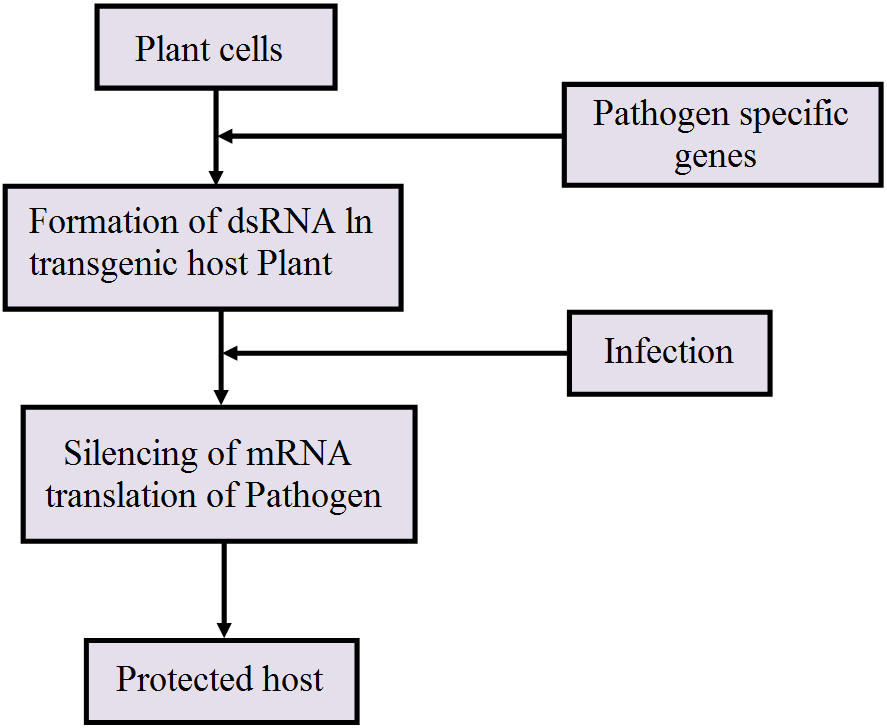
Study the given flow chart and answer:
  1. Name the defence mechanism used.
  2. In which plant it has been done?
  3. Name the pathogen.
  4. Name the vector used in this technique.

Answer
  1. RNA interference (RNAI).
  2. Tobacco plant.
  3. Meloidegyne incognitia (nematode).
  4. Agrobacterium tumefaciens vector.
View full question & answer
Question 383 Marks
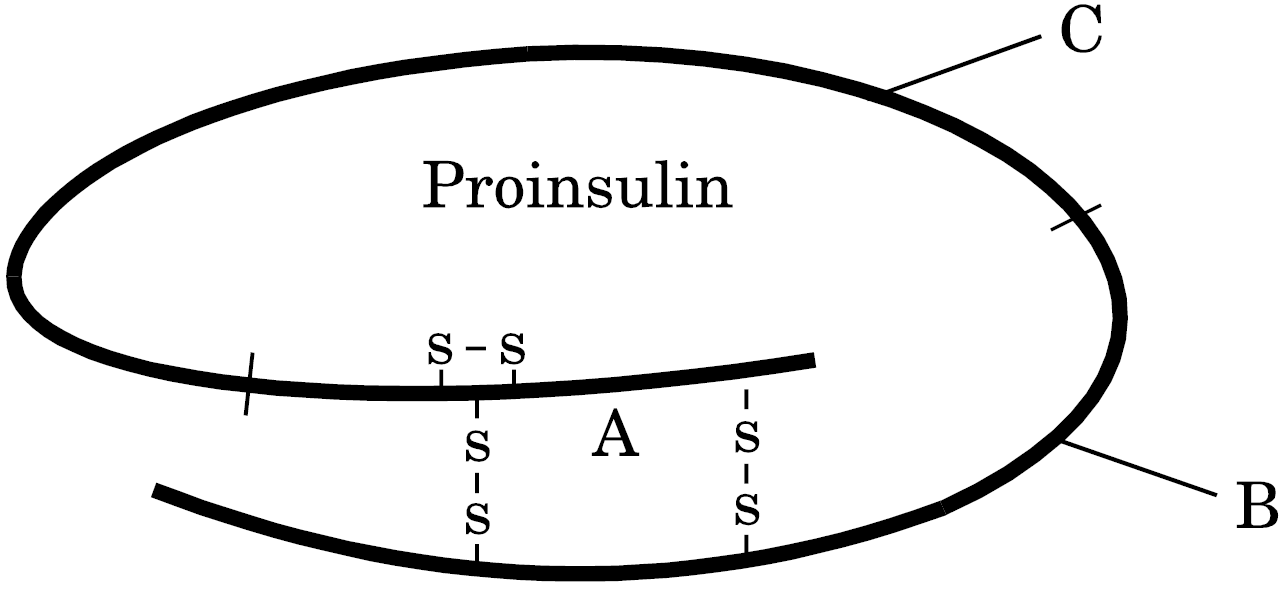
Insulin in the human body is secreted by pancreas as prohormone/ proinsulin. The schematic polypetide structure of proinsulin is given below. This proinsulin needs to undergo processing before it becomes functional in the body. Answer the questions that follow:

  1. State the change the proinsulin undegoes at the time of its processing to become functional.
  2. Name the technique the American company Eli Lilly used for the commercial production of human insulin.
  3. How are the two polypeptides of a functional insulin chemically held together?
Answer
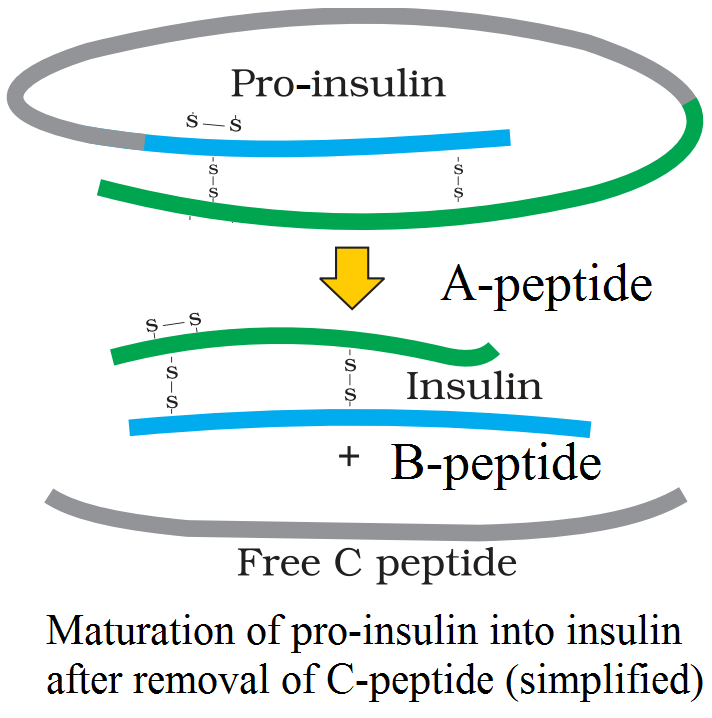
  1. Proinsulin has three polypeptide chains namely A, B and C. The chain C acts as a link between, chain A and chain B. Polypeptide C aligns chain A & B in such way that a disulphide bond is formed between polypeptide A and B. With the formation of disulphide bridge pro-insulin becomes functional. A function insulin has only two polypeptide chain.
  2. r-DNA technology or recombinant DNA technology.
  3. The polypeptide chain are held together, by disulphide bridges between chain A and B.
View full question & answer
Question 393 Marks
Expand 'ELISA'. Why is this method preferred over conventional methods of diagonsis of the disease?
Answer
Enzyme-linked immunosorbent assay:
  • Using conventional methods, early diagnosis is notpossible.
  • By the time, the symptoms of the disease appear, the concentration of the pathogen is very high. But by ELISA, the presence of the pathogen can be detected, when its concentration is low and the symptoms have not appeared, hence, early treatment and cure is possible.
View full question & answer
Question 403 Marks
Explain why children eating golden rice are unlikely to suffer from 'night blindness'?
Answer
  1. Golden rice is genetically engineered with Vit A precursor carotenoids.
  2. Lack of Vit A causes night blindness.
View full question & answer
Question 413 Marks
What are the advantages of the techniques of GM crops?
Answer
There are two advantages:
  1. Any gene (from any organism or a synthetic gene) can be used for transfer.
  2. Change in genotype is precisely controlled.
View full question & answer
Question 423 Marks
Explain the steps involved in the production of genetically engineered insulin. Name the source from which insulin was extracted earlier. Why is this insulin no more in use by diabetic people?
Answer
Genetically engineered insulin:

  • Insulin contains two short polypeptide chains- chain A and chain B linked by disulphide bridges.
  • In mammals, insulin is synthesised as a pro-hormone (that needs to be processed to become mature and functional hormone). It contains an extra stretch called C peptide.
  • C peptide is absent in mature insulin and is removed during maturation into insulin.
  • Earlier, insulin was extracted from pancreas of slaughtered cattle and pigs but some patients began developing allergies.
  • Production of insulin by rDNA techniques was achieved by an American company, Eli Lilly, in 1983. It prepared two DNA sequences corresponding to A and B chains of human insulin and introduced them in plasmids of E. coli for production. The A and B chains produced, were separated, extracted and combined, by creating disulfide bonds to form human insulin.

Earlier, insulin was extracted from pancreas of slaughtered cattle and pig. This insulin is not in use as some patients developed allergic reaction to this foreign protein.

View full question & answer
Question 433 Marks
How has the use of Agrobacterium as vectors helped in controlling Meloidegyne incognitia infestation in tobacco plants? Explain in correct sequence.
Answer
A nematode Meloidegyne incognitia infects the roots of tobacco plants and causes a great reduction in yield. A novel strategy was adopted to prevent this infestation which was based on the process of RNA inteference (RNAi).

Using Agrobacterium vectors, nematode-specific genes were introduced into the host plants. The introduction of DNA was such that it produced both sense and anti sense RNA in the host cells. These two RNA’s being complementary to each other formed a double stranded (dsRNA) that initiated RNAi and thus, silenced specific mRNA of the nematode. The consequence was that the parasite could not survive in a transgenic host expressing specific interfering RNA. The transgenic plant therefore got itself protected from the parasite.

View full question & answer
Question 443 Marks
  1. Give the scientific name of the soil bacterium which produces crystal (Cry) proteins.
  2. How are these proteins useful in agriculture?
  3. What do the differently written terms ‘Cry’ and ‘cry’ represent respectively?
Answer
  1. Bacillus thuringiensis.
  2. These Cry proteins are toxic to certain larvae of insects and thus provide resistance against them. The gene encoding Cry proteins are used in several crop plants (Bt toxin). Such a crop plant is resistant to the particular insect pest.
  3. Cry represents crystal protein while cry refers to the gene encoding the Cry protein.
View full question & answer
Question 453 Marks
  1. What are transgenic animals?
  2. Name the transgenic animal having the largest number amongst all the existing transgenic animals.
  3. Mention any three purposes for which these animals are produced.
Answer
  1. Transgenic animals are those animals, which have their DNA manipulated to possess and express one/ more foreign gene(s).
  2. Mica.
  3. They are produced for the following purposes:
  1. Transgenic animals are designed to allow the study of how genes are regulated and how they affect the normal functions of the body and its development, e.g. information has been obtained as to how insulin has a role as growth factor.
  2. Transgenic animals that produce useful biological compounds are created by introducing a portion of the DNA that codes for the product, e.g. a-1-antitrypsin is produced for treating emphysema.
  3. Transgenic animals are being developed to test the safety of vaccines, e.g. polio vaccine has been tested on transgenic mice.
  4. Transgenic animals with more sensitivity to toxic substances are being developed to test the toxicity of drugs
View full question & answer
Question 463 Marks
  1. What is Gene therapy?
  2. Describe the procedure of such a therapy that could be a permanent cure for a disease. Name the disease.
Answer
  1. (Collection of) methods that allows correction of gene defect that has been diagnosed in a child/embryo/Genes are inserted into a person’s cells and tissues to treat a disease, this involves delivery of a normal gene into the individual/embryo to take over the function of and compensate for non functional/a defective gene.
  2. If the desired gene is isolated and introduced into cells at early embryonic stages it can provide a permanant cure.

ADA/Adenosine deaminase deficiency

View full question & answer
Question 473 Marks
  1. Tobacco plants are damaged severely when infested with Meloidegyne incognitia. Name and explain the strategy that is adopted to stop this infestation.
  2. Name the vector used for introducing the nematode specifie gene in tobacco plant.
Answer
  1. Nematode specific gene introduced into host plant(using Agrobacterium), produced dsRNA, RNAi initiated, specificmRNAof the nematode silenced and parasite dies.
  2. Agrobacterium tumifaciens.
View full question & answer
Question 483 Marks
  1. Which insects are killed by Bacillus thuringiensis?
  2. The Bt binds to which cells?
  3. In which plants Bt toxin is used?
Answer
  1. The activated toxin binds to the surface of midgut epithelial cells and creates pores that cause cell swelling and lysis leading to the death of an insect.
  2. Bacillus thuringiensis forms protein crystals (Cry) during a particular phase of their growth. These crystals contain a toxic insecticidal protein.
View full question & answer
Question 493 Marks
  1. Why are transgenic animals so called?
  2. Explain the role of transgenic animals in (i) Vaccine safety and (ii) Biological products with the help of an example each.
Answer
Transgenic animals are called so as these animal possess the deliberate modification their genome. The changes in the genome of the organism are brought about by recombinant DNA technology.

Role of transgenic animal in vaccine safety- transgenic mice are being developed for use in testing the safety of vaccines before they are used on human.

Example- Transgenic mice are being used to test the safety of the polio vaccines. If successful and found to be reliable, they could replace the use of monkeys to test the safety of bathes of the vaccine.

Role of transgenic animal in production of biological products- Transgenic cow, peste is used for the production of human protein-enriched milk, which contained D-actalbamin and was nutritionally more suitable for human babies.

View full question & answer
Question 503 Marks
Gene expression can be controlled with the help of RNA molecule. Explain the method with an example.
Answer
Gene expression can be controlled by using RNA molecule and this technology is called RNA interference or RNAi. It is used to block the expression of certain genes and also referred to as gene silencing. During this process a complementary RNA to the mRNA being produced by the gene is introduced into the cell. This RNA binds to the mRNA making it double stranded and therefore stops translation. Resistance to nematode Meloidegyne incognita in tomato has been achieved by this method.
View full question & answer
Question 513 Marks
Mention some transgenic plants and their potential applications.
Answer
Some transgenic plants and their potential applications are given below:
S. No.
Transgenic plants
Useful applications
(i)
Flavr Savr tomato.
Better nutrient quality.
(ii)
Brassica napus.
Contains hirudin (a protein) that prevents blood clotting. Hirudin is synthesised chemically and it is transferred into Brassica napus.
(iii)
Bt cotton.
It has resistance to bollworm infestation, tolerance to herbicide, high yielding.
(iv)
Wheat.
Resistant against herbicide PPT (Commercial name “Basta” 26 percent PPT).
(v)
Potato.
Content of starch increased by about 20-40 percent.
(vi)
Corn, brinjal.
Insect resistance.
(vii)
Maize, soyabean.
Herbicide resistance.
(viii)
Golden rice.
Rich in vitamin-A.
View full question & answer
Question 523 Marks
List the disadvantages of insulin obtained from the pancreas of slaughtered cows and pigs:
Answer
Following are the disadvantages of insulin from slaughtered animals:
  1. Demand for insulin is very high which necessitates slaughtering of a large number of animals.
  2. Slaughtering of animals amounts to cruelty against animals.
  3. Insulin from animal origin can result in allergic reactions because of body’s tendency to encounter foreign substance.
  4. The slaughtered animal can be infected with some dangerous microbes. This can contaminate the insulin.
View full question & answer
Question 533 Marks
How does a transgenic organism differ from the rest of its population? Give any two examples of such organism for human advantage.
Answer
A transgenic organism contains foreign gene, hence it differs from the rest of the population in having one or more extra genes apart from the gene pool of that population showing an additional phenotype.
Example:
  1. Transgenic E.coli, with gene for human insulin.
  2. Transgenic mouse with gene for human growth hormone.
View full question & answer
Question 543 Marks
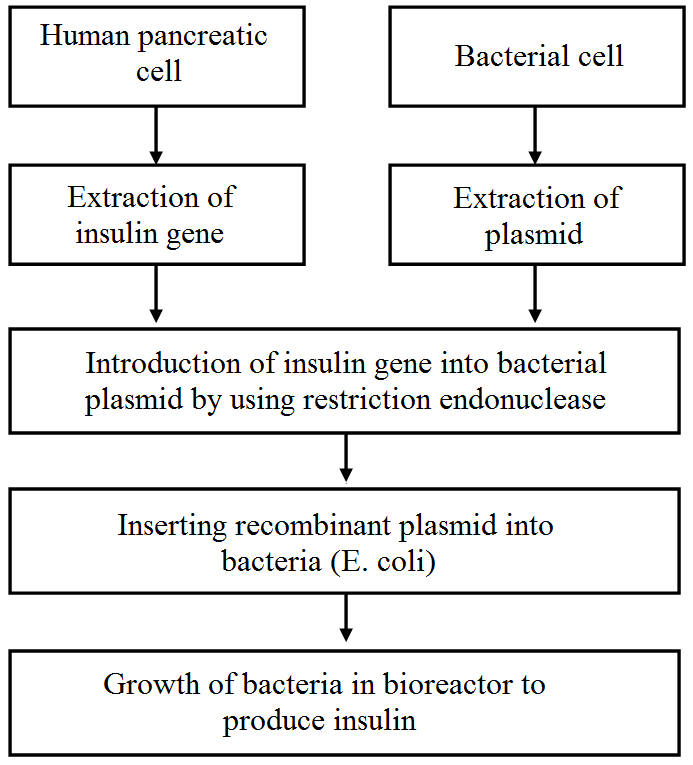
Recombinant DNA-technology is of great importance in the field of medicine. With the help of a flow chart, show how this technology has been used in preparing genetically engineered human insulins.
Answer
Insulin consists of two (short) polypeptide chains (A and B), linked by disulphide bonds, two DNA sequences corresponding to chain A and B prepared (by Eli Lily company), introduced them into plasmids of E.coli, chain A and B produced separately, extracted and combined by creating disulphide bonds.
View full question & answer
Question 553 Marks
Answer the following questions:
What is plasmid?
Answer
Plasmid is a circular extra-chromosomal DNA molecule present in a bacterial cell, which replicates autonomously independent of bacterial chromosomal DNA.
View full question & answer
Question 563 Marks
Recombinant DNA technology is of great importance in the field of medicine. With the help of a flow chart, show how this techonolgy has been used in preparing genetically engineered human insulins.
Answer
Preparation of Human Insulin using recombinant DNA technology:

View full question & answer
Question 573 Marks
Transgenic animals are the animals in which a foreign gene is expressed. Such animals can be used to study the fundamental biological process, phenomenon as well as for producing products useful for mankind. Give one example for each type.
Answer
Following are the examples of various uses of transgenic animals:
  • Fundamental biological processes: Transgenic animals can be used to understand insulin-like growth factors in humans.
  • Study of Diseases: Many transgenic animals are introduced with genes for certain disease. Then progression and possible cure for such disease can be studied using these animals.
  • Biological Products: A transgenic cow Rosie could produce protein enriched milk.
View full question & answer
Question 583 Marks
Gene therapy is an attempt to correct a genetic defect by providing a normal gene into the individual. By this the normal function can be restored. An alternate method would be to provide the gene product (protein/ enzyme) known as enzyme replacement therapy, which would also restore the function. Which in your opinion is a better option? Give reason for your answer.
Answer
Gene therapy is an attempt to correct a genetic defect by providing a normal gene into the individual. By this the normal function can be restored. Alternate method would be to provide the gene product (protein/ enzyme) know as enzyme replacement therapy, which would also restore the function. Which in your opinion is a better option? Give reason for your answer.
View full question & answer
Question 593 Marks
While creating genetically modified organisms, genetic barriers are not respected. How can this be dangerous in the long run?
Answer
The manipulation of living organisms by the human race cannot go on any further, without regulation. Some ethical standards are required to evaluate the morality of all human activities that might help or harm living organisms. Going beyond the morality of such issues, the biological significance of such things is also important. Genetic modification of organisms can have unpredictable results when such organisms are introduced into the ecosystem.
View full question & answer
Question 603 Marks
How has the study of biotechnology helped in developing pest resistant cotton crop? Explain.

Or

One of the major contribution of biotechnology is to develop pest resistant varieties of cotton plants. Explain how it has been made possible.

Answer
The pests that destroy the cotton balls are cotton bollworms and cotton borer. Bt cotton is created by using some strains of a bacterium, Bacillus thuringiensis (Bt is short form).
  1. This bacterium produces protein that kills certain insects such as lepidopterans (tobacco budworm and armyworm), coleopterans (beetles) and dipterans (flies and mosquitoes).
  2. Bacillus thuringiensis forms protein crystals during a particular phase of their growth. These crystals contain a toxic insecticidal protein.
  3. Bt toxin protein exists as inactive protoxins in bacteria, but once an insect ingests this inactive toxin, it is converted into an active form due to the alkaline pH of the gut, which solubilises the crystals.
  4. The activated toxin binds to the surface of midgut epithelial cells and creates pores that cause cell swelling and lysis leading to death of insect.
  5. Specific Bt toxin genes were isolated from Bacillus thuringiensis and incorporated into several crop plants.
  6. Most Bt toxins are insect-group specific. The toxin is coded by a gene named cry. For example, the proteins encoded by the genes cry IAc and cry IAD control the cotton bollworms and cry IAb controls corn borer.
View full question & answer
Question 613 Marks
How did an American Company, Eli Lilly use the knowledge of r-DNA technology to produce human insulin?
Answer
Two chains of DNA sequence corresponding to A& B chains of human insulin prepared, introduced them into plasmids of E.coli to produce separate A& B chains,
A & B chains extracted combined by creating disulphide bonds.
View full question & answer
Question 623 Marks
Why has the Indian Parliament cleared the second amendment of the country’s patents bill?
Answer
It was observed that some MNCs or other organizations obtained patent on products or services which had been part of the traditional knowledge of developing countries. This act had the potential of exploitation of indigenous people by not providing adequate compensation and by commercial exploitation. To prevent such a misuse of patent, the Indian Parliament cleared the second amendment of the country’s patent bill.
View full question & answer
Question 633 Marks
Name the genes responsible for making Bt cotton plants resistant to bollworm attack. How do such plants attain resistance against bollworm attacks? Explain.
Answer
Bt cotton has cry IAc/cry II Ab gene, produces crystals of protoxins. When bollworm bites the cotton fruits, it consumes the toxic insecticidal protein, In its gut it is activated by the alkaline pH- binds to mid gut epithelial cells, lysis, swelling-death of the insect.
View full question & answer
Question 643 Marks
Discuss the advantages of GMO.
Answer
Following are the advantages of GMO:
  • GM crops are more tolerant to various stresses.
  • GM crops reduce the reliance on pesticides and synthetic fertilizers.
  • GM crops can enhance nutrient value of a particular food.
View full question & answer
Question 653 Marks
How did an American Company, Eli Lilly use the knowledge of rDNA technology to produce human insulin?

Or

How did Eli Lilly synthesise the human insulin? Mention one difference between this insulin and the one produced by the human pancreas.

Or

How did Eli Lilly Company go about preparing the human insulin? How is the insulin thus produced different from that produced by the functional human insulin gene?

Answer
In 1983, Eli Lilly, an American company prepared two DNA sequences corresponding to A and B-chains of human insulin and introduced them in plasmids of E. coli to produce insulin chains. These chains (A and B) were produced separately, extracted and combined by creating disulphide bonds to form human insulin called humulin.

View full question & answer
Question 663 Marks
How does RNA interference help in developing resistance in tobacco plant against nematode infection?
Answer
With RNA interference (RNAi) technique transgenic tobacco plant is protected against nematode/Meloidegyne incognitia using Agrobacterium as the vectors, nematode-specific genes were introduced into the host plant, it produces both sense & anti sense RNA, these 2 RNAs form ds RNA, it silences specific mRNA of nematode (no protein synthesis/no translation ), hence nematode cannot survive in tobacco plant.
View full question & answer
Question 673 Marks
Biotechnology has helped farmers to get pest resistant cotton crops. Explain the technique adopted along with its mode of action. (Mention six points).
Answer
The technique involves the use of a popularly known biopesticide Bt toxin produced by bacteria Bacillus thuriengiensis. Bt toxin protein when ingested by the insect gets converted to its active form due to alkaline pH of the gut. The activated toxin binds to the surface of midgut epithelial cells. It creates pores in these cells that cause swelling and lysis and eventually kills the insect. The genes (cry genes) encoding this protein are isolated from the bacterium and incorporated into crop plants like cotton.
The proteins encoded by these cry genes control the pest.
Specifically, cryIAc and cryIIAb control cotton bollworm (Helicoverpa armigera), an insect belonging to Lepidoptera which earlier used to destroy the whole crop.
View full question & answer
Question 683 Marks
How did the process of RNA interference help to control the nematode from infecting the roots of tobacco plants?

Or

How has RNAi technique helped to prevent the infestation of roots in tobacco plants by a nematode Meloidogyne incognita?

Answer
RNA interference is a gene-silencing process that blocks the expression of genes in the parasite when it enters the host's body. RNAi is a method adopted to prevent infestation of roots of tobacco plants by a nematode meloidegyne incognitia. In RNAi, a complementary RNA binds to mRNA to from a ds RNA that cannot translate and hence, its expression is blocked (Silencing). In this process, nematode-specific genes (DNA) are introduced in the host plant. This introduced DNA forms both sense and anti-sense RNA. These two stands, being complementary to each other, bend and form ds RNA, leading to RNA interface. mRNA of nematode is thus silenced and the parasite cannot survive in the transgenic host. Thus, through the above method, tobacco plants can be protected from nematode attack.
View full question & answer
Question 693 Marks
People are quite apprehensive to use GM crops. Give three arguments in support of GM crops so as to convince the people in favour of such crops.
Answer
The GMO's are the plants, animals, bacteria, etc., whose genes have been altered by genetic manipulation. They were created because:
  1. The agro-chemicals used in agriculture are too costly.
  2. Excess use of chemicals in field adversely affects our environment by causing pollution. GMO's are beneficial in many ways.
Advantages of GMOs are as follows:
  1. Tolerance against abiotic stresses, such as cold, drought, salt, heat.
  2. Reduce dependence on chemical pesticides.
  3. Reduce post-harvest losses.
  4. Increase efficiency of mineral usage by plants.
View full question & answer
Question 703 Marks
What is a recombinant DNA vaccine? Give two examples.
Answer
A recombinant vaccine is a vaccine produced through recombinant DNA technology. This involves inserting the DNA encoding an antigen that stimulates an immune response into bacterial or mammalian cells. Recombinant DNA technology has allowed the production of antigenic polypeptides of pathogen in bacteria or yeast. Vaccines produced using this approach allow large scale production and hence greater availability for immunisation, e.g., hepatitis B vaccine (Recombivax HB) produced from yeast. As of June 2015 one human DNA vaccine had been approved for human use, the single-dose Japanese encephalitis vaccine called IMOJEV, released in 2010 in Australia.
View full question & answer
Question 713 Marks
What is ADA deficiency and how can it be cured?
Answer
Adenosine Deaminase (ADA) deficiency by M Blease and WF Andresco of National Institute of Health. This particular enzyme is crucial for the immune system to function. The disorder is caused due to the deletion of the gene for adenosine deaminase. In some children, ADA deficiency can be cured by bone marrow transplantation and in, others by enzyme replacement therapy. But, the problem with both of these approaches is that they are not completely curative.
Steps followed in enzyme replacement gene therapy are given below:
  1. In first step of gene therapy, lymphocytes from the blood of the patient are grown in a culture outside the body.
  2. A functional ADA cDNA (using a retroviral vector) is then introduced into these lymphocytes which are subsequently returned to the patient.
  3. As these cells are not immortal, the Patient requires periodic infusion of such genetically engineered lymphocytes. But if the gene isolated fiom marrow cells producing ADA is introduced into cells at early embryonic stages, it could be a permanent cure.
View full question & answer
Question 723 Marks
Why do lepidoplerans die when they feed on Bt cotton plant? Explain how does it happen.
Answer
Bt cotton contains inactive toxin protein/protoxin/insecticidal protein/crystal protein, once the insect ingest it the inactive protoxins are converted into active form due to alkaline pH in gut, which solubilise the crystals, activated toxins binds to surface of midgut (epithelial cells), create pores causes cell swelling, lysis eventually leading the death of the insect pest.
View full question & answer
Question 733 Marks
Explain enzyme-replacement therapy to treat adenosine deaminase deficiency. Mention two disadvantages of this procedure.
Answer
Functional adenosine deaminase is given to the patient by injection.

Disadvantages:

Therapy is not completely curative, periodic infusion of enzyme required.

View full question & answer
Question 743 Marks
Describe any three potential applications of genetically modified plants.
Answer
More tolerant to abiotic stress, less dependence on chemical pesticides, reduces post-harvest losses, increase efficiency of mineral usage by plants. Enhance nutritional value of food.
e.g., Vitamin A enriched rice.
View full question & answer
Question 753 Marks
Explain the various steps involved in the production of artificial insulin.
Answer
Two DNA sequences corresponding to A and B polypeptide chains of human insulin were prepared, these were introduced into E.coli to produce A and B chains separately, these chains were extracted and combined by creating disulphide bonds.
View full question & answer
Question 763 Marks
Why is molecular diagnosis preferred over conventional methods? Name any two techniques giving one use of each.
Answer
Using conventional methods of diagnosis (serum and urine analysis), early detection of diseases is not possible To overcome this problem, some molecular diagnosis techniques were developed that provide early detection of diseases.
These are as follows:
  1. Polymerase Chain Reaction (PCR) helps in early detection of diseases or pathogens by the amplification of their nucleic acid. PCR can amplify nucleic acids of pathogens even when their concentration is very low. This technique can be used for detecting HIV in suspected AIDS patients, genetic mutations in suspected cancer patients and in identifying genetic disorders.
  2. Enzyme Linked Immuno Sorbent Assay (ELISA) is based on the principle of antigen-antibody interaction. Infection by pathogen can be detected by the presence of antigens (proteins, glycoproteins, etc.) or by detecting the antibodies synthesised against the pathogen.
View full question & answer
Question 773 Marks
How has RNAi technique helped to prevent the infestation of roots in tobacco plants by a nematode Meloidogyne incognita?
Answer
Using Agrobacterium vectors, nematode specific genes introduced into host plant, produced sense - antisense RNA in host cells, ds RNA - initiated RNAi, silenced specific mRNA of nematode, parasite could not survive in transgenic host.
View full question & answer
Question 783 Marks
Explain why Bt cotton flowers undergo pollination by butterflies and bees inspite of being insect pest resistant?
Answer
Bt cotton is genetically engineered to produce a toxin which kills insect pests which eat the plant and cause damage. Bees and butterflies only forage for nectar in flowers and do not eat any part of the plant. So, they do not die.
View full question & answer
Question 793 Marks
Write a short note on Biopiracy highlighting the exploitation of developing countries by the developed countries.
Answer
Biopiracy is the term used to refer to the use of bio-resources by multinational companies and other organisations without proper authorisation from the countries and people concerned without compensatory payment. Most of the industrialised nations are rich financially but poor in biodiversity arid traditional knowledge. In contrast the developing and the underdeveloped world is rich in biodiversity and traditional knowledge related to bio-resources. Traditional knowledge related to bio-resources can be exploited to develop modem applications and can also be used to save time, effort and expenditure during their commercialisation.
View full question & answer