Question 14 Marks
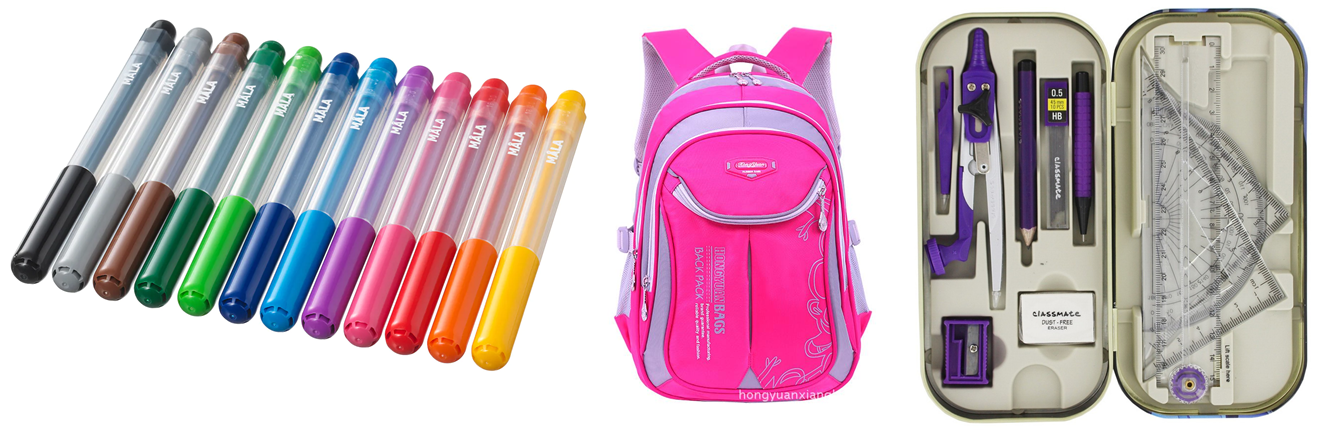
Gaurav purchased $5$ pens, $3$ bags and $1$ instrument box and pays $₹ \ 16.$ From the same shop, Dheeraj purchased $2$ pens, 1 bag and $3$ instrument boxes and pays $₹ \ 19,$ while Ankur purchased $1$ pen, $2$ bags and $4$ instrument boxes and pays $₹ \ 25.$
Using the concept of matrices and determinants, answer the following questions.
Using the concept of matrices and determinants, answer the following questions.
- The cost of one pen is:
- $₹ \ 2$
- $₹ \ 5$
- $₹ \ 1$
- $₹ \ 3$
- What is the cost of one pen and one bag?
- $₹ \ 3$
- $₹ \ 5$
- $₹ \ 7$
- $₹ \ 8$
- What is the cost of one pen and one instrument box?
- $₹ \ 7$
- $₹ \ 6$
- $₹ \ 8$
- $₹ \ 9$
- Which of the following is correct?
- Determinant is a square matrix.
- Determinant is a number associated to a matrix.
- Determinant is a number associated to a square matrix.
- All of the above.
- From the matrix equation $AB = AC,$ it can be concluded that $B = C$ provided:
- $A$ is singular.
- $A$ is non$-$singular.
- $A$ is symmetric.
- $A$ is square.
Answer
View full question & answer→Let the cost of $1$ pen $= ₹ \ x$ the cost of $1$ bag $= ₹ \ y,$ and the cost of $1$ instrument box $= ₹ \ z$ According to the question,
we have $5x + 3y + z $
$= 16, 2x + y + 3z $
$= 19, x + 2y + 4z $
$= 25$
This system of equation can be written as $AX = B,$
Where, $\text{A}=\begin{bmatrix}5&3&1\\2&1&3\\1&2&4\end{bmatrix},\text{B}=\begin{bmatrix}16\\19\\25\end{bmatrix}$ and $\text{X}=\begin{bmatrix}\text{x}\\\text{y}\\\text{z}\end{bmatrix}$
$|A| = 5(4 - 6) - 3(8 - 3) + 1(4 - 1) $
$= -10 - 3(5) + 3 $
$= -22 ≠ 0$
$\therefore A^{-1}$ exists.
Now, $X = A^{-1}B,$
where $\text{A}^{-1}=\frac{1}{[\text{A}]}(\text{adj A}).$
Here, $\text{adj A}=\begin{bmatrix}-2&-5&3\\-10&19&-7\\8&-13&-1\end{bmatrix}'=\begin{bmatrix}-2&-10&8\\-5&19&-13\\3&-7&-1\end{bmatrix}$
$\therefore\text{A}^{-1}=\frac{1}{-22}\begin{bmatrix}-2&-10&8\\-5&19&-13\\3&-7&-1\end{bmatrix}$
$\therefore\text{X}=\begin{bmatrix}\text{x}\\\text{y}\\\text{z}\end{bmatrix}=\frac{1}{-22}\begin{bmatrix}-2&-10&8\\-5&19&-13\\3&-7&-1\end{bmatrix}\begin{bmatrix}16\\19\\25\end{bmatrix}$
$=\frac{1}{-22}\begin{bmatrix}-32-190+200\\-80+361-325\\48-133-25\end{bmatrix}$
$=\frac{-1}{22}\begin{bmatrix}-22\\-44\\-110\end{bmatrix}$
$=\begin{bmatrix}1\\2\\5\end{bmatrix}$
$\therefore\text{x}=1,\text{y}=2,\text{z}=5$
Hence, cost of one pen, one bag and an instrument box is $₹ \ 1, ₹ \ 2$ and $₹ \ 5$ respectively.
Pre$-$multiplying by $A^{-1}$ on both sides, we get
$A^{-1} AB = A^{-1} AC $
$\Rightarrow (A^{-1}A) B = (A^{-1}A)C$
$\Rightarrow IB = IC (\because AA^{-1} = A^{-1}A = I)$
$\Rightarrow B = C$
Since $A^{-1}$ exists only if $A $ is non$-$singular.
$\therefore$ For $B = C, A$ should be non$-$singular.
we have $5x + 3y + z $
$= 16, 2x + y + 3z $
$= 19, x + 2y + 4z $
$= 25$
This system of equation can be written as $AX = B,$
Where, $\text{A}=\begin{bmatrix}5&3&1\\2&1&3\\1&2&4\end{bmatrix},\text{B}=\begin{bmatrix}16\\19\\25\end{bmatrix}$ and $\text{X}=\begin{bmatrix}\text{x}\\\text{y}\\\text{z}\end{bmatrix}$
$|A| = 5(4 - 6) - 3(8 - 3) + 1(4 - 1) $
$= -10 - 3(5) + 3 $
$= -22 ≠ 0$
$\therefore A^{-1}$ exists.
Now, $X = A^{-1}B,$
where $\text{A}^{-1}=\frac{1}{[\text{A}]}(\text{adj A}).$
Here, $\text{adj A}=\begin{bmatrix}-2&-5&3\\-10&19&-7\\8&-13&-1\end{bmatrix}'=\begin{bmatrix}-2&-10&8\\-5&19&-13\\3&-7&-1\end{bmatrix}$
$\therefore\text{A}^{-1}=\frac{1}{-22}\begin{bmatrix}-2&-10&8\\-5&19&-13\\3&-7&-1\end{bmatrix}$
$\therefore\text{X}=\begin{bmatrix}\text{x}\\\text{y}\\\text{z}\end{bmatrix}=\frac{1}{-22}\begin{bmatrix}-2&-10&8\\-5&19&-13\\3&-7&-1\end{bmatrix}\begin{bmatrix}16\\19\\25\end{bmatrix}$
$=\frac{1}{-22}\begin{bmatrix}-32-190+200\\-80+361-325\\48-133-25\end{bmatrix}$
$=\frac{-1}{22}\begin{bmatrix}-22\\-44\\-110\end{bmatrix}$
$=\begin{bmatrix}1\\2\\5\end{bmatrix}$
$\therefore\text{x}=1,\text{y}=2,\text{z}=5$
Hence, cost of one pen, one bag and an instrument box is $₹ \ 1, ₹ \ 2$ and $₹ \ 5$ respectively.
- $(c) ₹ \ 1$
- $(a) ₹ \ 3$
- $(b) ₹ \ 6$
- $(c)$ Determinant is a number associated to a square matrix.
- $(b) A$ is non$-$singular.
Pre$-$multiplying by $A^{-1}$ on both sides, we get
$A^{-1} AB = A^{-1} AC $
$\Rightarrow (A^{-1}A) B = (A^{-1}A)C$
$\Rightarrow IB = IC (\because AA^{-1} = A^{-1}A = I)$
$\Rightarrow B = C$
Since $A^{-1}$ exists only if $A $ is non$-$singular.
$\therefore$ For $B = C, A$ should be non$-$singular.