Questions

Case study (4 Marks)

🎯

Test yourself on this topic

10 questions · timed · auto-graded

Question 14 Marks
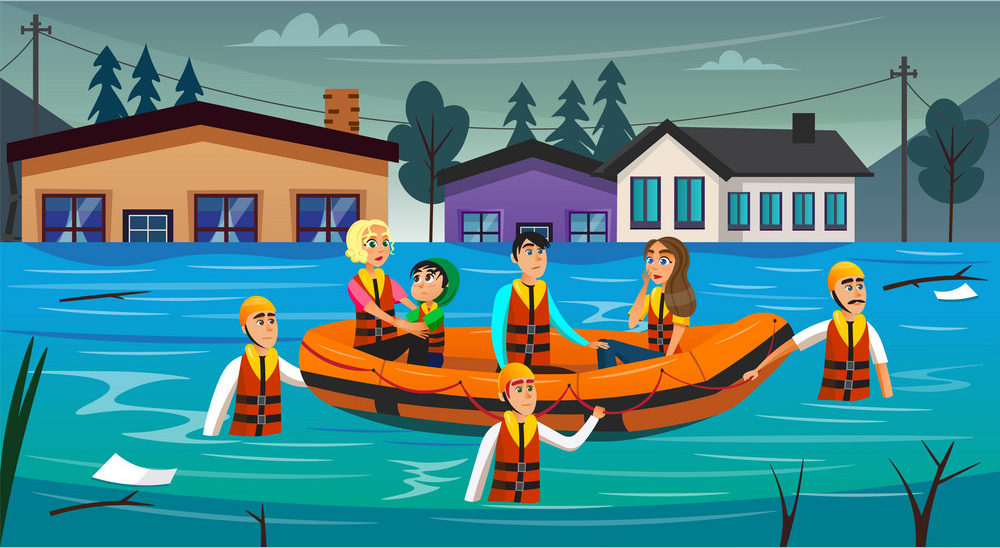
Three schools A, B and C organized a mela for collecting funds for helping the rehabilitation of flood victims. They sold hand made fans, mats and plates from recycled material at a cost of ₹ 25, ₹ 100 and ₹ 50 each. The number of articles sold by school A, B, C are given below.
Article
School
A
B
C
Fans
40
25
35
Mats
50
40
50
Plates
20
30
40
Based on above information, answer the following questions.
  1. If P be a 3 × 3 matrix represent the sale of handmade fans, mats and plates by three schools A, B and C, then
  1. $\begin{matrix}& \ \ \ \ \ \ \ \ \ \ \text{Fans}&\text{Mats}&\text{Plates}\end{matrix}\\\begin{matrix}\ \ \ \ \ \ \ \ \ \ \text{A}\\\text{P}\ =\text{B}\\\ \ \ \ \ \ \ \ \ \ \text{C}\end{matrix}\begin{bmatrix} \ \ 40 \ \ \ & 50 & \ \ \ \ \ 25\\25 & 40 & \ \ \ \ \ 30\\35& \ 50& \ \ \ \ \ 40\end{bmatrix}$
  2. $\begin{matrix}& \ \ \ \ \ \ \ \ \ \ \text{Fans}&\text{Mats}&\text{Plates}\end{matrix}\\\begin{matrix}\ \ \ \ \ \ \ \ \ \ \text{A}\\\text{P}\ =\text{B}\\\ \ \ \ \ \ \ \ \ \ \text{C}\end{matrix}\begin{bmatrix} \ \ 25 \ \ \ & 40 & \ \ \ \ \ 20\\35 & 40 & \ \ \ \ \ 30\\40& \ 50& \ \ \ \ \ 20\end{bmatrix}$
  3. $\begin{matrix}& \ \ \ \ \ \ \ \ \ \ \text{Fans}&\text{Mats}&\text{Plates}\end{matrix}\\\begin{matrix}\ \ \ \ \ \ \ \ \ \ \text{A}\\\text{P}\ =\text{B}\\\ \ \ \ \ \ \ \ \ \ \text{C}\end{matrix}\begin{bmatrix} \ \ 40 \ \ \ & 25 & \ \ \ \ \ 35\\50 & 40 & \ \ \ \ \ 50\\20& \ 30& \ \ \ \ \ 40\end{bmatrix}$
  4. $\begin{matrix}& \ \ \ \ \ \ \ \ \ \ \text{Fans}&\text{Mats}&\text{Plates}\end{matrix}\\\begin{matrix}\ \ \ \ \ \ \ \ \ \ \text{A}\\\text{P}\ =\text{B}\\\ \ \ \ \ \ \ \ \ \ \text{C}\end{matrix}\begin{bmatrix} \ \ 25 \ \ \ & 35 & \ \ \ \ \ 40\\40 & 40 & \ \ \ \ \ 50\\20& \ 30& \ \ \ \ \ 20\end{bmatrix}$
  1. If Q be a 3 x 1 matrix represent the sale prices (in ₹) of given products per unit, then
  1. $\text{Q}=\begin{bmatrix}25\\50\\100\end{bmatrix}\begin{matrix}\text{Fans}\\\text{Mats}\\\text{Plates}\end{matrix}$
  2. $\begin{matrix}\ \ \ \ \ \ \text{Fans}&\text{Mats}&\text{Plates}\end{matrix}\\\text{Q}=\begin{matrix}[25\ \ \ &50&\ \ \ 100]\end{matrix}\\$
  3. $\begin{matrix}\ \ \ \ \ \ \text{Fans}&\text{Mats}&\text{Plates}\end{matrix}\\\text{Q}=\begin{matrix}[25\ \ \ &100&\ \ \ 50]\end{matrix}\\$
  4. $\text{Q}=\begin{bmatrix}25\\100\\50\end{bmatrix}\begin{matrix}\text{Fans}\\\text{Mats}\\\text{Plates}\end{matrix}$
  1. The funds collected by school A by selling the given articles is:
  1. ₹ 7000
  2. ₹ 6125
  3. ₹ 7875
  4. ₹ 8000
  1. The funds collected by school B by selling the given articles is:
  1. ₹ 5125
  2. ₹ 6125
  3. ₹ 7125
  4. ₹ 8125
  1. The total funds collected for the required purpose is:
  1. ₹ 20000
  2. ₹ 21000
  3. ₹ 30000
  4. ₹ 35000
Answer
  1. (a) $\begin{matrix}& \ \ \ \ \ \ \ \ \ \ \text{Fans}&\text{Mats}&\text{Plates}\end{matrix}\\\begin{matrix}\ \ \ \ \ \ \ \ \ \ \text{A}\\\text{P}\ =\text{B}\\\ \ \ \ \ \ \ \ \ \ \text{C}\end{matrix}\begin{bmatrix} \ \ 40 \ \ \ & 50 & \ \ \ \ \ 25\\25 & 40 & \ \ \ \ \ 30\\35& \ 50& \ \ \ \ \ 40\end{bmatrix}$
Solution:
Clearly, $\begin{matrix}& \ \ \ \ \ \ \ \ \ \ \text{Fans}&\text{Mats}&\text{Plates}\end{matrix}\\\begin{matrix}\ \ \ \ \ \ \ \ \ \ \text{A}\\\text{P}\ =\text{B}\\\ \ \ \ \ \ \ \ \ \ \text{C}\end{matrix}\begin{bmatrix} \ \ 40 \ \ \ & 50 & \ \ \ \ \ 25\\25 & 40 & \ \ \ \ \ 30\\35& \ 50& \ \ \ \ \ 40\end{bmatrix}$
  1. (d) $\text{Q}=\begin{bmatrix}25\\100\\50\end{bmatrix}\begin{matrix}\text{Fans}\\\text{Mats}\\\text{Plates}\end{matrix}$
Solution:
Since Q is a 3 × 1 matrix, therefore
$\text{Q}=\begin{bmatrix}25\\100\\50\end{bmatrix}\begin{matrix}\text{Fans}\\\text{Mats}\\\text{Plates}\end{matrix}$
  1. (a) ₹ 7000
Solution:
Clearly, total funds collected by each school is given by the matrix
$\text{PQ}=\begin{bmatrix}40&50&20\\25&40&30\\35&50&40\end{bmatrix}\begin{bmatrix}25\\100\\50\end{bmatrix}$
$=\begin{bmatrix}1000+5000+1000\\625+4000+15000\\875+5000+2000\end{bmatrix}=\begin{bmatrix}7000\\6125\\7875\end{bmatrix}$
$\therefore$ Funds collected by school A is ₹ 7000
Funds collected by school B is ₹ 6125
Funds collected by school C is ₹ 7875
  1. (b) ₹ 6125
  2. (b) ₹ 21000
Solution:
Total funds collected for the required purpose = ₹ (7000 + 6125 + 7875) = ₹ 21000
View full question & answer
Question 24 Marks
Consider $2$ families $A$ and $B$. Suppose there are $4$ men$,4$ women and $4$ children in family $A$ and $2$ men$, 2$ women and $2$ children in family $B$. The recommend daily amount of calories is $2400$ for a man, $1900$ for a woman$, 1800$ for a children and $45$ grams of proteins for a man$, 55$ grams for a woman and $33$ grams for children.

Based on the above information, answer the following questions.
  1. The requirement of calories and proteins for each person in matrix form can be represented as:
  1. $\begin{matrix}& \ \ \ \ \ \ \ \ \ \ \ \ \ \text{Calorise}&\text{Proteins}\end{matrix}\\\begin{matrix}\text{Man}\\\text{Woman}\\\text{Children}\end{matrix}\begin{bmatrix} \ \ 2400 \ \ \ & 45\\1900 & 55\\1800& \ 33&\end{bmatrix}$
  2. $\begin{matrix}& \ \ \ \ \ \ \ \ \ \ \ \ \ \text{Calorise}&\text{Proteins}\end{matrix}\\\begin{matrix}\text{Man}\\\text{Woman}\\\text{Children}\end{matrix}\begin{bmatrix} \ \ 1900 \ \ \ & 55\\2400 & 45\\1800& \ 33&\end{bmatrix}$
  3. $\begin{matrix}& \ \ \ \ \ \ \ \ \ \ \ \ \ \text{Calorise}&\text{Proteins}\end{matrix}\\\begin{matrix}\text{Man}\\\text{Woman}\\\text{Children}\end{matrix}\begin{bmatrix} \ \ 1800 \ \ \ & 33\\1900 & 55\\2400& \ 45&\end{bmatrix}$
  4. $\begin{matrix}& \ \ \ \ \ \ \ \ \ \ \ \ \ \text{Calorise}&\text{Proteins}\end{matrix}\\\begin{matrix}\text{Man}\\\text{Woman}\\\text{Children}\end{matrix}\begin{bmatrix} \ \ 2400 \ \ \ & 33\\1900 & 55\\1800& \ 45&\end{bmatrix}$
  1. Requirement of calories of family $A$ is:
  1. $24000$
  2. $24400$
  3. $15000$
  4. $15800$
  1. Requirement of proteins for family $B$ is:
  1. $560$ grams
  2. $332$ grams
  3. $266$ grams
  4. $300$ grams
  1. If $A$ and Bare two matrices such that $AB = B$ and $BA = A,$ then $A^2 + B^2$ equals.
  1. $2AB$
  2. $2BA$
  3. $A + B$
  4. $AB$
  1. If $\text{A}=(\text{a}_\text{ij})_{\text{m}\times\text{n}},\ \ \text{B}=(\text{b}_\text{ij})_{\text{n}\times\text{p}}$ and $\text{C}=(\text{c}_\text{ij})_{\text{p}\times\text{q}}$ then the product $(BC) A$ is possible only when.
  1. $m = q$
  2. $n = q$
  3. $p = q$
  4. $m = p$
Answer
  1. $(a) \begin{matrix}& \ \ \ \ \ \ \ \ \ \ \ \ \ \text{Calorise}&\text{Proteins}\end{matrix}\\\begin{matrix}\text{Man}\\\text{Woman}\\\text{Children}\end{matrix}\begin{bmatrix} \ \ 2400 \ \ \ & 45\\1900 & 55\\1800& \ 33&\end{bmatrix}$
Let $F$ be the matrix representing the number of family members and $R$ be the matrix representing the requirement of calories and proteins for each person. Then
$\ \ \ \ \ \ \ \ \ \ \ \ \ \ \ \ \ \ \ \ \ \ \ \ \ \begin{matrix}\text{Men} & \text{Women} & \text{Children}\\\end{matrix}\\\text{F} =\begin{matrix}\text{Family A} \\ \text{Family B} \end{matrix} \begin{bmatrix} 4 &\ \ \ \ \ \ \ \ 4 &\ \ \ \ \ \ \ \ \ \ \ \ 4\\2 & \ \ \ \ \ \ \ \ \ 2 & \ \ \ \ \ \ \ \ \ \ \ \ 2\end{bmatrix}$
$\begin{matrix}& \ \ \ \ \ \ \ \ \ \ \ \ \ \ \ \ \ \ \ \ \ \ \ \text{Calorise}&\text{Proteins}\end{matrix}\\\begin{matrix}\ \ \ \ \ \ \ \ \ \text{Man}\\\text{R}\ =\text{Woman}\\\ \ \ \ \ \ \ \ \ \ \ \text{Children}\end{matrix}\begin{bmatrix} \ \ 2400 \ \ \ & 45\\1900 & 55\\1800& \ 33&\end{bmatrix}$
  1. $(b) 24400$
The requirement of calories and proteins for each ofthe two families is given by the product matrix $FR.$
$\text{FR}=\begin{bmatrix}4&4&4\\2&2&2\end{bmatrix}\begin{bmatrix}2400&45\\1900&55\\1800&33\end{bmatrix}$
$=\begin{bmatrix}4(2400+1900+1800)&4(45+55+33)\\2(2400+1900+1800)&2(45+55+33)\end{bmatrix}$
$\begin{matrix} \ \ \ \ \ \ \ \ \ \ \ \text{Calories}&\text{Proteins}\end{matrix}\\\text{FR}=\begin{bmatrix}24400&\ \ \ \ \ \ 532\\12200&\ \ \ \ \ \ 266\end{bmatrix}\begin{matrix}\text{Family A}\\\text{Family B}\end{matrix}$
  1. $(c) 266$ grams
  2. $(c) A + B$
Since$, AB = B ... (i)$
$BA = A ... (ii)$
$\therefore A^2 + B^2 = A \times A + B \times B$
$= A(BA) + B(AB)$
$= (AB)A + (BA)B$
$= BA + AB$
$= A + B$
  1. $(a) m = q$
$\text{A}=(\text{a}_\text{ij})_{\text{m}\times\text{n}},\ \ \text{B}=(\text{b}_\text{ij})_{\text{n}\times\text{p}},\ \ \text{C}=(\text{c}_\text{ij})_{\text{p}\times\text{q}}$
$\text{BC}=(\text{b}_\text{ij})_{\text{n}\times\text{p}}\times(\text{c}_\text{ij})_{\text{p}\times\text{q}}=(\text{d}_\text{ij})_{\text{n}\times\text{q}}$
$\text{(BC)A}=(\text{d}_\text{ij})_{\text{n}\times\text{q}}\times(\text{a}_\text{ij})_{\text{m}\times\text{n}}$
Hence$, (BC)A$ is possible only when $m = q$
View full question & answer
Question 34 Marks
To promote the making of toilets for women, an organisation tried to generate awareness through (i) house call (ii) emails and (iii) announcements. The cost for each mode per attempt is given below:
  1. ₹ 50
  2. ₹ 20
  3. ₹ 40
The number of attempts made in the villages X, Y and Z are given below:
  (i) (ii) (iii)
X 400 300 100
Y 300 250 75
Z 500 400 150
Also, the chance of making of toilets corresponding to one attempt of given modes is:
  1. 2%
  2. 4%
  3. 20%
Based on the above information, answer the following questions.
  1. The cost incurred by the organisation on village X is:
  1. ₹ 10000
  2. ₹ 15000
  3. ₹ 30000
  4. ₹ 20000
  1. The cost incurred by the organisation on village Y is:
  1. ₹ 25000
  2. ₹ 18000
  3. ₹ 23000
  4. ₹ 28000
  1. The cost incurred by the organisation on village Z is:
  1. ₹ 19000
  2. ₹ 39000
  3. ₹ 45000
  4. ₹ 50000
  1. The total number of toilets that can be expected after the promotion in village X, is:
  1. 20
  2. 30
  3. 40
  4. 50
  1. The total number of toilets that can be expected after the promotion in village Z, is
  1. 56
  2. 26
  3. 36
  4. 46
Answer
  1. (c) ₹ 30000
Solution:
Let ₹ A, ₹ B and ₹ C be the cost incurred by the organisation for villages X, Y and Z respectively. Then A, B, C will be given by the following matrix equation.
$\begin{bmatrix}400 & 300 & 100\\300 & 250 & 75\\500 & 400 & 150 \end{bmatrix}\begin{bmatrix}50 \\20\\40\end{bmatrix}=\begin{bmatrix}\text{A}\\\text{B}\\\text{C}\end{bmatrix}$
$=\begin{bmatrix}\text{A}\\\text{B}\\\text{C}\end{bmatrix}=\begin{bmatrix}400\times50+300\times20100\times40\\300\times50+250\times20+75\times40\\500\times50+400\times20+150\times40 \end{bmatrix}$
$\begin{bmatrix}2000+6000+4000\\15000+5000+3000\\25000+8000+6000 \end{bmatrix}=\begin{bmatrix}30000 \\23000\\39000\end{bmatrix}$
  1. (c) ₹ 23000
  2. (b) ₹ 39000
  3. (c) 40
Solution:
Total number of toilets that can be expected in each village is given by the following matrix
$\begin{matrix}\text{X}\\\text{Y}\\\text{Z}\end{matrix}\begin{bmatrix}400&300&100\\300&250&75\\500&400&150\end{bmatrix}\begin{bmatrix}\frac{2}{100}\\\frac{4}{100}\\\frac{20}{100}\end{bmatrix}$
$\begin{matrix}\text{X}\\\text{Y}\\\text{Z}\end{matrix}\begin{bmatrix}8+12+20\\6+10+15\\10+16+30\end{bmatrix}=\begin{matrix}\text{X}\\\text{Y}\\\text{Z}\end{matrix}\begin{bmatrix}40\\31\\56\end{bmatrix}$
  1. (d) 46
View full question & answer
Question 44 Marks
Three car dealers, say A, Band C, deals in three types of cars, namely Hatchback cars, Sedan cars, SUV cars. The sales figure of 2019 and 2020 showed that dealer A sold 120 Hatchback, 50 Sedan, 10 SUV cars in 2019 and 300 Hatchback, 150 Sedan, 20 SUV cars in 2020; dealer B sold 100 Hatchback, 30 Sedan, 5 SUV cars in 2019 and 200 Hatchback, 50 Sedan, 6 SUV cars in 2020; dealer C sold 90 Hatchback, 40 Sedan, 2 SUV cars in 2019 and 100 Hatchback, 60 Sedan, 5 SUV cars in 2020.

Based on the above information, answer the following questions.
  1. The matrix summarizing sales data of 2019 is:
  1. $\begin{matrix}&\text{Hatchback}&\text{Sedan}&\text{SUV}\end{matrix}\\\begin{matrix}\text{A}\\\text{B}\\\text{C}\end{matrix}\begin{bmatrix}\ \ \ \ \ \ 300\ \ \ &\ \ 150&\ \ \ \ \ 20\\\ \ \ 200&\ \ 50&\ \ \ \ \ 6\\\ \ \ 100&\ \ 30&\ \ \ \ \ 5\end{bmatrix}$
  2. $\begin{matrix}&\text{Hatchback}&\text{Sedan}&\text{SUV}\end{matrix}\\\begin{matrix}\text{A}\\\text{B}\\\text{C}\end{matrix}\begin{bmatrix}\ \ \ \ \ \ 120\ \ \ &\ \ 100&\ \ \ \ \ 20\\\ \ \ 100&\ \ 30&\ \ \ \ \ 5\\\ \ \ 90&\ \ 40&\ \ \ \ \ 2\end{bmatrix}$
  3. $\begin{matrix}&\text{Hatchback}&\text{Sedan}&\text{SUV}\end{matrix}\\\begin{matrix}\text{A}\\\text{B}\\\text{C}\end{matrix}\begin{bmatrix}\ \ \ \ \ \ 100\ \ \ &\ \ 30&\ \ \ \ \ 5\\\ \ \ 120&\ \ 50&\ \ \ \ \ 10\\\ \ \ 90&\ \ 40&\ \ \ \ \ 2\end{bmatrix}$
  4. $\begin{matrix}&\text{Hatchback}&\text{Sedan}&\text{SUV}\end{matrix}\\\begin{matrix}\text{A}\\\text{B}\\\text{C}\end{matrix}\begin{bmatrix}\ \ \ \ \ \ 200\ \ \ &\ \ 50&\ \ \ \ \ 6\\\ \ \ 100&\ \ 30&\ \ \ \ \ 5\\\ \ \ 300&\ \ 150&\ \ \ \ \ 20\end{bmatrix}$
  1. The matrix summarizing sales data of 2020 is:
  1. $\begin{matrix}&\text{Hatchback}&\text{Sedan}&\text{SUV}\end{matrix}\\\begin{matrix}\text{A}\\\text{B}\\\text{C}\end{matrix}\begin{bmatrix}\ \ \ \ \ \ 300\ \ \ &\ \ 150&\ \ \ \ \ 20\\\ \ \ 200&\ \ 50&\ \ \ \ \ 6\\\ \ \ 100&\ \ 60&\ \ \ \ \ 5\end{bmatrix}$
  2. $\begin{matrix}&\text{Hatchback}&\text{Sedan}&\text{SUV}\end{matrix}\\\begin{matrix}\text{A}\\\text{B}\\\text{C}\end{matrix}\begin{bmatrix}\ \ \ \ \ \ 120\ \ \ &\ \ 50&\ \ \ \ \ 10\\\ \ \ 100&\ \ 60&\ \ \ \ \ 5\\\ \ \ 90&\ \ 40&\ \ \ \ \ 2\end{bmatrix}$
  3. $\begin{matrix}&\text{Hatchback}&\text{Sedan}&\text{SUV}\end{matrix}\\\begin{matrix}\text{A}\\\text{B}\\\text{C}\end{matrix}\begin{bmatrix}\ \ \ \ \ \ 100\ \ \ &\ \ 60&\ \ \ \ \ 5\\\ \ \ 120&\ \ 50&\ \ \ \ \ 10\\\ \ \ 90&\ \ 40&\ \ \ \ \ 2\end{bmatrix}$
  4. $\begin{matrix}&\text{Hatchback}&\text{Sedan}&\text{SUV}\end{matrix}\\\begin{matrix}\text{A}\\\text{B}\\\text{C}\end{matrix}\begin{bmatrix}\ \ \ \ \ \ 200\ \ \ &\ \ 50&\ \ \ \ \ 6\\\ \ \ 100&\ \ 60&\ \ \ \ \ 5\\\ \ \ 300&\ \ 150&\ \ \ \ \ 20\end{bmatrix}$
  1. The cost incurred by the organisation on village Z is:
  1. $\begin{matrix}&\text{Hatchback}&\text{Sedan}&\text{SUV}\end{matrix}\\\begin{matrix}\text{A}\\\text{B}\\\text{C}\end{matrix}\begin{bmatrix}\ \ \ \ \ \ 190\ \ \ &\ \ 100&\ \ \ \ \ 7\\\ \ \ 300&\ \ 80&\ \ \ \ \ 11\\\ \ \ 420&\ \ 200&\ \ \ \ \ 30\end{bmatrix}$
  2. $\begin{matrix}&\text{Hatchback}&\text{Sedan}&\text{SUV}\end{matrix}\\\begin{matrix}\text{A}\\\text{B}\\\text{C}\end{matrix}\begin{bmatrix}\ \ \ \ \ \ 300\ \ \ &\ \ 80&\ \ \ \ \ 11\\\ \ \ 190&\ \ 100&\ \ \ \ \ 7\\\ \ \ 420&\ \ 200&\ \ \ \ \ 30\end{bmatrix}$
  3. $\begin{matrix}&\text{Hatchback}&\text{Sedan}&\text{SUV}\end{matrix}\\\begin{matrix}\text{A}\\\text{B}\\\text{C}\end{matrix}\begin{bmatrix}\ \ \ \ \ \ 420\ \ \ &\ \ 200&\ \ \ \ \ 30\\\ \ \ 300&\ \ 80&\ \ \ \ \ 11\\\ \ \ 190&\ \ 100&\ \ \ \ \ 7\end{bmatrix}$
  4. None of these
  1. The increase in sales from 2019 to 2020 is given by the matrix.
  1. $\begin{matrix}&\text{Hatchback}&\text{Sedan}&\text{SUV}\end{matrix}\\\begin{matrix}\text{A}\\\text{B}\\\text{C}\end{matrix}\begin{bmatrix}\ \ \ \ \ \ 180\ \ \ &\ \ 100&\ \ \ \ \ 10\\\ \ \ 10&\ \ 20&\ \ \ \ \ 1\\\ \ \ 100&\ \ 20&\ \ \ \ \ 3\end{bmatrix}$
  2. $\begin{matrix}&\text{Hatchback}&\text{Sedan}&\text{SUV}\end{matrix}\\\begin{matrix}\text{A}\\\text{B}\\\text{C}\end{matrix}\begin{bmatrix}\ \ \ \ \ \ 10\ \ \ &\ \ 20&\ \ \ \ \ 3\\\ \ \ 100&\ \ 20&\ \ \ \ \ 1\\\ \ \ 180&\ \ 100&\ \ \ \ \ 10\end{bmatrix}$
  3. $\begin{matrix}&\text{Hatchback}&\text{Sedan}&\text{SUV}\end{matrix}\\\begin{matrix}\text{A}\\\text{B}\\\text{C}\end{matrix}\begin{bmatrix}\ \ \ \ \ \ 180\ \ \ &\ \ 100&\ \ \ \ \ 10\\\ \ \ 100&\ \ 20&\ \ \ \ \ 1\\\ \ \ 10&\ \ 20&\ \ \ \ \ 3\end{bmatrix}$
  4. $\begin{matrix}&\text{Hatchback}&\text{Sedan}&\text{SUV}\end{matrix}\\\begin{matrix}\text{A}\\\text{B}\\\text{C}\end{matrix}\begin{bmatrix}\ \ \ \ \ \ 100\ \ \ &\ \ 20&\ \ \ \ \ 3\\\ \ \ 180&\ \ 100&\ \ \ \ \ 10\\\ \ \ 10&\ \ 20&\ \ \ \ \ 3\end{bmatrix}$
  1.  If each dealer receive profit of ₹ 50000 on sale of a Hatchback. ₹ 100000 on sale of a Sedan and ₹ 200000 on sale of a SUV, then amount of profit received in the year 2020 by each dealer is given by the matrix.
  1. $\begin{matrix}\text{A}\\\text{B}\\\text{C}\end{matrix}\begin{bmatrix}30000000\\15000000\\12000000\end{bmatrix}$
  2. $\begin{matrix}\text{A}\\\text{B}\\\text{C}\end{matrix}\begin{bmatrix}12000000\\16200000\\34000000\end{bmatrix}$
  3. $\begin{matrix}\text{A}\\\text{B}\\\text{C}\end{matrix}\begin{bmatrix}34000000\\16200000\\12000000\end{bmatrix}$
  4. $\begin{matrix}\text{A}\\\text{B}\\\text{C}\end{matrix}\begin{bmatrix}15000000\\30000000\\12000000\end{bmatrix}$
Answer
  1. (b) $\begin{matrix}&\text{Hatchback}&\text{Sedan}&\text{SUV}\end{matrix}\\\begin{matrix}\text{A}\\\text{B}\\\text{C}\end{matrix}\begin{bmatrix}\ \ \ \ \ \ 120\ \ \ &\ \ 100&\ \ \ \ \ 20\\\ \ \ 100&\ \ 30&\ \ \ \ \ 5\\\ \ \ 90&\ \ 40&\ \ \ \ \ 2\end{bmatrix}$
Solution:
In 2019, dealer A sold 120 Hatchback, 50 Sedan and 10 SUV; dealer B sold 100 Hatchback, 30 Sedan and 5 SUV and dealer C sold 90 Hatchback, 40 Sedan and 2 SUV.
$\therefore$ Required matrix, say P, is given by,
$\begin{matrix}& \ \ \ \ \ \ \ \ \text{Hatchback}&\text{Sedan}&\text{SUV}\end{matrix}\\\begin{matrix}\ \ \ \ \ \ \ \ \ \ \text{A}\\\text{P}\ =\text{B}\\\ \ \ \ \ \ \ \ \ \ \text{C}\end{matrix}\begin{bmatrix}\ \ \ \ \ \ 120\ \ \ &\ \ 100&\ \ \ \ \ 20\\\ \ \ 100&\ \ 30&\ \ \ \ \ 5\\\ \ \ 90&\ \ 40&\ \ \ \ \ 2\end{bmatrix}$
  1. (a) $\begin{matrix}&\text{Hatchback}&\text{Sedan}&\text{SUV}\end{matrix}\\\begin{matrix}\text{A}\\\text{B}\\\text{C}\end{matrix}\begin{bmatrix}\ \ \ \ \ \ 300\ \ \ &\ \ 150&\ \ \ \ \ 20\\\ \ \ 200&\ \ 50&\ \ \ \ \ 6\\\ \ \ 100&\ \ 60&\ \ \ \ \ 5\end{bmatrix}$
Solution:
In 2020, dealer A sold 300 Hatchback, 150 Sedan, 20 SUV dealer B sold 200 Hatchback, 50 sedan, 6 SUV dealer C sold 100 Hatchback, 60 sedan, 5 SUV.
$\therefore$ Required matrix, say Q, is given by,
$\begin{matrix}& \ \ \ \ \ \ \ \ \text{Hatchback}&\text{Sedan}&\text{SUV}\end{matrix}\\\begin{matrix}\ \ \ \ \ \ \ \ \ \ \text{A}\\\text{Q}\ =\text{B}\\\ \ \ \ \ \ \ \ \ \ \text{C}\end{matrix}\begin{bmatrix}\ \ \ \ \ \ 300\ \ \ &\ \ 150&\ \ \ \ \ 20\\\ \ \ 200&\ \ 50&\ \ \ \ \ 6\\\ \ \ 100&\ \ 60&\ \ \ \ \ 5\end{bmatrix}$
  1. (c) $\begin{matrix}&\text{Hatchback}&\text{Sedan}&\text{SUV}\end{matrix}\\\begin{matrix}\text{A}\\\text{B}\\\text{C}\end{matrix}\begin{bmatrix}\ \ \ \ \ \ 420\ \ \ &\ \ 200&\ \ \ \ \ 30\\\ \ \ 300&\ \ 80&\ \ \ \ \ 11\\\ \ \ 190&\ \ 100&\ \ \ \ \ 7\end{bmatrix}$
Solution:
Total number of cars sold in two given years, by each dealer, is given by
$\begin{matrix}& \ \ \ \ \ \ \ \ \ \ \ \ \ \ \ \ \ \ \ \ \ \ \text{Hatchback}&\ \ \ \ \ \ \text{Sedan}&\ \ \ \ \ \ \ \ \ \text{SUV}\end{matrix}\\\begin{matrix}\ \ \ \ \ \ \ \ \ \ \ \ \ \ \ \ \text{A}\\\text{P+Q}\ =\text{B}\\\ \ \ \ \ \ \ \ \ \ \ \ \ \ \ \ \ \text{C}\end{matrix}\begin{bmatrix}\ \ \ 120+300\ \ \ &\ \ 50+150&\ \ \ \ \ 10+20\\100+200&\ \ 30+50&\ \ \ \ \ 5+6\\90+100&\ \ 40+60&\ \ \ \ \ 2+5\end{bmatrix}$
$\begin{matrix}&\text{Hatchback}&\text{Sedan}&\text{SUV}\end{matrix}\\\begin{matrix}\ \ \ \ \ \text{A}\\=\text{B}\\\ \ \ \ \text{C}\end{matrix}\begin{bmatrix}\ \ \ \ \ \ 420\ \ \ &\ \ 200&\ \ \ \ \ 30\\\ \ \ 300&\ \ 80&\ \ \ \ \ 11\\\ \ \ 190&\ \ 100&\ \ \ \ \ 7\end{bmatrix}$
  1. (c) $\begin{matrix}&\text{Hatchback}&\text{Sedan}&\text{SUV}\end{matrix}\\\begin{matrix}\text{A}\\\text{B}\\\text{C}\end{matrix}\begin{bmatrix}\ \ \ \ \ \ 180\ \ \ &\ \ 100&\ \ \ \ \ 10\\\ \ \ 100&\ \ 20&\ \ \ \ \ 1\\\ \ \ 10&\ \ 20&\ \ \ \ \ 3\end{bmatrix}$
Solution:
The increase in sales from 2019 to 2020 is given by:
$\begin{matrix}& \ \ \ \ \ \ \ \ \ \ \ \ \ \ \ \ \ \ \ \ \ \ \text{Hatchback}&\ \ \ \ \ \ \text{Sedan}&\ \ \ \ \ \ \ \ \ \text{SUV}\end{matrix}\\\begin{matrix}\ \ \ \ \ \ \ \ \ \ \ \ \ \ \ \ \text{A}\\\text{Q - P}\ =\text{B}\\\ \ \ \ \ \ \ \ \ \ \ \ \ \ \ \ \ \text{C}\end{matrix}\begin{bmatrix}\ \ \ 300-120\ \ \ &\ 150-50&\ \ \ \ \ 20-10\\200-100&\ \ 50-30&\ \ \ \ \ 6-5\\100-90&\ \ 60-40&\ \ \ \ \ 5+2\end{bmatrix}$
$\begin{matrix}&\text{Hatchback}&\text{Sedan}&\text{SUV}\end{matrix}\\\begin{matrix}\ \ \ \ \ \text{A}\\=\text{B}\\\ \ \ \ \text{C}\end{matrix}\begin{bmatrix}\ \ \ \ \ \ 180\ \ \ &\ \ 100&\ \ \ \ \ 10\\\ \ \ 100&\ \ 20&\ \ \ \ \ 1\\\ \ \ 10&\ \ 20&\ \ \ \ \ 3\end{bmatrix}$
  1. (c) $\begin{matrix}\text{A}\\\text{B}\\\text{C}\end{matrix}\begin{bmatrix}34000000\\16200000\\12000000\end{bmatrix}$
Solution:
The amount of profit in 2020 received by each dealer is given by the matrix.
$\begin{matrix}&\text{Hatchback}&\text{Sedan}&\text{SUV}\end{matrix}\\\begin{matrix}\text{A}\\\text{B}\\\text{C}\end{matrix}\begin{bmatrix}\ \ \ \ \ \ 300\ \ \ &\ \ 150&\ \ \ \ \ 20\\\ \ \ 200&\ \ 50&\ \ \ \ \ 6\\\ \ \ 100&\ \ 60&\ \ \ \ \ 5\end{bmatrix}\times\begin{bmatrix}50000\\100000\\200000\end{bmatrix}$
$\begin{matrix}\ \ \ \ \text{A}\\=\text{B}\\\ \ \ \ \text{C}\end{matrix}\begin{bmatrix}15000000+15000000+4000000\\10000000+5000000+1200000\\5000000+6000000+1000000\end{bmatrix}$
$\begin{matrix}\ \ \ \ \ \text{A}\\=\text{B}\\\ \ \ \ \ \text{C}\end{matrix}\begin{bmatrix}34000000\\16200000\\12000000\end{bmatrix}$
View full question & answer
Question 54 Marks
Three shopkeepers $A, B$ and $C$ go to a store to buy stationary. A purchase $12$ dozen notebooks, $5$ dozen pens and $6$ dozen pencils. $B$ purchases $10$ dozen notebooks, $6$ dozen pens and $7$ dozen pencils. $C$ purchases $11$ dozen notebooks, $13$ dozen pens and $8$ dozen pencils. A notebook costs $₹. 40,$ a pen costs $₹. 12$ and a pencil costs $₹. 3.$

Based on the above information, answer the following questions.
  1. The number of items purchased by shopkeepers $A, B$ and $C$ represented in matrix form as:
  1. $\begin{matrix}\text{Notebooks}&\text{Pens}&\text{Pencils}\end{matrix}\\\begin{bmatrix}144&\ \ \ \ \ \ \ \ 60&\ \ \ \ \ 72\\120&\ \ \ \ \ \ \ \ \ 720&\ \ \ \ \ 84\\132&\ \ \ \ \ \ \ \ \ 156&\ \ \ \ \ 96\end{bmatrix}\begin{matrix}\text{A}\\\text{B}\\\text{C}\end{matrix}$
  2. $\begin{matrix}\text{Notebooks}&\text{Pens}&\text{Pencils}\end{matrix}\\\begin{bmatrix}144&\ \ \ \ \ \ \ \ 72&\ \ \ \ \ 60\\120&\ \ \ \ \ \ \ \ \ 84&\ \ \ \ \ 72\\132&\ \ \ \ \ \ \ \ \ 156&\ \ \ \ \ 96\end{bmatrix}\begin{matrix}\text{A}\\\text{B}\\\text{C}\end{matrix}$
  3. $\begin{matrix}\text{Notebooks}&\text{Pens}&\text{Pencils}\end{matrix}\\\begin{bmatrix}144&\ \ \ \ \ \ \ \ 72&\ \ \ \ \ 72\\120&\ \ \ \ \ \ \ \ \ 156&\ \ \ \ \ 84\\132&\ \ \ \ \ \ \ \ \ 84&\ \ \ \ \ 96\end{bmatrix}\begin{matrix}\text{A}\\\text{B}\\\text{C}\end{matrix}$
  4. $\begin{matrix}\text{Notebooks}&\text{Pens}&\text{Pencils}\end{matrix}\\\begin{bmatrix}144&\ \ \ \ \ \ \ \ 60&\ \ \ \ \ 60\\120&\ \ \ \ \ \ \ \ \ 84&\ \ \ \ \ 72\\132&\ \ \ \ \ \ \ \ \ 156&\ \ \ \ \ 96\end{bmatrix}\begin{matrix}\text{A}\\\text{B}\\\text{C}\end{matrix}$
  1. If $Y$ represents the matrix formed by the cost of each item, then $XY$ equals.
  1. $\begin{bmatrix}5741\\6780 \\8040\end{bmatrix}$
  2. $\begin{bmatrix}6696\\5916 \\7440\end{bmatrix}$
  3. $\begin{bmatrix}5916\\6696 \\7440\end{bmatrix}$
  4. $\begin{bmatrix}6740\\5740 \\8140\end{bmatrix}$
  1. Bill of $A$ is equal to:
  1. $₹. 6740$
  2. $₹. 8140$
  3. $₹. 5740$
  4. $₹. 6696$
  1. If $A^2 = A,$ then $(A + 1)^{3 }- 7A =$
  1. $A$
  2. $A - I$
  3. $I$
  4. $A + I$
  1. If $A$ and $B$ are $3 \times 3$ matrices such that $A^2 - B^2 = (A - B) (A+ B),$ then
  1. Either $A$ or $B$ is zero matrix.
  2. Either $A$ or $B$ is unit matrix.
  3. $A = B$
  4. $AB = BA$
Answer
  1. $(a) \begin{matrix}\text{Notebooks}&\text{Pens}&\text{Pencils}\end{matrix}\\\begin{bmatrix}144&\ \ \ \ \ \ \ \ 60&\ \ \ \ \ 72\\120&\ \ \ \ \ \ \ \ \ 720&\ \ \ \ \ 84\\132&\ \ \ \ \ \ \ \ \ 156&\ \ \ \ \ 96\end{bmatrix}\begin{matrix}\text{A}\\\text{B}\\\text{C}\end{matrix}$
$\begin{matrix}\ \ \ \ \ \ \ \text{Notebooks}&\text{Pens}&\text{Pencils}\end{matrix}\\\text{X}=\begin{bmatrix}144&\ \ \ \ \ \ \ \ 60&\ \ \ \ \ 72\\120&\ \ \ \ \ \ \ \ \ 720&\ \ \ \ \ 84\\132&\ \ \ \ \ \ \ \ \ 156&\ \ \ \ \ 96\end{bmatrix}\begin{matrix}\text{A}\\\text{B}\\\text{C}\end{matrix}$
  1. $(b) \begin{bmatrix}6696\\5916 \\7440\end{bmatrix}$
Since, $\text{Y}=\begin{bmatrix}40\\12\\3\end{bmatrix}\begin{matrix}\text{Notebook}\\\text{Pens}\\\text{Pencil}\end{matrix}$
$\therefore\ \ \text{XY}=\begin{bmatrix}144&60&72\\120&72&84\\132&156&96\end{bmatrix}\begin{bmatrix}40\\12\\3\end{bmatrix}$
$=\begin{bmatrix}5760+720+216\\4800+864+252\\5280+1872+288\end{bmatrix}=\begin{bmatrix}6696\\5916\\7440\end{bmatrix}$
  1. $(d) ₹.6696$
Bill of $A$ is $₹.6696.$
  1. $(c) I$
$(A + I)^{2 }= A^{2 }+ 2A + I = 3A + I$
$\Rightarrow (A + 1)^3 = (3A + I) (A + I)$
$= 3A^{2 }+ 4A + I = 7A + I$
$\therefore (A + I)^3 - 7A = I$
  1. $(d) AB = BA$
$A^2 - B^2 = (A - B) (A + B) $
$= A^2 + AB - BA - B^2$
$\therefore AB = BA$
View full question & answer
Question 64 Marks
DETERMINANTS: A determinant is a square array of numbers (written within a pair of vertical lines) which represents a certain sum of We can solve a system of equations using determinants, but it becomes very tedious for large systems. We will only do 2 × 2 and 3 × 3 systems using determinants. Using the properties of determinants solve the problem given below and answer the questions that follow:
Three shopkeepers Ram Lal, Shyam Lal, and Ghansham are using polythene bags, handmade bags (prepared by prisoners), and newspaper's envelope as carry bags. It is found that the shopkeepers Ram Lal, Shyam Lal, and Ghansham are using (20, 30, 40), (30, 40, 20), and (40, 20, 30) polythene bags, handmade bags, and newspapers envelopes respectively. The shopkeepers Ram Lal, Shyam Lal, and Ghansham spent ₹250, ₹270, and ₹200 on these carry bags respectively.
  1. What is the cost of one polythene bag?
  1. ₹ 1
  2. ₹ 2
  3. ₹ 3
  4. ₹ 5
  1. What is the cost of one handmade bag?
  1. ₹1
  2. ₹2
  3. ₹3
  4. ₹5
  1. What is the cost of one newspaper bag?
  1. ₹1
  2. ₹2
  3. ₹3
  4. ₹5
  1. Keeping in mind the social conditions, which shopkeeper is better?
  1. Ram Lal
  2. Shyam Lal
  3. Ghansham
  4. None of these
  1. Keeping in mind the environmental conditions, which shopkeeper is better?
  1. Ram Lal
  2. Shyam Lal
  3. Ghansham
  4. None of these
Answer
  1. (a) ₹1
  2. (b) ₹2
  3. (d) ₹5
  4. (b) Shyam Lal
  5. (a) Ram Lal
View full question & answer
Question 74 Marks
If $\text{A}=[\text{a}_\text{ij}]_{\text{m}\times\text{n}}$ and $\text{B}=[\text{b}_\text{ij}]_{\text{m}\times\text{n}}$ are two matrices, then A ± B is of order m × n and is defined as:
$(\text{A}\pm\text{B})_\text{ij}=\text{a}_\text{ij}\pm\text{b}_\text{ij},$ where i = 1, 2, ............. , m and j = 1, 2, .......... , n
If $\text{A}=[\text{a}_\text{ij}]_{\text{m}\times\text{n}}$ and $\text{B}=[\text{b}_\text{ij}]_{\text{n}\times\text{p}}$ are two matrices, then AB is of order m × p and is defined as:
$(\text{A}\text{B})_\text{ik}=\sum\limits_\text{r=1}^\text{n}\text{a}_\text{ir}\text{b}_\text{rk}=\text{a}_\text{i1}\text{b}_\text{1k}+\text{a}_\text{i2}\text{b}_\text{2k}+.....+\text{a}_\text{in}\text{b}_\text{nk}$
Consider $\text{A}=\begin{bmatrix}2&-1\\3&4\end{bmatrix},\ \text{B}=\begin{bmatrix}5&2\\7&4\end{bmatrix},\ \text{B}=\begin{bmatrix}2&5\\3&8\end{bmatrix} \text{And}\ \text{D}=\begin{bmatrix}\text{a}&\text{b}\\\text{c}&\text{d}\end{bmatrix}$
Using the concept of matrices answer the following questions.
  1. Find the product AB.
  1. $\begin{bmatrix}3&0\\43&22\end{bmatrix}$
  2. $\begin{bmatrix}0&3\\22&43\end{bmatrix}$
  3. $\begin{bmatrix}43&22\\0&3\end{bmatrix}$
  4. $\begin{bmatrix}22&43\\3&0\end{bmatrix}$
  1. If A and Bare any other two matrices such that AB exists, then
  1. BA does not exist.
  2. BA will be equal to AB.
  3. BA may or may not exist.
  4. None of these.
  1. Find the values of a and c in the matrix D such than CD - AB = 0.
  1. a = 77, c = -191
  2. a = -191, c = 77
  3. a = 191, c = 77
  4. a = 91, c = 70
  1. Find the values of band din the matrix D such that CD - AB = 0.
  1. b = 44, d = -110
  2. b = 110, d = 44
  3. b = -110, d = 44
  4. b = -44, d = 110
  1. Find B + D.
  1. $\begin{bmatrix}80&200\\115&105\end{bmatrix}$
  2. $\begin{bmatrix}84&48\\180&181\end{bmatrix}$
  3. $\begin{bmatrix}186&108\\-84&-48\end{bmatrix}$
  4. $\begin{bmatrix}-186&-108\\84&48\end{bmatrix}$
Answer
  1. (a) $\begin{bmatrix}3&0\\43&22\end{bmatrix}$
Solution:
$\text{AB}=\begin{bmatrix}2&-1\\3&4\end{bmatrix}\begin{bmatrix}5&2\\7&4\end{bmatrix}$
$=\begin{bmatrix}10-7&4-4\\15+28&6+16\end{bmatrix}=\begin{bmatrix}3&0\\43&22\end{bmatrix}$
  1. (c) BA may or may not exist.
  2. (b) a = -191, c = 77
Solution:
We have, CD - AB = 0
$\Rightarrow\begin{bmatrix}2&5\\3&8\end{bmatrix}\begin{bmatrix}\text{a}&\text{b}\\\text{c}&\text{d}\end{bmatrix}-\begin{bmatrix}3&0\\43&22\end{bmatrix}=\begin{bmatrix}0&0\\0&0\end{bmatrix}$
$\Rightarrow\begin{bmatrix}2\text{a}+5\text{c}&2\text{b}+5\text{d}\\3\text{a}+8\text{c}&3\text{b}+8\text{d}\end{bmatrix}-\begin{bmatrix}3&0\\43&22\end{bmatrix}=\begin{bmatrix}0&0\\0&0\end{bmatrix}$
$\Rightarrow\begin{bmatrix}2\text{a}+5\text{c}-3&2\text{b}+5\text{d}\\3\text{a}+8\text{c}-43&3\text{b}+8\text{d}-22\end{bmatrix}=\begin{bmatrix}0&0\\0&0\end{bmatrix}$
By equality of matrices, we get
2a + 5c - 3 = 0 .......... (i)
3a + 8c - 43 = 0 ........... (ii)
2b+ 5d = 0 ........... (iii)
3b + 8d - 22 = 0 ............. (iv)
  1. (c) b = -110, d = 44
Solution:
Solving (iii) and (iv), we get b = -110, d = 44
  1. (d) $\begin{bmatrix}-186&-108\\84&48\end{bmatrix}$
Solution:
We have, $\text{B+D}=\begin{bmatrix}5&2\\7&4\end{bmatrix}+\begin{bmatrix}-191&-110\\77&44\end{bmatrix}$
$=\begin{bmatrix}-186&-108\\84&48\end{bmatrix}$
View full question & answer
Question 84 Marks
A trust fund has ₹ 35000 that must be invested in two different types of bonds, say X and Y. The first bond pays 10% interest p.a. which will be given to an old age home and second one pays 8% interest p.a. which will be given to WWA (Women Welfare Association).
Let A be a 1 × 2 matrix and B be a 2 × 1 matrix, representing the investment and interest rate on each bond respectively.

Based on the above information, answer the following questions.
  1. If ₹ 15000 is invested in bond X, then
  1. $\begin{matrix}\ \ \ \ \ \ \ \ \ \ \ \ \ \text{investment}\end{matrix}\begin{matrix}&&&\text{X}&&\text{Y}\end{matrix}\\\begin{matrix}\text{A}\ =\text{X}\\\ \ \ \ \ \ \ \ \ \ \text{Y}\end{matrix}\begin{bmatrix}\ \ 15000\ \ \\\ \ 20000\ \end{bmatrix};\text{B}=\begin{bmatrix}0.1&0.08\end{bmatrix}\text{Interest rate.}$
  2. $\begin{matrix}&&&&&&&&\text{X}&\ \ \ \ \ \ \ \text{Y}\end{matrix}\begin{matrix}\ \ \ \ \ \ \ \ \ \ \ \ \ \ \ \ \ \ \ \ \ \ \ \text{investment}\end{matrix}\\\text{A = Investment}\begin{bmatrix}15000&20000\end{bmatrix};\ \begin{matrix}\text{B}\ =\text{X}\\\ \ \ \ \ \ \ \ \ \ \text{Y}\end{matrix}\begin{bmatrix}\ \ 0.1\ \ \\\ \ 0.08\ \end{bmatrix}$
  3.  $\begin{matrix}&&&&&&&&\text{X}&\ \ \ \ \ \ \ \text{Y}\end{matrix}\begin{matrix}\ \ \ \ \ \ \ \ \ \ \ \ \ \ \ \ \ \ \ \ \ \ \ \text{investment}\end{matrix}\\\text{A = Investment}\begin{bmatrix}20000&15000\end{bmatrix};\ \begin{matrix}\text{B}\ =\text{X}\\\ \ \ \ \ \ \ \ \ \ \text{Y}\end{matrix}\begin{bmatrix}\ \ 0.08\ \ \\\ \ 0.1\ \end{bmatrix}$
  4. $\text{None of these}$
  1. If ₹ 15000 is invested in bond X, then total amount of interest received on both bonds is:
  1. ₹ 2000
  2. ₹ 2100
  3. ₹ 3100
  4. ₹ 4000
  1. If the trust fund obtains an annual total interest of ₹ 3200, then the investment in two bonds is:
  1. ₹ 15000 in X, ₹ 20000 in Y
  2. ₹ 17000 in X, ₹ 18000 in Y
  3. ₹ 20000 in X, ₹ 15000 in Y
  4. ₹ 18000 in X, ₹ 17000 in Y
  1. The total amount of interest received on both bonds is given by:
  1. AB
  2. A' B
  3. B' A
  4. None of these
  1. If the amount of interest given to old age home is ₹ 500, then the amount of investment in bond Y is:
  1. ₹ 20000
  2. ₹ 30000
  3. ₹ 15000
  4. ₹ 25000
Answer
  1. (b) $\begin{matrix}&&&&&&&&\text{X}&\ \ \ \ \ \ \ \text{Y}\end{matrix}\begin{matrix}\ \ \ \ \ \ \ \ \ \ \ \ \ \ \ \ \ \ \ \ \ \ \ \text{investment}\end{matrix}\\\text{A = Investment}\begin{bmatrix}15000&20000\end{bmatrix};\ \begin{matrix}\text{B}\ =\text{X}\\\ \ \ \ \ \ \ \ \ \ \text{Y}\end{matrix}\begin{bmatrix}\ \ 0.1\ \ \\\ \ 0.08\ \end{bmatrix}$
Solution:
If ₹ 15000 is invested in bond X, then the amount invested in bond Y = ₹ (35000 - 15000) = ₹ 20000.
$\begin{matrix}&&&&&&&&\text{X}&\ \ \ \ \ \ \ \text{Y}\end{matrix}\\\text{A = Investment}\begin{bmatrix}15000&20000\end{bmatrix}$
 and $\begin{matrix}\ \ \ \ \ \ \ \ \ \ \ \ \ \ \ \ \text{investment rate}\end{matrix}\ \ \ \ \ \ \ \ \ \ \ \ \ \ \ \begin{matrix}\text{investment rate}\end{matrix}\\\begin{matrix}\text{B}\ =\text{X}\\\ \ \ \ \ \ \ \ \ \ \text{Y}\end{matrix}\ \ \ \ \ \ \ \begin{bmatrix}\ \ 10\text{%}\ \ \\\ 8\text{%}\ \end{bmatrix} \ \ \ \ \ \ \ =\begin{matrix}\text{X}\\\text{Y}\end{matrix}\ \ \ \ \ \ \ \ \begin{bmatrix}\ \ 0.1\ \ \\0.0 8\ \end{bmatrix}$
  1. (c) ₹ 3100
Solution:
The amount of interest received on each bond is given by
$\text{AB}=[15000\ \ \ 20000]\times\begin{bmatrix}0.1\\0.08\end{bmatrix}$
= [15000 × 0.1 + 20000 × 0.08] = [1500 + 1600) = 3100
  1. (c) ₹ 20000 in X, ₹ 15000 in Y
Solution:
Let ₹ x be invested in bond X and then ₹ (35000 - x) will be invested in bond Y. 
Now, total amount of interest is given by:
$[\text{x}\ \ \ 35000\ \ -\ \ \ \text{x}]\begin{bmatrix}0.1\\0.08\end{bmatrix}=[0.1\text{x}+(35000-\text{x})0.08]$
But, it is given that total amount of interest = ₹ 3200
$\therefore$ 0.1x + 2800 - 0.08x = 3200
⇒ 0.02x = 400 ⇒ x = 20000
Thus, ₹ 20000 invested in bond X and ₹ 35000 - ₹ 20000 = ₹ 15000 invested in bond Y.
  1. (a) AB
Solution:
AB will give the total amount of interest received on both bonds.
  1. (b) ₹ 30000
Solution:
Let ₹ x invested in bond X, then we have
$\text{x}\times\frac{10}{100}=500\Rightarrow\text{x}=5000$
Thus, amount invested in bond X is ₹ 5000 and so investment in bond Y be ₹ (35000 - 5000) = ₹ 30000
View full question & answer
Question 94 Marks
In a city there are two factories A and B. Each factory produces sports clothes for boys and girls. There are three types of clothes produced in both the factories, type I, II and III. For boys the number of units of types I, II and III respectively are 80, 70 and 65 in factory A and 85, 65 and 72 are in factory B. For girls the number of units of types I, II and III respectively are 80, 75, 90 in factory A and 50, 55, 80 are in factory B.

Based on the above information, answer the following questions:
  1. If P represents the matrix of number of units of each type produced by factory A for both boys and girls, then P is given by:
  1. $\begin{matrix}&\text{Boys}&\text{Girls}\end{matrix}\\\begin{matrix}\text{I}\\\text{II}\\\text{III}\end{matrix}\begin{bmatrix}85&50\\65&55\\72&80\end{bmatrix}$
  2. $\begin{matrix}&&&\text{I}\ \ \ &\text{II}&\text{III}\end{matrix}\\\begin{matrix}\text{Boys}\\\text{Girls}\end{matrix}\begin{bmatrix}50&55&80\\85&65&72\end{bmatrix}$
  3. $\begin{matrix}&&&\text{I}\ \ \ &\text{II}&\text{III}\end{matrix}\\\begin{matrix}\text{Boys}\\\text{Girls}\end{matrix}\begin{bmatrix}80&75&90\\80&70&65\end{bmatrix}$
  4. $\begin{matrix}&\text{Boys}&\text{Girls}\end{matrix}\\\begin{matrix}\text{I}\\\text{II}\\\text{III}\end{matrix}\begin{bmatrix}80&80\\70&75\\65&90\end{bmatrix}$
  1. If Q represents the matrix of number of units of each type produced by factory B for both boys and girls, then Q is given by:
  1. $\begin{matrix}&\text{Boys}&\text{Girls}\end{matrix}\\\begin{matrix}\text{I}\\\text{II}\\\text{III}\end{matrix}\begin{bmatrix}85&50\\65&55\\72&80\end{bmatrix}$
  2. $\begin{matrix}&&&\text{I}\ \ \ &\text{II}&\text{III}\end{matrix}\\\begin{matrix}\text{Boys}\\\text{Girls}\end{matrix}\begin{bmatrix}80&75&90\\80&70&65\end{bmatrix}$
  3. $\begin{matrix}&&&\text{I}\ \ \ &\text{II}&\text{III}\end{matrix}\\\begin{matrix}\text{Boys}\\\text{Girls}\end{matrix}\begin{bmatrix}80&75&90\\80&70&65\end{bmatrix}$
  4. $\begin{matrix}&\text{Boys}&\text{Girls}\end{matrix}\\\begin{matrix}\text{I}\\\text{II}\\\text{III}\end{matrix}\begin{bmatrix}80&80\\70&75\\65&90\end{bmatrix}$
  1. The total production of sports clothes of each type for boys is given by the matrix.
  1. $\begin{matrix}\ \ \text{I}&\ \ \ \ \text{II}&\ \ \ \text{III}\end{matrix}\\\begin{matrix}[165&130&137]\end{matrix}\\$
  2. $\begin{matrix}\ \ \text{I}&\ \ \ \ \text{II}&\ \ \ \text{III}\end{matrix}\\\begin{matrix}[130&165&137]\end{matrix}\\$
  3. $\begin{matrix}\ \ \text{I}&\ \ \ \ \text{II}&\ \ \ \text{III}\end{matrix}\\\begin{matrix}[165&135&137]\end{matrix}\\$
  4. $\begin{matrix}\ \ \text{I}&\ \ \ \ \text{II}&\ \ \ \text{III}\end{matrix}\\\begin{matrix}[137&135&165]\end{matrix}\\$
  1. The total production of sports clothes of each type for girls is given by the matrix.
  1. $\begin{matrix}\ \ \text{I}&\ \ \ \ \text{II}&\ \ \ \text{III}\end{matrix}\\\begin{matrix}[130&130&170]\end{matrix}\\$
  2. $\begin{matrix}\ \ \text{I}&\ \ \ \ \text{II}&\ \ \ \text{III}\end{matrix}\\\begin{matrix}[170&130&130]\end{matrix}\\$
  3. $\begin{matrix}\ \ \text{I}&\ \ \ \ \text{II}&\ \ \ \text{III}\end{matrix}\\\begin{matrix}[130&170&130]\end{matrix}\\$
  4. None of these
  1. Let R be a 3 × 2 matrix that represent the total production of sports dothes of each type for boys and girls, then transpose of R is:
  1. $\begin{bmatrix}165 & 135 & 137\\130 & 130 & 170 \end{bmatrix}$
  2. $\begin{bmatrix}130 & 130 & 170\\165 & 135 & 138 \end{bmatrix}$
  3. $\begin{bmatrix}165 & 132 \\135 & 130 \\137 & 170 \end{bmatrix}$
  4. $\begin{bmatrix}130 & 168 \\130 & 135 \\170 & 137 \end{bmatrix}$
Answer
  1. (d) $\begin{matrix}&\text{Boys}&\text{Girls}\end{matrix}\\\begin{matrix}\text{I}\\\text{II}\\\text{III}\end{matrix}\begin{bmatrix}80&80\\70&75\\65&90\end{bmatrix}$
Solution:
In factory A, number of units of types I, II and III for boys are 80, 70, 65 respectively and for girls number of units oftypes I, II and III are 80, 75, 90 respectively.
$\begin{matrix}&&&&\text{Boys}&\text{Girls}\end{matrix}\\\therefore\text{P}=\begin{matrix}\text{I}\\\text{II}\\\text{III}\end{matrix}\begin{bmatrix}80&80\\70&75\\65&90\end{bmatrix}$
  1. (a) $\begin{matrix}&\text{Boys}&\text{Girls}\end{matrix}\\\begin{matrix}\text{I}\\\text{II}\\\text{III}\end{matrix}\begin{bmatrix}85&50\\65&55\\72&80\end{bmatrix}$
Solution:
In factory B, number of units of types I, II and III for boys are 85, 65, 72 respectively and for girls number of units of types I, II and III are 50, 55, 80 respectively.$\begin{matrix}&&&&\text{Boys}&\text{Girls}\end{matrix}\\\therefore\text{Q}=\begin{matrix}\text{I}\\\text{II}\\\text{III}\end{matrix}\begin{bmatrix}85&50\\65&55\\72&80\end{bmatrix}$
  1. (c) $\begin{matrix}\ \ \text{I}&\ \ \ \ \text{II}&\ \ \ \text{III}\end{matrix}\\\begin{matrix}[165&135&137]\end{matrix}\\$
Solution:
Let X be the matrix that represent the number of units of each type produced by factory A for boys, and Y be the matrix that represent the number of units of each type produced by factory B for boys.
Then, $\begin{matrix}\ \ \ \ \ \ \ \ \ \text{I}&\ \ \ \text{II}& \text{III}\end{matrix}\\\begin{matrix}\text{X}=[80&70&65]\end{matrix}\\$ and $\begin{matrix}\ \ \ \ \ \ \ \ \ \text{I}&\ \ \ \text{II}& \text{III}\end{matrix}\\\begin{matrix}\text{Y}=[85&65&72]\end{matrix}\\$
Now, required matrix = X + Y = [80 70 65] + [85 65 72] = [165 135 137]
  1. (a) $\begin{matrix}\ \ \text{I}&\ \ \ \ \text{II}&\ \ \ \text{III}\end{matrix}\\\begin{matrix}[130&130&170]\end{matrix}\\$
Solution:
Required matrix = [80 75 90] + [50 55 80] = [130 130 170]
  1. (a) $\begin{bmatrix}165 & 135 & 137\\130 & 130 & 170 \end{bmatrix}$
Solution:
Clearly, R = P + Q
$=\begin{bmatrix}80 & 80 \\70 & 75 \\65 & 90 \end{bmatrix}+\begin{bmatrix}85 & 50 \\65 & 55 \\72 & 80 \end{bmatrix}=\begin{bmatrix}165 & 130 \\135 & 130 \\137 & 170 \end{bmatrix}$
$\therefore\text{R'}=\begin{bmatrix}165 & 135 & 137\\130 & 130 & 170 \end{bmatrix}$
View full question & answer
Question 104 Marks
Two farmers Shyam and Balwan Singh cultivate only three varieties of pulses namely Urad, Masoor and Mung. The sale (in ₹) of these varieties of pulses by both the farmers in the month of September and October are given by the following matrices A and B.

September sales (in ₹)
$\begin{matrix}\ \ \ \ \ \ \ \ \ \ \text{Urad}&\text{Masoor}&\text{Mung}\end{matrix}\\\text{A}=\begin{bmatrix}10000&20000&30000\\50000&30000&10000\end{bmatrix}\begin{matrix}\text{Shayam}\\\text{Balwan singh}\end{matrix}$
October sales (in ₹)
$\begin{matrix}\ \ \ \ \ \ \ \ \ \ \text{Urad}&\text{Masoor}&\text{Mung}\end{matrix}\\\text{B}=\begin{bmatrix}10000&20000&30000\\50000&30000&10000\end{bmatrix}\begin{matrix}\text{Shayam}\\\text{Balwan singh}\end{matrix}$
Using algebra of matrices, answer the following questions.
  1. The combined sales of Masoor in September and October, for farmer Balwan Singh, is:
  1. ₹ 80000
  2. ₹ 90000
  3. ₹ 40000
  4. ₹ 135000
  1. The combined sales of Urad in September and October, for farmer Shyam is:
  1. ₹ 20000
  2. ₹ 30000
  3. ₹ 36000
  4. ₹ 15000
  1. Find the decrease in sales of Mung from September to October, for the farmer Shyam.
  1. ₹ 24000
  2. ₹ 10000
  3. ₹ 30000
  4. No change
  1. If both farmers receive 2% profit on gross sales, compute the profit for each farmer and for each variety sold in October.
  1. $\begin{matrix} \ \text{Urad}&\text{Masoor}&\text{Mung}\end{matrix}\\\begin{bmatrix}100&\ \ \ \ \ \ 200&\ \ \ \ \ 220\\400&\ \ \ \ \ \ 300&\ \ \ \ \ 200\end{bmatrix}\begin{matrix}\text{Shayam}\\\text{Balwan singh}\end{matrix}$
  2. $\begin{matrix} \ \text{Urad}&\text{Masoor}&\text{Mung}\end{matrix}\\\begin{bmatrix}100&\ \ \ \ \ \ 200&\ \ \ \ \ 120\\400&\ \ \ \ \ \ 200&\ \ \ \ \ 200\end{bmatrix}\begin{matrix}\text{Shayam}\\\text{Balwan singh}\end{matrix}$
  3. $\begin{matrix} \ \text{Urad}&\text{Masoor}&\text{Mung}\end{matrix}\\\begin{bmatrix}150&\ \ \ \ \ \ 200&\ \ \ \ \ 220\\400&\ \ \ \ \ \ 200&\ \ \ \ \ 280\end{bmatrix}\begin{matrix}\text{Shayam}\\\text{Balwan singh}\end{matrix}$
  4. $\begin{matrix} \ \text{Urad}&\text{Masoor}&\text{Mung}\end{matrix}\\\begin{bmatrix}100&\ \ \ \ \ \ 200&\ \ \ \ \ 120\\250&\ \ \ \ \ \ 200&\ \ \ \ \ 220\end{bmatrix}\begin{matrix}\text{Shayam}\\\text{Balwan singh}\end{matrix}$
  1. Which variety of pulse has the highest selling value in the month of September for the farmer Balwan Singh?
  1. Urad
  2. Masoor
  3. Mung
  4. All of these have the same price
Answer
Combined sales in September and October for each farmer in each variety is given by: $\begin{matrix}\ \ \ \ \ \ \ \ \ \ \ \ \ \ \ \ \text{Urad}&\text{Masoor}&\text{Mung}\end{matrix}\\\text{A+B}=\begin{bmatrix}10000&20000&30000\\50000&30000&10000\end{bmatrix}\begin{matrix}\text{Shayam}\\\text{Balwan singh}\end{matrix}$
  1. (c) ₹ 40000
Solution:
Combined sales of Masoor in September and October for farmer Balwan Singh = ₹ 40000
  1. (d) ₹ 15000
Solution:
Combined sales of Urad in September and October for farmer Shyam = ₹ 15000
  1. (a) ₹ 24000
Solution:
Change in sales from September to October is given by:
$\begin{matrix}\ \ \ \ \ \ \ \ \ \ \ \ \ \ \ \ \text{Urad}&\text{Masoor}&\text{Mung}\end{matrix}\\\text{A-B}=\begin{bmatrix}5000&10000&24000\\30000&20000&0\end{bmatrix}\begin{matrix}\text{Shayam}\\\text{Balwan singh}\end{matrix}$
$\therefore$ Decrease in sales of Mung from September to October for farmer Shyam = ₹ 24000.
  1. (b)  $\begin{matrix} \ \text{Urad}&\text{Masoor}&\text{Mung}\end{matrix}\\\begin{bmatrix}100&\ \ \ \ \ \ 200&\ \ \ \ \ 120\\400&\ \ \ \ \ \ 200&\ \ \ \ \ 200\end{bmatrix}\begin{matrix}\text{Shayam}\\\text{Balwan singh}\end{matrix}$
Solution:
Required profit is given by:
2% of $\text{B}=\frac{2}{100}\times\text{B}=0.02\times\text{B}$
$\begin{matrix} \ \ \ \ \ \ \ \ \ \ \ \ \text{Urad}&\text{Masoor}&\text{Mung}\end{matrix}\\=0.02\begin{bmatrix}100&\ \ \ \ \ \ 200&\ \ \ \ \ 120\\400&\ \ \ \ \ \ 200&\ \ \ \ \ 200\end{bmatrix}\begin{matrix}\text{Shayam}\\\text{Balwan singh}\end{matrix}$
$\begin{matrix} \ \ \ \ \ \text{Urad}&\text{Masoor}&\text{Mung}\end{matrix}\\=\begin{bmatrix}100&\ \ \ \ \ \ 200&\ \ \ \ \ 120\\400&\ \ \ \ \ \ 200&\ \ \ \ \ 200\end{bmatrix}\begin{matrix}\text{Shayam}\\\text{Balwan singh}\end{matrix}$
Thus, in October Shyam receives ₹ 100, ₹ 200 and ₹ 120 as profit in the sale of each variety of pulses, respectively and Balwan Singh receives a profit of ₹ 400, ₹ 200 and ₹ 200 in the sale of each variety of pulses respectively.
  1. (a) Urad
View full question & answer
Case study (4 Marks) - MATHS STD 12 Science Questions - Vidyadip