Sample QuestionsMATRICES questions
One sample from each question group in this chapter. Select any group above to see the full set with answer keys.
If $A$ is a square matrix of order $3$ and $|A| = 5,$ then the value of $|2A'|$ is:
Answer: D.
View full solution →If $A$ is a square matrix such that $A^2 = A,$ then $(I - A)^3 + A$ is equal to:
Answer: A.
View full solution →If $\text{A}=\begin{bmatrix}\text{n}&0&0\\0&\text{n}&0\\0&0&\text{n}\end{bmatrix}$ and $\text{B}=\begin{bmatrix}\text{a}_1&\text{a}_2&\text{a}_3\\\text{b}_1&\text{b}_2&\text{b}_3\\\text{c}_1&\text{c}_2&\text{c}_3\end{bmatrix},$ then $AB$ is equal to:
Answer: B.
View full solution →If A is a square matrix, then AA is a:
Answer: D.
View full solution →The restriction on n, k and p so that PY + WY will be defined are:
Answer: A.
View full solution →Directions : In the following questions, a statement of assertion $(A)$ is followed by a statement of reason $(R).$ Mark the correct choice as :
Assertion : Let $\text{A}_{\theta}=\begin{pmatrix}\cos\theta+\sin\theta&\sqrt{2}\sin\theta\\-\sqrt{2}\sin\theta&\cos\theta-\sin\theta\end{pmatrix}\Big(\text{A}_{\frac{\pi}{3}}\Big)^{3}=-\text{I}.$
Reason : $\text{A}_{\theta}\cdot\text{A}_{\phi}=\text{A}_{\theta+\phi}.$
- ✓
Both $A$ and $R$ are true and $R$ is the correct explanation of $A.$
- B
Both $A$ and $R$ are true but $R$ is not the correct explanation of $A.$
- C
$A$ is true but $R$ is false.
- D
$A$ is false but $R$ is true.
Answer: A.
View full solution →Directions : In the following questions, a statement of assertion $(A)$ is followed by a statement of reason $(R).$ Mark the correct choice as :
Assertion : If $\text{A}=\begin{pmatrix}0 & 2 & -1\\ -2 & 0 & 3 \\ 1& -3 & 0 \end{pmatrix},$ then $A^{-1}$ is symmetric matrix.
Reason : If $A$ is skew symmetric matrix then $A^{-1}$ is skew symmetric matrix.
- ✓
Both $A$ and $R$ are true and $R$ is the correct explanation of $A.$
- B
Both $A$ and $R$ are true but $R$ is not the correct explanation of $A$.
- C
$A$ is true but $R$ is false.
- D
$A$ is false but $R$ is true.
Answer: A.
View full solution →Directions : In the following questions, a statement of assertion $(A)$ is followed by a statement of reason $(R).$ Mark the correct choice as :
Assertion : If $A$ is a square matrix such that $A^2 = I$, then $(I + A)^2 - 3A = I$.
Reason : $Al = IA = A,$ where $I$ is Idetity matrix.
- A
Both $A$ and $R$ are true and $R$ is the correct explanation of $A.$
- B
Both $A$ and $R$ are true but $R$ is not the correct explanation of $A.$
- C
$A$ is true but $R$ is false.
- ✓
$A$ is false but $R$ is true.
Answer: D.
View full solution →Directions : In the following questions, a statement of assertion $(A)$ is followed by a statement of reason $(R).$ Mark the correct choice as :
Assertion : If $\text{A}=\begin{pmatrix}3&-2&10\\-2&4&5\\10&5&6\end{pmatrix}$ and $\text{x}=\begin{pmatrix}1&5&6\\-2&0&1\\4&3&2\end{pmatrix} X\ 'AX$ is symmetric matrix.
Reason :$ X\ 'AX$ is symmetric or skew symmetric as $A$ is symmetric or skew symmetric.
- ✓
Both $A$ and $R$ are true and $R$ is the correct explanation of $A.$
- B
Both $A$ and $R$ are true but $R$ is not the correct explanation of $A.$
- C
$A$ is true but $R$ is false.
- D
$A$ is false but $R$ is true.
Answer: A.
View full solution →Directions : In the following questions, a statement of assertion $(A)$ is followed by a statement of reason $(R).$ Mark the correct choice as :
Assertion : If $\text{A}=\begin{pmatrix}1 & 2 & -1\\ 2 & 0 & 3 \\ -1& 3 & 4 \end{pmatrix},$ then $A^{-1}$ is symmetric matrix.
Reason : If $A$ is symmetric matrix then $A^{-1}$ is symmetric matrix.
- ✓
Both $A$ and $R$ are true and $R$ is the correct explanation of $A.$
- B
Both $A$ and $R$ are true but $R$ is not the correct explanation of $A.$
- C
$A$ is true but $R$ is false.
- D
$A$ is false but $R$ is true.
Answer: A.
View full solution →Use elementary column operation $\text{C}_{2}\rightarrow\text{C}_{2} + 2\text{C}_{1}$ in the following matrix equation:
$ \begin{bmatrix} 2 & 1 \\ 2 & 0 \\ \end{bmatrix} = \begin{bmatrix} 3 & 1 \\ 2 & 0 \\ \end{bmatrix} \begin{bmatrix} 1 & 0 \\ -1 & 1 \\ \end{bmatrix} $
View full solution →Write the number of all possible matrices of order $2\times2$ with each entry 1, 2 or 3.
View full solution →If for any $2 \times 2$ square matrix A, A(adj A) $= \begin{bmatrix} 8 & 0 \\ 0 & 8 \end{bmatrix},$ then write the value of |A|.
View full solution →If A is a square matrix such that $A^2 = A$, then write the value of $7A – (I + A)^3$, where I is an identity matrix.
View full solution →If $\text{A} = \begin{bmatrix} \\cos\theta & \sin\theta & \\ -\sin\theta & \cos\theta & \\ \end{bmatrix}, $ then for any natural number n, find the value of Det $(A^{n}).$
View full solution →If A is a skew-symmetric matrix of order 3, then prove that det A = 0.
If A and B are square matrices of order 3 such that |A| = – 1, |B| = 3, then find the value of |2AB|.
Show that all the diagonal elements of a skew symmetric matrix are zero.
Given $\text{A}=\begin{bmatrix}2 & -3 \\-4 & 7 \end{bmatrix},$ compute $A^{-1}$ and show that $2A^{-1} = 9I – A$.
View full solution →Find a matrix A such that 2A - 3B + 5C = O, where $\text{B}=\begin{bmatrix}-2 & 2 & 0 \\3 & 1 & 4 \end{bmatrix}$ and $\text{C}=\begin{bmatrix}2 & 0 & -2 \\7 & 1 & 6\end{bmatrix}.$
View full solution →Express the matrix $\begin{bmatrix} 0 & \frac{9}{2} & \frac{9}{2} \\ -\frac{9}{2} & 0 & -\frac{3}{2} \\ -\frac{9}{2} & \frac{3}{2} & 0 \end{bmatrix} $ as the sum of a symmetric and skew symmetric matrix.
View full solution →Express the following matrix as the sum of a symmetric and a skew symmetric matrix:$ \begin{bmatrix} 1 & 3 & 5 \\ - 6 & 8 & 3 \\ - 4 & 6 & 5 \end{bmatrix} $
View full solution →Find the values of a, b, c and d if:$3\begin{bmatrix}\text{a}&\text{b}\\\text{c}&\text{d}\end{bmatrix}=\begin{bmatrix}\text{a}&6\\-1&2\text{d}\end{bmatrix}+\begin{bmatrix}4&\text{a}+\text{b}\\\text{c}+\text{d}&3\end{bmatrix}.$
View full solution →Given: $3\begin{bmatrix}x & y \\z & w \end{bmatrix} = \begin{bmatrix}x & 6 \\-1 & 2w \end{bmatrix} + \begin{bmatrix}4 & x + y \\z + w & 3 \end{bmatrix},$ find the values of x, y, z and w.
View full solution →If $\text{A}=\begin{bmatrix}\cos\alpha&\sin\alpha\\-\sin\alpha&\cos\alpha\end{bmatrix},$ then verify that $A^TA = I_2$.
View full solution →Find matrix A such that
$\begin{pmatrix} 2 & -1 \\ 1 & 0 \\ -3 & 4 \end{pmatrix}\text{A} = \begin{pmatrix} -1 & -8 \\ 1 & -2 \\ 9 & 22 \end{pmatrix}$
View full solution →If A = $\begin{bmatrix} 2 & -3 & 5 \\ 3 & 2 &-4 \\ 1 & 1 & -2 \end{bmatrix} $, then find $A^{–1}$ and hence solve the system of linear equations $2x – 3y + 5z = 11, 3x + 2y – 4z = – 5$ and $x + y – 2z = – 3$.
View full solution →$\text{If A} = \begin{bmatrix} 0 & 6 & 7 \\ -6 & 0 & 8 \\ 7 & -8 & 0 \end{bmatrix}, \text{B} = \begin{bmatrix} 0 & 1 & 1 \\ 1 & 0 & 2 \\ 1 & 2 & 0 \end{bmatrix}, \text{C} = \begin{bmatrix} 2 \\ -2 \\ 3 \end{bmatrix},$ then calculate AC, BC and (A + B) C. Also verify that (A + B) C = AC + BC.
View full solution →Using elementary row operations (transformations), find the inverse of the following matrix:
$\begin{bmatrix} 0 & 1 & 2 \\ 1 & 2 & 3 \\ 3 & 1 & 0 \end{bmatrix}$
View full solution →Using properties of determinants, prove that
$\begin{vmatrix} \text{a}^2+2\text{a}& 2\text{a}+1 & 1\$0.3em] 2\text{a}+1 & \text{a}+2 & 1 \$0.3em] 3 & 3 & 1 \end{vmatrix}=(\text{a}-1)^3$
View full solution →In a city there are two factories A and B. Each factory produces sports clothes for boys and girls. There are three types of clothes produced in both the factories, type I, II and III. For boys the number of units of types I, II and III respectively are 80, 70 and 65 in factory A and 85, 65 and 72 are in factory B. For girls the number of units of types I, II and III respectively are 80, 75, 90 in factory A and 50, 55, 80 are in factory B.

Based on the above information, answer the following questions:
- If P represents the matrix of number of units of each type produced by factory A for both boys and girls, then P is given by:
- $\begin{matrix}&\text{Boys}&\text{Girls}\end{matrix}\\\begin{matrix}\text{I}\\\text{II}\\\text{III}\end{matrix}\begin{bmatrix}85&50\\65&55\\72&80\end{bmatrix}$
- $\begin{matrix}&&&\text{I}\ \ \ &\text{II}&\text{III}\end{matrix}\\\begin{matrix}\text{Boys}\\\text{Girls}\end{matrix}\begin{bmatrix}50&55&80\\85&65&72\end{bmatrix}$
- $\begin{matrix}&&&\text{I}\ \ \ &\text{II}&\text{III}\end{matrix}\\\begin{matrix}\text{Boys}\\\text{Girls}\end{matrix}\begin{bmatrix}80&75&90\\80&70&65\end{bmatrix}$
- $\begin{matrix}&\text{Boys}&\text{Girls}\end{matrix}\\\begin{matrix}\text{I}\\\text{II}\\\text{III}\end{matrix}\begin{bmatrix}80&80\\70&75\\65&90\end{bmatrix}$
- If Q represents the matrix of number of units of each type produced by factory B for both boys and girls, then Q is given by:
- $\begin{matrix}&\text{Boys}&\text{Girls}\end{matrix}\\\begin{matrix}\text{I}\\\text{II}\\\text{III}\end{matrix}\begin{bmatrix}85&50\\65&55\\72&80\end{bmatrix}$
- $\begin{matrix}&&&\text{I}\ \ \ &\text{II}&\text{III}\end{matrix}\\\begin{matrix}\text{Boys}\\\text{Girls}\end{matrix}\begin{bmatrix}80&75&90\\80&70&65\end{bmatrix}$
- $\begin{matrix}&&&\text{I}\ \ \ &\text{II}&\text{III}\end{matrix}\\\begin{matrix}\text{Boys}\\\text{Girls}\end{matrix}\begin{bmatrix}80&75&90\\80&70&65\end{bmatrix}$
- $\begin{matrix}&\text{Boys}&\text{Girls}\end{matrix}\\\begin{matrix}\text{I}\\\text{II}\\\text{III}\end{matrix}\begin{bmatrix}80&80\\70&75\\65&90\end{bmatrix}$
- The total production of sports clothes of each type for boys is given by the matrix.
-
$\begin{matrix}\ \ \text{I}&\ \ \ \ \text{II}&\ \ \ \text{III}\end{matrix}\\\begin{matrix}[165&130&137]\end{matrix}\\$
-
$\begin{matrix}\ \ \text{I}&\ \ \ \ \text{II}&\ \ \ \text{III}\end{matrix}\\\begin{matrix}[130&165&137]\end{matrix}\\$
-
$\begin{matrix}\ \ \text{I}&\ \ \ \ \text{II}&\ \ \ \text{III}\end{matrix}\\\begin{matrix}[165&135&137]\end{matrix}\\$
-
$\begin{matrix}\ \ \text{I}&\ \ \ \ \text{II}&\ \ \ \text{III}\end{matrix}\\\begin{matrix}[137&135&165]\end{matrix}\\$
- The total production of sports clothes of each type for girls is given by the matrix.
- $\begin{matrix}\ \ \text{I}&\ \ \ \ \text{II}&\ \ \ \text{III}\end{matrix}\\\begin{matrix}[130&130&170]\end{matrix}\\$
- $\begin{matrix}\ \ \text{I}&\ \ \ \ \text{II}&\ \ \ \text{III}\end{matrix}\\\begin{matrix}[170&130&130]\end{matrix}\\$
- $\begin{matrix}\ \ \text{I}&\ \ \ \ \text{II}&\ \ \ \text{III}\end{matrix}\\\begin{matrix}[130&170&130]\end{matrix}\\$
- None of these
- Let R be a 3 × 2 matrix that represent the total production of sports dothes of each type for boys and girls, then transpose of R is:
- $\begin{bmatrix}165 & 135 & 137\\130 & 130 & 170 \end{bmatrix}$
- $\begin{bmatrix}130 & 130 & 170\\165 & 135 & 138 \end{bmatrix}$
- $\begin{bmatrix}165 & 132 \\135 & 130 \\137 & 170 \end{bmatrix}$
- $\begin{bmatrix}130 & 168 \\130 & 135 \\170 & 137 \end{bmatrix}$
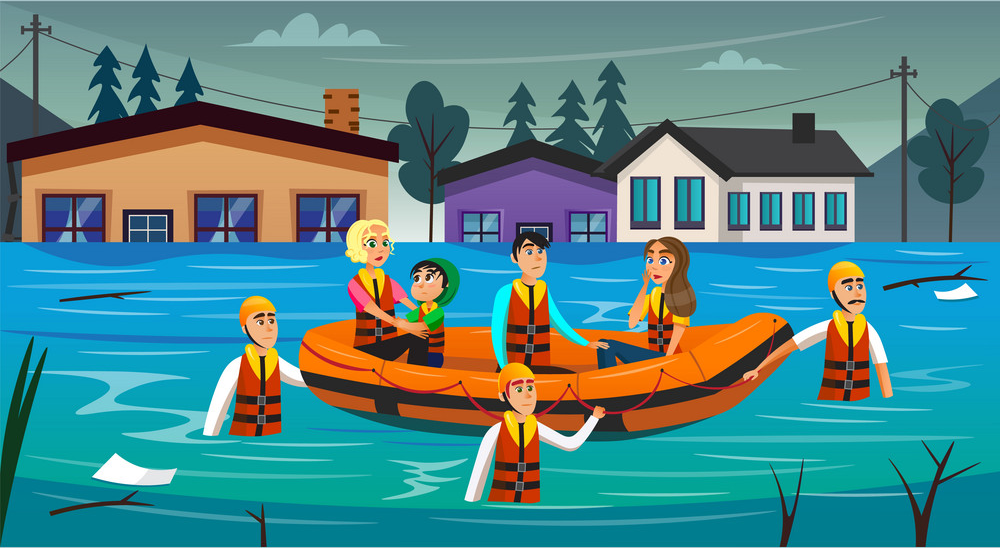
View full solution →Three schools A, B and C organized a mela for collecting funds for helping the rehabilitation of flood victims. They sold hand made fans, mats and plates from recycled material at a cost of ₹ 25, ₹ 100 and ₹ 50 each. The number of articles sold by school A, B, C are given below.
|
Article
|
School
|
|
A
|
B
|
C
|
|
Fans
|
40
|
25
|
35
|
|
Mats
|
50
|
40
|
50
|
|
Plates
|
20
|
30
|
40
|
Based on above information, answer the following questions.
- If P be a 3 × 3 matrix represent the sale of handmade fans, mats and plates by three schools A, B and C, then
- $\begin{matrix}& \ \ \ \ \ \ \ \ \ \ \text{Fans}&\text{Mats}&\text{Plates}\end{matrix}\\\begin{matrix}\ \ \ \ \ \ \ \ \ \ \text{A}\\\text{P}\ =\text{B}\\\ \ \ \ \ \ \ \ \ \ \text{C}\end{matrix}\begin{bmatrix} \ \ 40 \ \ \ & 50 & \ \ \ \ \ 25\\25 & 40 & \ \ \ \ \ 30\\35& \ 50& \ \ \ \ \ 40\end{bmatrix}$
- $\begin{matrix}& \ \ \ \ \ \ \ \ \ \ \text{Fans}&\text{Mats}&\text{Plates}\end{matrix}\\\begin{matrix}\ \ \ \ \ \ \ \ \ \ \text{A}\\\text{P}\ =\text{B}\\\ \ \ \ \ \ \ \ \ \ \text{C}\end{matrix}\begin{bmatrix} \ \ 25 \ \ \ & 40 & \ \ \ \ \ 20\\35 & 40 & \ \ \ \ \ 30\\40& \ 50& \ \ \ \ \ 20\end{bmatrix}$
- $\begin{matrix}& \ \ \ \ \ \ \ \ \ \ \text{Fans}&\text{Mats}&\text{Plates}\end{matrix}\\\begin{matrix}\ \ \ \ \ \ \ \ \ \ \text{A}\\\text{P}\ =\text{B}\\\ \ \ \ \ \ \ \ \ \ \text{C}\end{matrix}\begin{bmatrix} \ \ 40 \ \ \ & 25 & \ \ \ \ \ 35\\50 & 40 & \ \ \ \ \ 50\\20& \ 30& \ \ \ \ \ 40\end{bmatrix}$
- $\begin{matrix}& \ \ \ \ \ \ \ \ \ \ \text{Fans}&\text{Mats}&\text{Plates}\end{matrix}\\\begin{matrix}\ \ \ \ \ \ \ \ \ \ \text{A}\\\text{P}\ =\text{B}\\\ \ \ \ \ \ \ \ \ \ \text{C}\end{matrix}\begin{bmatrix} \ \ 25 \ \ \ & 35 & \ \ \ \ \ 40\\40 & 40 & \ \ \ \ \ 50\\20& \ 30& \ \ \ \ \ 20\end{bmatrix}$
- If Q be a 3 x 1 matrix represent the sale prices (in ₹) of given products per unit, then
- $\text{Q}=\begin{bmatrix}25\\50\\100\end{bmatrix}\begin{matrix}\text{Fans}\\\text{Mats}\\\text{Plates}\end{matrix}$
- $\begin{matrix}\ \ \ \ \ \ \text{Fans}&\text{Mats}&\text{Plates}\end{matrix}\\\text{Q}=\begin{matrix}[25\ \ \ &50&\ \ \ 100]\end{matrix}\\$
- $\begin{matrix}\ \ \ \ \ \ \text{Fans}&\text{Mats}&\text{Plates}\end{matrix}\\\text{Q}=\begin{matrix}[25\ \ \ &100&\ \ \ 50]\end{matrix}\\$
- $\text{Q}=\begin{bmatrix}25\\100\\50\end{bmatrix}\begin{matrix}\text{Fans}\\\text{Mats}\\\text{Plates}\end{matrix}$
- The funds collected by school A by selling the given articles is:
- ₹ 7000
- ₹ 6125
- ₹ 7875
- ₹ 8000
- The funds collected by school B by selling the given articles is:
- ₹ 5125
- ₹ 6125
- ₹ 7125
- ₹ 8125
- The total funds collected for the required purpose is:
- ₹ 20000
- ₹ 21000
- ₹ 30000
- ₹ 35000
View full solution →If $\text{A}=[\text{a}_\text{ij}]_{\text{m}\times\text{n}}$ and $\text{B}=[\text{b}_\text{ij}]_{\text{m}\times\text{n}}$ are two matrices, then A ± B is of order m × n and is defined as:
$(\text{A}\pm\text{B})_\text{ij}=\text{a}_\text{ij}\pm\text{b}_\text{ij},$ where i = 1, 2, ............. , m and j = 1, 2, .......... , n
If $\text{A}=[\text{a}_\text{ij}]_{\text{m}\times\text{n}}$ and $\text{B}=[\text{b}_\text{ij}]_{\text{n}\times\text{p}}$ are two matrices, then AB is of order m × p and is defined as:
$(\text{A}\text{B})_\text{ik}=\sum\limits_\text{r=1}^\text{n}\text{a}_\text{ir}\text{b}_\text{rk}=\text{a}_\text{i1}\text{b}_\text{1k}+\text{a}_\text{i2}\text{b}_\text{2k}+.....+\text{a}_\text{in}\text{b}_\text{nk}$
Consider $\text{A}=\begin{bmatrix}2&-1\\3&4\end{bmatrix},\ \text{B}=\begin{bmatrix}5&2\\7&4\end{bmatrix},\ \text{B}=\begin{bmatrix}2&5\\3&8\end{bmatrix} \text{And}\ \text{D}=\begin{bmatrix}\text{a}&\text{b}\\\text{c}&\text{d}\end{bmatrix}$
Using the concept of matrices answer the following questions.
- Find the product AB.
- $\begin{bmatrix}3&0\\43&22\end{bmatrix}$
- $\begin{bmatrix}0&3\\22&43\end{bmatrix}$
- $\begin{bmatrix}43&22\\0&3\end{bmatrix}$
- $\begin{bmatrix}22&43\\3&0\end{bmatrix}$
- If A and Bare any other two matrices such that AB exists, then
- BA does not exist.
- BA will be equal to AB.
- BA may or may not exist.
- None of these.
- Find the values of a and c in the matrix D such than CD - AB = 0.
- a = 77, c = -191
- a = -191, c = 77
- a = 191, c = 77
- a = 91, c = 70
- Find the values of band din the matrix D such that CD - AB = 0.
- b = 44, d = -110
- b = 110, d = 44
- b = -110, d = 44
- b = -44, d = 110
- Find B + D.
- $\begin{bmatrix}80&200\\115&105\end{bmatrix}$
- $\begin{bmatrix}84&48\\180&181\end{bmatrix}$
- $\begin{bmatrix}186&108\\-84&-48\end{bmatrix}$
- $\begin{bmatrix}-186&-108\\84&48\end{bmatrix}$
View full solution →A trust fund has ₹ 35000 that must be invested in two different types of bonds, say X and Y. The first bond pays 10% interest p.a. which will be given to an old age home and second one pays 8% interest p.a. which will be given to WWA (Women Welfare Association).
Let A be a 1 × 2 matrix and B be a 2 × 1 matrix, representing the investment and interest rate on each bond respectively.

Based on the above information, answer the following questions.
- If ₹ 15000 is invested in bond X, then
- $\begin{matrix}\ \ \ \ \ \ \ \ \ \ \ \ \ \text{investment}\end{matrix}\begin{matrix}&&&\text{X}&&\text{Y}\end{matrix}\\\begin{matrix}\text{A}\ =\text{X}\\\ \ \ \ \ \ \ \ \ \ \text{Y}\end{matrix}\begin{bmatrix}\ \ 15000\ \ \\\ \ 20000\ \end{bmatrix};\text{B}=\begin{bmatrix}0.1&0.08\end{bmatrix}\text{Interest rate.}$
- $\begin{matrix}&&&&&&&&\text{X}&\ \ \ \ \ \ \ \text{Y}\end{matrix}\begin{matrix}\ \ \ \ \ \ \ \ \ \ \ \ \ \ \ \ \ \ \ \ \ \ \ \text{investment}\end{matrix}\\\text{A = Investment}\begin{bmatrix}15000&20000\end{bmatrix};\ \begin{matrix}\text{B}\ =\text{X}\\\ \ \ \ \ \ \ \ \ \ \text{Y}\end{matrix}\begin{bmatrix}\ \ 0.1\ \ \\\ \ 0.08\ \end{bmatrix}$
- $\begin{matrix}&&&&&&&&\text{X}&\ \ \ \ \ \ \ \text{Y}\end{matrix}\begin{matrix}\ \ \ \ \ \ \ \ \ \ \ \ \ \ \ \ \ \ \ \ \ \ \ \text{investment}\end{matrix}\\\text{A = Investment}\begin{bmatrix}20000&15000\end{bmatrix};\ \begin{matrix}\text{B}\ =\text{X}\\\ \ \ \ \ \ \ \ \ \ \text{Y}\end{matrix}\begin{bmatrix}\ \ 0.08\ \ \\\ \ 0.1\ \end{bmatrix}$
- $\text{None of these}$
- If ₹ 15000 is invested in bond X, then total amount of interest received on both bonds is:
- ₹ 2000
- ₹ 2100
- ₹ 3100
- ₹ 4000
- If the trust fund obtains an annual total interest of ₹ 3200, then the investment in two bonds is:
- ₹ 15000 in X, ₹ 20000 in Y
- ₹ 17000 in X, ₹ 18000 in Y
- ₹ 20000 in X, ₹ 15000 in Y
- ₹ 18000 in X, ₹ 17000 in Y
- The total amount of interest received on both bonds is given by:
- AB
- A' B
- B' A
- None of these
- If the amount of interest given to old age home is ₹ 500, then the amount of investment in bond Y is:
- ₹ 20000
- ₹ 30000
- ₹ 15000
- ₹ 25000
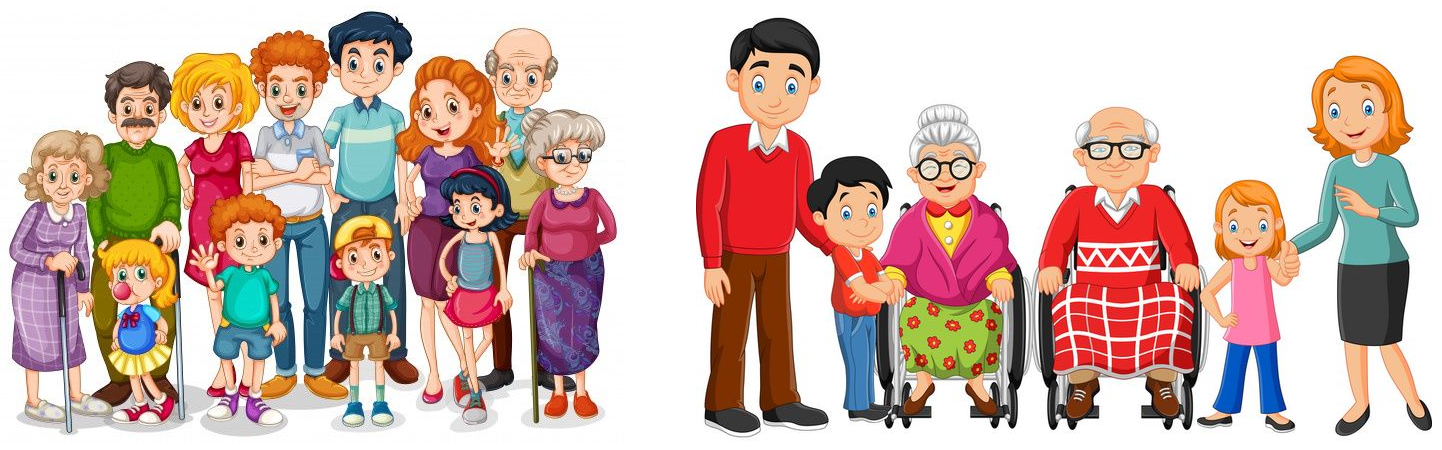
View full solution →Consider $2$ families $A$ and $B$. Suppose there are $4$ men,$4$ women and $4$ children in family $A$ and $2$ men, $2$ women and $2$ children in family $B.$ The recommend daily amount of calories is $2400$ for a man, $1900$ for a woman, $1800$ for a children and $45$ grams of proteins for a man, $55$ grams for a woman and $33$ grams for children.
Based on the above information, answer the following questions.
- The requirement of calories and proteins for each person in matrix form can be represented as:
- $\begin{matrix}& \ \ \ \ \ \ \ \ \ \ \ \ \ \text{Calorise}&\text{Proteins}\end{matrix}\\\begin{matrix}\text{Man}\\\text{Woman}\\\text{Children}\end{matrix}\begin{bmatrix} \ \ 2400 \ \ \ & 45\\1900 & 55\\1800& \ 33&\end{bmatrix}$
- $\begin{matrix}& \ \ \ \ \ \ \ \ \ \ \ \ \ \text{Calorise}&\text{Proteins}\end{matrix}\\\begin{matrix}\text{Man}\\\text{Woman}\\\text{Children}\end{matrix}\begin{bmatrix} \ \ 1900 \ \ \ & 55\\2400 & 45\\1800& \ 33&\end{bmatrix}$
- $\begin{matrix}& \ \ \ \ \ \ \ \ \ \ \ \ \ \text{Calorise}&\text{Proteins}\end{matrix}\\\begin{matrix}\text{Man}\\\text{Woman}\\\text{Children}\end{matrix}\begin{bmatrix} \ \ 1800 \ \ \ & 33\\1900 & 55\\2400& \ 45&\end{bmatrix}$
- $\begin{matrix}& \ \ \ \ \ \ \ \ \ \ \ \ \ \text{Calorise}&\text{Proteins}\end{matrix}\\\begin{matrix}\text{Man}\\\text{Woman}\\\text{Children}\end{matrix}\begin{bmatrix} \ \ 2400 \ \ \ & 33\\1900 & 55\\1800& \ 45&\end{bmatrix}$
- Requirement of calories of family $A$ is:
- $24000$
- $24400$
- $15000$
- $15800$
- Requirement of proteins for family $B$ is:
- $560$ grams
- $332$ grams
- $266$ grams
- $300$ grams
- If $A$ and Bare two matrices such that $AB = B$ and $BA = A,$ then $A^2 + B^2$ equals.
- $2AB$
- $2BA$
- $A + B$
- $AB$
- If $\text{A}=(\text{a}_\text{ij})_{\text{m}\times\text{n}},\ \ \text{B}=(\text{b}_\text{ij})_{\text{n}\times\text{p}}$ and $\text{C}=(\text{c}_\text{ij})_{\text{p}\times\text{q}}$ then the product (BC) A is possible only when.
- $m = q$
- $n = q$
- $p = q$
- $m = p$
View full solution →Fill in the blank.
A matrix which is not a square matrix is called a _________ matrix.
Fill in the blank.
If A and B are symmetric matrices of same order, then AB is symmetric if and only if _________.
Fill in the blank.
If A and B are symmetric matrices, then:
- AB – BA is a _________.
- BA – 2AB is a _________.
Fill in the blank.
If A is a symmetric matrix, then $A^3$ is a _________ matrix.
View full solution →Fill in the blank.
_________ matrix is both symmetric and skew symmetric matrix.
Which of the following statements are True or False.
If A, B and C are square matrices of same order, then AB = AC always implies that B = C.
Which of the following statements are True or False.
If A and B are two square matrices of the same order, then AB = BA.
Which of the following statements are True or False.
If A and B are two square matrices of the same order, then A + B = B + A.
Which of the following statements are True or False.
Two matrices are equal if they have same number of rows and same number of columns.
Which of the following statements are True or False.If $\text{A}=\begin{bmatrix}2&3&-1\\1&4&2\end{bmatrix}$ and $\text{B}=\begin{bmatrix}2&3\\4&5\\2&1\end{bmatrix},$ then AB and BA are defined and equal.
View full solution →