Questions

2 Marks Questions

Take a timed test

47 questions · self-marked practice — reveal the answer and mark yourself.

Question 12 Marks
Define thermoplastics and thermosetting polymers with two examples of each.
Answer
A thermoplastic polymers are the linear or slightly branched long chain molecules capable of repeatedly softening on heating and hardening on cooling. These polymers posses intermolecular forces of attraction intermediate between elastomers and fibres. For example polythene, polystyrene, polyvinyls, etc.
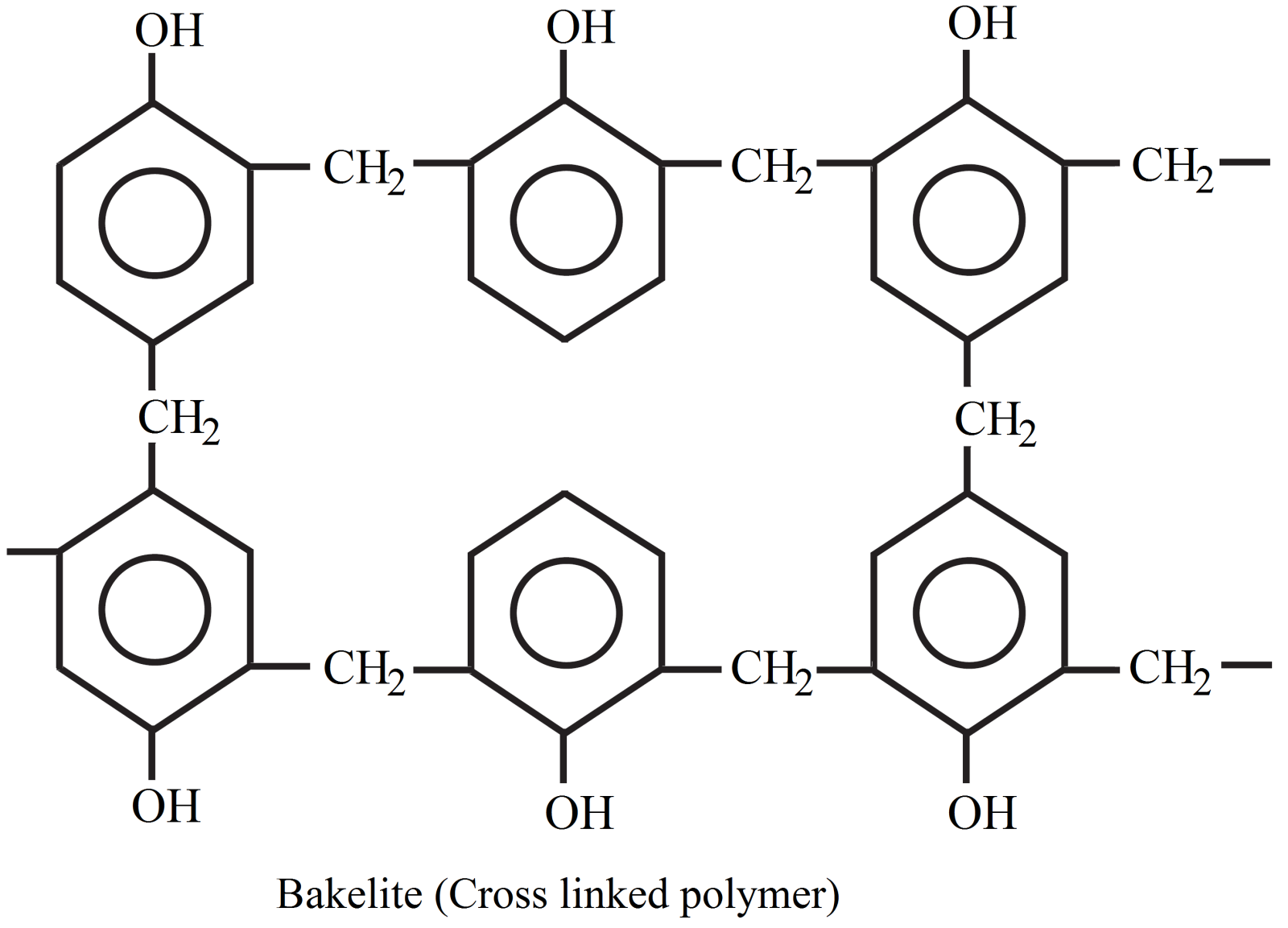
A thermosetting polymer are cross linked or heavily branched molecules, which on heating undergo extensive cross linking in moulds and again become infusible. These cannont be reused. For example are bakelite, urea- formaldehyde resin etc.
View full question & answer
Question 22 Marks
Explain the terms polymer and monomer.
Answer
Polymers are high molecular mass substances consisting of a very large number of simple repeating structural units joined together through covalent bonds in a regular fashion. Polymers are also called macromolecules. Some examples are polythene, nylon-66, bakelite, rubber, etc. Monomers are the. simple and reactive molecules from which the polymers are prepared either by addition or condensation polymerisation. Some examples are ethene, vinyl chloride, acrylonitrile, phenol and formaldehyde etc.
View full question & answer
Question 32 Marks
How are polymers classified on the basis of structure?
Answer
There are three different types based on the structure of the polymers.
  1. Linear polymer: These polymers consist of long and straight chains. Such as polythene, polyvinyl chloride etc.
  2. Branched chain polymers: These polymers contain linear chains having some branches. Such as low density polythene.
  3. Cross-linked polymers: These are formed from bi- functional and tri- functional monomers. Such as bakelite, malamin etc.
View full question & answer
Question 42 Marks
Explain the term copolymerisation and give two examples.
Answer
When two or more different monomers are allowed to polymerise together the product formed is called a copolymer, and the process in called copolymerisation. Example, Buna-S and Buna-N. Buna- Sis a copolymer of 1, 3- butadiene and styrene while Buna-N is a copolyrner of 1, 3-butadiene and acrylonitrile.
View full question & answer
Question 52 Marks
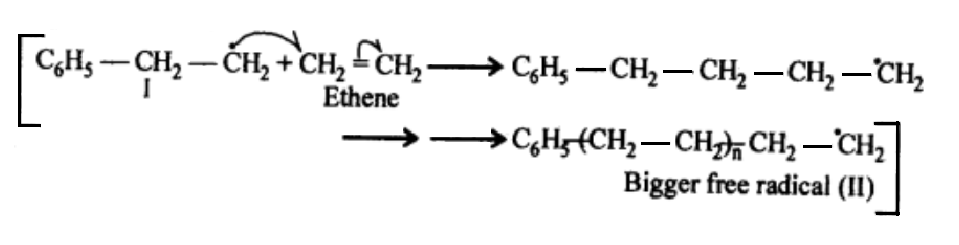
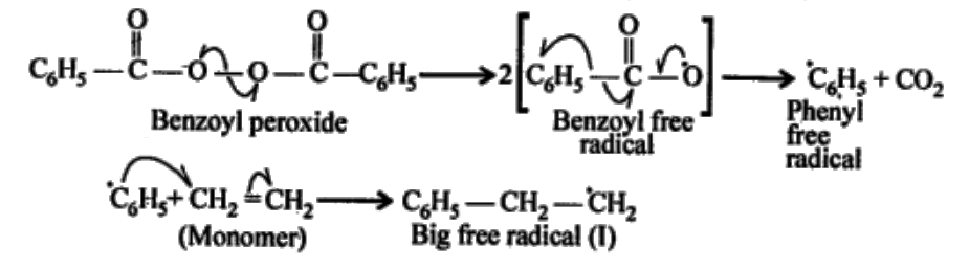
Write the free radical mechanism for the polymerisation of ethene.
Answer
  1. Chain initiation step:
  1. Chain propagating step:
  1. Chain termination steps:
  1. By combination of free radicals (II):
  1. By disproportionation of free radicals:
View full question & answer
Question 62 Marks
In which classes, the polymers are classified on the basis of molecular forces?
Answer
  1. Elastomers.
  2. Fibres.
  3. Thermoplastics.
  4. Thermosetting plastics.
View full question & answer
Question 72 Marks
What are natural and synthetic polymers? Give two examples of each type.
Answer
Natural polymers: Polymers which are found in nature,i.e., in animals and plants are called natural polymers, e.g., proteins, starch, cellulose, nucleic acids, resins and natural Sol. rubber.
Synthetic polymers: Man-made polymers are called synthetic polymers, e.g., plastics (polythene, PVC), synthetic fibres (polyester, 15.8 nylon-66) and synthetic rubber (neoprene, Buna-S).
View full question & answer
Question 82 Marks
How can you differentiate between addition and condensation polymerisation?
Answer
In addition polymerization, the molecules of the same or different monomers simply add on to one another leading to the formation of a macromolecules without elimination of small molecules like $H_20,\ NH_3$ etc. Addition polymerization generally occurs among molecules containing double and triple bonds. For example, formation of polythene from ethene and neoprene from chloroprene, etc. In condensation polymerisation, two or more bifunctional trifimctional molecules undergo a series of independent condensation reactions usually with the elimination of simple molecules like water, alcohol, ammonia, carbon dioxide and hydrogen chloride to form a macromolecule. For example, nylon$-6, 6$ is a condensation polymer of hexamethylenediamine and adipic acid formed by elimination of water molecules.
View full question & answer
Question 92 Marks
Write the principle behind the froth floatation process. What is the role of collectors in this process?
Answer
This method is based upon the preferential wetting of mineral/ore particles by oil and gangue by water.
Collectors enhance non-wettability of the mineral/ore particles.
View full question & answer
Question 102 Marks
Write the name of monomers used for getting the following polymers:
  1. Teflon.
  2. Buna-N.
Answer
  1. Tetrafluoroethene.
  2. 1, 3–butadiene and acrylonitrile.
View full question & answer
Question 112 Marks
Write the name of monomers used for getting the following polymers:
  1. Terylene.
  2. Nylon-6, 6.
Answer
  1. Ethylene glycol (Ethane–1,2–diol) and terephthalic acid. (Benzene–1,4–dicarboxylic acid)
  2. Hexamethylenediamine & adipic acid.
View full question & answer
Question 122 Marks
Write the name of monomers used for getting the following polymers:
  1. Bakelite.
  2. Neoprene.
Answer
  1. Phenol & Formaldehyde.
  2. 2–Chloro–1,3–butadiene.
Alternate Answer

Chloroprene.
View full question & answer
Question 132 Marks
Define thermoplastic and thermosetting polymers. Give one example of each.
Answer
Thermoplastics: These polymers are easily softened on heating, moulded and then hardened on cooling.
Examples: polythene, polypropylene, polystyrene, polyvinyl chloride, teflon, polyvinyl acetate, etc.
Thermosetting polymers: These polymers on heating become infusible and form an insoluble hard mass thus, cannot be remoulded.
Examples: Bakelite, urea-formaldelyde resins, etc.
View full question & answer
Question 142 Marks
What is a biodegradable polymer? Give an example of a biodegradable aliphatic polyester.
Answer
The polymers which can be degraded by the micro organism.
Example: PHBV.
View full question & answer
Question 162 Marks
Differentiate between molecular structures and behaviours of thermoplastic and thermosetting polymers. Give one example of each type.
Answer
S. No. Thermoplastic Thermosetting Plastics
i) Soften and melt on heating and can be remoulded. Do not soften on heating and cannot be remoulded.
ii) It is linear. It has cross-links .
iii) e.g polythene/PVC. e.g Bakelite/Terylene.
View full question & answer
Question 172 Marks
What are thermoplastic and thermosetting polymers? Give one example of each.
Answer
Polymers which can be remoulded again and again are called thermoplastic polymers.
Ex. Polythene, PVC etc.
Polymers which cannot be remoulded again and again are called thermosetting polymers.
Ex. Bakelite, Melamine etc.
View full question & answer
Question 192 Marks
Draw the structure of the monomer for each of the following polymers:
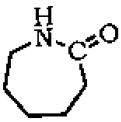
  1. Nylon $6.$
  2. Polypropene.
Answer
  1.  
  1. $CH_2=CH-CH_{3.}$
View full question & answer
Question 202 Marks
Mention two important uses of each of the following:
  1. Bakelite.
  2. Nylon 6.
Answer
  1. Bakelite: For making combs, electrical switches, handles of utensils, computer discs.
  2. Nylon-6: For making tyre cords, fabrics, ropes.
View full question & answer
Question 212 Marks
What is the repeating unit in the condensation polymer obtained by combining $HO_2CCH_2CH_2CO_2H$ (succinic acid) and $H_2NCH_2CH_2NH_2$ (ethylene diamine).
Answer
$\text{nH}_{2}\text{OCCH}_{2}\text{CH}_{2}\text{CO}_{2}\text{H}+\text{nH}_{2}\text{NCH}_{2}\text{CH}_{2}\text{NH}_{2}\rightarrow\left\{\text{OC-CH}_{2}\text{-CH}_{2}\text{-CO-NH-CH}_{2}\text{CH}_{2}\text{-NH-}\right\}n$
View full question & answer
Question 222 Marks
Draw the structures of the monomers of the following polymers:
  1. Teflon.
  2. Polythene.
Answer
  1. $\text{CF}_{2}=\text{CF}_{2}.$
  2. $\text{CH}_{2}=\text{CH}_{2}.$
View full question & answer
Question 232 Marks
Draw the structure of the monomer of each of the following polymers:
  1. Polyvinylchloride (PVC).
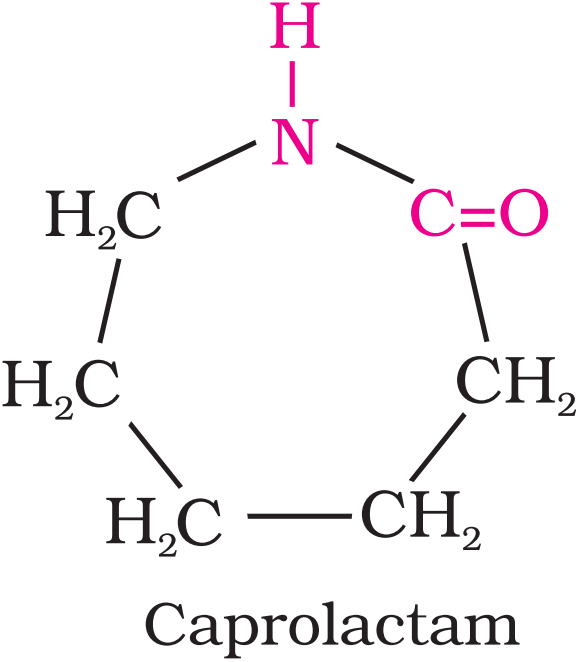
  2. Nylon-6.
Answer
  1. $\text{CH}_{2}=\text{CHCl}$
  2.  
View full question & answer
Question 242 Marks
  1. How does vulcanization change the character of natural rubber$?$
  2. Why are the numbers $66$ and $6$ put in the names of nylon$-66$ and nylon$-6?$
Answer
  1. During vulcanization, sulphur cross links are formed which make the rubber hard.
  2. Nylon$–66$ is so called because both adipic acid and hexa methylene diamine contain $6$ carbons each. The Nylon–6 implies that all the $C_6$ units of the chain are alike.
View full question & answer
Question 252 Marks
Write the structures of monomers used in the preparation of:
  1. Teflon.
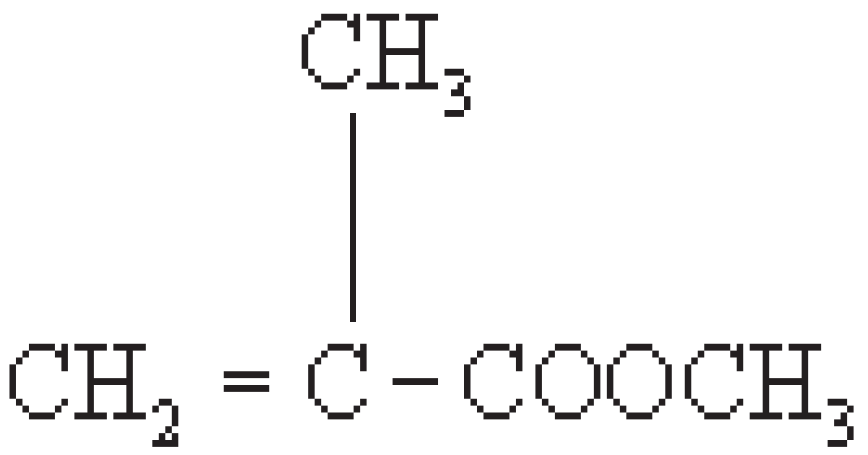
  2. PMMA.
Answer
  1. Teflon, $CF_2 = CF_2.$
  2. PMMA.
View full question & answer
Question 262 Marks
Write the names and structures of monomers in the following polymers:
  1. Buna$-N.$
  2. Nylon $6.$
Answer
  1. $CH_2=CH-CH=CH_2,$ Butadiene; $CH_2=CH-CN,$ Acrylonitrile.
  2.  

Aminocaproic acid, $NH_2(CH_2)_5COOH.$
View full question & answer
Question 272 Marks
Write the names and structures of monomers in the following polymers:
  1. Nylon$-6, 6.$
  2. Buna$-S.$
Answer
  1. $NH_2(CH_2)_6NH_2 –$ Hexamethylenediamine, $HOOC(CH_2)_4COOH – $ Adipic acid.
  2. $CH_2=CH-CH=CH_2 –$ Butadiene, $C_6H_5CH=CH_2 –$ Styrene.
View full question & answer
Question 282 Marks
Write the names and structures of monomers in the following polymers:
  1. Bakelite.
  2. Neoprene.
Answer
  1. $C_6H_5OH + HCHO,$ Phenol $+$ formaldehyde.
  2. $CH_2=C(Cl) – CH=CH_2,$ Chloroprene.
View full question & answer
Question 292 Marks
What is the structural difference between HDP and LDP? How does the structure account for different behaviour and nature, hence the use of a polymer?
Answer
Low density polythene: It is obtained by the polymerisation of ethane under high pressure of 1000 to 2000 atmospheres at a temperature of 350K to 570K in the presence of traces of dioxygen or a peroxide initiator (catalyst). The low-density polythene (LDP) obtained through the free radical addition and H-atom abstraction has highly branched structure.
High density polythene: It is formed when addition polymerisation of ethane takes place in a hydrocarbon solvent in the presence of a catalyst such as triethylaluminium and titanium tetrachloride (Ziegler-Natta catalyst) at a temperature of 333K to 343K and under a pressure of 6-7 atmospheres. High density polythene (HDP) thus produced, consists of linear molecules and has a high density due to close packing. It is also chemically inert and more tougher and harder. It is used for manufacturing buckets, dustbins, bottles, pipes.
View full question & answer
Question 302 Marks
Synthetic polymers do not degrade in the environment for a long time. How can biodegradable synthetic polymers be made. Differentiate between biopolymers and biodegradable polymers and give examples of each type.
Answer

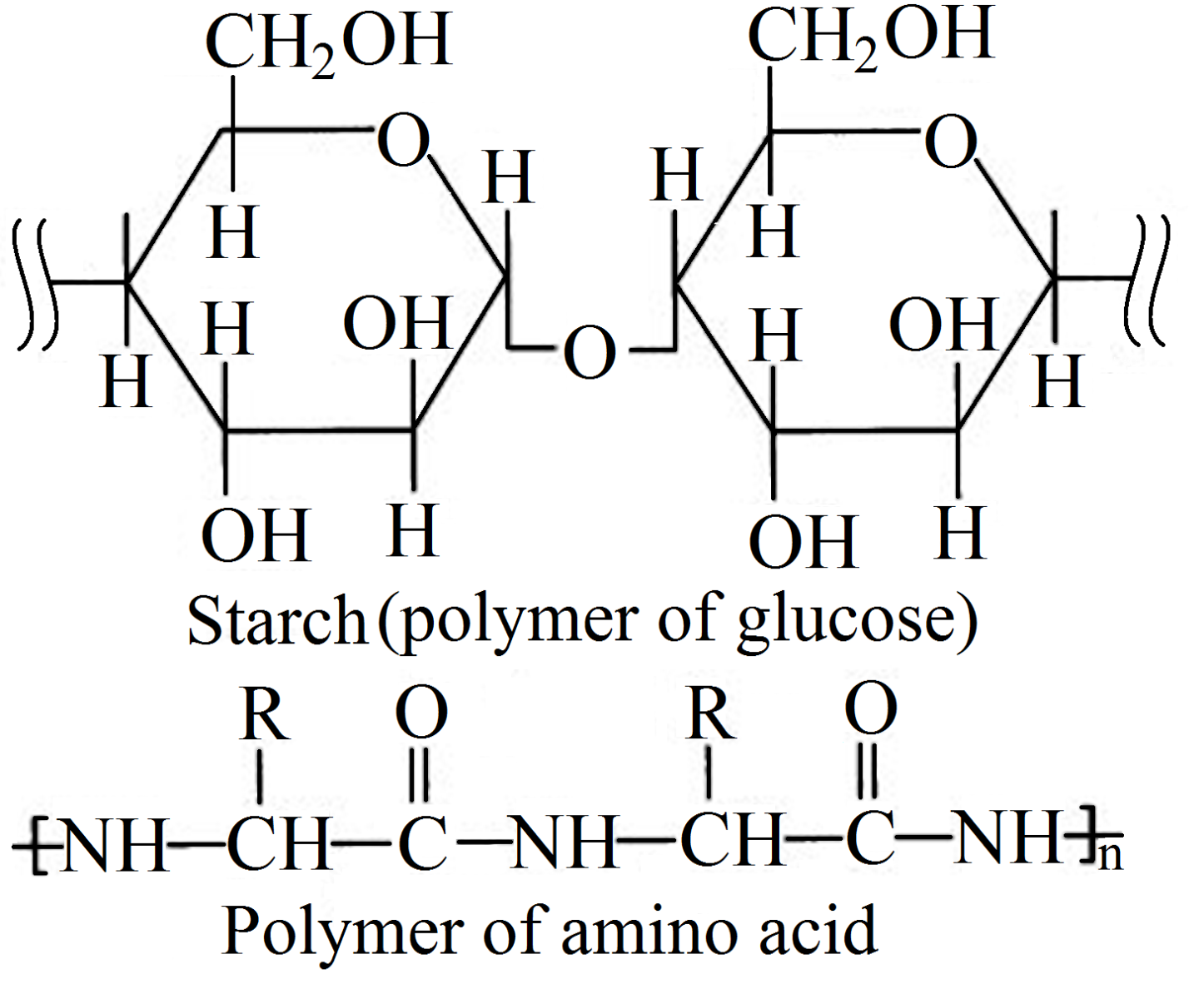
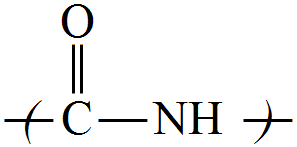
Synthetic polymers are quite resistant to environmental degradation process and are responsible for accumulation of polymer solid waste material. New biodegradable synthetic polymers have been designed and developed. These polymers contain similar functional groups as present in biopolymers, e.g., aliphatic polyesters Biopolymers are polymers of amino acids or carbohydrates which are linked to each other by peptide or glycosidic linkages as shown below:

Polymer of amino acid Biopolymer can or cannot be biodegradable. e.g., protein, starch etc., are biodegradable but keratin are non-biodegradable. Biodegradable polymer are polymers which can be degradable always, e.g., DHBV nylon-2, nylon-6.
View full question & answer
Question 312 Marks
To have practical applications why are cross links required in rubber?
Answer
To improve upon physical properties of natural rubber, a process of vulcanisation is carried out. This process consists of heating a mixture of raw rubber with sulphur and an appropriate additive at temperature range between373K to 415k. On vulcanization, sulphur forms cross links at the reactive sites of double bonds and thus the rubber gets stiffened.
View full question & answer
Question 332 Marks
Briefly describe the following term giving one example:
Polyamides.
Answer
Polyamides: The polymers having large number of amide linkage the chain are called polyamides, for example, nylon-6, 6 and nylon-6.
View full question & answer
Question 342 Marks
Low density polythene and high density polythene, both are polymers of ethene but there is marked difference in their properties. Explain.
Answer
 
LDP
 
HDP
1.
It is obtained the polymerisation of ethene under high pressure of 1000 to 2000 atmospheres at a temperature of 350K to 570K in the presence of traces of dioxygen or a peroxide initiator (catalyst).
1.
It is formed when addition polymerisation of ethene takes place in a hydrocarbon solvent in the presence of a catalyst such as triethylaluminium and titanium tetrachloride (Ziegler Natta catalyst) at a temperature of 333K to 343K and under a pressure of 6-7 atmospheres.
2.
(LDP) obtained through the free radical addition and H-atom abstraction has highly branched structure.
2.
(HDP) consists of linear molecules and has a high density due to close packing.
3.
Low density polythene is chemically inert and tough but flexible and a poor conductor of electricity.
3.
It is also chemically inert and more tough and hard.
View full question & answer
Question 352 Marks
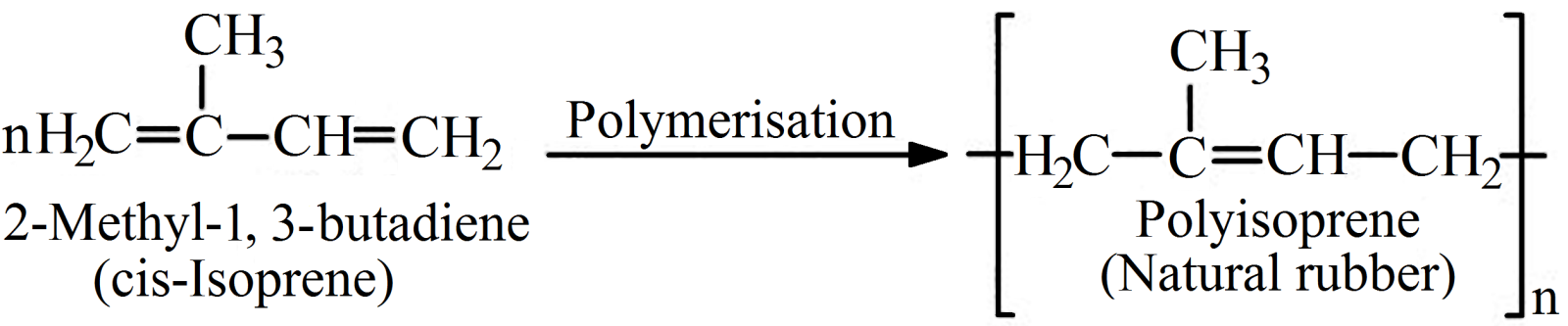
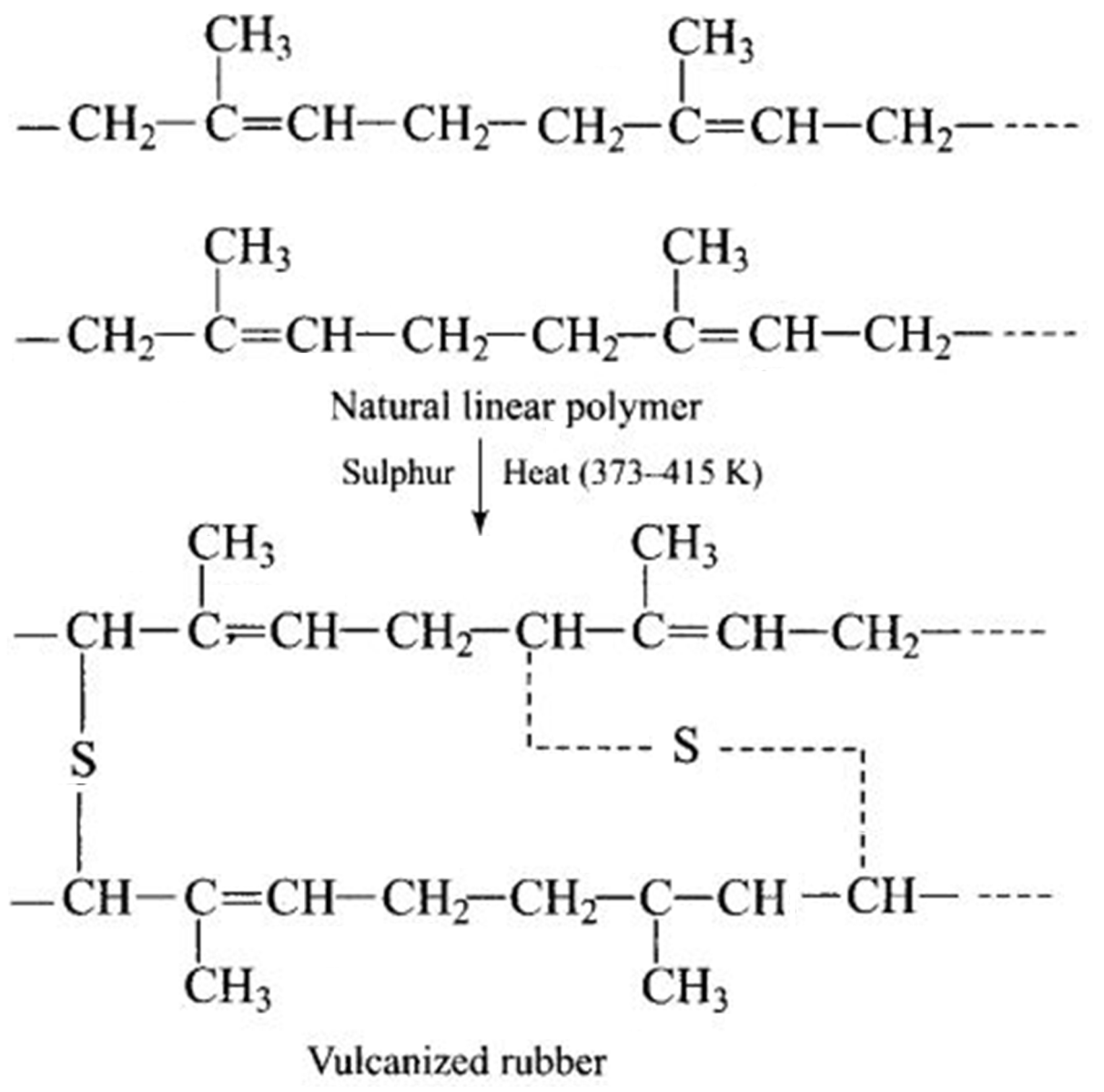
A natural linear polymer of 2-methyl-1, 3-butadiene becomes hard on treatment with sulphur between 373 to 415K and —S—S— bonds are formed between chains. Write the structure of the product of this treatment?
Answer

Vulcanized rubber:

When it is heated withs at 373-415K, it results into -S-S-links forming.
View full question & answer
Question 362 Marks
Differentiate the following pair of polymer based on the property mentioned against.
Buna-S and terylene (intermolecular forces of attraction).
Answer
Buna-S is an elastomer having weak van der Waals intermolecular forces whereas terylene is a fibre having strong intermolecular hydrogen bonding.
View full question & answer
Question 382 Marks
How does the presence of benzoquinone inhibit the free radical polymerisation of a vinyl derivative?
Answer
Benzoquinone traps the radical intermediate to form a non-reactive radical, which is highly stabilised by resonance. Due to the lack of reactivity of this intermediate, further progress of the chain reaction is interrupted and the reaction stops.
View full question & answer
Question 392 Marks
Briefly describe the following term giving one example:
Polyesters.
Answer
Polyesters: These are the polycondensation products of dicarboxylic acids and diols. Dacron or terylene is the best known example of polyesters.
View full question & answer
Question 402 Marks
Write the structure of the monomers of the following polymer:
  1. PVC.
  2. Polypropene.
Answer
S. No. Polymers Monomer Structures of the Monomer
(i) PVC Vimyl chloride $CH_2=CH-Cl$
(ii) Polypropene Propene $CH_3-CH=CH_2$
View full question & answer
Question 412 Marks
Answer the following question:
Why are the numbers 6, 6 and 6 put in the names of nylon 6, 6 and nylon 6?
Answer
In nylon-6, 6, two sixes stand for hexamethylene diamine (a monomer with 6C-atoms) and adipic acid (another monomer with 6C-atoms).
In nylon-6, six stands for the only monomer caprolactam (6C-atoms).
View full question & answer
Question 422 Marks
Can nucleic acids, proteins and starch be considered as step growth polymers?
Answer
Yes, step growth polymers (nucleic acids, proteins and starch) are conden¬sation polymers and they can be formed by the loss of simple molecule like water leading to the formation of high molecular mass polymers.
View full question & answer
Question 432 Marks
What is vulcanisation? Why is it done? Why is diphenyl amine added to rubber?
Answer
Vulcanisation is a process of heating natural rubber with sulphur. This is done so as to make it more elastic, hard, more abrasion resistant by sulphur cross-linking. Diphenyl amine is added to rubber so as to prevent its oxidation.
View full question & answer
Question 442 Marks
Briefly describe the following term giving one example:
Polyolefins.
Answer
Polyolefins: These are polymers derived from unsaturated hydrocarbons, for example, polypropene.
View full question & answer
Question 452 Marks
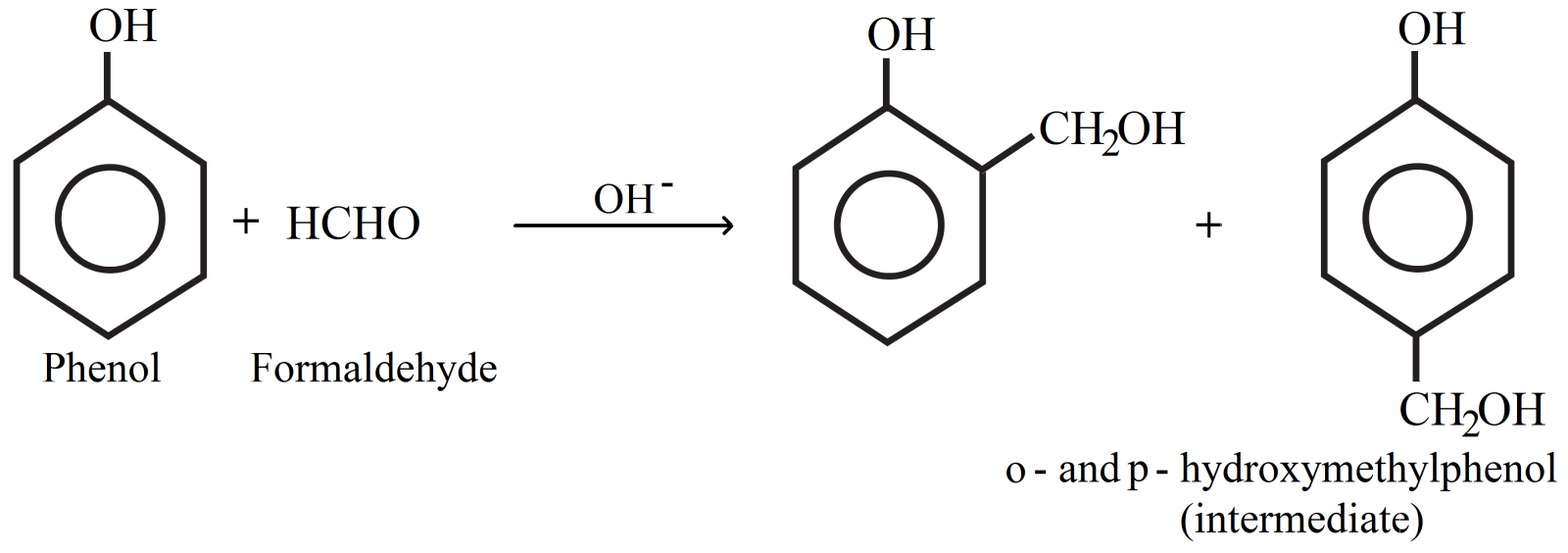
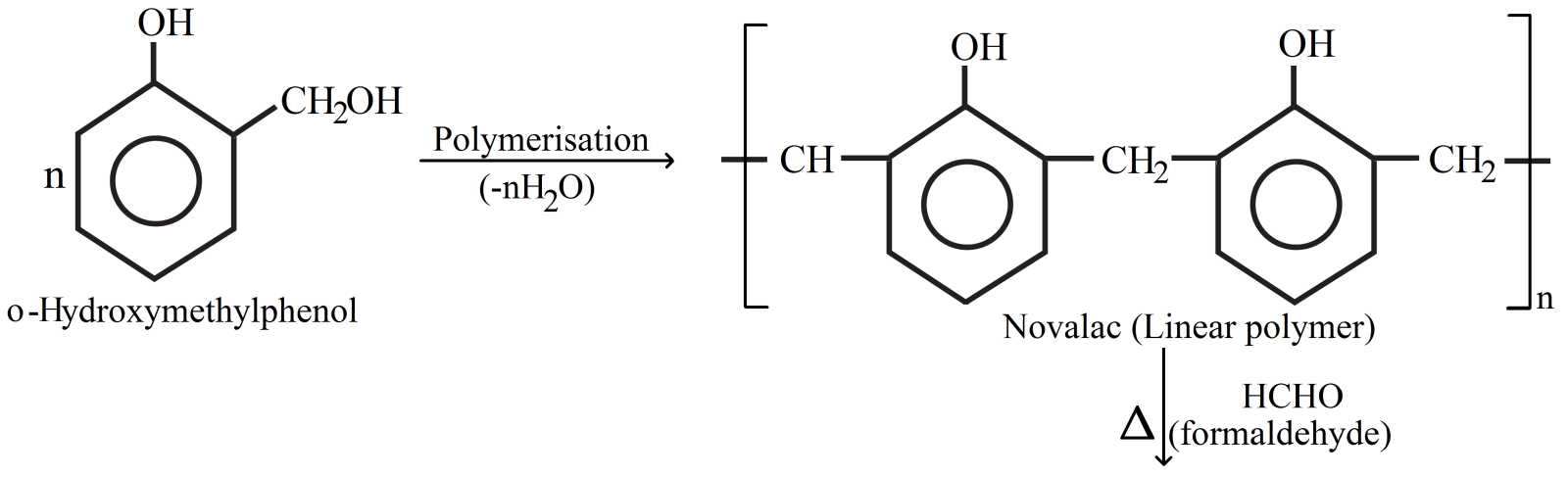
Phenol and formaldehyde undergo condensation to give a polymar (A) which on heating with formaldehyde gives a thermosetting polymer (B). Name the polymers. Write the reactions involved in the formation of (A). What is the structural difference between two polymers?
Answer

Polymer ‘A’ is Novalac and ‘B’ is Bakelite. The reactions involved in the formation of these two polymers are given below:


Novalac on heating with HCHO undergo cross-linkage to form an infusible solid called Bakelite. Novolac is linear chain polymer while Bakelite is cross linked polymer.
View full question & answer
Question 462 Marks
What are LDPE and HDPE? How are they prepared?
Answer
  1. LDPE (Low Density Polyethylene): LDPE is obtained by the polymerisation of ethene under high pressure of 1000-2000 atm at 350-570K in the presence of an initiator.
  2. HDPE (High Density Polyethylene): It is obtained when polymerisation is done in the presence of Ziegler-Natta catalyst at 333-343K under 6-7 atm pressure.
View full question & answer
Question 472 Marks
Differentiate between rubbers and plastics on the basis of intermolecular forces.
Answer
Rubbers: In rubber, the polymer chains are held together by the weakest intermolecular forces. These weak binding forces permit the polymer to be stretched. A few ‘crosslinks’ are introduced in between the chains, which help the polymer to retract to its original position after the force is released as in vulcanised rubber.
Plastics: These are the linear or slightly branched long chain molecules capable of repeatedly softening on heating and hardening on cooling. These polymers possess intermolecular forces of attraction intermediate between elastomers and fibres.
View full question & answer