MCQ
$\,$
  • A

  • B


  • D

Answer

Correct option: C.

c
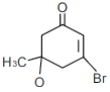
When $HBr$ reacts with $5 -$ methylene cyclohex $-2-$ enone, it acts as an electrophile. This is an example of electrophilic addition reaction. When electrophile attacks on the cyclohexene ring, the formation of carbcations take place. The two molecules of bromine will add on the most stable carbocation as shown below :

Need a full question paper?

Generate a complete, print-ready paper with questions like this in minutes — across 16+ boards, with answer keys.
Start Generating Free

Similar questions

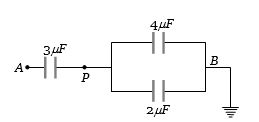
In the figure a potential of $+$ $1200\, V$ is given to point $A$ and point $B$ is earthed, what is the potential at the point $P$....$V$
If $\overrightarrow{ F }=(60 \hat{ i }+15 \hat{ j }-3 \hat{ k })\; N$ and $\overrightarrow{ V }=(2 \hat{ i }-4 \hat{ j }+5 \hat{ k }) \;m / s$, then instantaneous power is
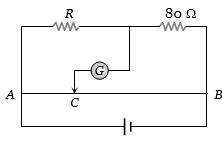
$AB$ is a wire of uniform resistance. The galvanometer $G$ shows no current when the length $AC = 20\,cm$ and $CB = 80\, cm$. The resistance $R$ is equal to .............. $\Omega $
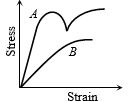
The diagram shows stress v/s strain curve for the materials $A$ and $B$. From the curves we infer that
A plane electromagnetic wave of frequency $25 \;MHz$ travels in free space along the $x$ -direction. At a particular point in space and time, $E = 6.3\,\hat j\;\,V/m$. What is $B$ at this point? 
Light wave traveling in air along $x$-direction is given by $E _{ y }=540 \sin \pi \times 10^{4}( x - ct ) Vm ^{-1}$. Then, the peak value of magnetic field of wave will be $\dots \times 10^{-7}\,T$ (Given $c =3 \times 10^{8}\,ms ^{-1}$ )
A rod of length $l$ is oscillating as a physical pendulum about one of its end with small angular amplitude $\alpha$ in a crossed magnetic field $B.$ The maximum $emf$ induced in the rod will be :-
Dot product of two mutual perpendicular vector is
A current of $0.1\, A$ circulates around a coil of $100$ $turns$ and having a radius equal to $5\, cm$. The magnetic field set up at the centre of the coil is $({\mu _0} = 4\pi \times {10^{ - 7}}\,weber/ampere - metre)$
This question has Statement $1$ and Statement $2.$ Of the four choices given after the Statements, choose the one that best describes the two Statements.

Statement $1:$ A metallic surface is irradiated by a monochromatic light of frequency $v > v_0$ (the threshold frequency). If the incident frequency is now doubled, the photocurrent and the maximum kinetic energy are also doubled.

Statement $2:$ The maximum kinetic energy of photoelectrons emitted from a surface is linearly dependent on the frequency of the incident light. The photocurrent depends only on the intensity of the incident light.