Question
A platinum surface having work function 5.63 eV is illuminated by a monochromatic source of $1.6 \times 10^{15} Hz$ Hz. What will be the minimum wavelength associated with the ejected electron.

Answer

Given $\emptyset_0=5.63 eV =5.63 \times 1.6 \times 10^{-19} J$
$v=1.6 \times 10^{15} Hz$
$K . E .=h v-\emptyset_0=\frac{h c}{\lambda}$
$\lambda=\frac{h c}{h v-\emptyset_0}$
$=\frac{6.63 \times 10^{-34} \times 3 \times 10^8}{6.63 \times 10^{-34} \times 1.6 \times 10^{15}-5.63 \times 1.6 \times 10^{-19}}$
$=\frac{19.89 \times 10^{-26}}{1.6 \times 10^{-19}(6.63-5.63)}$
$=\frac{19.89 \times 10^{-26}}{1.6 \times 10^{15}}$ $=12.4 \times 10^{-7} m$

Need a full question paper?

Generate a complete, print-ready paper with questions like this in minutes — across 16+ boards, with answer keys.
Start Generating Free

Similar questions

When an electron in hydrogen atom jumps from the third excited state to the ground state, how would the de Broglie wavelength associated with the electron change? Justify your answer.
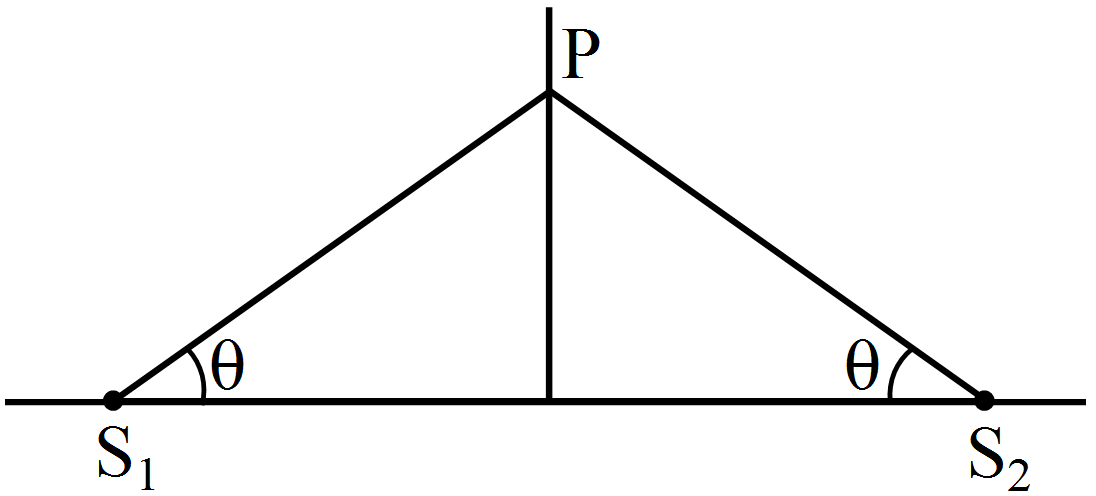
Two sources of sound $S_1$ and $S_2$ vibrate at same frequency and are in phase figure. The intensity of sound detected at a point $P$ as shown in the figure is $I_0.$
  1. If $0$ equals $45^\circ ,$ what will be the intensity of sound detected at this point if one of the sources is switched off?
  2. What will be the answer of the previous part if $= 60^\circ$ ?
Let $\vec{\text{A}}=3\vec{\text{i}}+4\vec{\text{j}}.$ Write four vector $\overrightarrow{\text{B}}$ such that $\overrightarrow{\text{A}}\neq\overrightarrow{\text{B}}$ but A = B.
Write down difference between the Interference pattera and the diffraction pattern.
The temperatures of the junctions of a bismuth$-$silver thermocouple are maintained at $0^\circ C$ and $0.001^\circ C.$ Find the thermo$-$emf $($Seebeck emf$)$ developed. For bismuth$-$silver, $a = -46 \times 10^-6V^\circ C-^1$ and $b = -0.48 \times 10^-6V^\circ C^-2.$
An athelete takes 2.0s to reach his maximum speed of 18.0km/h. What is the magnitude of his average acceleration?
Define the absorption transition and emission transition.
Obtain the binding energy (in MeV) of a nitrogen nucleus $\left({ }_7^{14} N\right)$, given $m\left({ }_7^{14} N\right)=14.00307 u$.
Explain why at the surface of a charged conductor, electric field is normal to the surface at each point.
If water be used to construct a barometer, what would be the height of water column at standard atmospheric pressure $(76\ cm$ of mercury$)?$