MCQ
A soap bubble is blown to a diameter of $7 \mathrm{~cm}$. $36960 \mathrm{erg}$ of work is done in blowing it further. If surface tension of soap solution is $40 \mathrm{dyne} / \mathrm{cm}$ then the new radius is______. $\mathrm{cm}$. Take $:\left(\pi=\frac{22}{7}\right)$.
  • A
    $5$
  • $7$
  • C
    $10$
  • D
    $15$

Answer

Correct option: B.
$7$
b
$\omega=\Delta \mathrm{U}=\mathrm{S} \Delta \mathrm{A}$

$36960$ $\mathrm{erg}=\frac{40 \text { dyne }}{\mathrm{cm}} 8 \pi\left[(\mathrm{r})^2-\left(\frac{7}{2}\right)^2\right] \mathrm{cm}^2$

$\mathrm{r}=7 \mathrm{~cm}$

Need a full question paper?

Generate a complete, print-ready paper with questions like this in minutes — across 16+ boards, with answer keys.

Start Generating Free

Similar questions

The whistle of a railway engine is heard in winter at much longer distances. This is due to:
Two sinusoidal waves given below are superposed

$y_1=A \sin \left(k x-\omega t+\frac{\pi}{6}\right), \quad y_2=A \sin \left(k x-\omega t-\frac{\pi}{6}\right)$

The equation of resultant wave is

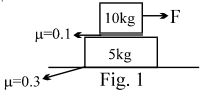
The maximum $"F"$ which will not cause motion of any of the blocks. ...... $N$
A particle moves with a velocity $6\hat i - 4\hat j + 3\hat k\,m/s$ under the influence of a constant force $\overrightarrow F = 20\hat i + 15\hat j - 5\hat k\,N.\,$ The instantaneous power applied to the particle is......... $J/s$
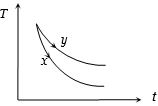
The graph. Shown in the adjacent diagram, represents the variation of temperature $(T)$ of two bodies, $x$ and $y$ having same surface area, with time $(t)$ due to the emission of radiation. Find the correct relation between the emissivity
A shell, in flight, explodes into four unequal parts. Which of the following is conserved?
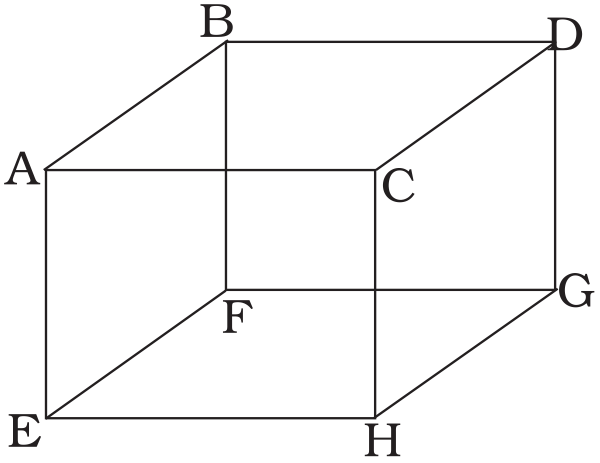
1 mole of an ideal gas is contained in a cubical volume V, ABCDEFGH at 300K (figure). One face of the cube (EFGH) is made up of a material which totally absorbs any gas molecule incident on it. At any given time,
A heavy stone is thrown from a cliff of height $h$ with a speed $v.$ The stone will hit the ground with maximum speed if it is thrown:
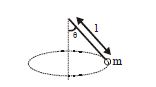
A conical pendulum is moving in a circle with angular velocity $\omega $ as shown. If tension in the string is $T$ , which of following equation are correct?
When a body slides down from rest along a smooth inclined plane making an angle of $30^{\circ}$ with the horizontal, it takes time $T$. When the same body slides down from the rest along a rough inclined plane making the same angle and through the same distance, it takes time $\alpha {T}$, where $\alpha$ is a constant greater than $1 .$ The co-efficient of friction between the body and the rough plane is $\frac{1}{\sqrt{{x}}}\left(\frac{\alpha^{2}-1}{\alpha^{2}}\right)$ where ${x}=..... .$