Question
Need a full question paper?
Generate a complete, print-ready paper with questions like this in minutes — across 16+ boards, with answer keys.
Explore more
Similar questions
A1. Simple Factual Activity:
State whether you Agree or Disagree with the following statements:
(1) No event or parts of the story are mentioned in this book review.
(2) Mischievousness was the most striking quality of 10-year-old Swami.
A little bit about the book...
Anything I mention about the book can be mistakenly understood as 'spoilers', so I would rather give a glance into the book without mentioning any events or plots of the story.
Swami is a mischievous little kid of about 10 years old and living in the era where India was under the British rule... Like most kids of that age, Swami is a kid who cannot stay at one place and absolutely hates school, even worse Mathematics. School is his absolute nightmare. Anyway the story unfolds around the happenings of this kid and how he constantly gets into trouble and gets a good beating from his father.
Swami is a talkative little kid and thinks that’s his way of facing life, talking himself out of everything. But he does learn the truth the harsh way. As many teens back then, all he wants to do is play under the sun, kick something, climb a tree, break something and harass somebody (unlike kids today!!!). This, in fact, was (and in most parts of India, still is) the life of a typical boy growing up. Technology isn’t big in a kid's life. All they want is to play havoc!!!
In what ways is Swami a typical boy in his growing years ?
In this regard, Narayan gets deeply into the workings of Swami’s ten year old mind, explaining exquisitely how he thinks and what his perspective of the world is. The reader does feel like Swami and gets very attached with the character as the story progresses. That's the magic of Narayan.
A2. Complex Factual Activity:
Complete the following sentences that tell you about author Narayan's magic:
(1) Narayan gets deeply into the working of _______________.
(2) Explains in pleasing manner how _______________.
A3. Activities based on Vocabulary:
Find the following from the passage:
(i) Noun forms of : happen, true
(ii) Verb forms of : hatred, thought
A4. Activities based on Contextual Grammar:
Find the error and rewrite the corrected sentences:
(1) Swami thinks that's his way of living life.
(2) Swami is an mischievous little kid.
A5. Personal Response:
(1) Yes, I definitely think so. It is the natural instinct of most of the kids to play, to make fun, to play mischiefs and enjoy the life like Swami. They try to avoid going to school under some pretext and dislike to learn some particular subjects. They often get beaten for their naughtiness, mistakes and their mischievous deeds. They do anything that comes to their mind, unintentionally.
State whether you Agree or Disagree with the following statements:
(1) No event or parts of the story are mentioned in this book review.
(2) Mischievousness was the most striking quality of 10-year-old Swami.
A little bit about the book...
Anything I mention about the book can be mistakenly understood as 'spoilers', so I would rather give a glance into the book without mentioning any events or plots of the story.
Swami is a mischievous little kid of about 10 years old and living in the era where India was under the British rule... Like most kids of that age, Swami is a kid who cannot stay at one place and absolutely hates school, even worse Mathematics. School is his absolute nightmare. Anyway the story unfolds around the happenings of this kid and how he constantly gets into trouble and gets a good beating from his father.
Swami is a talkative little kid and thinks that’s his way of facing life, talking himself out of everything. But he does learn the truth the harsh way. As many teens back then, all he wants to do is play under the sun, kick something, climb a tree, break something and harass somebody (unlike kids today!!!). This, in fact, was (and in most parts of India, still is) the life of a typical boy growing up. Technology isn’t big in a kid's life. All they want is to play havoc!!!
In what ways is Swami a typical boy in his growing years ?
In this regard, Narayan gets deeply into the workings of Swami’s ten year old mind, explaining exquisitely how he thinks and what his perspective of the world is. The reader does feel like Swami and gets very attached with the character as the story progresses. That's the magic of Narayan.
A2. Complex Factual Activity:
Complete the following sentences that tell you about author Narayan's magic:
(1) Narayan gets deeply into the working of _______________.
(2) Explains in pleasing manner how _______________.
A3. Activities based on Vocabulary:
Find the following from the passage:
(i) Noun forms of : happen, true
(ii) Verb forms of : hatred, thought
A4. Activities based on Contextual Grammar:
Find the error and rewrite the corrected sentences:
(1) Swami thinks that's his way of living life.
(2) Swami is an mischievous little kid.
A5. Personal Response:
(1) Yes, I definitely think so. It is the natural instinct of most of the kids to play, to make fun, to play mischiefs and enjoy the life like Swami. They try to avoid going to school under some pretext and dislike to learn some particular subjects. They often get beaten for their naughtiness, mistakes and their mischievous deeds. They do anything that comes to their mind, unintentionally.
A1. Simple Factual Activities:
As a child, I had a vision of tomorrow. A vision of that cobbler boy sitting with me in my classroom.
Now, that tomorrow has become TODAY.
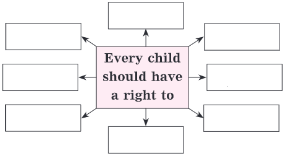
I am TODAY, and you are TODAY. TODAY it is time for every child to have a right to life, right to freedom, right to health, right to education, right to safety, right to dignity, right to equality, and right to peace.
TODAY, beyond the darkness, I see the smiling faces of our children in the blinking stars. TODAY, in every wave of every ocean, I see my children are playing and dancing. TODAY, in every plant, in every tree, and mountain, I see our children growing freely with dignity.
Friends, I want you to see and feel this TODAY inside you.
My dear sisters and brothers, as I said many interesting things are happening today. May I please request you to put your hand close to your heart - close your eyes and feel the child inside you?
I am sure you can - Now, listen to that child.Listen please.
Today, I see thousands of Mahatma Gandhis, Nelson Mandelas and Martin Luther Kings calling on us.
Let us democratise knowledge. Let us universalise justice. Together, let us globalise compassion!
I call upon you in this room, and all across the world. I call for a march from exploitation to education, I call for a march from poverty to shared prosperity, a march from slavery to liberty, and a march from violence to peace.
Let us march from ignorance to awakening. Let us march from darkness to light. Let us march from mortality to divinity.
Let us march!
A2. Complex Factual Activities:
Complete the following:
The writer calls all the listeners for a march.
from → _______________ to → education
from → poverty to → _______________
from → slavery to → _______________
from → _______________ to → peace
from → _______________ to → awakening
from → darkness to → _______________
from → mortality to → _______________
A3. Activities based on Vocabulary:
(1) ignorance × _______________
(2) immortality × _______________
(3) deny × _______________
(4) recognised × _______________
A4. Activities based on Contextual Grammar:
Make nouns of the following:
(1) play (2) grow (3) globalise (4) violent
A5. Personal Response:
(1) What is your vision of tomorrow?
As a child, I had a vision of tomorrow. A vision of that cobbler boy sitting with me in my classroom.
Now, that tomorrow has become TODAY.
I am TODAY, and you are TODAY. TODAY it is time for every child to have a right to life, right to freedom, right to health, right to education, right to safety, right to dignity, right to equality, and right to peace.
TODAY, beyond the darkness, I see the smiling faces of our children in the blinking stars. TODAY, in every wave of every ocean, I see my children are playing and dancing. TODAY, in every plant, in every tree, and mountain, I see our children growing freely with dignity.
Friends, I want you to see and feel this TODAY inside you.
My dear sisters and brothers, as I said many interesting things are happening today. May I please request you to put your hand close to your heart - close your eyes and feel the child inside you?
I am sure you can - Now, listen to that child.Listen please.
Today, I see thousands of Mahatma Gandhis, Nelson Mandelas and Martin Luther Kings calling on us.
Let us democratise knowledge. Let us universalise justice. Together, let us globalise compassion!
I call upon you in this room, and all across the world. I call for a march from exploitation to education, I call for a march from poverty to shared prosperity, a march from slavery to liberty, and a march from violence to peace.
Let us march from ignorance to awakening. Let us march from darkness to light. Let us march from mortality to divinity.
Let us march!
A2. Complex Factual Activities:
Complete the following:
The writer calls all the listeners for a march.
from → _______________ to → education
from → poverty to → _______________
from → slavery to → _______________
from → _______________ to → peace
from → _______________ to → awakening
from → darkness to → _______________
from → mortality to → _______________
A3. Activities based on Vocabulary:
(1) ignorance × _______________
(2) immortality × _______________
(3) deny × _______________
(4) recognised × _______________
A4. Activities based on Contextual Grammar:
Make nouns of the following:
(1) play (2) grow (3) globalise (4) violent
A5. Personal Response:
(1) What is your vision of tomorrow?
A1. Simple Factual Activities:
Name the following:
(1) Original name of Madame Curie.
(2) Her place of birth.
The history of men’s progress from the darkness of ignorance to the glorious light of knowledge and enlightenment is full of chapters that tell of extraordinary men and women. These men and women worked with great courage, commitment, dedication and singleness of purpose in their effort to attain what seemed to be unattainable. These men and women were driven in their effort to uncover the truth and mystery of the universe with an indomitable spirit which characterises the human spirit. And this is the spirit that drove Columbus and Vasco de Gama to sail to the unknown seas, Robert Peary to race to the Pole, Sir Ronald Ross to fight against malaria, Hillary and Tenzing to reach the top of Everest, and Armstrong and his team to go to the moon.
One great woman who dedicated her life to the cause of science and to the welfare of humanity is Madame Curie, the discoverer of radium. The mere statement that Madame Curie discovered the radium will never tell the true story of the extraordinary courage, determination and singleness of purpose that this noble woman showed in the face of extreme poverty, pain and suffering that comes along with such condition.
Born Maria Sklodowska in Warsaw, Poland on November, 7 1867, Marie Curie’s childhood dream was to study science in Paris, but her father could not afford the expense for this. So Maria took a job as a governess and saved a little money. With that little money she finally went to Sorbonne, the University of Paris, to study science. Her father could send her only a small amount and her life in the university was a disheartening experience in poverty and hunger. She lived only on bread, butter and tea, and she often fainted for lack of food. In spite of all this she pursued her studies indomitably and she topped her class with Honours in Physics and Mathematics.
It was at the university that she met a Frenchman, Pierre Curie, a brilliant but poor scientist. Then they together began to work in a shabby laboratory. Soon, their friendship turned into love and in less than a year, in July, 1895, they were married. The couple then took a flat in Paris with scarcely any furniture in it except their books, a lamp, a white wooden table and two chairs.
After the birth of a daughter, Irene, the next year, Marie and Pierre set up a laboratory in a wooden shed near their flat, It had a leaky skylight and an earthen floor. Here Marie, after her daily household work, settled down to study.
A2. Complex Factual Activities:
Complete the following sentences:
(1) Madame Curie dedicated her life to the cause _______________ and to the _______________.
(2) The qualities that great achievers possess are _______________ and _______________.
A3. Activities based on Vocabulary:
Find out the words from the passage which mean:
(1) unbeatable
(2) discouraging
(3) hardly
(4) illiteracy
A4. Activities based on Contextual Grammar:
(1) took a job as a governess and saved a little money. (Rewrite using 'by' + ing.)
(2) Marie Curie's childhood dream was to study science in Paris, but her father could not afford the expense for this. (Rewrite using "Though')
A5. Personal Response:
(1) Describe your favourite scientist.
Name the following:
(1) Original name of Madame Curie.
(2) Her place of birth.
The history of men’s progress from the darkness of ignorance to the glorious light of knowledge and enlightenment is full of chapters that tell of extraordinary men and women. These men and women worked with great courage, commitment, dedication and singleness of purpose in their effort to attain what seemed to be unattainable. These men and women were driven in their effort to uncover the truth and mystery of the universe with an indomitable spirit which characterises the human spirit. And this is the spirit that drove Columbus and Vasco de Gama to sail to the unknown seas, Robert Peary to race to the Pole, Sir Ronald Ross to fight against malaria, Hillary and Tenzing to reach the top of Everest, and Armstrong and his team to go to the moon.
One great woman who dedicated her life to the cause of science and to the welfare of humanity is Madame Curie, the discoverer of radium. The mere statement that Madame Curie discovered the radium will never tell the true story of the extraordinary courage, determination and singleness of purpose that this noble woman showed in the face of extreme poverty, pain and suffering that comes along with such condition.
Born Maria Sklodowska in Warsaw, Poland on November, 7 1867, Marie Curie’s childhood dream was to study science in Paris, but her father could not afford the expense for this. So Maria took a job as a governess and saved a little money. With that little money she finally went to Sorbonne, the University of Paris, to study science. Her father could send her only a small amount and her life in the university was a disheartening experience in poverty and hunger. She lived only on bread, butter and tea, and she often fainted for lack of food. In spite of all this she pursued her studies indomitably and she topped her class with Honours in Physics and Mathematics.
It was at the university that she met a Frenchman, Pierre Curie, a brilliant but poor scientist. Then they together began to work in a shabby laboratory. Soon, their friendship turned into love and in less than a year, in July, 1895, they were married. The couple then took a flat in Paris with scarcely any furniture in it except their books, a lamp, a white wooden table and two chairs.
After the birth of a daughter, Irene, the next year, Marie and Pierre set up a laboratory in a wooden shed near their flat, It had a leaky skylight and an earthen floor. Here Marie, after her daily household work, settled down to study.
A2. Complex Factual Activities:
Complete the following sentences:
(1) Madame Curie dedicated her life to the cause _______________ and to the _______________.
(2) The qualities that great achievers possess are _______________ and _______________.
A3. Activities based on Vocabulary:
Find out the words from the passage which mean:
(1) unbeatable
(2) discouraging
(3) hardly
(4) illiteracy
A4. Activities based on Contextual Grammar:
(1) took a job as a governess and saved a little money. (Rewrite using 'by' + ing.)
(2) Marie Curie's childhood dream was to study science in Paris, but her father could not afford the expense for this. (Rewrite using "Though')
A5. Personal Response:
(1) Describe your favourite scientist.
A1. Simple Factual Activities:
Who said to whom-
(1) "Now tell me your name."
(2) "Didn't I tell you? Now take this book."
When the school bell rang. All the girls scurried out of the classroom. But Bholi dared not leave her corner. Her head still lowered. She kept on sobbing.
‘‘Bholi.’’
The teacher’s voice was so soft and soothing! In all her life she had never been called like that. It touched her heart.
‘‘Get up.’’ said the teacher. It was not a command, but just a friendly suggestion. Bholi got up.
‘‘Now tell me your name.’’
Sweat broke out over her whole body. Would her stammering tongue again disgrace her? For the sake of this kind woman. However she decided to make an effort. She had such a soothing voice : she would not laugh at her.
‘‘Bh-Bh-Bho-Bho-,’’ she began to stammer.
‘‘Well done, well done.’’ The teacher encouraged her. ‘‘Come on now- the full name?’’
‘‘Bh-Bh-Bho-Bholi.’’ At last she was able to say it and felt relieved as if it was a great achievement.
‘‘Well done.’’ The teacher patted her affectionately and said. ‘‘Put the fear out of your heart and you will be able to speak like everyone else.’’
Bholi looked up as if to ask. ‘Really?’
‘‘Yes, yes, it will be very easy. You just come to school everyday, will you come?’’
Bholi nodded.
‘‘No. say it aloud.’’
‘‘Ye-Ye-Yes.’’ And Bholi herself was astonished that she had been able to say it.
‘‘Didn’t I tell you? Now take this book.’’
The book was full of nice pictures and the pictures were in colour dog, cat, goat, house, parrot, tiger and a cow just like Lakshmi. And with every picture was a word in big black letters.
‘‘In one month you will be able to read this book. Then I will give you a bigger book, then a still bigger one. In time you will be more learned than anyone else in the village. Then no one will ever be able to laugh at you. People will listen to you with respect and you will be able to speak without the slightest stammer. Understand? Now go
home, and come back early tomorrow morning”
Bholi felt as if suddenly all the bells in the village temple were ringing and the trees in front of the school house had blossomed into big red flowers. Her heart was throbbing with a new hope and a new life.
A2. Complex Factual Activities:
(1) How would you describe the teacher's attitude towards Bholi? Give 3 to 4 points.
A3. Activities based on Vocabulary:
Complete the following sentences using the words given in the brackets:
(scurried, affectionately, a great achievement)
(1) After class, the students _______________ out for their lunch-break.
(2) My father always tries to solve my problem _______________.
A4. Activities based on Contextual Grammar:
Change the voice:
(1) The teacher patted her affectionately. (Begin the sentence with "She....)
(2) The teacher encouraged her. (Begin the sentence with "She....)
A5. Personal Response:
(1) Why does positive encouragement work better than criticism?
Who said to whom-
(1) "Now tell me your name."
(2) "Didn't I tell you? Now take this book."
When the school bell rang. All the girls scurried out of the classroom. But Bholi dared not leave her corner. Her head still lowered. She kept on sobbing.
‘‘Bholi.’’
The teacher’s voice was so soft and soothing! In all her life she had never been called like that. It touched her heart.
‘‘Get up.’’ said the teacher. It was not a command, but just a friendly suggestion. Bholi got up.
‘‘Now tell me your name.’’
Sweat broke out over her whole body. Would her stammering tongue again disgrace her? For the sake of this kind woman. However she decided to make an effort. She had such a soothing voice : she would not laugh at her.
‘‘Bh-Bh-Bho-Bho-,’’ she began to stammer.
‘‘Well done, well done.’’ The teacher encouraged her. ‘‘Come on now- the full name?’’
‘‘Bh-Bh-Bho-Bholi.’’ At last she was able to say it and felt relieved as if it was a great achievement.
‘‘Well done.’’ The teacher patted her affectionately and said. ‘‘Put the fear out of your heart and you will be able to speak like everyone else.’’
Bholi looked up as if to ask. ‘Really?’
‘‘Yes, yes, it will be very easy. You just come to school everyday, will you come?’’
Bholi nodded.
‘‘No. say it aloud.’’
‘‘Ye-Ye-Yes.’’ And Bholi herself was astonished that she had been able to say it.
‘‘Didn’t I tell you? Now take this book.’’
The book was full of nice pictures and the pictures were in colour dog, cat, goat, house, parrot, tiger and a cow just like Lakshmi. And with every picture was a word in big black letters.
‘‘In one month you will be able to read this book. Then I will give you a bigger book, then a still bigger one. In time you will be more learned than anyone else in the village. Then no one will ever be able to laugh at you. People will listen to you with respect and you will be able to speak without the slightest stammer. Understand? Now go
home, and come back early tomorrow morning”
Bholi felt as if suddenly all the bells in the village temple were ringing and the trees in front of the school house had blossomed into big red flowers. Her heart was throbbing with a new hope and a new life.
A2. Complex Factual Activities:
(1) How would you describe the teacher's attitude towards Bholi? Give 3 to 4 points.
A3. Activities based on Vocabulary:
Complete the following sentences using the words given in the brackets:
(scurried, affectionately, a great achievement)
(1) After class, the students _______________ out for their lunch-break.
(2) My father always tries to solve my problem _______________.
A4. Activities based on Contextual Grammar:
Change the voice:
(1) The teacher patted her affectionately. (Begin the sentence with "She....)
(2) The teacher encouraged her. (Begin the sentence with "She....)
A5. Personal Response:
(1) Why does positive encouragement work better than criticism?
A1. Simple Factual Activities:
Name the following:
(1) The warrior mentioned in the passage -
(2) Native place of Mary Kom -
(3) Mary Kom's parents -
(4) The sportsperson who won gold medal in Asian games-
There had to be one successful story if Indians were to survive in sports and we have that story now. Enough has been said about this great warrior who conquered the world. This warrior is none other than Mary Mangte Kom-the Komqueror and the Komrade. She is famed as a five times World Boxing Champion and the only boxer to win a medal in every one of the six world championships. In the 2012 Olympics, she became the first Indian woman boxer to qualify and win a bronze medal in the 51
kg flyweight category of Boxing.
Kom was born in Kangthei village, Moirang Lamkhai in Churachandpur district of rural Manipur in eastern India. She came from a poor family. Her parents, Mangte Tonpa Kom and Mangte Akham Kom were tenant farmers who worked in jhum fields.
Kom grew up in humble surroundings, helping her parents with farm related chores, going to school and learning athletics initially and later boxing simultaneously. Her father was a keen wrestler in his younger age.
She had an eager interest in athletics since childhood and the success of Dingko Singh a fellow Manipuri returned from the 1998 Bangkok Asian games with a gold medal, Kom recollects, had inspired many youngsters in Manipur to try boxing
and she too thought of giving it a try.
Mary Kom’s career started in 2000 after her victory in the Manipur State women’s boxing championship and the regional championship in West Bengal. In 2001, she started competing at international level. She was only 18 years old when she made her international debut at the first AIBA Women’s World Boxing Championship in United States, winning a silver medal in the 48 kg weight category. Her greatness is reinforced by the way she apoligized to the whole nation for not being able to win the Gold. She is a legend for sure and an idol for all the sportswomen to look up to.
A2. Complex Factual Activities:
(1) Mary Kom's exceptional achievement is that _______________.
(2) Mary Kom's parents made their living by _______________.
A3. Activities based on Vocabulary:
Fill in the blanks by selecting words or phrases from the passage :
(1) My younger sister has so much _______________ in dancing and singing.
(2) Tanaji Malusare was a great _______________ in history.
A4. Activities based on Contextual Grammar:
Do as directed:
(1) Mary Kom was a warrior. She was a boxer. (Use 'as well as')
(2) Her father was a keen wrestler in his younger age. (Pick out and rewrite two adjectives from the given sentence.)
A5. Personal Response:
(1) Describe your favourite sportswoman.
Name the following:
(1) The warrior mentioned in the passage -
(2) Native place of Mary Kom -
(3) Mary Kom's parents -
(4) The sportsperson who won gold medal in Asian games-
There had to be one successful story if Indians were to survive in sports and we have that story now. Enough has been said about this great warrior who conquered the world. This warrior is none other than Mary Mangte Kom-the Komqueror and the Komrade. She is famed as a five times World Boxing Champion and the only boxer to win a medal in every one of the six world championships. In the 2012 Olympics, she became the first Indian woman boxer to qualify and win a bronze medal in the 51
kg flyweight category of Boxing.
Kom was born in Kangthei village, Moirang Lamkhai in Churachandpur district of rural Manipur in eastern India. She came from a poor family. Her parents, Mangte Tonpa Kom and Mangte Akham Kom were tenant farmers who worked in jhum fields.
Kom grew up in humble surroundings, helping her parents with farm related chores, going to school and learning athletics initially and later boxing simultaneously. Her father was a keen wrestler in his younger age.
She had an eager interest in athletics since childhood and the success of Dingko Singh a fellow Manipuri returned from the 1998 Bangkok Asian games with a gold medal, Kom recollects, had inspired many youngsters in Manipur to try boxing
and she too thought of giving it a try.
Mary Kom’s career started in 2000 after her victory in the Manipur State women’s boxing championship and the regional championship in West Bengal. In 2001, she started competing at international level. She was only 18 years old when she made her international debut at the first AIBA Women’s World Boxing Championship in United States, winning a silver medal in the 48 kg weight category. Her greatness is reinforced by the way she apoligized to the whole nation for not being able to win the Gold. She is a legend for sure and an idol for all the sportswomen to look up to.
A2. Complex Factual Activities:
(1) Mary Kom's exceptional achievement is that _______________.
(2) Mary Kom's parents made their living by _______________.
A3. Activities based on Vocabulary:
Fill in the blanks by selecting words or phrases from the passage :
(1) My younger sister has so much _______________ in dancing and singing.
(2) Tanaji Malusare was a great _______________ in history.
A4. Activities based on Contextual Grammar:
Do as directed:
(1) Mary Kom was a warrior. She was a boxer. (Use 'as well as')
(2) Her father was a keen wrestler in his younger age. (Pick out and rewrite two adjectives from the given sentence.)
A5. Personal Response:
(1) Describe your favourite sportswoman.
A1. Simple Factual Activities:
Name the following:
(1) Military officer
(2) A peasant girl
(3) The oldest son of the King France
(4) The persons who Joan needed to free Orleans
The war fought between England and France from 1337 to 1453 has come to be known as the Hundred Years War. Joan was a peasant girl born in eastern
France who led the French army to several victories during this war.
This play begins at the time when all of northern France and some parts of the south-west were under foreign control. The English controlled some parts and the Burgundians controlled the others. The city of New Orleans, one of the few remaining French cities was held by the English. The year is 1429. Captain Robert de Baudricourt, a military officer is seated at the table. His steward stands facing him.
Robert : I told you to throw the girl out. You have fifty armed soldiers and dozens of strong servants to carry out my orders. Are they afraid of her ?
Steward : No sir, we are afraid of you, but she puts courage in us. She really doesn’t seem to be afraid of anything. Perhaps you could frighten her, sir.
Robert : (grimly) Perhaps, where is she now ?
Steward : Down in the courtyard, sir.
(Robert goes to the window and asks the soldiers to send the girl up)
(The girl enters. She is a well-built, strong country girl of 17 to 18 years. The squire’s glare neither frightens her nor stops her. She speaks confidently.)
Joan : Good morning, captain squire. You are to give me a horse and armour and some soldiers, and send me to the Dauphin.
Robert : This girl is mad. Why didn’t you tell me so, you blockhead ?
Steward : Sir, do not anger her. Give her what she wants.
Robert : I shall send you back to your father with orders to put you under lock and
key.
Joan : You think you will, squire. But it won’t happen that way. You said you would not see me. But here I am.
Robert : So, you are assuming that I’ll give
you what you want.
Joan : Yes, squire. (Continues busily) A horse will cost sixteen francs. It is a big
amount of money. But I can save it on the armour. I don’t need beautiful armour made to my measure. I can find a soldier’s armour that will fit me well enough. I shall not want many soldiers. The Dauphin will give me, all I need, to free Orleans.
Robert : (Shocked) To free Orleans !
Joan : (Simply) Yes, squire. Three men will be enough for you to send with me.
Polly and Jack have promised to come with me.
Robert : You mean Monsieur de Poulengey ?
Joan : Yes, Squire Jack will come willingly. He is a very kind gentleman, and gives me money to give to the poor. I think John Godsave will come, and Dick the Archer, and their servants, John of Honecourt and Julian. There will be no trouble for you, squire. I have arranged it all. You have only to give the order.
A2. Complex Factual Activities:
(1) Why had Joan wanted to meet the Captain Squire?
A3. Activities based on Vocabulary:
Give one word for the following:
(1) A person of high rank
(2) A stupid person
(3) To take for granted
(4) Military unit consisting of armoured fighting vehicles
A4. Activities based on Contextual Grammar:
(1) He is a very kind gentleman. (Make it exclamatory.)
(2) She is a well-built strong country girl. (Make it exclamatory.)
A5. Personal Response:
(1) Describe any brave lady as Joan of Arc, from India who fought for her nation.
Name the following:
(1) Military officer
(2) A peasant girl
(3) The oldest son of the King France
(4) The persons who Joan needed to free Orleans
The war fought between England and France from 1337 to 1453 has come to be known as the Hundred Years War. Joan was a peasant girl born in eastern
France who led the French army to several victories during this war.
This play begins at the time when all of northern France and some parts of the south-west were under foreign control. The English controlled some parts and the Burgundians controlled the others. The city of New Orleans, one of the few remaining French cities was held by the English. The year is 1429. Captain Robert de Baudricourt, a military officer is seated at the table. His steward stands facing him.
Robert : I told you to throw the girl out. You have fifty armed soldiers and dozens of strong servants to carry out my orders. Are they afraid of her ?
Steward : No sir, we are afraid of you, but she puts courage in us. She really doesn’t seem to be afraid of anything. Perhaps you could frighten her, sir.
Robert : (grimly) Perhaps, where is she now ?
Steward : Down in the courtyard, sir.
(Robert goes to the window and asks the soldiers to send the girl up)
(The girl enters. She is a well-built, strong country girl of 17 to 18 years. The squire’s glare neither frightens her nor stops her. She speaks confidently.)
Joan : Good morning, captain squire. You are to give me a horse and armour and some soldiers, and send me to the Dauphin.
Robert : This girl is mad. Why didn’t you tell me so, you blockhead ?
Steward : Sir, do not anger her. Give her what she wants.
Robert : I shall send you back to your father with orders to put you under lock and
key.
Joan : You think you will, squire. But it won’t happen that way. You said you would not see me. But here I am.
Robert : So, you are assuming that I’ll give
you what you want.
Joan : Yes, squire. (Continues busily) A horse will cost sixteen francs. It is a big
amount of money. But I can save it on the armour. I don’t need beautiful armour made to my measure. I can find a soldier’s armour that will fit me well enough. I shall not want many soldiers. The Dauphin will give me, all I need, to free Orleans.
Robert : (Shocked) To free Orleans !
Joan : (Simply) Yes, squire. Three men will be enough for you to send with me.
Polly and Jack have promised to come with me.
Robert : You mean Monsieur de Poulengey ?
Joan : Yes, Squire Jack will come willingly. He is a very kind gentleman, and gives me money to give to the poor. I think John Godsave will come, and Dick the Archer, and their servants, John of Honecourt and Julian. There will be no trouble for you, squire. I have arranged it all. You have only to give the order.
A2. Complex Factual Activities:
(1) Why had Joan wanted to meet the Captain Squire?
A3. Activities based on Vocabulary:
Give one word for the following:
(1) A person of high rank
(2) A stupid person
(3) To take for granted
(4) Military unit consisting of armoured fighting vehicles
A4. Activities based on Contextual Grammar:
(1) He is a very kind gentleman. (Make it exclamatory.)
(2) She is a well-built strong country girl. (Make it exclamatory.)
A5. Personal Response:
(1) Describe any brave lady as Joan of Arc, from India who fought for her nation.
A1. Simple Factual Activity:
Complete the sentences with the help of the information in the passage:
(1) The quality and quantity of energy we put forth, _______________.
(2) _______________ is a walk in the dark.
Time-bound: Establish time parameters around each goal, as it will help increase focus and accountability. To reduce weight we know how to go about it. But without consistent time - bound action, it never becomes a reality. It may be exercise, diet and stress-free thoughts. All these have to be practised and implemented without hesitation, doubt or indifference, but within a deadline.
Visions, wishes, intentions and dreams are all valuable. They spark off imagination and encourage us to define where we want to reach. In order to get there, however, we need to bring life images, down to earth and plan to execute our strategies. The quality and quantity of energy we put forth, directly impact the results. Life is something like a trumpet. If we don’t put anything in, we can’t get anything out.
Success is a walk in the dark. Finding the right footing, precisely mastering the skills and getting to the next place, all depend on how we approach and
tackle the problem. The best way to get from where we are, to where we want to be is to find the footing of our next step. When we take the next step, it should support and hold us without a crack.
A2. Complex Factual Activity:
Pick out examples from the passage that support each of the following facts:
(a) Good results depend upon the quality and quantity of work put in.
(b) A time-limit should be set to achieve goals.
A3. Activities based on Vocabulary:
Classify the following words in their respective columns:
ah, of, if, and, oh, from, we, but, it, hurrah
Complete the sentences with the help of the information in the passage:
(1) The quality and quantity of energy we put forth, _______________.
(2) _______________ is a walk in the dark.
Time-bound: Establish time parameters around each goal, as it will help increase focus and accountability. To reduce weight we know how to go about it. But without consistent time - bound action, it never becomes a reality. It may be exercise, diet and stress-free thoughts. All these have to be practised and implemented without hesitation, doubt or indifference, but within a deadline.
Visions, wishes, intentions and dreams are all valuable. They spark off imagination and encourage us to define where we want to reach. In order to get there, however, we need to bring life images, down to earth and plan to execute our strategies. The quality and quantity of energy we put forth, directly impact the results. Life is something like a trumpet. If we don’t put anything in, we can’t get anything out.
Success is a walk in the dark. Finding the right footing, precisely mastering the skills and getting to the next place, all depend on how we approach and
tackle the problem. The best way to get from where we are, to where we want to be is to find the footing of our next step. When we take the next step, it should support and hold us without a crack.
A2. Complex Factual Activity:
Pick out examples from the passage that support each of the following facts:
(a) Good results depend upon the quality and quantity of work put in.
(b) A time-limit should be set to achieve goals.
A3. Activities based on Vocabulary:
Classify the following words in their respective columns:
ah, of, if, and, oh, from, we, but, it, hurrah
| Pronoun | Preposition | Conjunction | Inter- jection |
A4. Activities based on Contextual Grammar:
(1) We need to bring life images. (Underline the infinitive.)
(2) The next step should support and hold us without a crack.
(Choose the correct question tag.)
(a) should it? (b) don't it? (c) shouldn't it?
A5. Personal Response:
(1) 'If we don't put anything in, we can't get anything out.' Explain.
A1. Simple Factual Activities:
Read the passage and fill in the blanks:
(i) Meena was a chronic _______________.
(ii) _______________ changed Meena's life.
(iii) The begger lived with his _______________ daughter.
(iv) The beggars were playing on the road because _______________.
‘Yes, a beggar,’ she repeated, as if to reassure me. ‘He was old and used to stay in front of my house with his five-year old granddaughter. As you know, I was a chronic pessimist. I used to give my leftovers to this beggar every day. I never spoke to him. Nor did he speak to me. One monsoon day, I looked out of my bedroom window and started cursing the rain. I don’t know why I did that because I wasn’t even getting wet. That day I couldn’t give the beggar and his granddaughter their daily quota of leftovers. They went hungry, I am sure.
‘However, what I saw from my window surprised me. The beggar and the young girl were playing on the road because there was no traffic. They were laughing, clapping and screaming joyously, as if they were in paradise. Hunger and rain did not matter.They were totally drenched and totally happy. I envied their zest for life.
‘That scene forced me to look at my own life. I realized I had so many comforts, none of which they had. But they had the most important of all assets, one which I lacked. They knew how to be happy with life as it was. I felt ashamed of myself. I even started to make a list of what I had and what I did not have. I found I had more to be grateful for than most people could imagine. That day, I decided to change my attitude towards life, using the beggar as my role model.’
After a long pause, I asked Meena how long it had taken her to change.
‘Once this realization dawned’, she said, ‘it took me almost two years to put the change into effect. Now nothing matters. I am always happy. I find happiness in every small thing, in every situation and in every person.’
‘Did you give any gurudakshina to your guru ?’ I asked.
‘No. Unfortunately, by the time I understood things, he was dead. But I sponsored his granddaughter to a boarding school as a mark of respect to him.’
A2. Complex Factual Activities:
(1) How did the beggar change Meena's attitude towards life? Write it down in 5 to 6 lines.
A3. Activities based on Vocabulary:
Find synonyms for the following words from the passage:
(a) heaven
(b) happily
(c) rainy
(d) very surprised
A4. Activities based on Contextual Grammar:
Do as directed:
(1) They were laughing and screaming.
(Choose the correct option of 'Not only...... but also'.)
(a) They were not only but also laughing and screaming.
(b) They were not only laughing but also screaming.
(c) They were laughing not only but also screaming.
(d) They were not only laughing and but also screaming.
(2) He used to stay in front of my house.
(Rewrite the sentence by using 'would'.)
A5. Personal Response:
(1) Describe an experience, where somebody has changed your way of looking at life.
Read the passage and fill in the blanks:
(i) Meena was a chronic _______________.
(ii) _______________ changed Meena's life.
(iii) The begger lived with his _______________ daughter.
(iv) The beggars were playing on the road because _______________.
‘Yes, a beggar,’ she repeated, as if to reassure me. ‘He was old and used to stay in front of my house with his five-year old granddaughter. As you know, I was a chronic pessimist. I used to give my leftovers to this beggar every day. I never spoke to him. Nor did he speak to me. One monsoon day, I looked out of my bedroom window and started cursing the rain. I don’t know why I did that because I wasn’t even getting wet. That day I couldn’t give the beggar and his granddaughter their daily quota of leftovers. They went hungry, I am sure.
‘However, what I saw from my window surprised me. The beggar and the young girl were playing on the road because there was no traffic. They were laughing, clapping and screaming joyously, as if they were in paradise. Hunger and rain did not matter.They were totally drenched and totally happy. I envied their zest for life.
‘That scene forced me to look at my own life. I realized I had so many comforts, none of which they had. But they had the most important of all assets, one which I lacked. They knew how to be happy with life as it was. I felt ashamed of myself. I even started to make a list of what I had and what I did not have. I found I had more to be grateful for than most people could imagine. That day, I decided to change my attitude towards life, using the beggar as my role model.’
After a long pause, I asked Meena how long it had taken her to change.
‘Once this realization dawned’, she said, ‘it took me almost two years to put the change into effect. Now nothing matters. I am always happy. I find happiness in every small thing, in every situation and in every person.’
‘Did you give any gurudakshina to your guru ?’ I asked.
‘No. Unfortunately, by the time I understood things, he was dead. But I sponsored his granddaughter to a boarding school as a mark of respect to him.’
A2. Complex Factual Activities:
(1) How did the beggar change Meena's attitude towards life? Write it down in 5 to 6 lines.
A3. Activities based on Vocabulary:
Find synonyms for the following words from the passage:
(a) heaven
(b) happily
(c) rainy
(d) very surprised
A4. Activities based on Contextual Grammar:
Do as directed:
(1) They were laughing and screaming.
(Choose the correct option of 'Not only...... but also'.)
(a) They were not only but also laughing and screaming.
(b) They were not only laughing but also screaming.
(c) They were laughing not only but also screaming.
(d) They were not only laughing and but also screaming.
(2) He used to stay in front of my house.
(Rewrite the sentence by using 'would'.)
A5. Personal Response:
(1) Describe an experience, where somebody has changed your way of looking at life.
A1. Simple Factual Activities:
Make a list of the problems that we are facing and creating violence against children -
I call upon all the governments, intergovernmental agencies, businesses, faith leaders, workers, teachers and NGOs, and each one of us, to put an end to all forms of violence against children. Slavery, trafficking, child marriages, child labour, sexual abuse, and illiteracy these things have no place in any civilised society.
Friends, we can do this. Governments must make child - friendly policies, and invest in education and young people. Businesses must be more responsible, accountable and open to innovative partnerships.Intergovernmental agencies must work together to accelerate action. Global civil society must rise above the business-as-usual and fragmented agendas. Faith leaders and institutions, and all of us must stand with our children.
We must be bold, we must be ambitious, and we must have the will. We must keep our promises. Over fifty years ago, on the first day of my school, I met a cobbler boy, my age sitting outside the gate of my school. I asked my teachers: “Why is he working outside? Why is he not with us in the school?” My teachers had no answer. One day, I
gathered the courage to ask the boys’ father. He said: “Sir, I have never thought about it. We are born to work.”
His answer made me angry. It still makes me angry.
A2. Complex Factual Activities:
Complete the following sentences :
(1) Government should make _______________.
(2) _______________ and _______________ must stand with our children.
A3. Activities based on Vocabulary:
Find out the describing words used for the following noun and make your own sentences by using any combination:
(1) _______________ agencies
(2) _______________ partnership
A4. Activities based on Contextual Grammar:
Rewrite as indirect speech:
(1) I asked my teachers, "Why is he working outside? Why is he not with us in the school?"
(2) The boy's father said to the writer, "I have never thought about it. We are born to work."
A5. Personal Response:
(1) Why should the government invest in education and young people?
Make a list of the problems that we are facing and creating violence against children -
I call upon all the governments, intergovernmental agencies, businesses, faith leaders, workers, teachers and NGOs, and each one of us, to put an end to all forms of violence against children. Slavery, trafficking, child marriages, child labour, sexual abuse, and illiteracy these things have no place in any civilised society.
Friends, we can do this. Governments must make child - friendly policies, and invest in education and young people. Businesses must be more responsible, accountable and open to innovative partnerships.Intergovernmental agencies must work together to accelerate action. Global civil society must rise above the business-as-usual and fragmented agendas. Faith leaders and institutions, and all of us must stand with our children.
We must be bold, we must be ambitious, and we must have the will. We must keep our promises. Over fifty years ago, on the first day of my school, I met a cobbler boy, my age sitting outside the gate of my school. I asked my teachers: “Why is he working outside? Why is he not with us in the school?” My teachers had no answer. One day, I
gathered the courage to ask the boys’ father. He said: “Sir, I have never thought about it. We are born to work.”
His answer made me angry. It still makes me angry.
A2. Complex Factual Activities:
Complete the following sentences :
(1) Government should make _______________.
(2) _______________ and _______________ must stand with our children.
A3. Activities based on Vocabulary:
Find out the describing words used for the following noun and make your own sentences by using any combination:
(1) _______________ agencies
(2) _______________ partnership
A4. Activities based on Contextual Grammar:
Rewrite as indirect speech:
(1) I asked my teachers, "Why is he working outside? Why is he not with us in the school?"
(2) The boy's father said to the writer, "I have never thought about it. We are born to work."
A5. Personal Response:
(1) Why should the government invest in education and young people?
A1. Simple Factual Activity:
Who said to whom:
(1) "Where did you disappear?"
(2) "But you go from one shop to another."
And Sitaram, glad that he had been of service to both a customer and his friend, hoisted his bag on his shoulders and went his way.
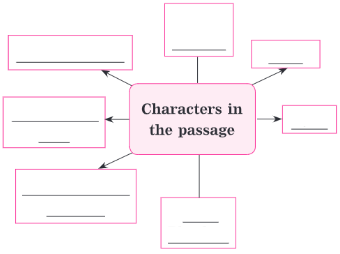
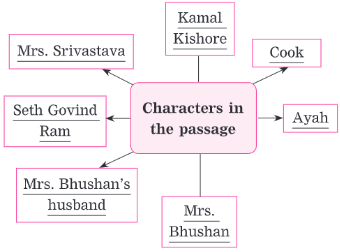
Mrs. Srivastava had to do some shopping. She gave instructions to the ayah about looking after the baby, and told the cook not to be late with the midday meal. Then she set out for the Pipalnagar market place, to make her customary tour of the cloth shops.
A large shady tamarind tree grew at one end of the bazaar, and it was here that Mrs. Srivastava found her friend Mrs. Bhushan sheltering from the heat. Mrs. Bhushan was fanning herself with a large handkerchief. She complained of the summer, which she affirmed, was definitely the hottest in the history of Pipalnagar. She then showed Mrs. Srivastava a sample of the cloth she was going to buy, and for five minutes they discussed its shade, texture and design. Having exhausted this topic, Mrs. Srivastava
said, ‘Do you know, my dear, that Seth Govind Ram’s bank can’t even pay its employees? Only this morning I heard a complaint from their sweeper, who hasn’t received his wages for over a month!’
‘Shocking!’ remarked Mrs. Bhushan. ‘If they can’t pay the sweeper they must be in a bad way. None of the others could be getting paid either.’
She left Mrs. Srivastava at the tamarind tree and went in search of her husband, who was sitting in front of Kamal Kishore’s photography shop, talking with the owner.
‘So there you are!’ cried Mrs. Bhushan. ‘I’ve been looking for you for almost an hour. Where did you disappear ?’
‘Nowhere,’ replied Mr. Bhushan. ‘Had you remained stationary in one shop, I might have found you. But you go from one shop to another, like a bee in a flower garden.’
‘Don’t start grumbling. The heat is trying enough.I don’t know what’s happening to Pipalnagar. Even the bank’s about to go bankrupt.’
A2. Complex Factual Activity:
(1) Write in your own words a few sentences about Mrs Srivastava.
A3. Activities based on Vocabulary:
Find the words from the passage that nean the following:
(1) usual
(2) raised to higher position
(3) stable
(4) without enough money to pay what you owe
A4. Activities based on Contextual Grammar:
(1) A large shady tamarind tree grew at one end of the bazaar. Mrs Srivastava found her friend Mrs Bhushan there. (Join the sentence with 'where'.)
(2) Mrs. Srivastava had to do some shopping. (Pick out the infinitive)
A5. Personal Response:
(1) Do you like Online Shopping? Why?
Who said to whom:
(1) "Where did you disappear?"
(2) "But you go from one shop to another."
And Sitaram, glad that he had been of service to both a customer and his friend, hoisted his bag on his shoulders and went his way.
Mrs. Srivastava had to do some shopping. She gave instructions to the ayah about looking after the baby, and told the cook not to be late with the midday meal. Then she set out for the Pipalnagar market place, to make her customary tour of the cloth shops.
A large shady tamarind tree grew at one end of the bazaar, and it was here that Mrs. Srivastava found her friend Mrs. Bhushan sheltering from the heat. Mrs. Bhushan was fanning herself with a large handkerchief. She complained of the summer, which she affirmed, was definitely the hottest in the history of Pipalnagar. She then showed Mrs. Srivastava a sample of the cloth she was going to buy, and for five minutes they discussed its shade, texture and design. Having exhausted this topic, Mrs. Srivastava
said, ‘Do you know, my dear, that Seth Govind Ram’s bank can’t even pay its employees? Only this morning I heard a complaint from their sweeper, who hasn’t received his wages for over a month!’
‘Shocking!’ remarked Mrs. Bhushan. ‘If they can’t pay the sweeper they must be in a bad way. None of the others could be getting paid either.’
She left Mrs. Srivastava at the tamarind tree and went in search of her husband, who was sitting in front of Kamal Kishore’s photography shop, talking with the owner.
‘So there you are!’ cried Mrs. Bhushan. ‘I’ve been looking for you for almost an hour. Where did you disappear ?’
‘Nowhere,’ replied Mr. Bhushan. ‘Had you remained stationary in one shop, I might have found you. But you go from one shop to another, like a bee in a flower garden.’
‘Don’t start grumbling. The heat is trying enough.I don’t know what’s happening to Pipalnagar. Even the bank’s about to go bankrupt.’
A2. Complex Factual Activity:
(1) Write in your own words a few sentences about Mrs Srivastava.
A3. Activities based on Vocabulary:
Find the words from the passage that nean the following:
(1) usual
(2) raised to higher position
(3) stable
(4) without enough money to pay what you owe
A4. Activities based on Contextual Grammar:
(1) A large shady tamarind tree grew at one end of the bazaar. Mrs Srivastava found her friend Mrs Bhushan there. (Join the sentence with 'where'.)
(2) Mrs. Srivastava had to do some shopping. (Pick out the infinitive)
A5. Personal Response:
(1) Do you like Online Shopping? Why?