An electron (mass $= 9 \times 10^{-31}\,kg$. Charge $= 1.6 \times 10^{-19}\,C$) whose kinetic energy is $7.2 \times 10^{-18}$ $joule$ is moving in a circular orbit in a magnetic field of $9 \times 10^{-5} \,weber/m^2$. The radius of the orbit is.....$cm$
Medium


Download our appand get started for free
Experience the future of education. Simply download our apps or reach out to us for more information. Let's shape the future of learning together!No signup needed.*
Similar Questions
- 1View SolutionA current carrying loop is free to turn in a uniform magnetic field. The loop will then come into equilibrium when its plane is inclined at
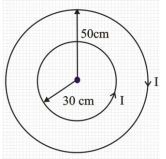
- 2Two concentric circular loops of radii $r _{1}=30\,cm$ and $r_{2}=50\,cm$ are placed in $X - Y$ plane as shown in the figure. $A$ current $I=7\,A$ is flowing through them in the direction as shown in figure. The net magnetic moment of this system of two circular loops is approximately.View Solution
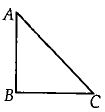
- 3A current carrying closed loop in the form of a right angle isosceles triangle $ABC$ is placed in a uniform magnetic field acting along $AB.$ If the magnetic force on the arm $BC$ is $\vec F,$ the force on the arm $AC$ isView Solution
- 4A thin circular wire carrying a current $I$ has a magnetic moment $M$. The shape of the wire is changed to a square and it carries the same current. It will have a magnetic momentView Solution
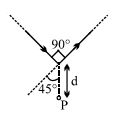
- 5Find the magnetic field at $P$ due to the arrangement shownView Solution
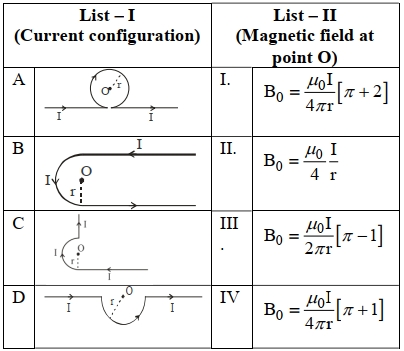
- 6Math List $I$ with List $II$View Solution
Choose the correct answer from the option given below:
- 7Figure shows a square loop $ABCD$ with edge length $a$. The resistance of the wire $ABC$ is $r$ and that of $ADC$ is $2r$. The value of magnetic field at the centre of the loop assuming uniform wire isView Solution
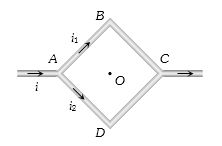
- 8In order to pass $10\,\%$ of main current through a moving coil galvanometer of $99\, ohm$, the resistance of the required shunt is ............ $\Omega $View Solution
- 9A square loop of side $2\, a ,$ and carrying current I, is kept in $XZ$ plane with its centre at origin. A long wire carrying the same current $I$ is placed parallel to the $z-$axis and passing through the point $(0, b, 0),(b>>a)$. The magnitude of the torque on the loop about $z-$axis is given by:View Solution
- 10A galvanometer has resistance of $7\,\Omega $ and gives a full scale deflection for a current of $1.0\, A$. How will you convert it into a voltmeter of range $10\, V$View Solution