MCQ
Anomalous behaviour of oxygen is due to its
- ALarge size and high electronegativity
- BSmall size and low electronegativity
- ✓Small size and high electronegativity
- DLarge size and low electronegativity
Generate a complete, print-ready paper with questions like this in minutes — across 16+ boards, with answer keys.
(Given : atomic number $Sm =62 ; Eu =63 ; Tb =65 ; Gd =64, Pm =61 \text { ) }$
$A.$ $Sm$ $B.$ $Eu$ $C.$ $Tb$ $D.$ $Gd$ $E.$ $Pm$
Choose the correct answer from the options given below:
A $4.0$ molar aqueous solution of $\mathrm{NaCl}$ is prepared and $500 \mathrm{~mL}$ of this solution is electrolysed. This leads to the evolution of chlorine gas at one of the electrodes (atomic mass: $\mathrm{Na}=23, \mathrm{Hg}=200 ; 1$ Faraday $=96500$ coulombs)
$1.$ The total number of moles of chlorine gas evolved is
$(A)$ $0.5$ $(B)$ $1.0$ $(C)$ $2.0$ $(D)$ $3.0$
$2.$ If the cathode is a $\mathrm{Hg}$ electrode, the maximum weight ( $\mathrm{g}$ ) of amalgam formed from this solution is
$(A)$ $200$ $(B)$ $225$ $(C)$ $400$ $(D)$ $446$
$3.$ The total charge (coulombs) required for complete electrolysis is
$(A)$ $24125$ $(B)$ $48250$ $(C)$ $96500$ $(D)$ $193000$
Give the answer question $1,2$ and $3.$
(Given atomic number: $\mathrm{Sc}: 21, \mathrm{Ti}: 22, \mathrm{~V}: 23$, $\mathrm{Cr}: 24, \mathrm{Mn}: 25, \mathrm{Fe}: 26, \mathrm{Co}: 27, \mathrm{Ni}: 28, \mathrm{Cu}: 29$, $\mathrm{Zn}: 30)$
image $\xrightarrow{{A{c_2}O}}A\mathop {\xrightarrow{{B{r_2}}}}\limits_{C{H_3}COOH} B\mathop {\xrightarrow{{{H_2}O}}}\limits_{{H^ + }} C$ would be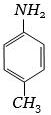
$\lambda_{\mathrm{m}\left(\mathrm{H}_{2} \mathrm{SO}_{4}\right)}^{0}=\mathrm{x} \;\mathrm{S}\; \mathrm{cm}^{2} \mathrm{mol}^{-1}$
$\lambda_{\mathrm{m}\left(\mathrm{K}_{2} \mathrm{SO}_{4}\right)}^{0}=\mathrm{y} \;\mathrm{S\;cm}^{2} \mathrm{mol}^{-1}$
$\lambda_{\mathrm{m}(\mathrm{CH_3} \mathrm{COOK})}^{0}=\mathrm{z}\; \mathrm{S\;cm}^{2} \mathrm{mol}^{-1}$
$\lambda_{\mathrm{m}}^{0}\left(\mathrm{in}\; \mathrm{S} \;\mathrm{cm}^{2} \mathrm{mol}^{-1}\right)$ for $\mathrm{CH}_{3} \mathrm{COOH}$ will be