MCQ
As the quantum number increases, the difference of energy between consecutive energy levels?
  • A
    Remain the same.
  • B
    Increases.
  • C
    Decreases.
  • D
    Sometimes increases and sometimes decreases.

Answer

  1. Decreases.

Need a full question paper?

Generate a complete, print-ready paper with questions like this in minutes — across 16+ boards, with answer keys.
Start Generating Free

Similar questions

Two parallel wires carry currents of 20A and 40A in opposite directions. Another wire carying a current anti parallel to 20A is placed midway between the two wires. T he magnetic force on it will be:
  1. Towards 20A.
  2. Towards 40A.
  3. Zero.
  4. Perpendicular to the plane of the currents.
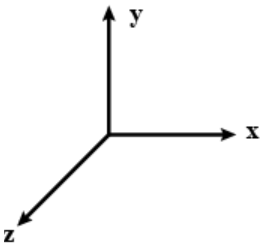
Light wave is travelling along y - direction. If the corresponding E vector at any time along the x - axis, the direction of B vector at that time is along.
Image
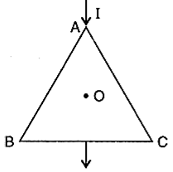
An equilateral triangle is made by uniform wires AB, BC, CA. A current I enteres at A and leaves from the midpoint of BC. If the lengths of each side of the triangle is L, the magnetic field B at the centroid O of the triangle is:
Image
Suppose, the electron in a hydrogen atom makes transition from n = 3 to n = 2 in 10-8s. The order of the torque acting on the electron in this period, using the relation between torque and angular momentum as discussed in the chapter on rotational mechanics is:
  1. 10-34Nm
  2. 10-24Nm
  3. 10-42Nm
  4. 10-8Nm
For the stability of radiated nucleus:

The speed of an electron having a wavelength of  is

(a) 7.25  

(b) 6.26  

(c) 5.25  

(d) 4.24  

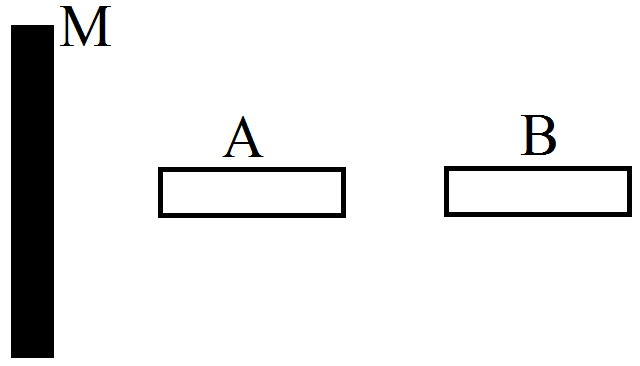
A large nonconducting sheet M is given a uniform charge density. Two uncharged small metal rods A and B are placed near the sheet as shown in figure:
  1. M attracts A.
  2. M attracts B.
  3. A attracts B.
  4. B attracts A.

Let p and E denote the linear momentum and energy of a photon. If the wavelength is decreased:
  1. Both p and E increase.
  2. P increases and E decreases.
  3. P decreases and E increases.
  4. Both p and E decrease.

Select the correct statement

(a) In a full wave rectifier, two diodes work alternately

(b) In a full wave rectifier, two diodes work simultaneously

(c) The efficiency of full wave and half wave rectifiers is same

(d) The full wave rectifier is bi-directional.

Two small spheres each carrying a charge q are placed r metre apart. If one of the spheres is taken around the other one in a circular path of radius r, the work done will be equal to

(a) Force between them × r

(b) Force between them × 2πr

(c) Force between them /2πr

(d) Zero