Question
Assertion (A): The pair of lines given by $\vec{r}=\hat{i}-\hat{j}+\lambda(2 \hat{i}+\hat{k})$ and $\vec{r}=2 \hat{i}-\hat{k}+\mu(\hat{i}+\hat{j}-\hat{k})$ intersect.
Reason $(R) :$ Two lines intersect each other, if they are not parallel and shortest distance $=0$.
Answer

Here, $\vec{a}_1=\hat{i}-\hat{j}, \vec{b}_1=2 \hat{i}+\hat{k}$
$\vec{a}_2=2 \hat{i}-\hat{k}$ and $\vec{b}_2=\hat{i}+\hat{j}-\hat{k}$
$\because \vec{b}_1 \neq k \vec{b}_2$, for any scalar $k$
$\therefore \quad$ Given lines are not parallel.
Now, $\vec{a}_2-\vec{a}_1=(2 \hat{i}-\hat{k})-(\hat{i}-\hat{j})=\hat{i}+\hat{j}-\hat{k}$
and $\vec{b}_1 \times \vec{b}_2=-\hat{i}+3 \hat{j}+2 \hat{k}$
$\Rightarrow\left|\vec{b}_1 \times \vec{b}_2\right|=\sqrt{(-1)^2+(3)^2+(2)^2}=\sqrt{1+9+4}=\sqrt{14}$
$\therefore \text { S.D. }=\left|\frac{\left(\vec{a}_2-\vec{a}_1\right) \cdot\left(\vec{b}_1 \times \vec{b}_2\right)}{\left|\vec{b}_1 \times \vec{b}_2\right|}\right|=\left|\frac{(\hat{i}+\hat{j}-\hat{k}) \cdot(-\hat{i}+3 \hat{j}+2 \hat{k})}{\sqrt{14}}\right|=0$
Hence, two lines intersect each other.
Two lines intersect each other, if they are not parallel and shortest distance $=0$.

Need a full question paper?

Generate a complete, print-ready paper with questions like this in minutes — across 16+ boards, with answer keys.

Start Generating Free

Similar questions

Directions: In the following questions, a statement of assertion (A) is followed by a statement of reason (R). Mark the correct choice as:
Assertion: If $\text{x}=\frac{1}{5\sqrt{2}}$ then $\{\text{x}\cos(\cot^{-1}\text{x})+\sin(\cot^{-1}\text{x})\}^{2}=\frac{51}{50}.$
Reason: $\tan\Big[\cos^{-1}\Big(\frac{1}{5\sqrt{2}}\Big)-\sin^{-1}\Big(\frac{4}{\sqrt{17}}\Big)\Big]=\frac{29}{3}.$
  1. Both A and R are true and R is the correct explanation of A.
  2. Both A and R are true but R is not the correct explanation of A.
  3. A is true but R is false.
  4. A is false but R is true.
  5. Both A and R are false.
Assertion (A) : Let $f:(e, \infty) \rightarrow R$ defined by $f(x)=\log (\log (\log x))$ is bijective.
Reason (R) : A function $f$ will be bijective if $f$ is both one-one and onto.
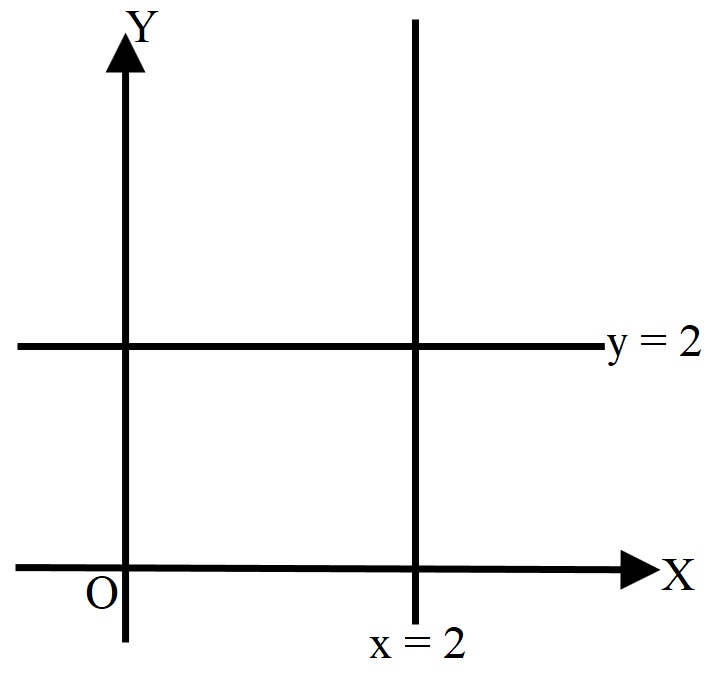
Directions: In the following questions, the Assertions (A) and Reason(s) (R) have been put forward. Read both the statements carefully and choose the correct alternative from the following Assertion (A): The graph of $\text{x}\leq2$ and $\text{y}\geq2$ will be situated in the first and second quadrants. Reason (R):
  1. Both A and R are true and R is the correct explanation of A
  2. Both A and R are true but R is NOT the correct explanation of A
  3. A is true but R is false.
  4. A is false but R is true.
Assertion (A): Consider the function defined as $f(x)=|x|+|x-1|, x \in R$. Then $f(x)$ is not differentiable at x = 0 x = 1

Reason (R): Suppose f be defined and continuous on $(a, b)$ and $c \in(a, b)$, then $f(x)$ is not differentiable at $x=c$ if $\lim _{h \rightarrow 0^{-}} \frac{f(c+h)-f(c)}{h} \neq \lim _{h \rightarrow 0^{+}} \frac{f(c+h)-f(c)}{h}$.
Assertion (A) : The lines $\vec{r}=\vec{a}_1+\lambda \vec{b}_1$ and $\vec{r}=\vec{a}_2+\mu \vec{b}_2$ are perpendicular, when $\vec{b}_1 \cdot \vec{b}_2=0$.
Reason (R): The angle $\theta$ between the lines $\vec{r}=\vec{a}_1+\lambda \vec{b}_1$ and $\vec{r}=\vec{a}_2+\mu \vec{b}_2$ is given by $\cos \theta=\frac{\vec{b}_1 \cdot \vec{b}_2}{\left|\vec{b}_1\right|\left|\vec{b}_2\right|}$.
Let $H_1, H_2, \ldots, H_n$ be mutually exclusive and exhaustive events with $P\left(H_i\right) > 0, i=1,2, \ldots, n$. Let $E$ be any other event with $0$ Assertion $(A) : P\left(H_i \mid E\right) > P\left(E \mid H_i\right) P\left(H_i\right)$ for $i=1,2, \ldots, n$
$\text { Reason (R) : } \sum_{i=1}^n P\left(H_i\right)=1 \text {. }$
Directions: In these questions, a statement of Assertion is followed by a statement of Reason is given.Choose the correct answer out of the following choices:
Assertion: $\text{I}=\int_{0}^{1}\frac{\text{dx}}{3\sqrt{1+\text{x}^3}}=\int_{0}^{{2}^\frac{-1}{3}}\frac{\text{dt}}{1-\text{t}^3}$
Reason: The integrand of the integral I becomes rational by the substitution $\text{t}=\frac{\text{x}}{3\sqrt{1+\text{x}^3}}$
  1. Assertion and Reason both are correct statements and Reason is the correct explanation of Assertion.
  2. Assertion and Reason both are correct statements but Reason is not the correct explanation of Assertion.
  3. Assertion is correct statement but Reason is wrong statement.
  4. Assertion is wrong statement but Reason is correct statement.
Assertion (A) : ' $x$ ' is not an integrating factor for the differential equation $x \frac{d y}{d x}+2 y=e^x$.
Reason (R) : $x\left(x \frac{d y}{d x}+2 y\right)=\frac{d}{d x}\left(x^2 y\right)$.
Assertion (A) : If $y=\log _{10} x+\log _e x$, then $\frac{d y}{d x}=\frac{\log _{10} e}{x}+\frac{1}{x}$.
Reason (R): $\frac{d}{d x}\left(\log _{10} x\right)=\frac{\log x}{\log 10}$ and
$
\frac{d}{d x}\left(\log _e x\right)=\frac{\log x}{\log e}
$
Directions: In the following questions, a statement of assertion (A) is followed by a statement of reason (R). Mark the correct choice as:
Assertion: $\tan^{-1}\big[\text{x}+\sqrt{1+\text{x}^{2}}\big]=\frac{\pi}{2}-\frac{1}{2}\cot^{-1}.$
Reason: $\sin^{2}\Big[2\tan^{-1}\sqrt{\frac{1+\text{x}}{1-\text{x}}}\Big]=1-\text{x}^{2}.$
  1. Both A and R are true and R is the correct explanation of A.
  2. Both A and R are true but R is not the correct explanation of A.
  3. A is true but R is false.
  4. A is false but R is true.
  5. Both A and R are false.