MCQ
$Assertion$ : Velocity-time graph for an object in uniform motion along a straight path is a straight line parallel to the time axis.

$Reason$ : In uniform motion of an object velocity increases as the square of time elapsed.

  • A
    If both Assertion and Reason are correct and the Reason is a correct explanation of the Assertion.
  • B
    If both Assertion and Reason are correct but Reason is not a correct explanation of the Assertion.
  • If the Assertion is correct but Reason is incorrect.
  • D
    If both the Assertion and Reason are incorrect.
Answer

Correct option: C.
If the Assertion is correct but Reason is incorrect.
c
In uniform motion the object moves with uniform velocity, the magnitude of its velocity at different instance i.e., at $t = 0, t =1, sec, t = 2\,sec .....$ will always be constant. Thus velocity-time graph for an object in uniform motion along a straight path is a straight line parallel to time axis.

Need a full question paper?

Generate a complete, print-ready paper with questions like this in minutes — across 16+ boards, with answer keys.

Start Generating Free

Similar questions

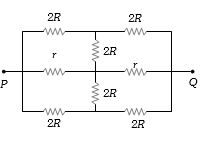
The effective resistance between points $P$ and $Q$ of the electrical circuit shown in the figure is
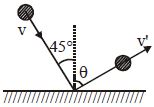
A ball strikes a horizontal surface as shown in figure. If co-efficient of restitution $e = 1/ \sqrt 3$,  then angle $\theta$ is  ............... $^o$
If a convex lens of focal length $80 \;cm$ and a concave lens of focal length $50 \;cm$ are combined together, what will be their resulting power
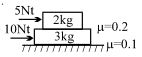
The system shown in figure is released then $a_1$ and $a_2$ is
A body of mass $m$ is allowed to fall with the help of string with downward acceleration $\frac{g}{6}$ to a distance $x$. The work done by the string is .............
The binding energies per nucleon for a deuteron and an $\alpha - $ particle are $x_1$ and $x_2$ respectively. What will be the energy $Q$ released in the reaction $_1{H^2}{ + _1}{H^2}{ \to _2}H{e^4} + Q$
Light coming from a star is observed to have a wavelength of $3737 Å$, while its real wavelength is $3700 Å$. The speed of the star relative to the earth is [Speed of light $3 \times {10^8}m/s$]
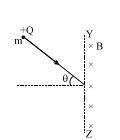
A particle with charge $+Q$ and mass m enters a magnetic field of magnitude $B,$ existing only to the right of the boundary $YZ$. The direction of the motion of the $m$ particle is perpendicular to the direction of $B.$ Let $T = 2\pi\frac{m}{{QB}}$ . The time spent by the particle in the field will be 
Photo-electric effect can be explained by
Two resistors $400\, \Omega$ and $800\, \Omega$ are connected in series across a $6 V$ battery. The potential difference measured by a voltmeter of $10\, k \Omega$ across $400\, \Omega$ resistor is close to$....V$