MCQ
At critical temperature, the surface tension of a liquid
  • A
    is zero
  • B
    is infinity
  • C
    cannot be determined
  • D
    is same as that any other temperature

Answer

(a) is zero
Explanation: At the critical temperature, the surface tension of a liquid becomes zero.

Need a full question paper?

Generate a complete, print-ready paper with questions like this in minutes — across 16+ boards, with answer keys.
Start Generating Free

Similar questions

A body is projected horizontally from a height with speed $20$ metres/sec. ........ $metres/sec$ will be its speed after $5$ seconds ($g = 10\,\,metres/{\sec ^2})$
A particle starts rotating from rest. Its angular displacement is expressed by the following equation $\theta  = 0.025{t^2} - 0.1t$ where $\theta $ is in radian and $t $ is in seconds. The angular acceleration of the particle is 
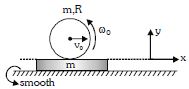
A disc having velocity $v_0$ and angular speed ${\omega _0}$ in anticlockwise direction kept on the rough plank. Initially plank is at rest. (assuming length of plank is very large) Choose $INCORRECT$ option
The dimensional formula $[ML^0T^{-3}]$ is more closely associated with
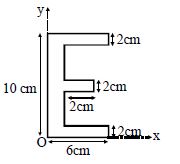
The $(x -y)$ co-ordinates $(in\ cm)$ of the centre of mass of letter $E$ relative to the origin $O$ , whose dimensions are shown in the figure is :
(Take width of the letter $2\ cm$ every where) :
A particle executes $S.H.M.$ and its position varies with time as $x=A$ sin $\omega t$. Its average speed during its motion from mean position to mid-point of mean and extreme position is
Two billiard balls A and B, each of mass 50g and moving in opposite directions with speed of 5m s–1 each, collide and rebound with the same speed. If the collision lasts for 10–3s, which of the following statements are true?
The graph between pressure $(P)$ and $\frac{1}{V}$ ($V$ is volume) for constant temperature process in ideal equation  $(PV = nRT)$
As a body performs $S.H.M.$, its potential energy $U.$ varies with time as indicated in
A machine gun is mounted on a $2000 \,kg$ car on a horizontal frictionless surface. At some instant the gun fires bullets of mass $10\, gm$ with a velocity of $500 \,m/sec$ with respect to the car. The number of bullets fired per second is ten, the acceleration of the car will be .....$\,m/{\sec ^2}$