Consumer Protection — Business Studies STD 12 Commerce — Question
CBSE BoardEnglish MediumSTD 12 CommerceBusiness StudiesConsumer Protection6 Marks
Question
Briefly, explain the different methods of training.
✓
Answer
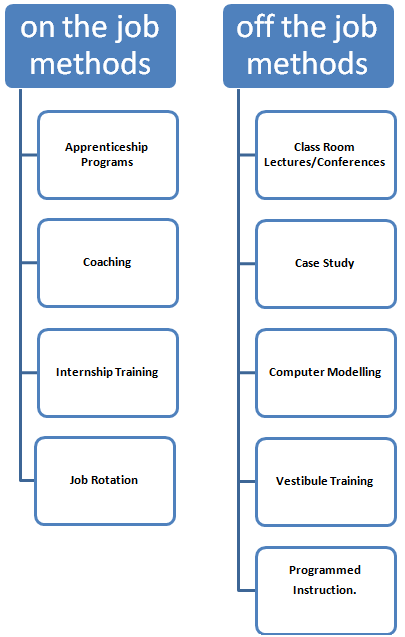
Methods of training: On the Job Methods:
Apprenticeship Programmes: Apprenticeship programmes put the trainee under the guidance of a master worker. These are designed to acquire a higher level of skill. People seeking to enter skilled jobs, to becomefor example, plumbers, electricians or iron-workers, are often required to undergo apprenticeship training
Coaching: In this method, the superior guides and instructs the trainee as a coach. The coach or counselor sets mutually agreed upon goals, suggests how to achieve these goals, periodically reviews the trainees progress and suggests changes required in behavior and performance.
Internship Training: It is a joint programme of training in which educational institutions and business firms cooperate. Selected candidates carry on regular studies for the prescribed period.
Off the job methods:
Case Study: Taken from actual experiences of organisations, cases represent attempts to describe, as accurately as possible real problems that managers have faced. Trainees study the cases to determine problems, analyse causes, develop alternative solutions, select what they believe to be the best solution, and implement it.
Computer Modelling: It simulates the work environment by programming a computer to imitate some of the realities of the job and allows learning to take place without the risk or high costs that would be incurred if a mistake were made in real life situation
Vestibule Training: Employees learn their jobs on the equipment they will be using, but the training is conducted away from the actual work floor. Actual work environments are created in a class room and employees use the same materials, files and equipment. This is usually done when employees are required to handle sophisticated machinery and equipment.
Need a full question paper?
Generate a complete, print-ready paper with questions like this in minutes — across 16+ boards, with answer keys.