MCQ
Choose the correct statement/ (s):
  • A
    Weight of a body is greater on planes and less on hill tops.
  • B
    Weight of a body is greater at the poles and less at the equator.
  • C
    Weight of a body on the moon is less than that on the earth.
  • D
    Weight of a body on the moon is same as that at a height, equal to radius of moon from the surface of earth.
Answer

  1. Weight of a body is greater on planes and less on hill tops.
  2. Weight of a body is greater at the poles and less at the equator.
  3. Weight of a body on the moon is less than that on the earth.

Explanation:

Weight = Mass × Acceleration due to gravity. The acceleration due to gravity is greater on planes than on hill top. g is greater at poles than at the equator. g is less on moon than on the earth.

Need a full question paper?

Generate a complete, print-ready paper with questions like this in minutes — across 16+ boards, with answer keys.

Start Generating Free

Similar questions

A flywheel can rotate in order to store kinetic energy. The flywheel is a uniform disk made of a material with a density $\rho $ and tensile strength $\sigma $ (measured in Pascals), a radius $r$ , and a thickness $h$ . The flywheel is rotating at the maximum possible angular velocity so that it does not break. Which of the following expression correctly gives the maximum kinetic energy per kilogram that can be stored in the flywheel ? Assume that $\alpha $ is a dimensionless constant
$C_v$ and $C_p$ denote the molar specific heat capacities of a gas at constant volume and constant pressure, respectively. Then
In an inelastic collision:
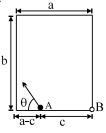
A billiard table whose length and width are as shown in the figure. $A$ ball is placed at point $A$. At what angle ‘$\theta $ ’the ball be projected so that after colliding with two walls, the ball will fall in the pocket $B$ .Assume that all collisions are perfectly elastic (neglect friction)
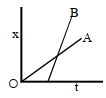
The position-time graphs for two students $A$ and $B$ returning from the school to their homes are shown in figure

$(A)$ $A$ lives closer to the school

$(B)$ $B$ lives closer to the school

$(C)$ $A$ takes lesser time to reach home

$(D)$ $A$ travels faster than $B$

$(E)$ $B$ travels faster than $A$

Choose the correct answer from the options given below :

If earth is supposed to be a sphere of radius R, if $g_{30}$ is value of acceleration due to gravity at latitude of $ 30^\circ$ and g at the equator, the value of $g - {g_{{{30}^o}}}$ is
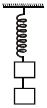
Two small bodies of mass of $2\, kg$ each attached to each other using a thread of length $10\, cm$, hang on a spring whose force constant is $200\, N/m$, as shown in the figure. We burn the thread. What is the distance between the two bodies when the top body first arrives at its highest position .... $cm$ ? (Take $\pi^2 = 10$)
The efficiency of a Carnot engine operating with reservoir temperature of $100\,^{\circ} C$ and $-23\,^{\circ} C$ will be
Simple harmonic motion is such a harmonic motion in which the restoring force F is directly proportional to :
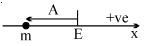
$A$ particle of mass m is constrained to move on $x$ -axis. $A$ force $F$ acts on the particle. $F$ always points toward the position labeled $E$. For example, when the particle is to the left of $E, F$ points to the right. The magnitude of $F$ is a constant $F$ except at point $E$ where it is zero. The system is horizontal. $F$ is the net force acting on the particle. The particle is displaced a distance $A$ towards left from the equilibrium position $E$ and released from rest at $t = 0.$  What is the period of the motion?