MCQ
Column $I$ describe some situations in which a small object moves. Column $II$ describes some characteristics of these motions. Match the situation in Column $I$ with the characteristics in Column $II$ and indicate your answer by darkening appropriate bubbles in the $4 \times 4$ matrix given in the $ORS$.
Column $I$ Column $II$
$(A)$ The object moves on the $\mathrm{x}$-axis under a conservative force in such a way that its "speed" and "position" satisfy $v=c_1 \sqrt{c_2-x^2}$, where $\mathrm{c}_1$ and $\mathrm{c}_2$ are positive constants. $(p)$ The object executes a simple harmonic motion.
$(B)$ The object moves on the $\mathrm{x}$-axis in such a way that its velocity and its displacement from the origin satisfy $\mathrm{v}=-\mathrm{kx}$, where $\mathrm{k}$ is a positive constant. $(q)$ The object does not change its direction.
$(C)$ The object is attached to one end of a massless spring of a given spring constant. The other end of the spring is attached to the ceiling of an elevator. Initially everything is at rest. The elevator starts going upwards with a constant acceleration a. The motion of the object is observed from the elevator during the period it maintains this acceleration. $(r)$ The kinetic energy of the object keeps on decreasing.
$(D)$ The object is projected from the earth's surface vertically upwards with a speed $2 \sqrt{\mathrm{GM}_e / R_e}$, where, $M_e$ is the mass of the earth and $R_e$ is the radius of the earth. Neglect forces from objects other than the earth. $(s)$ The object can change its direction only once.
  • $A \rightarrow(p), B \rightarrow(q) \&(r), C \rightarrow(p), D \rightarrow(r) \&(q)$
  • B
    $A \rightarrow(r), B \rightarrow(q) \&(r), C \rightarrow(p), D \rightarrow(p) \&(q)$
  • C
    $A \rightarrow(q), B \rightarrow(r) \&(r), C \rightarrow(p), D \rightarrow(q) \&(r)$
  • D
    $A \rightarrow(s), B \rightarrow(q) \&(s), C \rightarrow(p), D \rightarrow(s) \&(r)$
Answer

Correct option: A.
$A \rightarrow(p), B \rightarrow(q) \&(r), C \rightarrow(p), D \rightarrow(r) \&(q)$
a

Need a full question paper?

Generate a complete, print-ready paper with questions like this in minutes — across 16+ boards, with answer keys.

Start Generating Free

Similar questions

 A conducting circular loop is placed in a uniform magnetic field, $B = 0.025\,\, T$ with its plane perpenducular to the loop. The radius of the loop is made to shrink at at a constant rate of $1\,\,mm\,\,s^{-1}$ . The induced emf when the radius is $2\,\,cm$ is
$Assertion$ : The dimensional formula for relative velocity is same as that of the change in velocity.

$Reason$ : Relative velocity of $P$  w.r.t. $Q$ is the ratio of velocity of $P$ and that of $Q$.

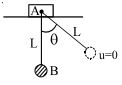
$A$ small ball $B$ of mass $m$ is suspended with light inelastic string of length $L$ from $a$ block $A$ of same mass $m$ which can move on smooth horizontal surface as shown in the figure. The ball is displaced by angle $\theta$ from equilibrium position & then released. The displacement of block when ball reaches the equilibrium position is
Assertion : Coloured spectrum is seen when we look through a muslin cloth.

Reason : It is due to the diffraction of white light on passing through fine slits

In stationary waves, antinodes are the points where there is
$Ampere - hour$ is a unit of
A cubical volume is bounded by the surfaces $x =0, x = a , y =0, y = a , z =0, z = a$. The electric field in the region is given by $\overrightarrow{ E }= E _0 \times \hat{ i }$. Where $E _0=4 \times 10^4 NC ^{-1} m ^{-1}$. If $a =2 cm$, the charge contained in the cubical volume is $Q \times 10^{-14} C$. The value of $Q$ is $...........$

Take $\left.\varepsilon_0=9 \times 10^{-12} C ^2 / Nm ^2\right)$ 

If $L , C$ and $R$ are the self inductance, capacitance and resistance respectively, which of the following does not have the dimension of time?
$5$ litre of benzene weighs
A cyclist is travelling with velocity $v$ on a curved road of radius $R$. The angle $\theta$  through which the cyclist leans inwards is given by