Question
Column IColumn II
(i) Diffusion(a) The pressure by which water rises upto some feet in a lofty tree.
(ii) Xylem(b) Two solutions which have equal osmotic pressure.
(iii) Root pressure(c) The tissue through which water and mineral salts move upward in a plant.
(iv) Isotonic solution(d) The process by which roots absorb water from the soil.
 (e) The process by which the molecules of perfume spread in the room when the bottle is open.

Answer

(i) (e ),(ii) (c ),(iii) (a),(iv) (b)

Need a full question paper?

Generate a complete, print-ready paper with questions like this in minutes — across 16+ boards, with answer keys.

Start Generating Free

Similar questions

Column IColumn II
(i) Exosmosis(a) The process by which roots absorb water from the soil.
(ii) Osmosis(b) The concentration of the solution when lower than that of the cell sap.
(iii) Plasmolysis(c) Two solutions which have equal osmotic pressure.
(iv) Hypotonic solution (d) The shrinkage of protoplasm when the cell is kept in a hypertonic solution
 (e) The exit or flow of water from the cell to the outer environment.
Column-IColumn-II
(A) Thrombokinase(i) blood coagulation
(B) Lymphocytes(ii) antitoxins
(C) Fibrinogen(iii) calcium ions
(D) Antibodies(iv) RBC
 (v) antibodies
Column IColumn II
(i) Parathyroid (a) Dwarfism and mental retardation
(ii) Cretinism (b) Shortage of glucose in blood.
(iii) Diabetes mellitus (c) Master of master gland.
(iv) Insulin shock (d) Regulates the level of calcium and phosphorus.
  (e) Excess of glucose in blood.
Column IColumn II
(i) Family Planning(a) Counting of population
(ii) Vasectomy(b) Sterilisation in females
(iii) Tubectomy(c) Sterilisation in males
(iv) Census(d) Red triangle
Image
ComponentApproximate numberLife Span
I. RBCs(A) 7,000(i) 3-5 days
II. WBCs(B) 2,50,000(ii) 100-120 days
III. Blood platelets(C) 4.8-5-5 million(iii) 2 weeks
Image

Image
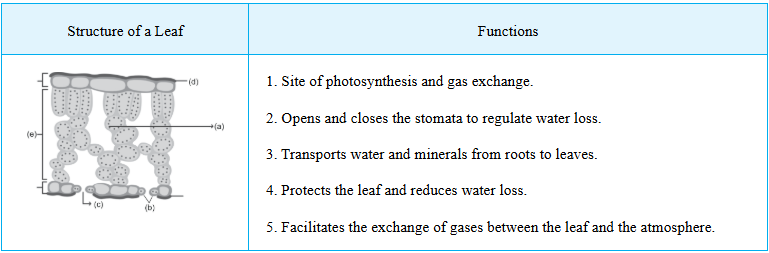
Column IColumn II
(i) Transpiration(a) Cacti plants
(ii) Movement of water(b) Stomata
(iii) Guttation(c) Maize plant
(iv) Low rate of transpiration(d) Xylem
 (e) Hydathodes
Column IColumn II
(i) Glomerulus (a) The triangle-shaped, hollow organ that collects urine.
(ii) Nephrology (b) The outer region of the kidney.
(iii) Bladder (c) The study of normal kidney function and kidney problems.
(iv) Renal cortex  (d) Filtration units in the kidneys.
  (e) A cluster of blood capillaries surrounded by a bowman's capsule.