Question
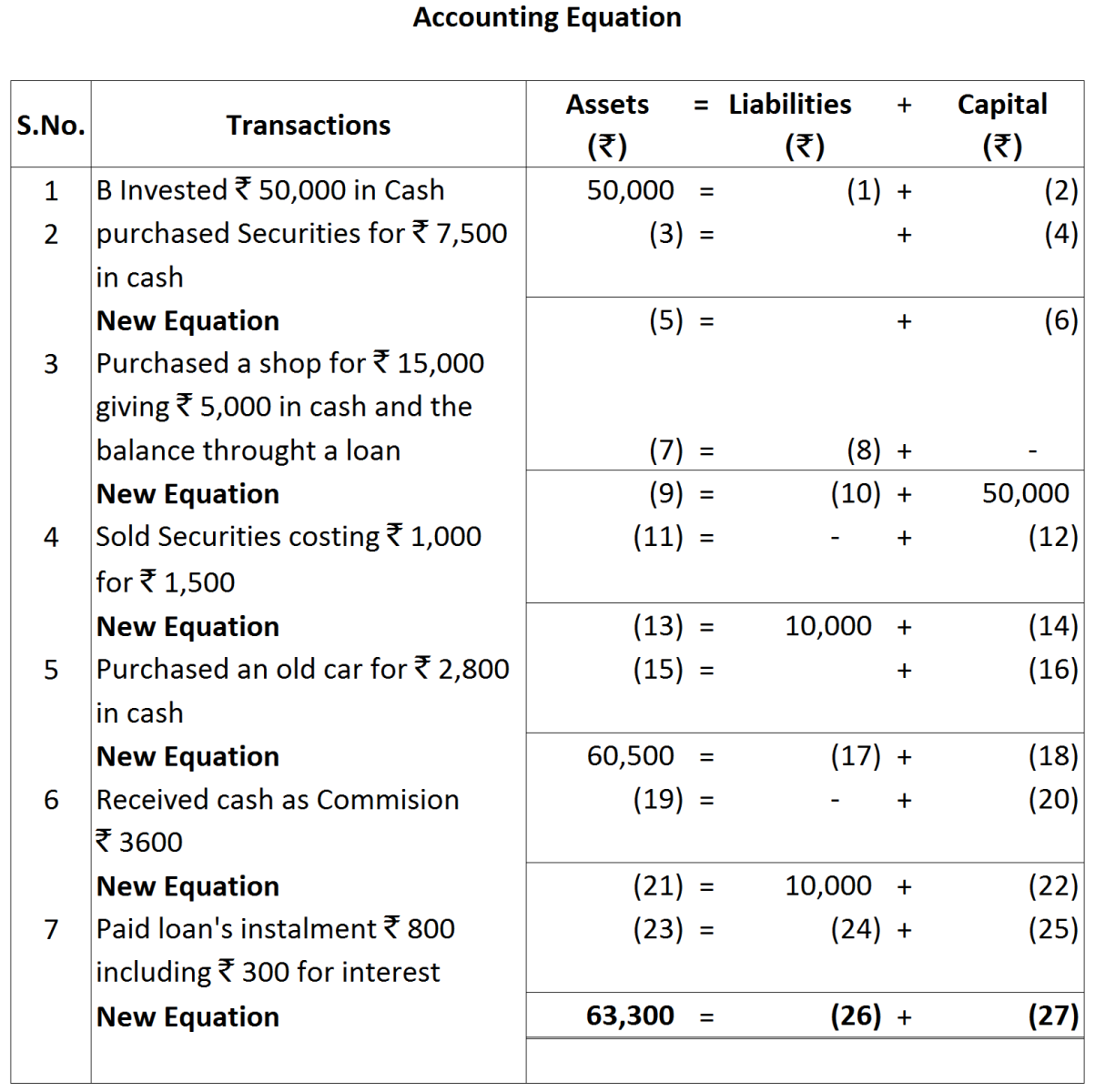
Complete the following Accounting Equation by filling the missing amounts:
Get the step-by-step solution for this question inside the Vidyadip app.
Get the answer in the appGenerate a complete, print-ready paper with questions like this in minutes — across 16+ boards, with answer keys.
|
1.
|
Bought goods from Nanak Bros. for ₹ 4,00,000 at 10% trade discount and 3% cash discount on purchase price. 25% of the amount paid at the time of purchase.
|
|
2.
|
Sold goods to Kumar & Sons. for ₹ 2,00,000 at 20% trade discount and 5% cash discount on sale price. 60% of the amount received by Cheque.
|
|
3.
|
Received from Gopi Chand ₹ 38,000 by Cheque after deducting 5% cash discount.
|
|
4.
|
Paid ₹ 20,000 for rent by Cheque.
|
|
5.
|
Paid ₹ 50,000 for salaries by Cheque.
|
|
6.
|
Goods worth ₹ 10,000 distributed as free samples.
|
|
7.
|
₹ 5,000 due from Chanderkant are bad-debts.
|
|
8.
|
Sold household furniture for ₹ 15,000 and the proceeds were invested into business.
|
|
2018
|
|
|
July 1
|
Sohan & Sons returned 2 Laptops HP sold @ ₹ 40,000 each plus CGST and SGST @ 6% each
|
|
July 2
|
Ramesh 2 'Ricoh' printers sold @ ₹ 10,000 each plus IGST @ 12%
|
|
July 25
|
Dinesh, Chandigarh returned 10 HP Desktops sold @ ₹ 20,000 each plus IGST @ 12% for delayed supply
|
|
July 26
|
Computer Mouse returned by Ravi, Delhi sold to him for cash ₹ 2,000 plus CGST and SGST @ 6% each
|
|
S.No
|
Types of Account
|
Account to be Debited
|
Account to be Credited
|
|
1
|
Personal Account
|
Receiver
|
Giver
|
|
2
|
Real Account
|
What comes in
|
what goes out
|
|
3
|
Nominal Account
|
Expense and Loss
|
Income and Gain
|
| S.No | ₹ | |
|
1
|
Mohan started business with cash
|
5,00,000
|
|
2
|
Purchased goods for cash
|
1,00,000
|
|
3
|
Sold goods for cash
|
1,50,000
|
|
4
|
Received interest from Ram in cash
|
500
|
|
5
|
Sold goods to Ashok
|
60,000
|
|
6
|
Purchased furniture for cash
|
50,000
|
|
7
|
Paid wages
|
20.000 |