Question
Complete the table based on the following information.
Why do they run? Running. It's painful, tedious, and exhausting. So, why do so many Americans do it? People run for many reasons. Most often, people run to stay in shape and to reach an ideal body weight. Studies show that a combination of diet and exercise is the most effective way to lose weight, as it triggers a loss of body fat and a proportional increase of lean tissue. Running, a rigorous cardiovascular exercise, allows a person to burn an average of 100 calories per each mile he or she runs. Other popular activities, such as biking and walking, only burn a fraction of those calories in the same amount of time. While the average human being burns about 2000-2500 calories a day by simply existing, running 5 miles a day can burn an additional 500 calories, making it a legitimate way to lose weight. Furthermore, running is an easily accessible activity-with a decent pair of sneakers and some determination, anyone can run.
Surprisingly, how fast a person runs has little effect on the number of calories he or she will burn. The most important factor is weight. For example, a 220-pound person running an eight-minute mile burns 150 calories, while a 120-pound person running at the same pace burns only 82. Every person's body requires an excess of 3500 calories in order to gain a pound or a deficit of 3500 calories in order to lose a pound. Thus, 180- pound person who runs 5 miles each day will lose about 5 pounds a month. However, as his or her weight goes down, he or she will burn fewer calories per mile. Eventually, a runner's weight will stabilize. When this will happen depends on how much the runner eats and how far he or she runs.
Miles runCalories burn


Answer

SELF

Need a full question paper?

Generate a complete, print-ready paper with questions like this in minutes — across 16+ boards, with answer keys.

Start Generating Free

Similar questions

Complete the table on the basis of information given below:
Native to India and Burma, the tree is a stately cousin of the Mahogany and has been venerated since ancient times for its medicinal and fumigant properties. Neem is one of the five ‘essentials’ that tradition prescribes for every Indian garden; the others are : amla (Indian gooseberry), palash (flame of the forest), bilva (Bengal quince or a bail) and tulsi (sacred basil) Ayurveda ascribes amazing curative powers to the neem. Then, there is the neem panchang - the roots, bark, gum, leaves, fruit, (kernel and oil)-which furnishes a variety of antiviral, antibacterials, fungicides and other bioactive substances. These have been found effective against a host of ailments.
Dried neem leaves are put in stored grain, clothes and books to protect them from pests. Neem leaves are used for skin ailments and in rituals to propitiate the goddess Mariamma of small pox and to fan the patients. Neem oil cake curbs pests, improves the soil and serves as a nourishing animal feed.
 Name :  .....................
 Origin : .....................
 Parts : .....................
 Qualities : .....................
 Uses : .....................
Read the following passage carefully. Represent this by means of a flow chart.
The word 'Literature' is really hard to define. Many interpretations are made about the word. But all are incomplete. Some opine that literature is the mirror of life, some others say that it is the criticism of life. Whatever may be the controversy about the word, we may say that literature is that which reflects life. The branches of literature are poetry, drama, novel and short stories. Poetry is of two kinds, imaginative and realistic. Drama is either a comedy or a tragedy. Novels are also of many kinds, historical, psychological, realistic, scientific and regional. Short story is that one which stands very close to life inspite of a little scope Put the following information into a flow chart.
Complete the table on the basis of the information given below:
There is an enemy beneath our feet - an enemy deadlier for his complete impartiality. He recognizes no national boundaries, no political parties. Everyone in the world is threatened by him. The enemy is the earth itself. When an earthquake strikes, the world trembles. The power of a quake is greater than anything man himself can produce. But today scientists are directing a great deal of their effort into finding some way of combating earthquakes, and it is possible that at some time in the near future mankind will have discovered a means of protecting itself from earthquakes. An earthquake strikes without warning. When it does, its power is immense. If it strikes a modern city, the damage it causes is as great as if it has struck a primitive village. Gas mains burst, explosions are caused and fires are started. Underground railways are wrecked. Buildings collapse, bridges fall, dams burst, gaping crevices appear in busy streets. If the quake strikes at sea, huge tidal waves sweep inland. If it strikes in mountain regions, avalanches roar down into the valley. Consider the terrifying statistics from the past 1755: Lisbon, capital of Portugal - the city destroyed entirely and 450 killed. 1970: Peru: 50,000 killed. In 1968 an earthquake struck Alaska. As this is a relatively unpopulated part, only a few people were killed. But it is likely that this was one of the most powerful quakes ever to have hit the world. Geologists estimate that during the tremors, the whole of the state moved over 80 feet farther west into the Pacific Ocean. Imagine the power of something that can move an entire subcontinent! This is the problem that the scientists face. They are dealing with forces so immense that man cannot hope to resist them. All that can be done is to try to pinpoint just where the earthquake will strike and work from there. At least some precautionary measures can then be taken to save lives and some of the property. (330 Words)'
 Damage caused  .....................
 City .....................
 Sea  .....................
 Mountains .....................
 Year  Place  No of people killed
...............................................................
...............................................................
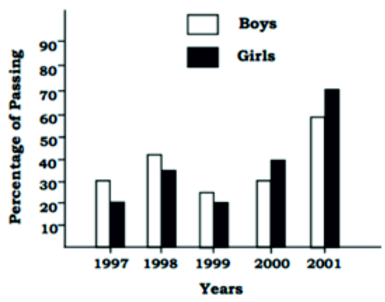
Look at the following graph. It shows the result of S.S.C. Exam of The General marathi School. Write a paragraph giving all the information of S.S.C. Results.
Image
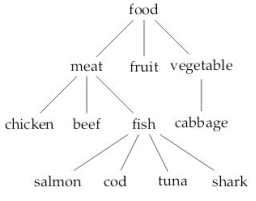
Read the information given in the tree-diagram. Write a paragraph based on it. Give a suitable title to it. Image
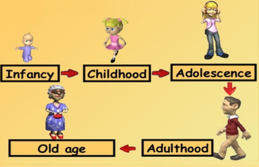
Read the information given in the diagram. Write a paragraph based on it. Give a suitable title to it.
Image
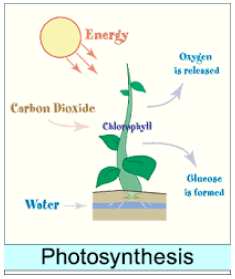
Read the information given in the diagram.Write a paragraph based on it. Give a suitable title to it.
Image
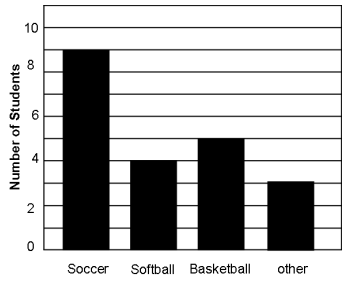
The following information is taken from a randomly selected students from Vidya Mandir school. Students have mentioned about their favourite sports. Read the information given in the diagram. Write a paragraph based on it. Give a suitable title to it.
Image
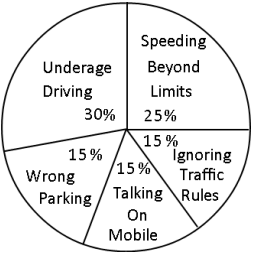
Read the information given in the pie diagram and write a paragraph based on it. Observe the following pie chart and prepare a writeup of about 100 words describing the causes of ‘Increasing Road Accidents’.
Image
Read the following extract and fill the table.
Bears or ursines as a class are a relatively new evolutionary development in the animal kingdom. The classification of bears as a group, in literature over the years, has at times been confusing and even controversial. According to Roger A. Caras, most bears are remarkably similar to each other, with the exception of a few species like the Indian sloth bear, the South American spectacled bear and the Arctic polar bear. The following list of genera might make broad classifications. Simpler-Brown bears (Ursus) that inhabit North America and Eurasia; Spectacled bears (Tremarctos) from South America : Sun bears (Helarctos) from South-East Asia; Asiatic black bears (Selenarctos), inhabiting the middle to far East of Asia; American black bears (Eurarctos)from the North American continent; Sloth bears (Melursus) of India: and Polar bears (Thalarctos) from the Arctic.
 Title : Bear Facts
Popular NameScientific NameFound in
..........................................
..........................................
..............Selenarctos..............
..........................................
.............................India