Question
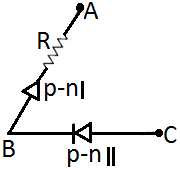
Consider a box with three terminals on top of it as shown in Fig (a): 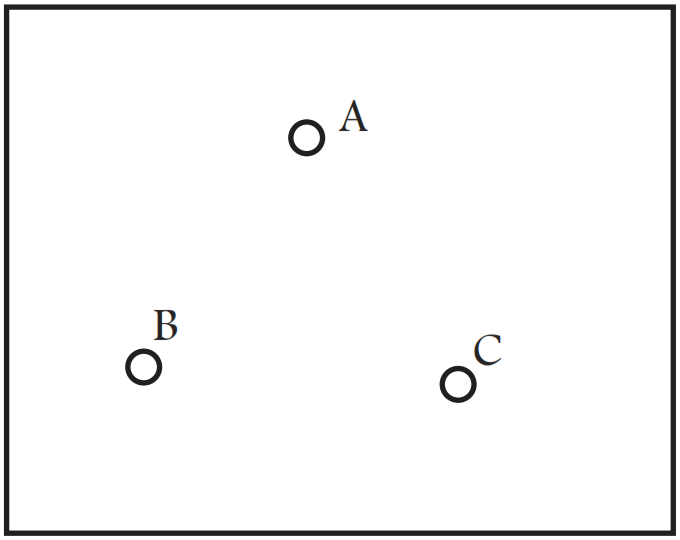 Three components namely, two germanium diodes and one resistor are connected across these three terminals in some arrangement. A student performs an experiment in which any two of these three terminals are connected in the circuit shown in Fig. (b).
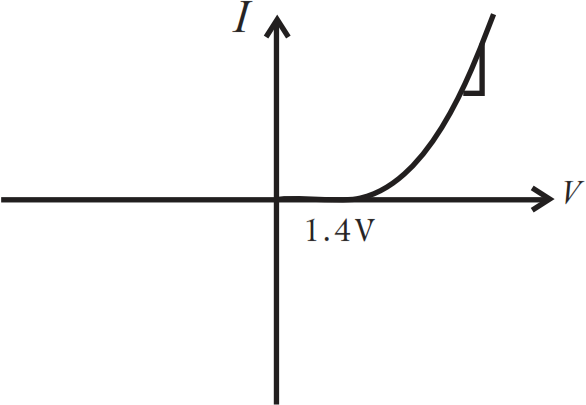
 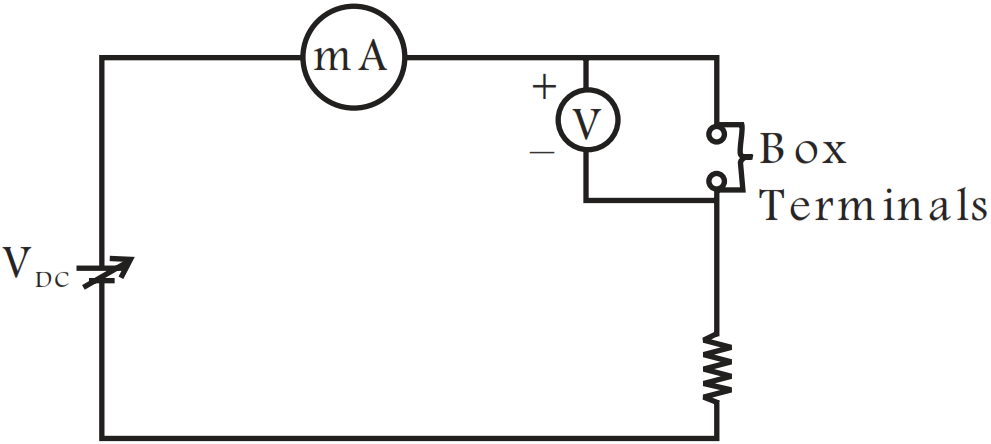 The student obtains graphs of current-voltage characteristics for unknown combination of components between the two terminals connected in the circuit. The graphs are
Three components namely, two germanium diodes and one resistor are connected across these three terminals in some arrangement. A student performs an experiment in which any two of these three terminals are connected in the circuit shown in Fig. (b). The student obtains graphs of current-voltage characteristics for unknown combination of components between the two terminals connected in the circuit. The graphs are - When A is positive and B is negative,
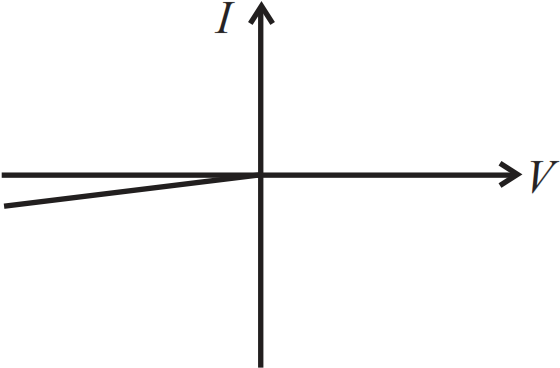
- When A is negative and B is positive,
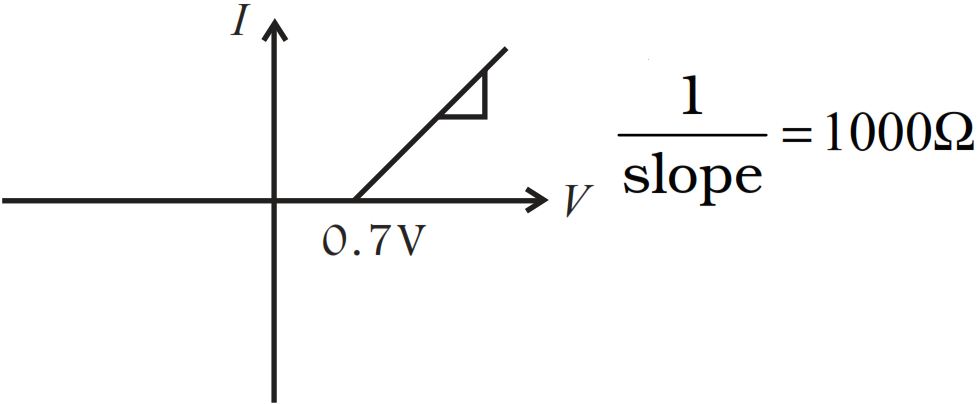
- When B is negative and C is positive,
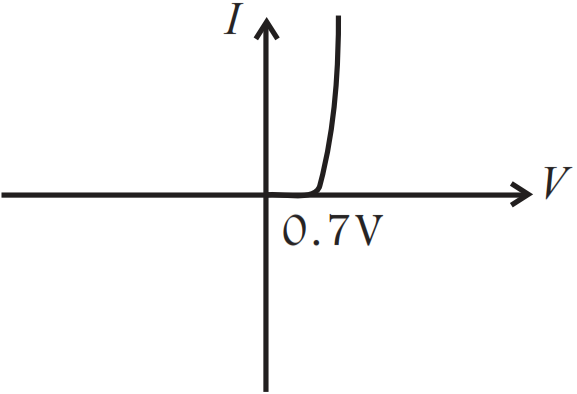
- When B is positive and C is negative,
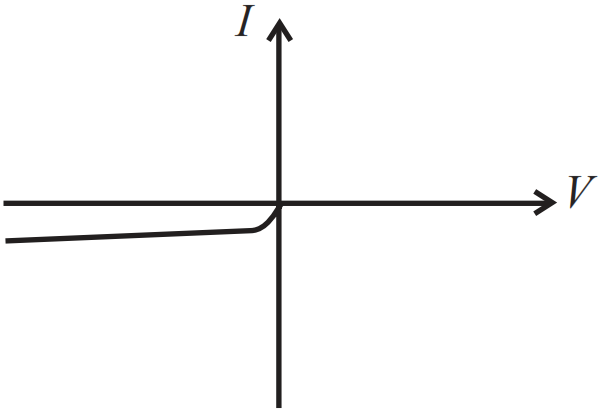
- When A is positive and C is negative,
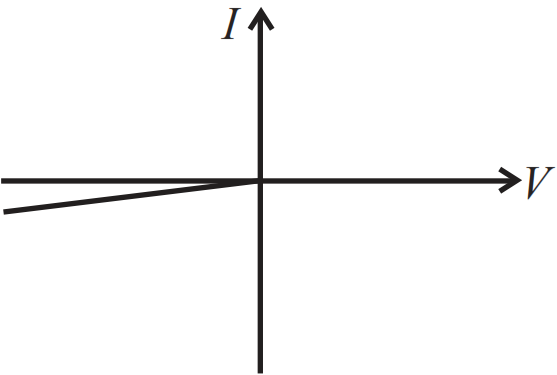
- When A is negative and C is positive,