Question
Describe the process of urine formation in kidneys.

Answer

Mechanism of Urine Formation: It has four components - glomerular filtration, selective reabsorption, tubular secretion and concentration.
  1. Glomerular Filtration: Blood flows in glomerulus under pressure due to narrowness of efferent arteriole. As a result it undergoes pressure filtration or ultrafiltration. All small volume solutes (e.g., urea, uric acid, amino acids, hormones, glucose, ions, vitamins) and water are filtered out and enter the Bowman’s capsule. The product is called nephric or glomerular filtrate. Its volume is 125 ml/min (180 litres/ day).
  2. Reabsorption: Nephric filtrate is also called primary urine. It passes into proximal convoluted tubule. The peritubular capillaries around PCT reabsorb all the useful components of nephric filtrate, e.g, glucose, amino acids, vitamins C, calcium, potassium, sodium, chloride, bicarbonate and water (75%). Selective reabsorption also occurs in the region of distal convoluted tubule. The amount of water absorption depends upon amount of excess water present in the body and the amount of dissolved waste to be excreted.
  3. Tubular Secretion (Augmentation): It occurs mostly in the distal convoluted tubule which is also surrounded by peritubular capillaries. Smaller amount of tubular secretion also takes place in the area of proximal convoluted tubule. Tubular secretion is active secretion of waste products by the blood capillaries into the urinary tubule. It ensures removal of all the waste products from blood, viz.,’ urea, uric acid, creatinine. Extra salts, $K^+$ and $H^+$ are also secreted into urinary tubule to maintain a proper concentration and pH of the urine.
  4. Concentration of the Urine: 75% of water content of nephric filtrate is reabsorbed in the region of proximal convoluted tubule. Some 10% of water passes out of the filtrate through osmosis in the area of loop of Henle. It is because loops of Henle are immersed in hyper-osmotic interstitial fluid, Further concentration takes place in the area of collecting tubes in the presence of hormone called antidiuretic hormone (ADH) or vasopressin. The hormone is secreted only when concentrated urine is to be passed out. It is not secreted when a person drinks a lot of water. Absence of antidiuretic hormone produces a dilute urine. Hormone action, therefore, maintains osmotic concentration of body fluids. Deficiency of ADH causes excessive, repeated, dilute urination (diabetes insipidus).

Need a full question paper?

Generate a complete, print-ready paper with questions like this in minutes — across 16+ boards, with answer keys.
Start Generating Free

Similar questions

Two very small organisms X and Y both reproduce by the method of budding. Organism X is industrially very important because it is used in making alcohol from sugar. It is also used in making bread. Organism Y Lives in freshwater. If organism Y gets cut into a number of parts accidently, each cut part can grow to form complete organism.
  1. What are organisms X and Y?
  2. What is the name of the process in which X converts sugar into alcohol?
  3. To which class of organisms does X belong?
  4. Name an important body feature of organism Y.
  5. Which organism is multicellular and which one is unicellular?
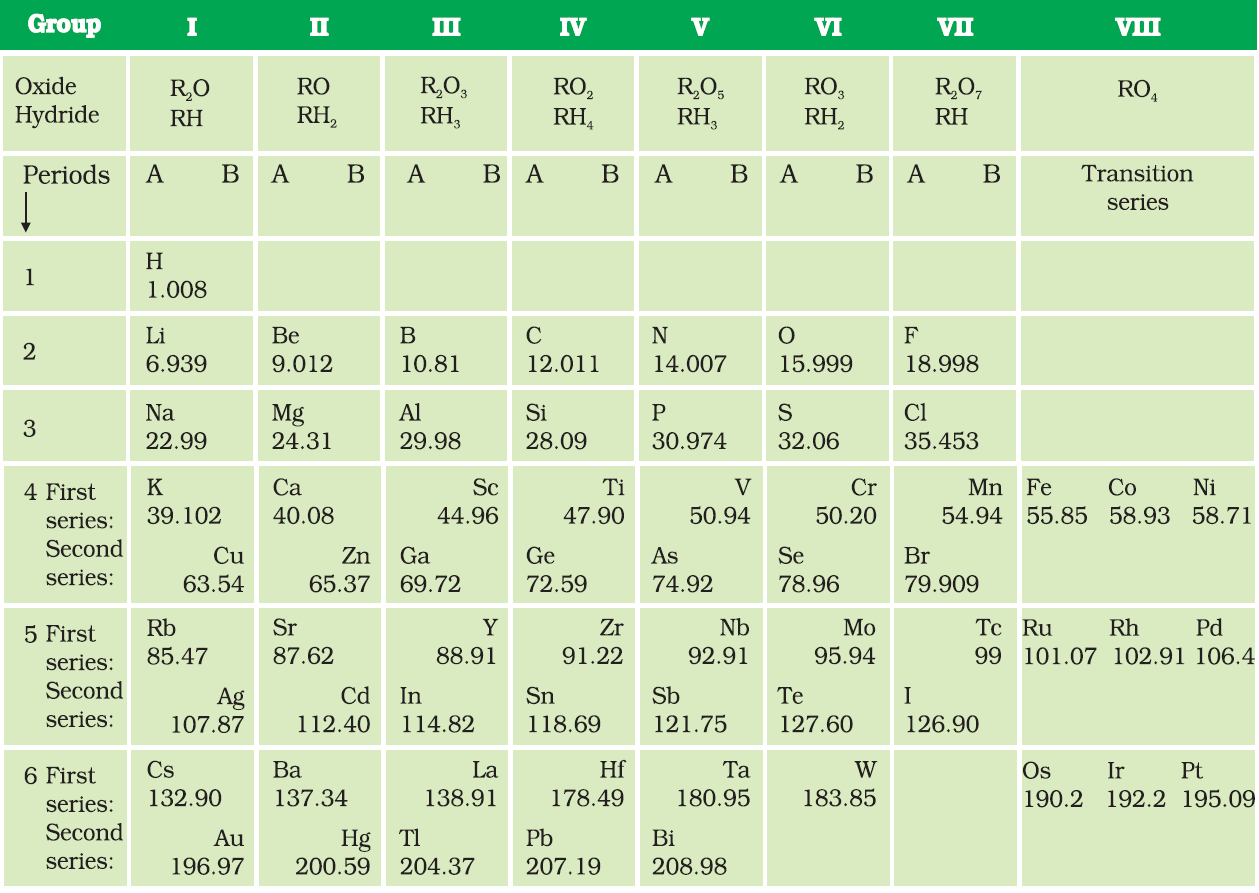
On the basis of Mendeleev’s Periodic Table given below, answer the questions that follow the table:
  1. Name the element which is in:
  1. i. $1^{\text {st }}$ group and $3^{\text {rd }}$ period.
    ii. $VII ^{\text {th }}$ group and 2nd period.
  1. Suggest the formula for the following:
  1. Oxide of nitrogen.
  2. Hydride of oxygen.
  1. In group VIII of the Periodic Table, why does cobalt with atomic mass 58.93 appear before nickel having atomic mass 58.71?
  2. Besides gallium, which two other elements have since been discovered for which Mendeleev had left gaps in his Periodic Table?
  3. Using atomic masses of Li, Na and K, find the average atomic mass of Li and K and compare it with the atomic mass of Na. State the conclusion drawn from this activity.
How will you conclude that the same potential difference (voltage) exists across three resistors connected in a parallel arrangement to a battery?
The partially digested food coming from the stomach of a person enters a long and narrow organ A in his body. The organ A receives the secretion of two glands: liver and pancreas. Liver secretes a greenish - yellow liquid B which is normally stored in the organ C. Pancreas secretes pancreatic juice which contains three digestive enzymes D, E and F. The intestinal juice completes the process of digestion of food. The inner wall of organ A has millions of tiny finger - like projections G which help in the rapid absorption of digested food into blood stream. The undigested part of food then passes into wider tube H which absorbs most of the water from undigested food. The last part of tube H called I stores this undigested food (or waste) for some time. The undigested food is then passed out though opening J as faeces in the process known as K.
  1. Name the organ A.
  2. Name liquid B and organ C.
  3. What are the digestive enzymes D, E and F?
  4. Name the projections G present on the inner wall of organ A.
  5. Name Tube H, Part I, Opening J and Process K.
The following is a food chain that ends with human:
plants → bee → human
  1. Explain how plants provide food for bees.
  2. How do bees provide food for humans?
  3. How does this food chain differ form a usual food chain involving human such as : plants → goat → human?
  4. Do you think that the food chain given in this question can really be regarded as a food chain? Explain your answer.
  1. Mention any two components of blood.
  2. Trace the movement of oxygenated blood in the body.
  3. Write the function of valves present in between atria and ventricles.
  4. Write one structural difference between the composition of artery and veins.
What is electromagnetic induction? State different ways of inducing current in a coil. Suggest the most convenient situation for inducing current in a coil. State the situation in which the induced current in the coil is found to be the highest. Name and state the rule used to know the direction of the induced current.
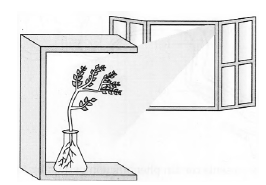
Image
Observe the above figure carefully and answer the following:
i. Which phenomenon does the figure represent?
ii. Which plant hormone is involved?
iii. How this plant hormone brings this movement?
With the help of a diagram, derive the formula for the resultant resistance of three resistors connected in series.
The position of five elements in the periodic table are shown below:
  Group 1 Group 2 Group 16 Group 16
Period 1   A   B
Period 3 C   D E
What are the number of valence electrons in B?
Identify the element(s) which
  1. Will have the smallest atomic radius?
  2. Will be the most metallic?
  3. Will form basic oxide?
  4. Will show valency three?
  5. Will show greatest tendency to gain electron?