Differentiate between physical and chemical change. Give one example of each. Give one example where both physical and chemical change is taking place.
Download our app for free and get started
|
S.No.
|
Differentiating Property
|
Physical Change
|
Chemical Change
|
|
1
|
Explanation
|
In a physical change, the molecules are rearranged while their actual composition remains same.
|
In a chemical change, the molecular composition of a substance completely changes and a new substance is formed.
|
|
2
|
Type of Change
|
Physical change is a temporary change.
|
Chemical change is a permanent change.
|
|
3
|
Energy Production
|
In a physical change, no energy is produced.
|
In a chemical change, energy is produced (heat, light, sound, etc.
|
|
4
|
Formation of new substance
|
In physical change, no new substance is formed.
|
A chemical change is always accompanied by one or more new substance(s).
|
|
5
|
Affects
|
Physical change affects only physical properties i.e. shape, size, etc.
|
Chemical change both physical and chemical properties of the substance including its composition.
|
Another example is eating chocolate, which is both a physical change (breaking of chocolate into smaller pieces or melting of chocolate) and a chemical change (breaking of chocolate molecules into simpler molecules, etc).

Download our appand get started for free
Experience the future of education. Simply download our apps or reach out to us for more information. Let's shape the future of learning together!No signup needed.*
Similar Questions
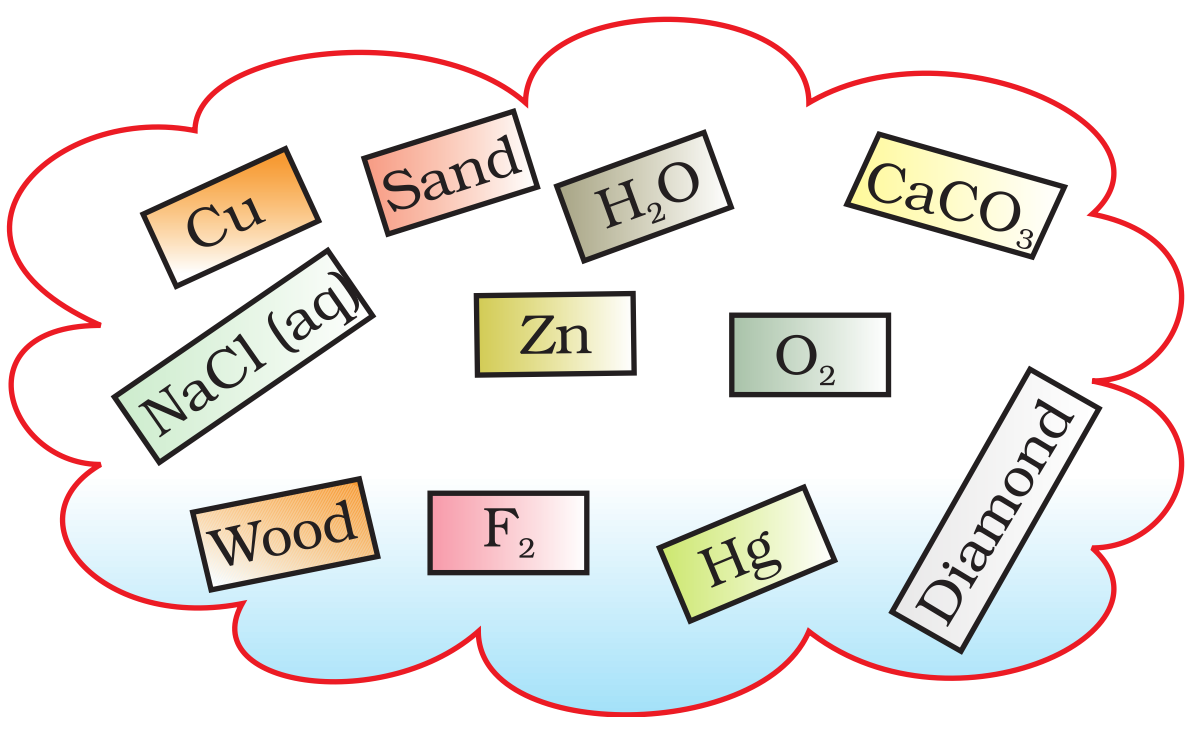
- 1View SolutionClassify the substances given in into elements and compounds:
- 2Calculate the volume by volume percent solution formed by combining $18\ ml$ of pure hydrogen peroxide with water to make $630\ ml$ of solution.View Solution
- 3View SolutionA solution is always a liquid. Comment.
- 4Calculate the mass of potassium sulphate required to prepare its $10 \%$ solution in $100\ g$ of water.View Solution
- 5View SolutionDraw a flow-chart for the schematic representation of different types of matter.
- 6View SolutionWhich of the following are physical changes and which are chemical changes?
- Burning of a magnesium wire.
- Freezing of water.
- Rusting of iron.
- Glowing of an electric bulb.
- 7View SolutionSalt can be recovered from its solution by evaporation. Suggest some other technique for the same?
- 8View SolutionWrite two applications of centrifugation techniques.
- 9View SolutionWhat is a suspension? Give two examples of suspensions.
- 10If $25\ ml$ of acetone is present in $150\ ml$ of its aqueous solution, calculate the concentration of solution.View Solution