Question
Differentiate between
Hormone and Enzyme
Hormone and Enzyme
| Hormone | Enzyme |
| They are produced by endocrine glands. | They are produced by exocrine glands. |
| Chemically they may be proteins, steroids or their derivatives. | All enzymes are proteins. |
| They are secreted at one site and act at another. | They act at their site of secretion or pass through ducts to their site of action. |
| Hormone-regulated processes are not reversible. | Enzyme-mediated reactions are reversible. |
| "They are effective in low concentration. Their under-secretion or over-secretion affects body metabolism and growth." | They act in low concentration. An increase or decrease in their concentration affects the rate of the process." |
| They act either slowly or rapidly. | They act quickly. |
Generate a complete, print-ready paper with questions like this in minutes — across 16+ boards, with answer keys.
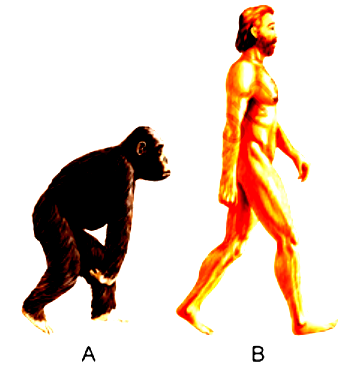
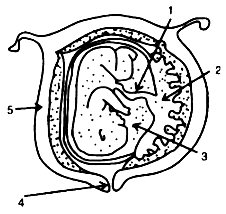
| Column I | Column II | ||
| 1 | β (beta) cells of islets of Langerhans | a | condition due to undersecretion of thyroxine in adults |
| 2 | Thyroid | b | Glucocorticoids |
| 3 | Cretinism | c | Exophthalmic goitre |
| 4 | Addison's disease | d | Increases heart beat |
| 5 | Hypothyroidism | e | Thyroxine |
| 6 | Myxoedema | f | Adrenal cortex |
| 7 | Adrenaline Under secretion of thyroxine in a child | h | Under secretion of thyroxine in a child |
| Column I | Column II |
| Genetics | Study of laws of inheritance of characters |
| Autosomes | Chromosomes are other than the pair of sex chromosomes. |
| Recessive gene | A gene that can express only when in a similar pair. |
| Allele | The alternative forms of a gene. |
| Homologous chromosomes | Chromosomes are similar in size and shape. |
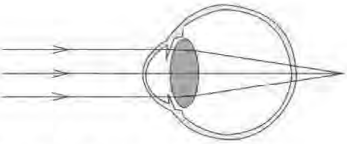
| Pictures | Cross | ||
| 1. | 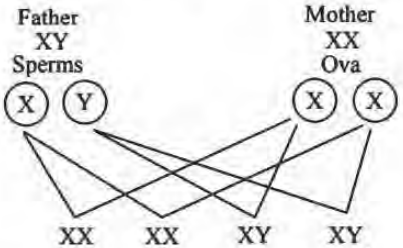 | a. | Incomplete |
| 2. | 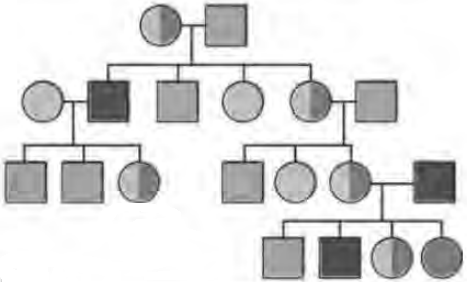 | b. | Sex determination |
| 3. | 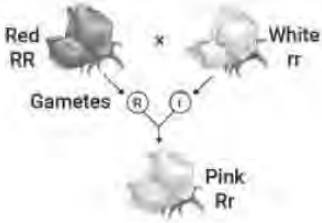 | c. | Dihybrid cross |
| 4. | 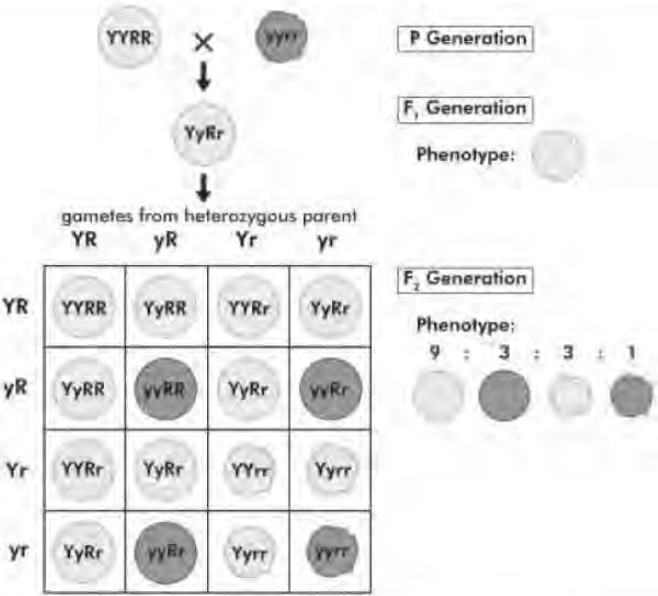 | d. | Pedigree analysis |