Question
Distinguish between : In-situ and ex-situ conservation.
| In-situ conservation | Ex-situ conservation |
| (1) In-situ conservation is a onsite conservation. | (1) Ex-situ conservation is done outside the habitat of plants and animals. |
| (2) Plant and animal species are conserved in their natural habitat for protecting endangered species. | (2) Plant and animal species are conserved in artificial or manmade place. |
| (3) It is done in natural environment. | (3) It is done in manmade environment. |
| (4) National parks, Sanctuaries, biosphere reserve, etc. are set up for in-situ conservation. | (4) Zoo, aquarium, seed banks are the examples of ex-situ conservation |
| (5) It is a dynamic process. Cheap and convenient to conduct. | (5) It is static process. Its expensive and commercial process. |
| (6) Captive breeding is not successful in all cases of in-situ conservation method. | (6) Captive breeding is successful and can help in increasing the number of endangered organisms. |
Generate a complete, print-ready paper with questions like this in minutes — across 16+ boards, with answer keys.
| Column A (Part of Anatropous ovule) | Column B (Terminology) |
| (1) Opening at the apex | (a) Hilum |
| (2) Stalk of the ovule | (b) Integument |
| (3) Protective covering | (c) Micropyle |
| (4) Place of attachment of body and stalk | (d) Funiculus |
| Column I | Column II |
| (1) Mechanical means | (a) Saheli |
| (2) Physiological device | (b) Jellies |
| (3) Chemical device | (c) Vasectomy |
| (4) Permanent method | (d) Diaphragm |
|
mRNA codon
|
Amino acid
|
|
AAG
|
Lysine
|
|
CUA
|
Leucine
|
|
GGA
|
Glycine
|
|
GUA
|
Valine
|
|
UAC
|
Tyrosine
|
|
UCG
|
Serine
|
| Normal haemoglobin | Sickle cell haemoglobin |
| Thr-Pro-Glu-Glu | Thr-Pro-Val-Glu |
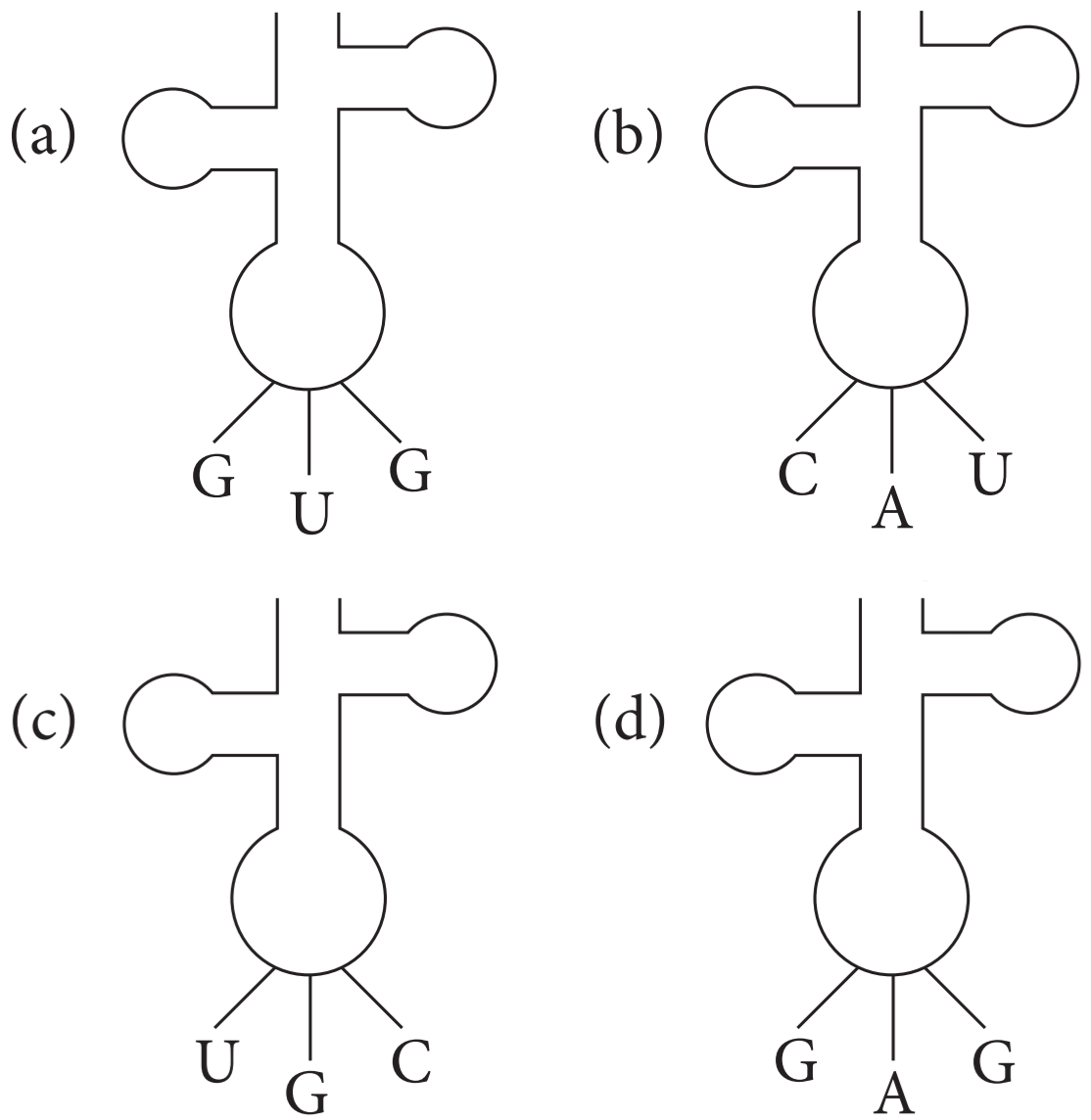
| Column A | Column B |
| Q.1. Neurons | (a) Earthworm |
| Q.2. Ladder type | (b) Hydra |
| Q.3. Ganglion | (c) Flatworm |
| Q.4. Nerve net | (d) Human |