Draw a neat and labelled diagram of the human ear. With the help of this diagram, explain the construction and working of the human ear.
Download our app for free and get started
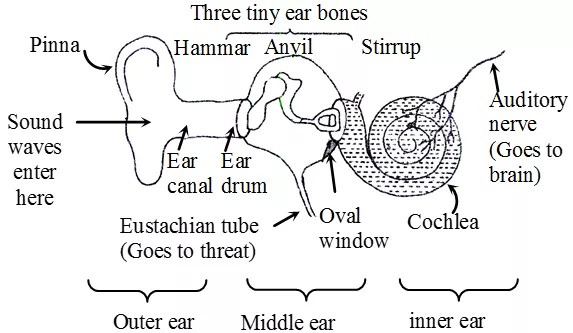
Construction of human ear: The ear consists of three compartments: outer ear, middle ear and inner ear. The outer ear consists of broad part called pinna and about $2$ to $3$ centimeters long passage called ear canal. At the end of ear canal is a thin, elastic, circular membrane called tympanum or ear-drum. The middle ear contains three small delicate bones called hammer, anvil and stirrup. These bones are linked to one another. The one end of hammer is touching the ear drum and its other end is connected to the second bone called anvil. The other end of anvil is connected to the third bone called stirrup. And the free end of stirrup is held against the membrane over the oval window of the inner ear. The lower part of middle ear has Eustachian tube going to the throat. The inner ear has a coiled structure called cochlea. The cochlea is filled with liquid containing sound sensitive nerve cells. The other side of cochlea is connected to the auditory nerve which goes to the brain.
Working of human ear: The sound waves are collected by the pinna. These sound waves pass through ear canal and fall on the ear-drum. Sound waves consist of compressions and rarefactions. When the compression strikes the ear drum, the pressure on the outside of ear drum increases and pushes the ear drum inwards. And when rarefaction strikes the ear drum, the pressure on the outside of ear drum decreases and it moves outwards. Thus, when sound waves fall on the ear drum, it vibrates back and forth rapidly. These vibrations are passed onto the three bones in the middle ear and finally to the liquid in the cochlea. Due to this, liquid in the cochlea starts to vibrate, setting up electrical impulses in the nerve cells present in it. These impulses are carried to the brain by auditory nerve. The brain interprets the impulses and we get the sensation of hearing.

Download our appand get started for free
Experience the future of education. Simply download our apps or reach out to us for more information. Let's shape the future of learning together!No signup needed.*
Similar Questions
- 1View SolutionDistinguish between longitudinal and transverse waves.
- 2View SolutionHow does sound from a sound producing body travel through air to reach our ears? Illustrate your answer with the help of a labelled diagram.
- 3View SolutionHow can reverberations in a big hall or auditotium be reduced?`
- 4Consider the following sound waves marked $A, B, C$ and $D:$View Solution
- Which two waves represent sounds of the same loudness but different pitch$?$
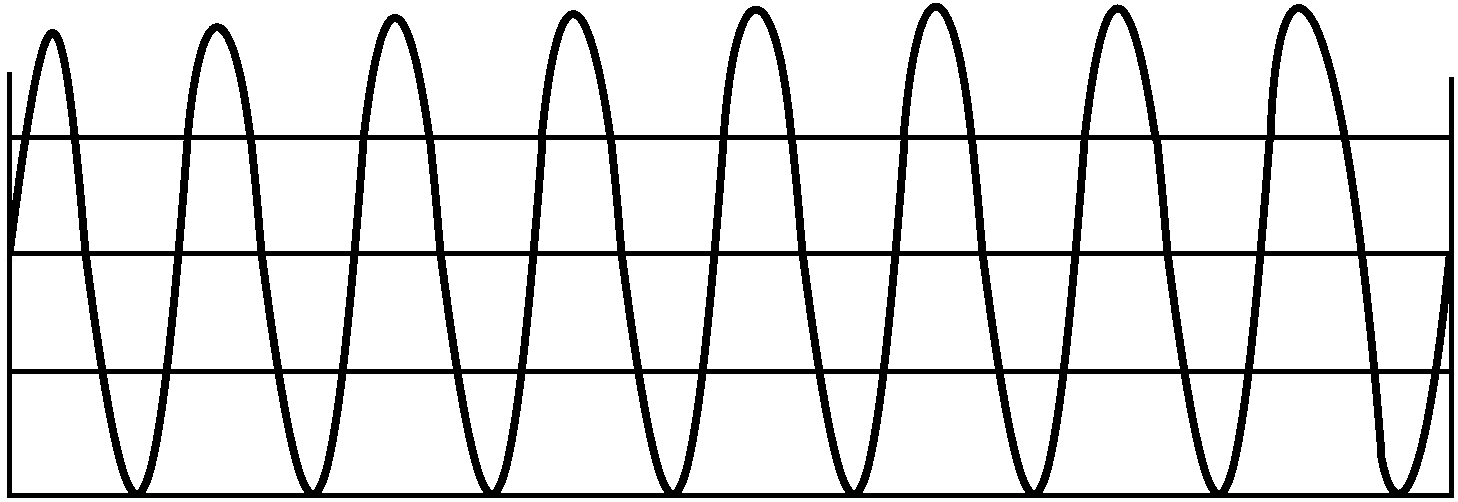
- Which two waves represent sounds of the same frequency but different loudness?
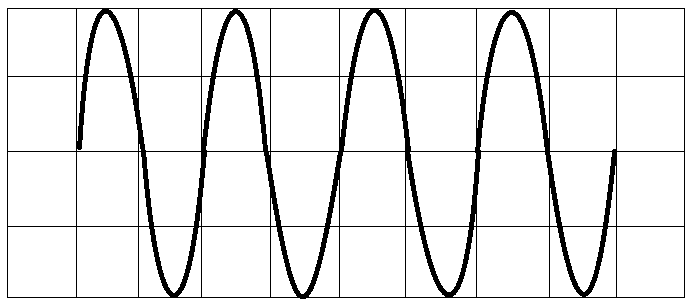
- State whether all these sound waves have been produced by the same vibrating body or different vibrating bodies?
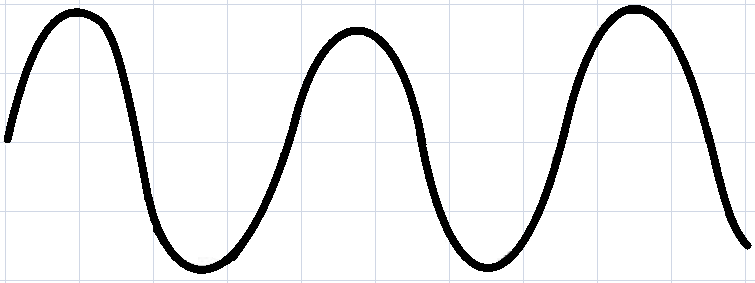
- Which vibrating body/bodies could have generated the sound waves shown here?
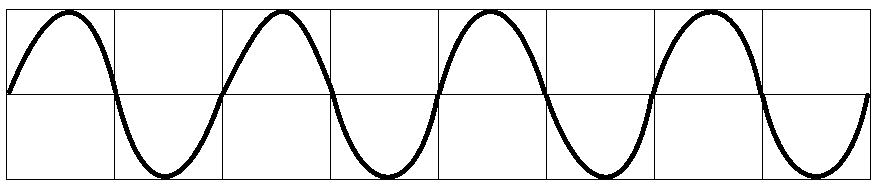
- 5View SolutionGive two examples each of longitudinal waves and transverse waves.
- 6What is kidnapped, blindfolded and imprisoned in a big room. How could the man tell if he was in: $(a)$ a city $(b)$ a village $(c)$ a bare room $(d)$ a furnished room.View Solution
- 7View SolutionWhat are longitudinal waves and transverse waves? Explain with the help of labelled diagrams.
- 8View SolutionHow could you convince a small child that when ou speak, it is not necessary for air to travel from your mouth to the ear of a listener?
- 9A sound producing body is at considerable distance from a man. There can be four different media $W, X, Y$ and $Z$ between the sound producing body and the man. The medium $X$ brings the sound to man most quickly whereas medium $Z$ takes the maximum time. The time taken by medium $W$ in bringing sound to man is less than that of $X$ but more than that of $Z.$ The medium $Y,$ however, fails to bring the sound from the sound producing body to the man. Which medium could be the one:View Solution
- Having no fixed shape and no fixed volume$?$
- Having a fixed volume but no fixed shape$?$
- Having the same composition as that on the moon$?$
- Having a fixed shape and a fixed volume$?$
- 10View SolutionWhat is the difference between a compression and a rarefaction in a sound wave? Illustrate your answer with a sketch.